

Home Blog Page 428

IAB SA Releases Brand Safety White Paper

IAB SA Releases Brand Safety White Paper

The IAB SA’s White Paper deals with the safety of brands online. The paper, authored by leaders in South African agencies, brands, publishing and tech, is the first installment of proactively and collectively driving awareness of the definition and challenges of brand safety in digital and looking at the ecosystem of publishers, agencies and brands in managing this.

The document will be shared via the IAB SA newsletter to IAB SA members, and will then be available on the IAB SA website.

Paula Hulley, CEO of IAB SA said, ‘The fundamental objective of the white paper is to create awareness of the collective ecosystem and process to create brand safe environments. When brand safety is managed pro-actively and collectively, the power of digital to deliver business impact is exponential.’

While businesses are accustomed to curating their image through advertising and marketing, the dominance of digital as a medium has added a layer of complexity to protecting brand reputation but when brand safety is managed pro-actively and collectively, the power of digital to deliver business impact is exponential.

‘Managing brand safety has a far-reaching impact on the South African economy. It is crucial that we foster environments that are favourable to doing good business, which includes doing business online. Hulley added, ‘The collective goal of South Africa’s digital economy is to grow, which requires investment and an environment that supports good business practice. Good business practice is defined as the ability to evolve in parallel to the rapid changes, opportunities and even threats of modern technology. For this reason, equity and economy of building brands online has taken centre stage. Good business practice online translates into tangible, sustainable impact.’

The White Paper clearly defines Brand Safety within the South African context and outlines all players in the digital ecosystem. Every party has a specific role to play in how they strategise, plan their spend, choose their platforms and identify content that is problematic to brands.

Daniel Courtenay, CEO MaxAxion and MD AdJoin, IAB SA Publisher Council Member, and IAB SA Brand Safety Committee lead commented, ‘The document will assist brands, agencies and publishers in making informed decisions in the digital ecosystem. We have achieved this by demystifying the technology underpinning digital advertising and identifying proactive strategies to improve Brand Safety.’

Thriving as a business in the digital economy is possible, but it takes consistent education, awareness of context, a willingness to take on solutions and the grit to confront the issues related to Brand Safety head on.

IAB SOUTH AFRICA
+27 10 900 3338 
hello@iabsa.net
www.iabsa.net

Hoorah Digital: Brands Should Ensure Their Ads Don’t Appear On Fake News Sites

Hoorah Digital: Brands Should Ensure That Their Ads Don't Appear On Fake News Sites
Image source: DSNR Media Group.

Neil Pursey, Co-founder and Director of Growth Marketing at Hoorah Digital, cited a recent investigation by News24, which revealed that many of South Africa’s biggest brands were inadvertently funding fake news sites. In the article, many of the brands implicated (or their agency representatives) plead ignorance, claiming that they have little control over where their ads end up.

In truth, however, brands have much greater control over their online advertising than they imagine. Moreover, they have a duty to exercise that control and ensure they don’t end up funding fake news.

Doing so not only means playing a role in protecting the credibility of news information, but it also means that brands can better protect themselves in a world where reputation matters more than ever.

Understanding fake news

Before we dig into why brands need to pay more attention to where their online ads appear, it’s important to understand what fake news actually is. Contrary to what some politicians would have you believe, fake news is not news that doesn’t align with your political views. Nor, for that matter, is it a news story that later turns out to be discredited because a journalist was misled by a source.

Instead, fake news refers to made up articles that are provably false and have popular appeal. Today, these articles largely appear on websites designed to mimic credible news sites. Like mainstream publications, these sites make their money from advertising. Some of them, like the ones run by teenagers in one Macedonian town have made a lot of money.

Programmatic and Google’s conundrum

But how are these sites able to attract advertising? After all, it’s not like they’re going out to brands and promising massive audiences if they advertise on their platforms (the way traditional publishers do). Instead, they’re taking advantage of products like Google Adsense, which allow publishers to serve automatic text, image, video, or interactive ads. For every ad served, the publisher receives around 68% of the revenue, with Google pocketing the rest.

The ads served are based on a combination of the site’s content and individuals users’ interests. With the content on fake news sites designed for maximum virality (something that’s much easier to do when you don’t have to worry about the truth), it’s easy to see how the money might pile up.

On that basis, it might be tempting to blame Google for ads appearing on these sites. It’s certainly an argument that’s been made often, but it’s really not that simple. While fake news sites have exploited Adsense (and other automated platforms), Google is constantly fighting to keep them off the platform. Every quarter, it kicks hundreds of so-called ‘bad publishers’ off Adsense. But with new sites cropping up quicker than they can be quashed, there’s only so much Google can do.

Brand safety

This is where the brands themselves come in. Someone in the brand team needs to be reviewing ad placements. This can be done internally, or via the outsourced agency the brand uses.

And if your agency tells you that’s impossible, it’s time to change agencies. A simple place to start is to have a list of fake news websites you want to exclude your ads from. Update this list regularly and, if a customer informs you that your ad is appearing on a site that’s not on your list, investigate it. Reporting these sites to Google will also help in the overall war against fake news.

Protecting integrity

Brands need to protect their integrity. That’s always been true, but in an age where consumers are hyper-conscious of what they do and don’t want to be associated with, it’s vital. But brand integrity doesn’t just mean appearing in the right places, it also means having a conscience when it comes to important global issues. The fake news industry is driven by money. Brands can, and should, play their part in ensuring that revenue dries up.

HOORAH DIGITAL
www.hoorahdigital.com

Guerrilla-IMC Celebrates 10th Anniversary

Guerrilla-IMC Celebrates 10th Anniversary

Guerrilla-IMC is chasing big growth as it celebrates its 10th birthday with two of many developments.

The first development is a new ContraVision site on Pybus, a stone’s throw from Guerrilla’s site at 92 Rivonia Road. This time the landlord partner is Redefine and the first client on board is AB InBev for brand Stella Artois.

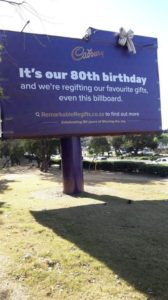
The second development was a bespoke, eye catching execution for client Cadbury. The campaign’s creative concept was ‘Re-gifting Anything’ – including in this case a billboard.

Guerrilla-IMC Celebrates 10th Anniversary
Cadbury ‘Re-gifting Anything’ campaign billborad by Guerrilla-IMC.

The team worked tirelessly to make this mega board on Grayston look like it had been re-wrapped and re-gifted, bring the concept to life on an XXXL scale.

GUERRILLA IMC
+27110218347 
matthew@guerrilla-imc.co.za
www.guerrilla-imc.co.za

Pop Up stores Reinventing Brand Engagement

Pop Up stores Reinventing Brand Engagement
John Faia, GM of Mall Ads.

Pop Up stores have become a trend that has stuck and one that keeps evolving, bringing something new and exciting to shoppers. John Faia, GM of Mall Ads, lists three reasons why Pop Up stores are reinventing brand engagement. 

The worldwide Pop Up phenomenon is a consequence of a culmination of factors, and is working effectively for both brands wanting the bricks and mortar element and malls needing to rent out unoccupied space. When it comes to retail, it has become very much a consumer’s world.

As such, the mall environment needs to consistently keep up with the trends and even stay slightly ahead of the curve in order to keep attracting consumers or risk becoming redundant. Pop Up stores within the mall environment are starting to become a popular method of keeping a brand top of mind, generating sales and filling empty shop space.

In fact, brands should consider the concept as part of their overall sales and marketing strategy. Below are three reasons.

1. The concept is multi-faceted and many stakeholders benefit – brand, landlord and consumer

The concept of Pop Up shops has evolved from an experimental exercise to an enduring experiential brand extension. Furthermore, it is a way of providing retail opportunities for brands where a fully-fledged retail presence – with long-term leases and everything else that goes with it – is not a viable option.

In a culture that is becoming ever more consumer-centric, brands are realising that in order to grab attention, they need to do things differently. They need to focus on their uniqueness and take advantage of that. Brands are also seeing the need to meet consumers where they are and this is where Pop Up stores fit squarely in the picture.

2. A fresh way to connect with consumers

The Pop Up store isn’t just about selling merchandise, it’s also about connecting with the consumer in a way that is fresh and surprising. For example, online clothing brand BiBi Rouge opened a Pop Up at Coachman’s Crossing in Bryanston so that shoppers could engage with the clothing ranges in a more tangible way. It also helps conversion to sales as consumers are more likely to take their shopping basket to the till point, instead of leaving everything and walking out, as it so often happens in online shopping.

From the point of view of extended brand communication, the concept affords moments that are Instagram-able, Pinterest-able and drive social media sharing, thus further enhancing brand image and recall. A Pop Up allows consumers to connect with the brand on various levels.

This type of out the box thinking and implementation helps to unlock income opportunities within the mall environment for both clients and landlords. For teambuilding company Playworks, Mall Ads™ set up a Pop Up at Musgrave Centre in KwaZulu-Natal. Playworks is traditionally a team development specialist brand with an established clientele.

The Pop Up aims to extend reach and brand recognition while increasing customer base. It is also bringing an added entertainment point to the mall and attracting shoppers who wouldn’t necessarily go to that mall. The justification isn’t just about selling, it’s about communicating elements of a brand and bringing a deeper understanding of what the brand stands for, in a physical environment.

3. The Pop Up is online retail reinvented

Another development in the pop up trend is that it is helping to drive the reinvention of online retail. It is starting to happen in South Africa such as with BiBi Rouge, but in other markets we are seeing significant roll out. The Pop Up allows ecommerce companies to continue growing after hitting a threshold online.

In terms of mall landlords, Pop Up stores make spaces profitable, they attract feet and add to the tenant mix. For brands, they provide the opportunity for greater conversion, give their consumers an experience and also allows them to test the market before embarking on something more permanent.

MALL ADS
john@provantage.co.za
www.provantage.co.za


Sunday Times 2018 Top Brands Survey Honours Multiple FCB Africa Clients

Sunday Times 2018 Top Brands Survey Honours Multiple FCB Africa Clients

Sixteen brands from FCB Africa were mentioned a total of 27 times across 18 different categories in the Sunday Times 2018 Top Brands survey.

FCB Africa clients accounted for the three major awards in the consumer section of the survey with Koo receiving the Grand Prix as the Overall Favourite Brand, and Coca-Cola taking the Social Investment Award and the Green Award.

In fact, three FCB Africa clients made it to the Top 10 Overall Favourite Brand list (Koo, Coca-Cola and Tastic Rice), two made it to the Top 10 Social Investment list (Coca-Cola and Tiger Brands) and two to the Top 10 Green list (Coca-Cola and Tiger Brands).

Tastic Rice was named the number one brand in the Essential Foods consumer category, Koo the number one brand in the Tinned Goods consumer category, and Coca-Cola the number one brand in the Soft Drinks consumer category.

FCB Africa Group CEO, Brett Morris said, ’We are exceptionally proud of our clients and their brands. This is a phenomenal performance proving their professionalism and commitment to South African consumers and, in the case of those making the Grand Prix lists, to issues that are important to those consumers.’

‘Congratulations to them all, especially seeing as – for most of them – this is not their first time achieving Grand Prix status, nor making the category lists. Consistency and commitment, staying the distance, is vital when it comes to brand building, and these 16 brands have certainly proved they’ve got what it takes to deliver,’ Morris continued.

FCB Africa brands achieving number two positions included Savanna Dry in the Cider consumer category and Toyota in the Car Companies business category.

Other FCB Africa brands acknowledged by the survey were Albany, Amarula, Sprite, FishAways, Sunlight Soap, Ingrams, Mrs Balls, Debonairs Pizza, Absa and Sasol.

Based on this performance, FCB Africa was the runner up for the Robyn Putter Award. This recognises the contributions made by creative agencies in support of winning brands, with the winner decided on a points system, based on the performance of its clients in the survey.

‘I’m very pleased to see such a wide spread of clients and brands making the lists, and across such a wide spread of different categories. I believe this demonstrates FCB Joburg’s, FCB Cape Town’s and Hellocomputer’s experience and depth, which obviously translates into adding value for our clients and brands, concluded Morris.

FCB  
www.fcb.co.za

IBASE Reveals SI-324 4K Digital Signage Player

IBASE Reveals SI-324 4K Digital Signage Player

The SI-324 4K digital signage player is based on the new AMD Ryzen Embedded V1000 processors. It integrates the IBASE iControl intelligent energy-saving green technology and the Observer remote monitoring technology to enable energy savings, automatic power-on/off scheduling, remote monitoring, automatic power recovery, low-temperature boot protection and smart operating system restoration.

It comes built-in with hardware Extended Display Identification Data analogue function remotely controlled by an IBASE utility to prevent problems caused by connecting a display, disconnection of display cables or unrecognised displays. These problems are manifested in the form of black screens, wrong screen resolution and colour distortion.

The SI-324 has flexible video wall configurations that are suitable a broad range of applications including restaurant menu boards and electronic displays in banks, airports and shopping malls to convey dynamic information and promotions to a targeted audience. Housed in an elegant black and white case with smooth edges, it has a segregated ventilation to keep dust away from system components and improve system reliability.

Supporting up to 32GB of fast dual-channel DDR4 memory, SI-324 offers advanced expansion and interfaces including 1x Mini PCI-E, 1x M.2 E-Key, 1x SIM card slot, 2x USB 3.0, 1x USB 3.1, 2x GbE RJ45 and HD audio.

IBASE TECHNOLOGY www.ibase.com.tw

JCDecaux And Zaha Hadid Design Create DOOH Landmarks

JCDecaux And Zaha Hadid Design Create DOOH Landmarks

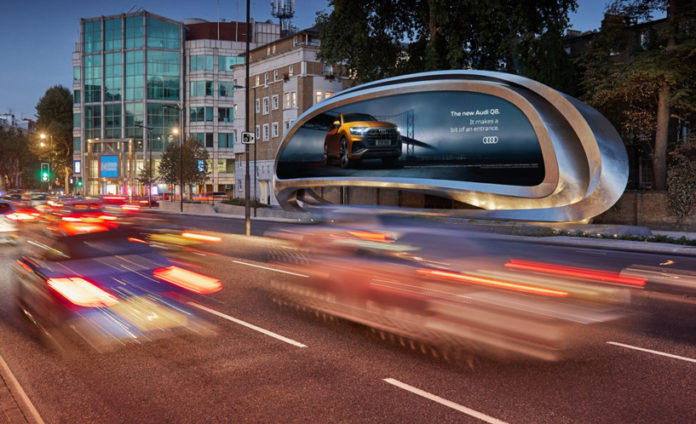
The first billboard by Zaha Hadid Design commissioned by JDDecaux – The Kensington is a curvilinear ribbon of matte steel, framing a curved digital screen. The billboard is located on West Cromwell Road, the key route linking central London and Heathrow Airport.

The Kensington provides brands with a unique communications’ channel in the capital. The channel combines the latest in digital screen technology with a spectacular, curved double-ribbon stainless steel design.

‘Both a civic gesture and a promotional medium, the intertwined, looped ribbon design expresses the dynamism of pedestrian and vehicle traffic movements that intersect at this important London junction. The stainless steel ribbon twists as it encircles the screen, defining a varying silhouette when seen from different viewpoints.’ said Melodie, Senior Associate at Zaha Hadid Design.

Spencer Berwin, Co-CEO of JCDecaux said, ‘Design is at the heart of JCDecaux’s DNA, and we are proud to have worked in partnership with Zaha Hadid Design to bring this exceptional vision for a contemporary advertising structure to London.

‘This project underlines how JCDecaux works with the world’s leading designers to transform cityscapes for the benefit of the public and advertising clients. We would like to pay tribute to Zaha Hadid’s commitment to design excellence and to her team for bringing our joint vision to fruition and to thank our launch partners for their commitment to this unique new advertising structure.’

JCDECAUX www.jcdecaux.co.uk

Rea Vaya Awards Transit Ads With Advertising Rights

Rea Vaya Awards Transit Ads With Advertising Rights

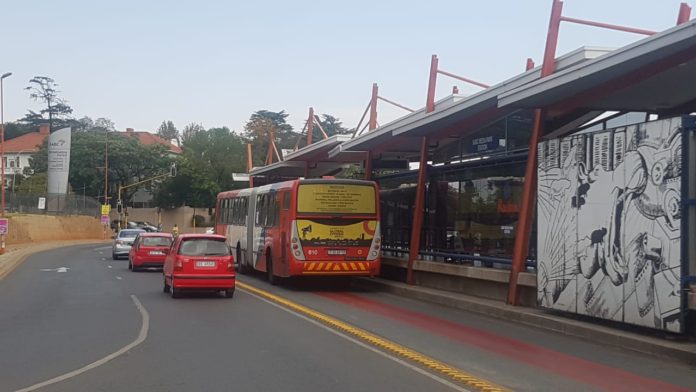
Transit Ads has been awarded the exclusive advertising rights to the Rea Vaya Rapid Transit System (BRT) 1B in Johannesburg, along specific routes.

In addition to a comprehensive, national and impactful portfolio of branding opportunities, Transit Ads now offers advertisers another highly valuable engagement point, increasing audience reach by 1,7 million every month.

Transit Ads already reaches 12,5 million weekly taxi commuters, 2,8 million bus commuters and 1,2 million train commuters weekly. This audience is economically active, tech-savvy and usually the main household purchasing decision maker, making them a key consumer for brands.

Shamy Naidu Executive, Transit Ads believes that the exclusive rights will have a significant impact on reach and ROI. ‘Transit Ads™ already has exclusive media rights to the MyCiTi buses in Cape Town and now, with the addition of the rights to the BRT in Johannesburg, we can offer a wider footprint and another key engagement point that is extremely impactful, highly visible and offers excellent daily frequency.’

‘One of the key elements to ensuring that advertising investment receives excellent return in terms of awareness, assimilation and response to call to action is to consistently bring new opportunities to the table. Opportunities that are in line with, and take advantage of, consumer growth, urbanization, infrastructure development and socio-economic shifts. With the addition of Rea Vaya into our extensive portfolio, we are doing exactly that,’ continued Naidu.

PROVANTAGE MEDIA GROUP
www.provantage.co.za

Traditional Offline Media In The Digital Online Media Space

Traditional Offline Media In The Digital Online Media Space

Margie Knap, Media Strategist at The MediaShop asks, ‘does traditional ‘offline’ media still have a place in the digital online media space?’ Knap said, ‘My career in media started somewhere in the 80’s. Needless to say, what we do today in media and what we did ‘back in the day’ is poles apart, mostly due to media choices being extremely limited.’

TV viewing was available for just a few hours a day, alternating English and Afrikaans news, and there was no real measurement of audiences. Completing Telmar runs was done through a dial-up system using a card, key and punch codes, with faxes as a means of confirmation. Adex was a manual system of thick manuals, rulers and highlighters. When we needed information on media owners, we used SARAD books and files – on actual paper! You are either nodding in agreement right now, or have a confused look on your face.

Media has evolved beyond anyone’s expectations. The 2002 movie, Minority Report (a neo-noir science fiction movie), quite prophetically depicted the role of media in a future state where technological advancements (AI) made a brand’s presence nearly boundless. The main character, Chief John Anderton was reminded of his favourite brand of beer as he walked past a billboard. We could say that right now we are all living in the Minority Report age, a virtual reality space.

Looking at online version of the thesaurus – of course not the actual tome – the adjectives and nouns for ‘virtual’ and ‘ reality’, helped crystallise this new world for me:

• Virtual (adj)
– Near
– Practical
– Effective
– Fundamental
– Essential

• Reality (n)
– Authenticity
– Truth
– Genuineness
– Certainty
– Representativeness

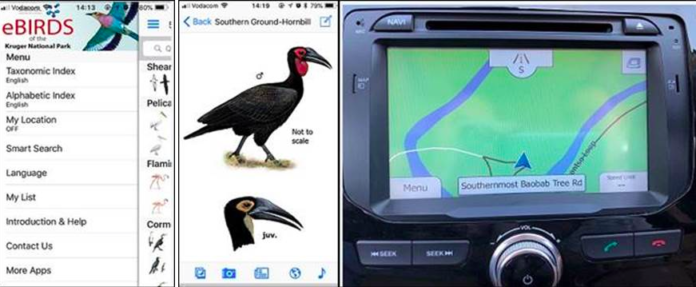
Having been fortunate enough to have a long break in the bush recently, I had a variety of apps that I could download that fell within the “virtual” space category. The apps were near (thumb length away), practical, effective, and in fact, ticked all the “virtual” boxes.

I could identify a bird, a spoor, the best loops to take, the distance from one camp to another – it was amazing.

However, the lack of internet coverage in the bush is exceptionally limited. We had to resort to paper. And it was a joy indeed – following a map instead of mindlessly listening to a disembodied voice telling us to take the third exit at the circle.

We also took great joy in hunting through the bird book to identify the variety of raptors and water birds with a mammal guide to help identify spoor. It was great! When I was putting this blog together and looking at my ‘material’, the smell of the bush was still on my maps in the form of a light coat of sand, and this immediately transported me back to the bush.

Our journey was documented on Facebook for our friends and family to be kept up to date with where we were, what close encounters we had and to share in our experience. These memories are out in the ether, and every year Facebook will send me a reminder of what a great time we had.

It is a relief that the written word isn’t dead. Each shop had a vast array of postcards, along with stamps and a post-box. Clearly, there was a demand for written mementoes to be sent to loved ones, An email is great, but to actually receive a handwritten postcard is just that bit more personal and memorable.

When it comes to those photographs, yes they are safely downloaded onto a memory stick. The best ones, however, are going to be printed and framed.

Our virtual world needs to live alongside and to work with the printed world. Having a mix of a variety of apps and a variety of maps and book guides made our experience so worthwhile and memorable.

THE MEDIASHOP
www.mediashop.co.za

Mall Ads Installs Indoor Towa At Umlazi Mega City

Mall Ads Installs Indoor Towa At Umlazi Mega City

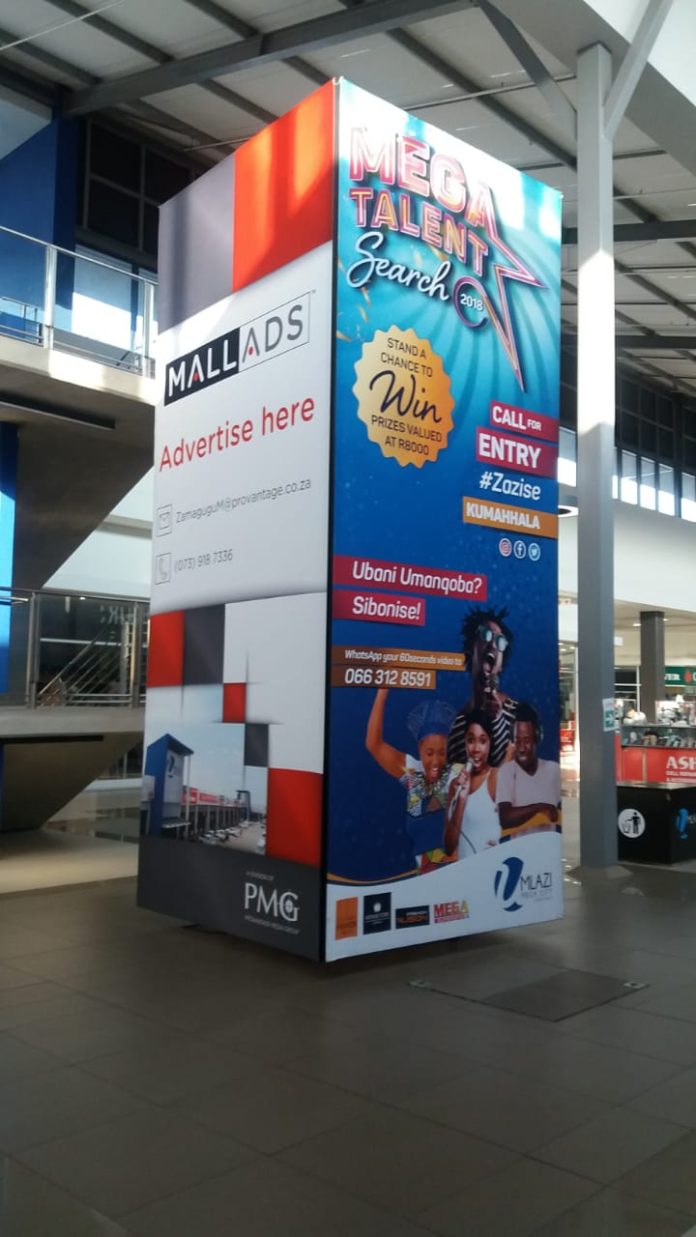
Mall Ads’ Indoor Towa installed inside Umlazi Mega City Mall in KwaZulu-Natal is a large format structure measuring over five metres high and two metres wide – making it highly visible to consumers within the mall.

Mall Ads recently launched Mall TV and Mall Radio and with the Indoor Towa the company continues to bring advertisers new, effective platforms that communicate with a highly receptive audience, this time within one of the busiest malls in KwaZulu-Natal.

Umlazi Mega City is a shopping complex which offers a wide variety of experiences for shoppers. The mall has recently undergone a R370 million refurbishment and is attracting a higher number of consumers as a result. It is strategically located at the gateway to Umlazi Township and attracts on average 1,3 million consumers each month.

Due to its size, the Indoor Towa is eye-catching and the messaging on it is highly visible. The Indoor Towa is lit and rotates 360° ensuring that all advertising messaging benefits from excellent exposure to a captive audience. This new advertising touchpoint is strategically located in the food court in Umlazi Mega City, an area which experiences high volumes of foot traffic and long dwell times.

John Faia, General Manager of Mall Ads explained that innovation coupled with strategic location makes for impactful advertising. ‘Points of engagement that are innovative and iconic directly influence the bottom line. The Umlazi Indoor Towa is iconic because of its size and targets consumers when they are enjoying a meal or standing in a queue waiting to order. This is where brands can positively influence purchasing decisions. With the Indoor Towa, not only does brand and product become top of mind, it influences purchase within the right environment.’

MALL ADS
john@provantage.co.za
www.provantage.co.za