Home Blog Page 414

Drawing In Customers Through Digital Signage

Drawing In Customers Through Digital Signage
Image source: www.digitalsignagetoday.com

It is difficult for retailers to connect with customers who have their heads buried in their phones, in today’s fast-paced retail environment. Mobile marketers are also getting smarter, as they deliver targeted mobile ads using beacon technology to directly appeal to customers.

Not to mention all the outdoor billboards and displays that compete for user attention. For brick and mortar retailers, this can be a major challenge. Retailers can get the upper hand, however, by using digital signage to attract customers, specifically digital signage deployed in windows.

Why use window digital signage?

When many users think of digital signage, they might imagine a basic LCD display to put up a few advertisements. However, digital signage includes many different selections, including window digital signage.

‘There is a diverse selection of options available that do so much more than traditional static signage. Digital displays can more easily capture the attention of customers, even under direct sunlight, and simple, efficient content management means retailers can keep their displays updated and eye-catching,’ said S.G Kim, executive vice president of visual display division, Samsung. Kim also pointed out that with window digital signage specifically you can, ‘reach customers before they even set foot in your store’.

What type of window signage should retailers use?

It’s not enough to simply put up a window display and hope for the best. End users need to consider a variety of elements, such as ensuring customers can see the display, even in bright or dim sunlight. Other factors to consider include versatility and flexibility. End users should look for solutions that can be positioned in a variety of ways, such as being hung or mounted. Kim said that end users, ‘should select a smart design that can be incorporated into any space.’

This article was sourced from: www.digitalsignagetoday.com

The Impact Of Broadcast Media On Buying Structures

The Impact Of Broadcast Media On Buying Structures

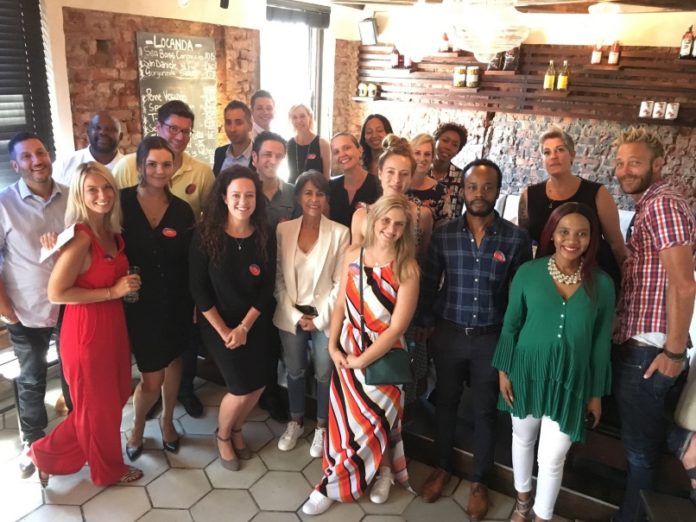
One of the burning industry issues discussed at DCMN’s roundtable meeting in Cape Town on 13 February 2019 was: can broadcast media disrupt traditional buying structures to accommodate start-up businesses?

The meeting was attended by DStv, eMedia, Jacaranda FM, Heart FM, Kaya FM, Travelstart, UCOOK, Silvertree Internet Holdings, Carzar, Lulalend and Wesgro and was moderated by DCMN South Africa. The objective of the roundtable were to encourage collaboration between various parties to enable start-ups to include radio and TV in their media plans.

Irina Herf, General Manager of growth marketing partner DCMN South Africa said, ‘What we realised again in this discussion is that: media houses have a lot of data on how each channel performs in terms of reach and frequency. The start-ups that were present have all tested various media and channels on a small scale and know what works for them and what doesn’t. Using attribution software, we at DCMN have data on which channels and what type of creatives deliver the best performance for start-ups (measuring actual results e.g. visits to their website). So, if we can all work together and combine our data to be able to give start-ups a media plan that is highly likely to give them the growth they need, it is a very powerful offering that is a win-win for everyone.’

DCMN explained that the start-ups that were in attendance are in their growth phase and need partners that can assist them to grow their businesses. For these start-ups, it is all about acquisition at this stage and they need media that will deliver on this metric.

It was unanimously agreed that using digital and social advertising as a starting point is ideal as it is measurable and agile, so it is easy to test on a small scale and make changes quickly. The overall perception was that, especially with TV, the measurability and agility (and of course budget too) are prohibitive factors for start-ups.

As Manuel Koser, Founder and Managing Director of Silvertree Internet Holdings mentioned, Google and Facebook are the benchmarks for measurability and offline media will never be able to compete. But, when growth starts stagnating, it is crucial to start looking at different media to get new clients. And this is where TV and radio plays an important role.

Performance-based pricing models

‘Media owners need a different operating model for start-ups. These companies are still trying to figure out what they are doing and things change all the time. It is important to tackle these guys with a different approach,’ said Koser. This was wholeheartedly supported by Travelstart. Although they have successfully been able to grow the business using a combination of media tactics, including TV and radio, acquisition remains their main objective.

Odette Faling, Commercial Director of Travelstart, was very clear that when budgets are cut, it is offline budgets that are cut first. In her opinion, performance-based payment models are crucial to ensure that brands like them can continue using offline media and justifying the spend. ‘Performance-based payment models will remove the risk for the client. We provide our content and the media owners can decide on which channels they want to run it (unsold inventory or prime inventory), but we only pay for conversions received. We also understand that they run a business, but with the data we have gathered so far by using attribution software, we can give the stations a very good idea of the bookings we will get on specific channels and what income they can expect,’ she said.

Understandably, from the media owners’ side, the perspective was met with some resistance since they would need to rely on data from the advertisers themselves and from attribution software to determine the conversions and being that co-dependent is a challenge for a big corporation. This highlights how big of a role transparency will play in whether performance-based pricing models could be successfully implemented.

Availability of prime inventory was also discussed. As Shamiel Salie from DStv said: ‘Inventory is a finite thing in our world.’ But the general feeling was that start-ups sometimes get better results from smaller channels and non-prime dayparts and that prime inventory isn’t necessarily what they are after. Koser also urged media owners to allocate a small percentage of their inventory to test the concept, thereby minimising the risk for themselves as well.

Co-creation of content

Of course, it isn’t just as simple as it sounds. The creative used also plays a big role in the success of the ad. The concept of co-creation is something that start-ups feel very strongly about. They want to form real partnerships with the media owners where they can co-create content, understanding their own audiences to create advertising that delivers performance.

Stacey Vermaak from Lulalend urged radio stations to share the knowledge that they gain by testing different creatives and different messages, etc. with their clients to help them grow. There was a very positive reaction to this in the room from all parties and Kevin Fine from Jacaranda FM reiterated, ‘Our job is not to take your money, our job is to accelerate your business.’ Greg Maloka, Managing Director of Kaya FM, also emphasised the need for these businesses to fully comprehend the South African landscape to realise real growth.

Agility and costs

The concept of agility and the need for start-ups to be able to change things quickly came up as a big pain point during discussions. However, it seems like even in TV there are ways to address this. As Fatulka Gaibi from eMedia explained, ‘There are options for ads that we can explore that don’t sit in the commercial break. We can also help start-ups with production and can make changes quickly.’

From the radio stations’ side, live reads are also a very good option for start-ups since it lends credibility and the message can be changed daily if needed, which also addresses the matter of high production costs. Various parties reiterated that even with TV, an extended campaign that runs over weeks is not necessary. One or two spots can make a difference if you track it properly and know which channel at what time delivers the required results for your business.

When we compare traditional TV planning vs performance TV planning there are some differences:

• The need for minimum ratings.
• Some beliefs like prime time is better than off-peak aren’t relevant to start-ups
• Neither is budget – if we have attribution in place we can track how much we are spending vs. the return and if that sum balances out then budget isn’t a factor.

Having a clear idea of who you are speaking to, what insight or need drives purchase and having a distinctive brand message are still relevant and important. Setting up an innovation lab to run a few tests seem like the most logical next step. If media owners, start-ups (and even SMEs and other e-commerce businesses) and marketing partners can all work together to find the solutions that will benefit everyone, they can help to grow the market leaders of tomorrow. Should you be interested in collaborating in this industry initiative, please email: m.winterbach@dcmn.com.

DCMN SOUTH AFRICA www.dcmn.com

The State Of Small Agencies

The State of Small Agencies
Image source: www.redbooth.com

Carla Gontier, head strategist at Iconic Media, and Abigail van Zyl, managing director of The Digital Thread, tackle the question: what does the shuffling of the big guys mean for smaller agencies?


Over the last year, there’s been some major changes in the local advertising market. From the closure of Y&R’s Cape Town office and its subsequent takeover by VML South Africa, to the major WPP story, the big players in the industry are making some major moves. But does this mean better opportunities for the smaller agencies?

‘I think big agencies definitely have amazing talent and capabilities, the problem is the perception of bloat in larger agencies,’ said Gontier.

According to Up to Light’s annual report, What Clients Think 2018, 22% of clients said that they sometimes struggle to understand design agency costs, pointing to a lack of transparency about the actual work involved in one task versus another.

‘This isn’t a startling revelation but clients like to be involved with the process and the work we’re producing for them,’ said van Zyl. ‘The major difference in the market is the fact that clients are now demanding transparent, one-on-one relationships with the agencies. While delivering the best creative is important, I also think agencies like mine can offer services at a lower price, and in these economic times you need to cut the fat where you can.’

According to Stats SA, the first quarter of 2018 saw a -2,2% dip in GDP compared to the fourth quarter of 2017. When economic times are tough, you need to be frugal with your marketing budget and still get results.

‘A few years ago I failed at launching my own small agency. It was definitely a learning curve, and to be honest the concept of a small freelance agency was a little ahead of its time,’ said van Zyl, ‘For me, revisiting the structure in the last few years has proven easy, efficient, and one most larger agencies wish they could copy.’

Another interesting change in the industry is how many middle and senior weight creatives are going it on their own. A 2017/2018 survey issued by the Southern African Freelancers Association found that over 80% of those surveyed were above the age of 30. With this drop off in permanent, experienced creatives in the industry, smaller agencies have been able to take advantage.

Van Zyl said, ‘I’m able to offer my clients quality work utilising senior freelancers who either got tired of agency life, wanted a more flexible lifestyle, or became frustrated by doing work for only one client. Whether it’s editors, sound engineers, designers, or writers, I can cherry pick talent to complete a project. In the long run I’ve found that not having to pay an office’s utility bills or other staff related costs means I’m able to operate at a lower costs, and still deliver fresh work.’

In addition, using senior freelancers has, in some circumstance, allowed smaller agencies to elevate their offerings. According to Gontier, ‘A couple of years ago when we approached bigger clients, there was the idea that we were not able to service their accounts because we didn’t have the capacity. Since then we’ve changed our approach so we’re able to operate like a big agency by using trusted external suppliers and freelancers but without taking on the additional expenses of permanent staff.’

While larger agencies will still dominate the TVC producing market for clients, and it is the biggest advertising-spend segment, smaller agencies are blazing new trails and are starting to offer alternatives.

‘Clients no longer have the budgets to put R3-R4 million behind a few TVCs a year. They want to be able to get bang for their buck, so being able to deliver high quality video content, and also trim the fat of a large production, is an invaluable skill,’ Gontier stated.

But at the end of the day smaller agencies offer one massive advantage that clients want: real one-on-one communication that isn’t diluted by processes and layers.

‘Every time I start a new project with a client they’re always so happy for the direct contact with me,’ said van Zyl. ‘They’re really grateful that I don’t bring any of the usual agency department layering. I’m a one-woman band and clients can be frank with me. They give direct briefs that I’m able to work with for solutions they want, which are bankable results, not awards. After all, smaller agencies live and die by what they can prove as actual ROIs. That’s why I think smaller local agencies will keep on attracting new corporate clientele,’ concluded van Zyl.

ICONIC MEDIA
carla@myiconicmedia.com
myiconicmedia.com
THE DIGITAL THREAD
abigail@digitalthread.co.za
www.thedigitalthread.co.za

Speakers At Nedbank’s Marketing Gets Naked Conference Delivering Powerful Insights

Insights From The Speakers Who Will Be At The Nedbank’s Marketing Gets Naked Conference
Dave Duarte (CEO of Treeshake) and Khensani Nobanda (Group Executive Nedbank Group Marketing and Corporate Affairs).

The Nedbank IMC Conference will take on a TED-talk style format on 14 March 2019 at Joburg’s iconic Fox Junction in Newtown. The 2019 Nedbank IMC Conference’s agenda will be packed with powerhouse players in the marketing and advertising world who will share their views on trends driving the space in 2019 under the theme ‘Marketing Gets Naked’.

Here are a few insights from a range of speakers on topics that will spark interest and robust conversation on the day:

Dave Duarte, CEO of Treeshake, will deliver the day’s opening address and share the naked truth about digital connectivity. ‘The ‘attention economy’ changed the game over the past 10 years and the power in marketing shifted from agencies to tech giants. But how are we going to get our consumers attention when their attention is already maximised?’ said Duarte.

Duarte hopes to spark a conversation about how marketers and agencies should be operating. ‘I think we should all be operating from three areas; trust, trends and tech. You have to deliver on your promises flawlessly with your consumer in order to earn their trust. You need to invest in skills and capabilities to align with the trends. And understand that tech is not just about using the latest software but rather about discovering new ways to add value to your customer,’ he said.

Khensani Nobanda, Group Executive: Nedbank Group Marketing and Corporate Affairs shares Duarte’s sentiment: ‘Consumers no longer invest their time, money and attention in brands that just sell good quality products at good prices. Instead, because they’re so well informed, they carefully consider choices to buy from companies that stand for a purpose, that reflect their personal values and beliefs,’ she said.

Darren Hampton, GM of Digital and CRM for Nandos, who will share the creative process behind Nandos’ campaigns over the years, agrees. ‘There is a lot of novelty in the marketing space. Many brands are chasing the latest trend and focus has been lost on what we’re actually doing here. Marketers should be using innovation to help them develop good data about their consumers and what they really want,’ he added.

Gillian Rightford, CEO of Adtherapy will bring up an often-provocative topic: the client/agency relationship. She will ask the controversial question, ‘why is everyone so afraid of a bad meeting?’ Rightford believes that the client/agency relationship is not a service one and will challenge listeners and co-speakers with her thoughts. ‘Managing the relationship should not be the focus. Creating the best product and doing the best work should be,’ she said.

Mosidi Seretlo, Founder and Director of Mosidi K Seretlo Consulting, will be delivering a summary of the day’s conversations. ‘I am interested in what will come up throughout the day but I do hope we cover some tough topics like marketing leadership, digital marketing for the sake of it and the difference between misleading marketing and unethical marketing,’ she said.

Seretlo is excited about this year’s theme of stripping marketing down to it bones, getting naked. ‘I want people in our industry to stop fooling themselves and get real. Forget the icing and all the trimmings, do we even have the right recipe to begin with?’ added Seretlo.

INTEGRATED MARKETING CONFERENCE www.imcconference.com

M&C Saatchi Abel Adds Tafel Radler And Continental Tyres To Client List

M&C Saatchi Abel Adds Tafel Radler And Continental Tyres To Client List

M&C Saatchi Abel has added several big name brands, including the likes of Tafel Radler and Continental Tyres, to its expanding client list.

The agency’s founding partner and Head of New Business, Jacques Burger, said, ‘These brands not only have great historic equity, but also bold growth ambitions, which is something that excites us.’

He continued, ‘They fall within a broader stable of brands, namely the Continental Group and the Heineken Group, with which we already have client relationships, so it is even more exciting that we are able to broaden our remit within these organisations. We believe that winning these brands is proof not only of the thinking and work we have presented but also of the quality of the client relationship we have and the work we have done on the other brands within these companies.’

These wins follow on the solid growth experienced by the company in 2018 and continue its trajectory over the past nine years since its inception. ‘We have been fortunate to experience sustained growth in a tough economic decade through new clients joining us, organic growth within our existing client base and our expansion through the addition of new companies to the group, which have added specialist skills in media, sponsorship, activation and digital. We have also grown our footprint in Africa and now operate in more than 26 markets,’ shared Burger.

Burger said that over the rest of 2019, M&C Saatchi Abel will be harnessing its strong entrepreneurial spirit to drive brave and audacious solutions. ‘The current challenging economic environment presents the perfect opportunity for innovative ideas to shine,’ he concluded.

M&C SAATCHI ABEL 
+27 11 268 6388 
www.mcsaatchiabel.co.za

Transit Ads Cements Campaign With PPC

Transit Ads Cements With PPC

To keep their products top of mind amongst a variety of audiences, PPC Cement commissioned Transit Ads to wrap 137 taxis across the country. Of the 137 taxis, 73 have a full wrap and 64 a full back. This OOH marketing strategy is part of a broader campaign by PPC Cement to showcase their different products.

With the opportunity for exposure and engagement provided by this extensive taxi campaign, PPC has access to a huge audience across the country on a daily basis. As such, they have extended the campaign for an additional three months and have added 27 full wraps and 8 full backs to the fleet.

Routes have all been strategically selected, ensuring the best opportunity for promotion to PPC Cement’s audience. Transit Ads implements extensive and continuous research to ensure that audiences are reached effectively with maximum exposure for the advertiser. Apart from the frequency and visibility along main routes, the messaging is exposed to consumers at taxi ranks and main transit nodes, areas which experience high footfalls and present long dwell times.

Hugh Wilson: Head of Sales at Transit Ads, explained the effect of taxis as moving billboards, ‘In terms of creative, taxi wraps offer a great platform for striking visuals, impactful messaging and a call to action. In addition, a diverse range of consumers are exposed to the messaging.’

PROVANTAGE MEDIA GROUP
www.provantage.co.za

Havas South Africa Appoints Human Resources And Transformation Director

Havas South Africa Appoints Human Resources And Transformation Director
Sameeha Muthen, new Human Resources and Transformation Director at Havas South Africa.

Sameeha Muthen, the new Human Resources and Transformation Director, will be based in Johannesburg, working across the Havas Village, leading with people management, talent development and transformation.

Muthen has been in the advertising space for over 19 years, with 14 years’ experience in Human Resources and Recruitment. She has a unique perspective in designing and implementing systems and processes that align transformation with business growth and has done so for various marketing and communications practices she has worked with.

Among other functions, Muthen will work closely with Lynn Madeley, CEO of Havas Southern Africa, and newly appointed Chief Creative Officer, John Davenport, in running the Havas Academy, a professional development institution within Havas whose mandate is to empower black women keen on entering the marketing and communications sector.

Madeley commented, ‘I’ve always maintained that businesses, especially marketing and communications agencies, ought to be microcosms of the societies within which they exist, that way they are better poised to understand their clients’ audiences. Not only is this good for business but it is also the right thing to do as corporate citizens in South Africa. Now, getting there requires active effort at transformation and Sameeha’s role will be to guide Havas through continuous impactful and sincere change. Her track record speaks for itself and we are excited to have her on board.’

Muthen will be part of the leadership team, and her unique perspective on talent management and transformation in South Africa will influence the decisions made within the Havas Village and therefore at the highest level in the business.

Muthen said, ‘It is really great to be joining an organisation that is sincere in its approach to people management, and transformation. For me it is testament to the values that are espoused by everyone who works here, and that is the fit that drew me to join Havas. I absolutely love that the South African reality of transformation, not just diversity, is a leadership-level concern. The fact that this concern is a priority in a business that is part of a global group is heartening and inspiring.’

HAVAS SOUTH AFRICA
+27115493600
info@havas.co.za
www.za.havas.com

HKLM Appoints Creative Director

HKLM Appoints Creative Director
Nobethu Jolobe, new Creative Director for 3D environmental projects at HKLM

Nobethu Jolobe has been appointed Creative Director for 3D environmental projects at strategic branding and communications agency, Harwood Kirsten Leigh Mccoy (HKLM).

Originally from Durban, Jolobe obtained her B. Arch degree from the University of Cape Town in 2001. Having worked for several years as an architect in South Africa, she then moved overseas to further her studies.

While in Japan, she earned an MSc. Eng degree from Mie University and achieved fluency in Japanese. In her capacity as an expressionist artist, she also participated in several exhibitions. Returning to South Africa in 2007, Jolobe resumed her career in architecture, which gave her the opportunity to pursue her twin passions for building design and artistic expression.

‘As a world citizen with deep African roots, Jolobe is a perfect fit for the agency and will add great value to HKLM’s projects,’ said Gary Harwood, Director HKLM.

HKLM GROUP
www.hklm.co.za

Creating Meaningful Experiences For Customers Through Event Marketing And AI

Creating Meaningful Experiences For Customers Through Event Marketing And AI
Sugeshni Subroyen, Head of Marketing for the Mint Group of Companies and Director for Mint Inland.

The marketing landscape is vastly different from 10 years ago. While billboards and print media slots worked previously, the advent of digital marketing in a buyer-empowered world has created endless possibilities for sellers to connect with buyers.

With the introduction of Artificial Intelligence (AI) into marketing initiatives and analysis, marketers are driving campaigns they could previously only dream of. AI offers endless possibilities when it comes to deriving value out of cognitive services across all spheres of business. AI in marketing is predominantly used to gain customer insights and identify buying trends through machine learning to better understand the customer. However, how can AI be effectively used in events?

I am a firm believer of closing the loop by seamlessly blending traditional and digital efforts when it comes to marketing, and with the capabilities of AI, the blend of digital and traditional becomes even more powerful and far-reaching, especially in event management.

Event marketing coupled with AI enables organisations to create memorable and meaningful experiences for customers. If you think of the critical challenges marketers face in executing events, they are pretty much the same for both intimate and large-scale events when considering the thought process, effort and planning required to achieve the ultimate ROI.

Most marketers can resonate with the common event challenges, such as irregular traffic to an event website that significantly drops after the event, whether the event will echo attendees’ expectations, and, the most dreaded of all, whether attendees will pitch.

AI for event management offers the solution to these issues. Mint Group applies the capabilities of AI to our events to ensure that customers receive a seamless experience from the moment they arrive. Our event delegates are recognised via facial recognition technology and greeted by name, so they have a quick and easy registration into the event.

During the event, we use crowd tracking technology to analyse delegate sentiment, and this works very well to gauge whether delegates are engaged and positive about the event and the content they are receiving. Implementing an event chatbot also yields fantastic results as delegates can direct all of their questions to the bot, which can handle thousands of questions at a time. Bots also provide real-time insights on how various sessions are received, offering a modernised real-time alternative to traditional event surveys.

These insights are invaluable for post-event marketing so that the engagement thread is continued far beyond the actual event. Interactions can be personalised to the delegate’s individual event experience, thereby, increasing the likelihood of continuous brand engagement and targeted responses.

AI initiatives are introducing a new era in marketing; one where digital and traditional initiatives can go much further, analyse deeper and target more accurately. The application of traditional and modern marketing efforts with AI, however, still depends on the type of customer you are targeting and the best-suited channels to reach them, invoke a reaction, spark emotion, and speak to the needs that your product or service can satisfy.

Emotions bind brands to customers, and while we can achieve this to a degree in digital marketing, nothing creates a better connection than face-to-face interactions – even more so when combined with AI experiences. One of my favourite quotes from renowned author Maya Angelou is, ‘People won’t remember what you said or did; they will remember how you made them feel.’

MINT GROUP OF COMPANIES www.mintgroup.net

Building Brand Trust Through Emails

Building Brand Trust Through Emails
Image source: ghanatalksbusiness.com

Would you send out company letters on unbranded documents? Have you thought about the risks of allowing employees to send out emails without the correct company branding? Paula Sartini, founder and CEO of BrandQuantum, asks these important questions and provides tips to build brand trust. 

We’ve all received emails that were typed up in Comic Sans, have a hand holding a feather quill as part of the email signature and end with a motivational quote or bible verse. Often employees within organisations treat email as their own personal space, but it is an important business tool that provides an opportunity to build brand trust with your customers. Particularly as email continues to be the most widely used communication tool for businesses.

While employees aren’t consistently trying to damage the brand, these emails do dilute the brand and even cause reputational damage to the organisation. The key to establishing a brand and building trust is consistency. In the case of emails, it is critical that every email sent from the organisation aligns to the brand. This means the font type, font colour, tone, logo, branding and email signature should be consistent across the organisation.

When used correctly, emails can help to build a company’s brand among its employees, customers and potential customers. To achieve this, all emails sent to both internal and external audiences should meet the criteria listed below. It’s important to remember that all internal emails can be sent to external audiences and should follow the correct branding standards too.

Email signatures: a standard email signature design should be used across the entire organisation and include visual elements such as the logo but also the organisation’s primary fonts as this sets the email apart from other brands and becomes a marketing tool. These signatures should be consistent across the organisation but meet the requirements of different business units and regions. For example, the signature could include different contact numbers for different departments so that customers can contact the correct department to meet their specific needs.

Relevant information about the company and the sender, such as name, title, telephone numbers, website address, physical address and even social media details should also be easily available from within the email signature as this adds an additional layer of verification but also helps establish trust among recipients. Where someone writes on behalf of someone else, this should also be noted to further establish trust with the recipients.

Trust and credibility can also be gained and enhanced by ensuring there is a mechanism of verification, for example including a click through from the email signature to a page that includes an image of the sender as well as their relevant experience. It is also important that these email signatures are tamperproof to prevent employees from changing job titles, for example, but should provide flexibility to make changes to signatures as necessary. HTML signatures are often used by businesses, however, they can present a security risk and also aren’t able to prevent employees from making changes to their details. Equally important is that email signatures display consistently across multiple devices and platforms to build trust with recipients.

Email disclaimers: every email that is sent out should contain a disclaimer to protect the company from possible risks. Depending on the department within an organisation, there may be a need to tailor the disclaimer to specific requirements, for example, finance departments may require different disclaimers to legal departments. For global organisations, each jurisdiction would need to have a disclaimer that adheres to the legal requirements of the country. To prevent the email from getting too long, different email signatures can be used for new emails and reply emails, both of which should include the disclaimer.

Font type and colour: every organisation uses a specific font for their emails, which aligns to the brand. In many instances, larger organisations design their own fonts to ensure uniqueness and reinforce their brand in the market. The colour of the font is also very important as this is one of the most memorable components of a brand. The colour scheme used in emails is critical to establishing brand trust among your audience as it is one of the first things the recipient will recognise from your brand after the logo. When receiving emails, recipients will often notice the font and colour before they start to read the content. By keeping the font consistent in terms of type, colour and size, customers will quickly recognise that emails come from your organisation.

Email banners: a final visual element within emails is the email banner. These banners provide an opportunity to further build brand trust while informing the recipient about campaigns and promotions that could be of interest to them. Email banners should incorporate all the same branding elements of the email from font colour and type through to the logo used. They should also be quick and easy to edit to accommodate any changes to campaigns or promotions as well as to tailor the content according to particular customer needs. It is important to note that these banners can add value to the recipient but they can also annoy recipients if they are not relevant to them. As such, banners should be used to get important information out to customers such as VAT changes or company changes and senders should have line of sight of what they are sending to their customers in an effort to avoid sending out incorrect or irrelevant information.

Email content: in addition to the visual elements of an email, email content should be written in a consistent brand voice and tone which aligns to the overall brand. This can be achieved by providing employees with pre-approved content but allowing them to personalise the email. This is particularly valuable for employees that have long-standing relationships with their clients and want to ensure that they are providing the correct information without neglecting the personal touch.

As with the email content, the correct attachments should always be included with the emails, this means that documents are branded correctly and the content has been pre-approved and is accurate. Incorrect or outdated documents can be costly to the organisation, have possible legal implications and erode brand trust among customers.

Social media links: these are often included in email signatures for customers to find out more about the organisation and read about its latest news and developments. It is important that the social media links included on email signatures direct recipients to the corporate social media accounts rather than to employees’ own personal pages.

To build brand trust with your employees and customers, every single email sent from your organisation should have consistent branding. It will also ensure that both employees and customers get a consistent experience from all emails regardless of who sends it.

As fraudulent emails are of concern for many recipients, consistently branded emails give customers peace of mind that the emails sent from your company did, in fact, come from your organisation. Verification tools can help provide an extra layer of security and give your customers added peace of mind that the emails they receive from your organisation are authentic.

With companies using emails as a primary tool to communicate with their employees and customers, it is valuable to use them as an opportunity to build brand trust with your recipients. You can achieve this by using tools to help simplify the process and incorporate the branding from email inception to sending.

BRANDQUANTUM
www.brandquantum.com

This is Modern Marketing