
Home Blog Page 368

Ways To Refresh QSR Digital Signage

With the Quick-Service Restaurant business being so highly competitive, players need to employ the latest technologies. I would encourage franchisees to look at what is being used in the industry and implement those innovative digital signage solutions that will improve the way they engage with their customers, promote their products and increase their bottom line,’ says Chris Day, Managing Director at Moving Tactics.

According to Nishal Ragoobeer, IT Director of McDonald’s South Africa, traditional information technology has broadened to include digital technology, customer technology and supply chain technology; and their adoption and integration has evolved the business.

Fast food restaurants, also known as Quick-Service Restaurants (QSRs), have been at the forefront of adopting new digital technologies to interact with their customers, improve their service offering and leverage the customer’s dining experience. 

New technologies are enabling customers to customise their orders, self-order, pay in a faster and more effective way, and be entertained and informed whilst waiting for their food to be packaged/served. 
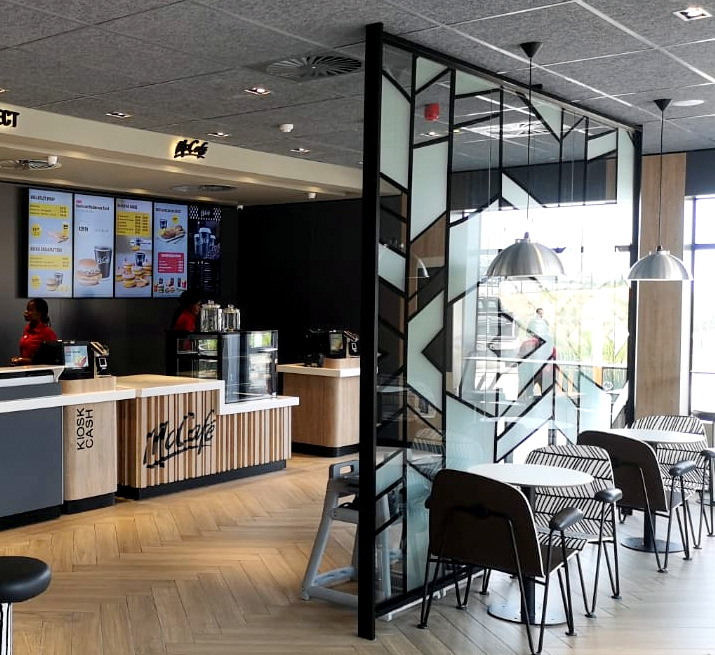
Here are some simple ways to update and refresh your QSR digital signage and technology systems.


1.    System-on-Chip (SOC) Technology

One technology basic is that the digital signage network employ System-on-Chip (SOC) technology. This facilitates the use of media players built into the screens, which leads to less downtime and technical issues, resulting in a more streamlined installation that saves on costs. SOC is also an integrated system that enables the screen to link into point-of-sale pricing, which in turn results in automatic updates to digital menu boards.

2.     Dayparting

Dayparting is when the time of day influences the content that is posted onto promotional screens and digital menu boards. Famous Brands has successfully employed this strategy, where breakfast or lunch options are specifically scheduled as screen takeovers at those times of day. It provides restauranteurs with a lot more flexibility and allows for speed to market.

3.     Weather-based content

Many external aspects determine people’s buying habits, from time of day to a QSR’s specific location or weather condition. Bespoke content based on location data is proving more popular and can be built into the planned marketing strategy many months ahead of time. This technology enables restaurants to upsell coffee with their meals on a cold day rather than cold drinks, automatically.

4.     Digital drive-thru’s

QSRs are relying more on digital drive-thru’s to effectively promote dayparting and weather-based content as well as integrate with the offers and products being promoted in-store. According to Daniel Padiachy, Chief Marketing, Communication and IT Officer at McDonald’s SA, looking to the future, McDonald’s is excited to investigate how Artificial Intelligence could change the drive-through experience. ‘With AI-powered number plate or facial recognition, we could recognise returning customers and offer them their ‘usual’ to cut the fuss out of ordering.’

5.     In-store music

Digital audio and music systems play a huge role in enhancing the in-restaurant dining experience and save franchisees hours of their time selecting, downloading, licencing and maintaining a music selection. Playlists can now be created and updated on a regular basis. Another benefit is that the type of music being played can be controlled and tailored specifically to the restaurant’s audience.

6.     In-restaurant WiFi

Offering WiFi in QSR establishments is one way of increasing the customer’s dining and/or ordering experience. It is an opportunity to get to know your customer, cut down on perceived waiting times, increase sales by sending personalised offers and reward brand loyalty. It can also be a way for your customers to promote your brand through social media sharing.

7.     Internal staff training

An integrated digital signage system can be used to provide staff in a region, nationally or internationally, with training via the in-restaurant digital screens or deliver other company information.

MOVING TACTICS
+27118070094 
chris.day@movingtactics.co.za
www.movingtactics.co.za

VMLY&R ECD Chosen As Ambassador For South African Executive Jury At Gerety Awards

Jacquie Mullany, Executive Creative Director at VMLY&R in Johannesburg.

New for Gerety 2020, is an executive jury in multiple locations globally, whose task it is to choose agency and production company of the year from their country. Jacquie Mullany, Executive Creative Director at VMLY&R in Johannesburg has been announced as the ambassador for the South African executive jury.

The Gerety Awards is the latest global advertising award programme to recognise global talent who define and refine the standards to which their craft should be held. ‘South Africa has an incredibly diverse advertising industry, well known globally for producing award-winning work. I’m really excited at the prospect of working with some of my most respected peers to seek out the best we have to offer and share it on the global stage,’ said Mullany.

In addition to Johannesburg, executive jury sessions will be held in Bangkok, Berlin, Buenos Aires, Helsinki, Istanbul, London, Madrid, Melbourne and New York. Each city will bring together some of its most respected agency and brand leaders to choose the shortlist, which will be announced mid-June. Shortlists are submitted to an international grand jury of creative experts for final evaluation. Winners are determined based on scores achieved across the board, regardless of product or medium. Entries for the Gerety Awards 2020 open globally on 1 January.

VML SOUTH AFRICA
+27115553800
www.vml.com/southafrica

Brands Should Start Tracking The Customer’s Full Journey

Michael King, Managing Director of Reprise Digital, an IPG Mediabrands company.

According to Michael King, Managing Director of Reprise Digital, an IPG Mediabrands company, in South Africa, financial industries, especially the top insurance companies, invest more money into Paid Search than most of the remaining industries put together.

In the digital world, it’s a given that Paid Search advertising is important, but only a few industries, except the finance and eRetail sectors, are capturing the true value this channel has to offer. Most brands are missing a trick by not tracking the full customer journey.

The reason for this is because these industries track the lifetime value of a customer and not just the initial sale value. Looking at profitability from a different angle allows marketers to see the true value of a ‘new client’. Car insurance as an example is one of the most expensive keywords globally and can cost advertisers upward of R650 per click, depending on how much they’re willing to pay to compete against other insurance brands. This is an astronomical amount of money – if brands wanted to truly compete in this space, they could be spending upwards of R150,000+ a day on Paid Search alone.

So how can it be possible that insurance brands invest 30% plus of their entire marketing budget on this channel? Simply put, it’s what companies call a P-Factor or Profitability Factor. This is a simple profitability equation that allows brands to measure the value of a sale over time. Let’s use car insurance as an example – if I’m insurance company A and I spend R5000 on Google Ads today, I’ll most likely generate quite a few visitors to my website who will either complete a quote online or want to talk to a sales advisor.

As a result of the quotes generated, I may sign up a new client who would hypothetically insure their vehicle at a monthly premium of R1000. At a glance, you might say that this channel is loss-making as the amount of ad spend far outweighs the sale value, but the inverse is actually true. Car Insurance is a service that consumers sign up for on a monthly basis, which means that as Insurer A, the company will be generating revenue from the initial sale over a long period of time. This is where P-Factor comes in. This equation helps us understand how long our new customer will need to stay insured with us before we cover the initial R5K adspend.

Ad Spend divided by initial sales value = P-Factor. So, R5 000/R1 000 = a P-Factor of 5. This means that our new client will need to stay insured with the brand for five months before it ‘breaks even’ on advertising spend. If we then incorporate the fact that the average insured person stays with their insurer for 12-18 months, the profitability conversation very quickly changes to a positive one. In this example, the company would be making money from our new client for anything between 7–13 months.

Every industry is of course different with their own unique challenges but the learning for marketers has to be that the future for brands is not only tracking a customer’s journey online until the sale is complete, but tracking the customer for the entire time that they’re associated with your brand.

REPRISE DIGITAL SOUTH AFRICA  
+27728721245
reprisedigital.com

ACA Rebrands Apex Awards As Effie Awards South Africa 2020

Effie Awards South Africa replaces the highly respected APEX awards, held annually in South Africa. The Association for Communication and Advertising (ACA), the official representative body for the Communications and Advertising profession in South Africa, has partnered with Effie Worldwide to launch the annual Effie Awards Programme in South Africa.  

Brands and their agency partners will now have the ability to receive global recognition for their most effective marketing and communications campaigns, with the awarding of an Effie viewed by media agencies, marketers and advertisers worldwide as a respected global symbol of achievement.

Mathe Okaba, CEO of the ACA said, ’Effie’s mission is to lead, inspire and champion the practice and practitioners of marketing effectiveness and we take great pride in hosting the first globally recognised marketing effectiveness awards programme in South Africa in 2020. The ACA has championed effectiveness in marketing and communications and the incredible work executed in our market. It is with great excitement that we officially launch the 2020 season of Effie South Africa, and look forward to catapulting our local profession into the global arena.’

Launched in 1968, Effie celebrates effectiveness worldwide with over 50 global, regional and national programmes across Asia-Pacific, Africa, Europe, Middle East, Latin America and North America. Effie South Africa joins the Effie network as the 49th national programme celebrating and Awarding Ideas That Work. 

‘The opportunity now exists to benchmark against the most effective work from all over the world. We invite all agencies and marketers to enter the programme in order to expose and celebrate their work that worked. There is no strict definition of effectiveness within the Effie programme. Effie recognises all forms of effectiveness —awareness, sales, behaviour, etc. The determining criteria for measuring effectiveness will be considering how challenging the objectives were, and the significance of the results achieved against those objectives,’ concludes Okaba.

‘Effie is proud to partner with the ACA to launch Effie South Africa,’ said Traci Alford, President and CEO, Effie Worldwide. ‘As a global forum, Effie provides a platform for marketers to celebrate the most effective marketing around the world, while establishing benchmarks that will drive our industry forward. We welcome South Africa to the global Effie network, leading the way as our first national programme in Africa, and look forward to showcasing and learning from this year’s winners and finalists.’

Effie South African finalists and winners will receive points towards the Global Effie Index, which ranks the most effective marketers, brands, holding companies, agency networks, agency offices and independent agencies globally. The Effie Index will also determine the local rankings.

The Effie Awards South Africa Call for Entries will be made in the first quarter of 2020.  Entry workshops providing guidelines, tips on how to enter the awards, requirements, case study presentations and more will take place as follows:

Booking will be essential for the workshops as space is limited. Email melanie@acasa.co.za or contact ACA.

ACA SOUTH AFRICA
+27117812772
ceo@acasa.co.za
www.acasa.co.za

It’s Not Always About Reach, Frequency And Impressions For Brands

Andile Qokweni, Business Unit Manager at The MediaShop.

KFC identified the need to turn the #KFCProposal story that begun at one of their stores into a positive legacy. By identifying the opportunity, they made it distinctive for their brand; they offered an experience and one could go as far as to say it was embedded into their ‘Add Hope’ initiative. Even if this was not targeted at kids per say, it still fits into that ‘bucket’, states Andile Qokweni, Business Unit Manager at The MediaShop.

This is after 8 November, where a man was spotted proposing to a woman at a KFC. The man was recorded on camera and his actions were very quickly shared on social media. The initial response to this noble action was very negative – one person on Twitter ranted, ‘SA men are broke they even propose at KFC…They have absolutely no class, I mean who proposes at KFC?? #KFCProposal’. 

But here was an opportunity for the brand to turn negative sentiment to positive because love is inherently free, it cannot be bought, sold or traded, even though the initial sentiment alluded to the fact that in modern times there’s a value associated to love. KFC as the brand to really bring all of this together, lived up to the principles above but in my opinion many of the other brands just wanted to jump onto the bandwagon. 

As soon as KFC saw the opportunity to reinforce some of these ‘love’ principles, the video went viral, and a nationwide search for the couple began with South African social media going into overdrive to find Nonhlanhla Soldaat and Hector Mkansi, the country’s newest sweethearts. Engagement offers went through the roof as KFC gave consumers incentives to help them find this couple.

McDonalds responded as the brand which ‘loves things’, offering an all-expenses paid trip to Cape Town for the Toni Braxton concert. Standard Bank offered to clear the couple’s debt – if they are Standard Bank customers. Audi offered the couple luxurious transport to their wedding destination. Puma offered clothing, Huawei gave the couple phones to take pictures on their honeymoon. KroneMCC would also ensure the newly-weds are toasted with some fine sparkling wine and many, many more brands got in on the action.

South Africans were now calling it ‘their wedding’ and by the end of the day, 30 brands had come forward to offer an additional experience for what had started as a negative tweet about proposing at KFC. So it’s clear, brands can mobilise and put aside rivalry or competition and do what is seen to be right by consumers and the general public.

This is where I’m going to flip the script a bit – at what point did this reach saturation? Was it after the tenth brand got involved, or was it after the third bank made an offer? Or maybe after the fifth FMCG brand offered the couple food? Don’t get me wrong, I would love the country and all its blue chip brands tripping over themselves to make my wedding a success, but as a marketer I did take a step back and ask some tough questions.

If I was a victim of the recent KZN hurricane and storms for example, would I not expect these brands to offer the same level of support for me and why that couple for that matter? Many South Africans will tie the knot as this is wedding season after all, so why are brands not lining up to assist them?

If we refer back to The MediaShop’s Media Landscape series where Maggie Pronto, Isla Prentis and I looked at what type of content works, we touched on the importance of relevance of content produced by brands for consumption and we arrived at five key things, which distinguish great content.

  • Move at the speed of culture.
  • Be distinctive.
  • Offer an experience.
  • Embed your purpose.
  • Invest appropriately.

At the recent AMASA Awards, one of the judges, Wandisile Nkabinde, mentioned that for brands to be successful it’s not just about arriving, it’s about how you arrive. Julio Rodrigues then went on to say it’s not just about pushing performing metrics all the time, it’s not always about reach, frequency and impressions, and this is exactly how I feel about some of the brands that joined the party very late. It’s not for me to say who those brands are, but the only questions that need answering now is ‘Who is flying me to the wedding and who will pay for my accommodation?’

THE MEDIASHOP
+27112584000 
www.mediashop.co.za

Four Top South Africans To Judge The One Show 2020

Bridget Johnson (The RiverBed Agency), Keith Manning (TBWA\Hunt Lascaris, Johannesburg), Grant Sithole (Avatar, Johannesburg) and Tammy Retter (Ogilvy, Johannesburg).

Four top creatives from South Africa (SA) are amongst the 200 top creatives from 35 countries who will judge work from around the world for the One Club for Creativity – the world’s foremost non-profit organisation celebrating creative excellence in advertising and design.

The four jury members fro SA and disciplines they will judge are: 

  • Bridget Johnson, ECD, The RiverBed Agency, Johannesburg (Film)
  • Keith Manning, ECD, TBWA\Hunt Lascaris, Johannesburg (Intellectual Property)
  • Tammy Retter, group head, Ogilvy, Johannesburg (Radio & Audio)
  • Grant Sithole, CCO, Avatar, Johannesburg and Cape Town (Radio & Audio)

The complete list of The One Show 2020 juries can be viewed here.

Kevin Swanepoel, CEO, The One Club for Creativity said, ’The quality of jurors has long been a hallmark of The One Show. This year’s juries consist of the industry’s top tier of creative thinkers and doers from around the world.  They judge work through the lens of creativity of ideas and quality execution, and use our robust judging platform featuring proprietary, state-of-the-art voting and scoring technology.’

Work can be submitted now to The One Show 2020 at http://www.oneshow.org, deadline for entry is 31 January 2020.  

THE ONE SHOW 
oneshow.org

Creativity: A Buzzword Or A Real Marketing Commodity?

Suhana Gordan, ECD at the DUKE Group.

The organisers of the Nedbank IMC Conference 2020 (Galleria in Sandton, 19 March 2020) asked three industry heavyweights who will be speaking at the conference to define creativity. 

Define creativity

Pepe Marais, Nedbank IMC 2020 Master of Ceremonies and Group CCO of Joe Public United, believes that creativity is simply the ability to think. ‘It’s the ability to think beyond our societal restrictions. Creating new ways and means in which to take the world forward and the ability to think conversely to the norm.’

Alistair King, Co-founder and CCO of the King James Group, added that creativity is the simple reminder that we are not robots or drones. ‘Creativity means that it’s as important to feel, as it is to think.’

Suhana Gordhan, ECD for FCB Joburg, believes that creativity is about feverish curiosity and an innate ability to see beyond what others see. ‘What sets creative people apart is the way in which they can wear their skin inside-out. Only by being a constant and keen observer of people, can you find the extraordinary in the ordinary.’

Is creativity what makes marketing work?

King believes that creativity is to marketing, what flavour is to food. ‘It’s not essential, but it is absolutely preferable if you want a campaign to be palatable, or even enjoyable.’

To Marais, there’s more to making marketing work. ‘There are many more ingredients to this very complex pot called marketing, like product quality, distribution and price, as well as brand purpose and strategy. Simplistically, what makes marketing work best is when all of these aspects work together.’

Gordhan added that creativity and marketing need each other. ‘But we need to do more than just make them work. These days, if marketing just works, it’s not good enough. I think that great creativity starts with great marketing. It starts with knowing the right problem to solve and finding ingenious ways of solving it.’

Have marketers and advertisers lost the ability to be creative, or is it just being done differently?

‘I don’t think creatives have lost the ability to be creative. But I think that creativity is being hampered by a hyper focus on science and systems. We’re a little too obsessed with the science of marketing and we’ve forgotten that a significant part of what we do is not scientific. In our pursuit of methodology and models of understanding the mind of the consumer, we’re in danger of losing their hearts,’ said Gordhan.

Marais added, ‘In our agency we push for more time and focus on creative purity (without any deviation from the brand’s strategy), and less focus on ticking boxes and laborious processes. Pretty much the way advertising used to be done before we went and complicated it.’

Does creativity work?

‘People are in search of meaning. If brands can find greater purpose, it can help shape a better world. The largest media expenditure available to mankind backs the tsunami of negative news that drowns us every day. The only money available to us to counter all this negativity, resides within the hands of our marketing fraternity. Now if only we could use it to inspire,’ said Marais.

King believes that it’s only through the pursuit of new ideas that we advance and grow as a species. ‘We are essentially moved by creativity, including brands. Most marketers I’ve ever met wish to be associated with innovative marketing, but that intent gets derailed. I have a theory on what’s holding us back, which I will be talking about at the Nedbank IMC 2020.’

The Nedbank IMC Conference a stellar line-up of 18 speakers will be giving attendees insights into various concepts, including creativity in marketing.

NEDBANK IMC CONFERENCE   
www.imcconference.com

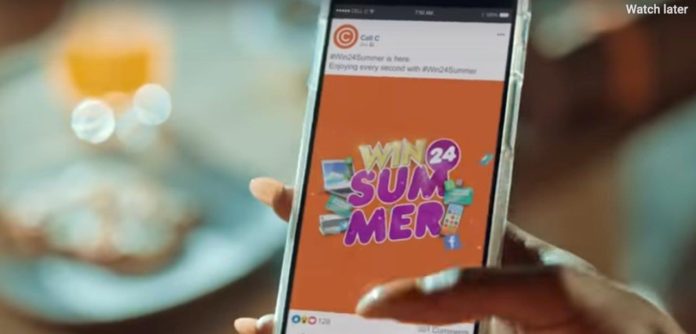
McCann1886 Launches Cell C Summer Ad Campaign

Devised by McCann1886’s creative team, led by Executive Creative Director Gareth Lessing, the 360 degree campaign includes television, radio, Out-of-Home, point-of-sale, print and digital executions, activations and promotions, internal communications and PR as well as social media and a micro-site dedicated to its competition element.

Cell C’s newly launched 2019 Summer campaign is a massive consumer promotion whereby millions of cash prizes are up for grabs. Executive Head of Marketing, Hazel Chimhandamba said, ‘The Cell C team briefed McCann1886 to develop a summer theme to bring Cell C to life and drive meaning behind the brand, its disciplines and verticals, and its offerings.’

‘Doing this, we knew, would continue to build equity behind the brand, stand for something, stand out and connect with people in an emotional and real way. The agency’s response was a campaign heroing social inclusion, of bringing people together by sharing how each of the millions of South Africans live and share during the summer – the Cell C way,’ she said.

According to Lessing, a key consumer insight leading to the development of the campaign was that – when it comes to summer – you never want it to end. ‘No matter how long the months, the holiday or the party, it just never seems enough,’ he said. ‘As a result, everyone wants to enjoy every second and cram as much as they can into the summer months of the year.’

‘Leveraging off this insight to answer the brief, we created a TV commercial that showed a 24-hour summer – featuring scenes ranging from sunrise, to sunset and midnight celebrations – to drive home that, with Cell C, anyone could have a 24 summer. And, because not everyone’s summer is the same, we added as much variety into the commercial as possible to demonstrate the diversity of our consumer, as well as the season.’

‘Bolted onto this fun, fresh and resonating piece of communication was the irresistible draw of a competition. So, not only could consumers enjoy 24 summer, download 24 summer, party 24 summer, binge 24 summer and get the best deals 24 summer, they could WIN 24 Summer.’

The many locations included Happy Island (pool scene), Breeze Block Café, Brixton (opening scene), Eldorado Park (children and oupa scene), Sophia Town (dancing near car scene – at night), Emmerentia (party in the rain – at night), Pirates Club (Sharks and Tik Tok scene), Milpark Skate Park (skate boarding), Northcliff Hill (viewpoint), Balfour (road trip) and Witieshoek and Drakensberg (man and dog).

MCCANN1886
+27115666000
mccann.co.za

Email Marketing Still Delivers High ROI

Email Marketing Still Delivers High ROI
Image source: ghanatalksbusiness.com

Jason Liebenberg, Business Unit Director, Hoorah Digital, says that despite the proliferation and increasing ubiquity of channels like instant messaging and social media, email remains a powerful way for brands to reach their audience, and the reasons for this are simpler than one might imagine. 

Two-hundred-and-eighty-one-billion. That’s a lot of emails being sent every day by some four billion email users around the world. And while many of us feel like we’re on the receiving end of about one million a day, at least, email isn’t going anywhere. Particularly not for marketers and advertisers, and that’s because email continues to outperform most other channels when it comes to return on investment (ROI). 

Preference 

Email’s user numbers are higher than those of any other digital customer communication channel, which gives it a headstart, but it is also people’s preferred form of digital communication. Personalised emails have a 51% open rate, significantly higher than the industry average that hovers around 13%. The click rate on personalised emails is also worth taking note of. At 18%, it too is significantly higher than the 0.9% industry average. Much of the research on the topic suggests that the preference for email holds true across industries, including travel, retail and entertainment. 

Proven ROI 

They say the numbers don’t lie and with a potential return on investment of up to 4400%, according to OptinMonster, it’s easy to see why marketers aren’t unsubscribing any time soon. The main cost factor in email marketing is building the database, but once you’ve got that, the cost of sending emails is negligible. With email marketing, it is typically also people who are genuinely interested in your product or service who opt-in in the first place, which means you’ve already got a captive audience. OptinMonster further highlights that the average open rate for email is around 23%, with a click-through rate of close to 4%, which far outweighs the combined engagement rate of other digital channels. 

Personalisation 

Stats show that over 90% of consumers are more likely to shop with brands who recognise, remember and provide relevant offers and recommendations. Numbers like these highlight that personalisation is not a nice-to-have but a central part of a dynamic, results-driven email marketing strategy. The strategic interpretation and application of big data not only makes it possible but also relatively easy to create mailers that demonstrate the brand’s understanding of the consumer’s likes, preferences and needs. 

Smart, smarter, smartest 

If email is to retain its competitive edge, it needs to keep evolving to stay contextually relevant. Data is everything these days and email marketing, too, benefits from the strategic incorporation of data insights into its universe. Things like behavioural data and geolocation help to ensure that consumers receive the right information at exactly the right time. 

Data is at the heart of concepts such as a single view of the customer (SVOC), hyper-personalisation, and micro-segmentation, which are all key to an organisation’s ability to build and create the kind of personalised email communication that customers not only prefer, but also expect. 

300 billion and beyond 

Ultimately, it’s up to each organisation to ensure they make the most of email marketing through a strategic, considered and relevant approach. Email’s edge is that it prioritises the individual experience and marketers are best served to ensure their efforts seek to retain this edge. 

HOORAH DIGITAL
+27103125733
info@hoorahdigital.com
www.hoorahdigital.com

Developed Countries Outsourcing To South African Marketing Agencies – A New Trend

Image source: www.digitalfire.co.za

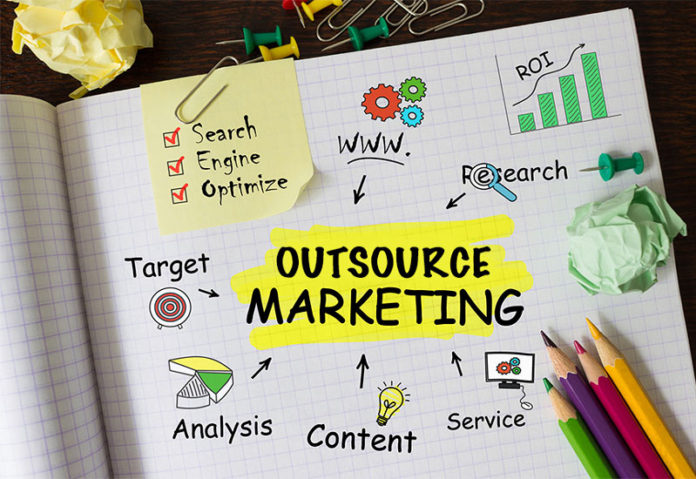
More and more companies from developed countries are outsourcing to South African marketing agencies to run their campaigns, due to tightening margins from competition and the increasing cost of employing local talent, says Justin Lester, owner of Ruby Digital and co-founder of Smart Marketing Podcast.

The biggest digital marketing trend we’ve seen recently is a shift by English-speaking first-world companies towards South Africa. Ruby Digital has seen a five-fold increase in enquiries from abroad over the past 12 months. Specifically, we’ve seen the most enquiries from East and West Coast America, the UK, Israel, Australia and New Zealand. 

Initially, companies from those countries were faced with two choices: they could use local marketing agencies or outsource to, typically, South-East Asian countries. Their home countries produce excellent content, but their prices tend to be exorbitant. In contrast, South-East Asian marketing companies, although much cheaper, tend to produce lower-quality output, particularly when it comes to creating good English content. These agencies tend to be found wanting when it comes to taking on more competitive campaigns.

But now these companies have a third option: working with a South African agency. South African marketing agencies offer high standards of work, but at a much lower cost – sometimes up to 50 percent less than what these companies would pay locally.

What is causing this trend?

There are multitudes of factors at play when it comes to any digital marketing trend. But for foreign companies choosing South African agencies, we can expect the causes to be as follows:

The weakening Rand

As of December 2019, $1 is worth R14,58. This time last year, it was worth R14.00. Therefore, the fact that the rand continues to depreciate against other currencies means that foreign companies can take advantage of the exchange rate, and use their higher buying power to get more value for what they spend on advertising.

Ease of communication

South Africa is located in an advantageous time zone. For example, South African agencies are able to communicate with Australian clients in the morning. Then, during the course of the day, they are able to liaise with clients in the UK and Israel, followed by American clients towards the end of the day.

Additionally, the fact that South Africa is largely an English-speaking country, and shares many cultural similarities with other Western countries means that communication is effective and both parties are able to understand each other well.

International recognition

South African agencies with international recognition will more easily attract foreign clients than those without.

How have South African agencies reacted?

South African agencies have certainly caught on to the fact that there is a large segment of the international market that they should focus on, and have reacted accordingly. Several agencies have begun to target Australia in particular, and have become quite well-established there.

South African agencies are focusing on Australia and not other countries like America, because there is a lot of saturation in those markets. There are many more competitive companies that are already established there, making it harder to gain a foothold.

There are a lot of opportunities for South African marketing agencies looking to expand their operations – though they may want to look beyond South Africa for potential clients.

RUBY DIGITAL
www.rubydigital.co.za

This is Modern Marketing