Home Blog Page 349

Tractor Outdoor Offers Polo Free Advertising To Drive Face Masks For Commuters Campaign

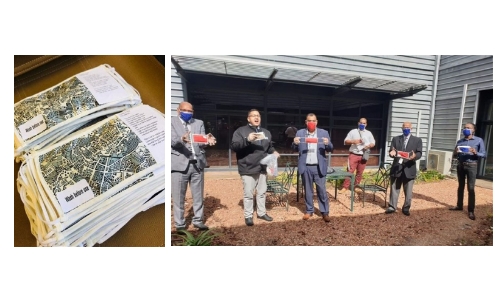
As a means to assist Polo in their effort to do good for the community, Tractor Outdoor has stepped forward to offer free advertising to Polo around the city of Cape Town on its DOOH network where these adverts will be visible at all crucial spots.

While the world is battling through the COVID-19 pandemic and all the uncertainties and difficulties it has brought with it, there is some sense of comfort in knowing that those who can, have come forward to help communities in any way that they are able.

Tractor Outdoor is making sure that the message is delivered successfully to the right people, ensuring that the commuters are aware of these face masks and that they reach the people who need them the most.

The campaign comes after realising the difficulties that essential service workers experience every day, especially those that are still reliant on public transport to get to work. Polo has pledged 250,000 cotton face masks to these selfless individuals. The shortage of face masks has been a major challenge, not only for South Africa but for most countries around the world. Not having enough face masks puts these essential service workers at a greater risk of contracting the virus.

To try and assist with this shortage, Polo has put together a task team in their shirt factory in Atlantis to manufacture these cotton face masks for commuters. Made from cotton fabric, these masks are washable and reusable. While these face masks are not medical masks, they still offer an important protective barrier for commuters.

TRACTOR OUTDOOR
www.tractoroutdoor.com

Email Opens Have Increased During Lockdown

JanDirk Engelbrecht, Managing Director at Everlytic.

JanDirk Engelbrecht, Managing Director at Everlytic, states that while consumers are already feeling the economic pain induced by COVID-19, their day to day needs are unlikely to change much.

However, for marketers, the brand conversations and value propositions placed before them must be adjusted and tailored. By leveraging smart digital messaging tools and data-driven insights during the crisis, marketers can reach consumers in an affordable, impactful way, at scale. 

While South African business owners scramble to mitigate the devastating economic impact of Coronavirus and an extended national lockdown, marketing teams have to adjust quickly to a radically altered business and communications landscape. 

During the lockdown, we have seen remarkable – and unexpected – email open rates (outperforming what is experienced during the annual Black Friday shopping bonanza month of November), indicating that consumers are both highly receptive and attentive at this time. For marketers, it’s imperative to harness this unexpected window of opportunity by keeping up the momentum with thoughtful, well-crafted messaging across multiple channels. 

The capacity to do so, of course, depends on how marketing teams and leaders adjust their existing strategies and budgets to cope with the unexpected shock of the pandemic. During the lockdown, we have observed interesting behaviour from marketers sitting within businesses that cannot operate virtually.

Some marketers are ‘hoarding’ marketing communication spend until after the lockdown when consumers are more able to act upon their calls to action. Other C-suite executives are ‘banking’ the budgeted marketing expense to put a band-aid on the haemorrhaging of lost income – thus leading to an abrupt discontinuation of marketing communications.

SA is tuned in

Yet such a halt on messaging makes little sense when assessing how responsive and engaged many consumers are at this time. Indeed, in terms of consumer attention within the context of direct messaging, engagement rates are phenomenally high. 

There are various potential reasons for this, such as: there are fewer messages competing in inboxes; consumers are more open to communication whilst working remotely; many temporarily economically displaced consumers have discretionary time available to spend reading messages; or consumers’ entertainment and social time (out of home) has been clamped down on and they now have more time to read messaging via digital channels. 

Arguably, a combination of these factors could be triggering the high engagement levels during a turbulent period. Email open rates are 26.95% higher during lockdown compared to the Black Friday month of November 2019 – whereby marketers staggered their offers across the month last year, and the click rate registers 6.38% higher during lockdown. With this unique ‘lockdown context’ in mind, what should marketers do from here? 

Plotting the way forward

In a time of radical uncertainty, we can look to tried and tested models for some possible answers and future scenarios. Game theory, for example, is the science of strategy – and contains some valuable nuggets for marketers in this context. In essence, it is the study of mathematical and logical models that identify dominant strategies amongst strategic decision-makers. It is also universally applicable, and can be used to determine the best communication strategy going forward. 

The following is called a pay-off matrix. This very simple example has two clear strategies available to competing marketers: send or don’t send. The numbers inside the matrix simply represent basic outcomes: 0 = no benefit or disadvantage, 1 = benefit, and -1 = disadvantage.

You

Send

Don’t send

Competitors

Send

0;0

1;-1

Don’t send

-1;1

-1;-1

This simple table shows that when you consistently send well-crafted and valuable messages throughout the lockdown (whilst your competitors don’t), you reap a disproportionate share of consumer attention – and the engagement with your messaging is unopposed by competitors. You therefore both have a benefit, as well as your competitors being further disadvantaged due to the loss of traction for their brand.

The inverse scenario is also true in favour of your competitor. If everyone keeps sending, it is business as usual. However, if nobody is sending, this represents the worst scenario because everyone would lose traction and have to rebuild momentum after the lockdown. Given the above model, sending is clearly the dominant strategy as it provides the best outcome…regardless of which strategies your competitors apply during the crisis. 

Planning for post-lockdown

In our view, this dynamic strategic evaluation can be extended to consider what might happen after lockdown ends. Arguably, there will be a short-term ‘super-influx’ of communication across all direct messaging channels which is likely to flood inboxes. This will likely lead to an exponentially geared negative impact on engagement across all channels as the noise drowns out messages (i.e. every competitor that releases its pent up waves of communication will make each individual competitor’s message far less likely to be engaged with…as a fixed pool of consumer attention is spread across exponentially more messages).

This further supports the strategy of continuing to communicate to lay the foundation for future success by keeping your brand top of mind through valuable content – and to generate leads to be able to outcompete competitors in the battle for consumer attention once the floodgates open again.

‘Buying attention’ becomes an expensive affair

When considering marketers’ complex challenges in terms of performance advertising networks, similar logic can be applied. So, those who banked their marketing budgets for locked down months will not have enough firepower to buy attention on the performance marketing networks, while those who hoarded begin to release their bolstered budgets to seek to make up for lost months (and simply outbid hoarders’ normal marketing budget for the month).

This will potentially both drown out those who wrote off budgets, and significantly drive up the cost per engagement on the ad networks – as unusually high volume and concentrated ad buying takes place. Naturally, this equation will burn through the hoarded marketing budgets and create a negatively geared effect where, for example, doubled-up budgets can’t unlock double the impact as marketers would have hoped (because prices might double accordingly based on heightened competition!)  

Future-proof your business now

When testing this theory with one of South Africa’s leading search experts, Brett Perlstein, CEO and founder of SearchKings Africa, a strategic partner to Everlytic, he affirmed, ‘Since lockdown commenced, as most businesses cut budgets or stopped marketing completely, we are seeing cheaper cost per click, lower cost per acquisition and greater impression share on the same or smaller costs.’

Reflecting on this trend, he added, ‘It is a scary time – we know, but not the time to cut brand marketing spend. Brand building is, and always has been a long-term investment. Those businesses that hold their nerve now will be the ones that will survive this period as well as future-proof for the country’s economic roller-coaster ride, which will naturally follow.’

According to Perlstein, research demonstrates that companies that increase their advertising and marketing communications budgets during recessions grew sales much faster than their rivals – not only during the downturn but also beyond it.

‘In the meantime, as the virus puts a quarter of the global population under lockdown, online viewership is up (and audiences are increasingly engaged) which spells opportunity for your business online,’ he noted. 

In my view, when interrogating the cause and effect in the context of marketing communications as described above (which are theoretical in nature), the dominant strategy – regardless of what competitors do – is to continue communicating with your customers. For marketers, the golden thread must be targeted, thoughtful and frequent communications that both nurture and build existing business to consumer relationships.

EVERLYTIC
+27114476147
sales@everlytic.com
everlytic.co.za

Roland DG South Africa And Media Partner Sign Africa Announce Top TikTok Challenge Winners

Roland DG South Africa has announced the top three winners from its Roland Unleashed Competition, where the public was invited to submit their original TikTok videos. Sign Africa was the proud media partner of this challenge.

Roland called upon the public to submit uplifting videos to brighten up this lockdown. This was a competition to inspire and to lift up our spirits during these uncertain times. The aim was to show that no matter how tough things get, the beauty of the human spirit always triumphs. There were a total of 833 entries submitted, with 926.5K views.

The main prize winners are:

1. You Survived the Sickness – Kyla Joubert – @kcjoubert
2. Unleashed Singing – RealBiggie – @biggie454
3. C CLUB CREW – Jonathan Franks – @jonsyfranks

Prizes for top 3 most popular videos

First prize: R15,000 cash.
Second prize: R10,000 cash.
Third prize: R5,000 cash.

View entries on TikTok.

View daily winners.

Roland DG
+27 11875 9300
rolanddg.co.za

Reimagining Innovation And Creativity In The Time Of The Coronavirus

Shaune Jordaan, CEO Hoorah Digital.

According to Shaune Jordaan, CEO of Hoorah Digital, the internet and social media, which make information readily available in a scenario completely at odds with our reality 25 years ago, are meanwhile feeding rather than quelling the global state of panic.

Coronavirus is, arguably, like nothing we’ve experienced in recent history. It’s both remarkable and scary, and we’ll be talking about it for decades to come. Conversely, however, we would not have been able to respond as proactively as has been the case to date if it were not for the fact that we do have these tools at our disposal.

Some of our key findings and learnings:

Ways of working

Remote working can be fantastic. There are so many tools and resources that allow for this, so employees can continue functioning as a team. At Hoorah, most of our work happens in the Cloud through the Google Business suite. This means everything is accessible, almost like a virtual warehouse, to everyone, irrespective of their location. Could this new way of working mean we finally uncouple desk occupancy from productivity?

Moving forward with technology

Business cannot freeze in the face of fear. At the most fundamental level, the ability to adapt and progress is what defines a sustainable, successful business. Where possible, we need to use the technology at our disposal to weather the storm, so finding new ways to sustain ourselves in these uncertain times and into the future.

We should view the lockdown as an invitation to innovate – as entrepreneurs we are also problem solvers, and there is plenty of solving that needs doing. As long as we remain connected, however, we can find ways of working together to find solutions, to build more resilient systems and perhaps even to redefine the fundamentals of how we do business. Take comfort in the fact that history shows us that business always finds a way. Humans always find a way. Our adaptability and resilience is our great strength.

Seek opportunity in chaos

The world feels chaotic right now, but the great Chinese strategist and philosopher Sun Tzu reminds us in The Art of War that ‘in the midst of chaos, there is also opportunity’. What if we use this time to rethink our beliefs, particularly about consumption, conservation and creativity? What if we open our minds to the possibility of emerging from coronavirus as a society that is better equipped for an uncertain future, as nations with serious regard for the long-term impact of climate change, as communities who rethink our values in relation to what benefits the common good?

We don’t know what opportunities will come of this, but let’s remain open to the possibilities. Importantly, we need to find ways to keep working – because there’s no other choice. We cannot allow panic to prevent us from making progress. It’s true that that ‘progress’ may be redefined over the coming months, but we should embrace that.

Humans, more than any other species, change; we make, we innovate, we reinvent ourselves. Our challenge here – no, make it our goal – is to change for the better. Let’s approach Covid-19 as our generation’s opportunity to redefine how we think about our place in the world, particularly in respect of how we do business and the consequent impact on our environment.

HOORAH DIGITAL
www.hoorahdigital.com

YBP Supplies Non Medical Fabric Face Masks While Uplifting Communities

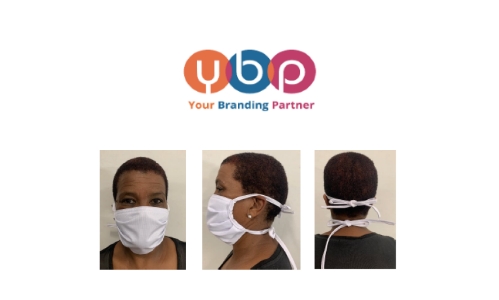
Your Branding Partner (YBP), in partnership with Unigraphics, has received official permits to remain open during the lockdown period to locally manufacture non-medical, non-surgical and re-usable fabric face masks in the hope of combatting the spread of the Coronavirus.

These face masks are manufactured by the company itself, local churches, communities and micro business. They closely monitor all their partners to ensure that strict quality is adhered to. Their current production capacity is 100,000 per day and 500,000 per week, which can be scaled if required. YBP are able to print any graphics, logos, colours or patterns.

YBP has also partnered with The Smile Foundation and are contributing towards their project to support frontline medical workers with Personal Protective Equipment (PPE) such as medical face masks and gloves. Not only does Your Branding Partner get to uplift and offer local communities work and give them an income during this lockdown period (and afterwards), but they also get the opportunity to give back to a most worthy charity. 

YBP’S Upliftment Programme

Several sewing machines are available at their warehouse and many more through a church home upliftment programme in the informal settlements they are supporting. One of their partners, Tarrkells, has access to many people from their church congregation and other churches that sew for him on a regular basis, so they have the capacity to produce these face masks and personally oversee the quality control.

This community is only too excited to be working and earning an income through this challenging time. ‘We have sparked much interest from local businesses and neighbouring countries so the potential for income to many of these communities through this lockdown period is needed and appreciated,’ said Lance Moor, Director YBP and Unigraphics.

The company uses three layers of quality, washable fabric. One size doesn’t fit all, so straps allow for any size head shape, including children. The mask also sits comfortably around your neck when not in use. The masks can be safely hand or machine washed with detergent up to 50 times (unlimited if necessary) and worn the next day. YBP manufactures face masks and abides by the International Centre for Disease Control’s testing guidelines.

Virus free: all staff wear masks and sanitise on entry and all the companies’ boxes are left to stand for three days before despatch. They do however recommend a wash before use.

YOUR BRANDING PARTNER
+27834401004
info@yourbrandingpartner.co.za
yourbrandingpartner.co.za

Loeries Announce Free 2020 Entries To Support Brand Communications Industry

A key focus of Loeries Creative Week, which will be held late in 2020, will be deep-dives into how society can overcome the impact of the COVID-19 pandemic and find ways to recover. With this in mind, entries for The 2020 Loeries – Africa and the Middle East’s most prestigious accolade for the brand communication industry – will be free. 

CEO of the Loeries, Preetesh Sewraj said, ’The COVID-19 pandemic has created challenges across society and the brand communication industry is no exception. The brand communication industry is an essential part of society and has been active in fighting the spread of the pandemic by working with governments to seed hygiene information, working with retailers to highlight where essentials can be bought and even working with various organisations to show businesses how to reduce the economic impact of COVID-19. We need to ensure that this industry is supported more than ever and we have decided to lend a helping hand to the industry by continuing to recognise the great work that has been done across Africa and the Middle East.’

Tseliso Rangaka, Chairperson: Loeries Africa Middle East, added, ‘The Loeries is a non-profit initiative and the key goal has always been to support the growth and diversity of the brand communication industry. This has been one of the most challenging times in our history and making the entries free will ensure that we maintain a robust brand communication industry which benefits all sectors of society.’ 

‘Our focus this year will be on Beyond COVID – the Loeries are poised to be one the first major events in the region which tackles this challenging subject,’ said Sewraj. ‘The need for great insights from thought-leaders from across business, healthcare and various governments is imperative if we are to move forward. The impact of COVID-19 will linger long after the infection curve has started to flatten so the Loeries Creative Week will be a platform to ensure that we curate some great insights on how to move forward in a world impacted by this pandemic.’

The decision to make the Loeries entries free this year was a unanimous board decision in support of the brand communications industry across Africa and the Middle East. The challenges faced by the Africa/Middle East region has necessitated the need to be innovative to ensure that thinking about a beyond COVID-19 environment is made accessible to a wide audience while taking into account the impact on the brand communication industry. 

Loeries Board Member, Dawn Rowlands, added, ‘I spend a great deal of time across Africa and the Middle East. A vibrant brand communication industry ensures that all sectors of society are supported, and this will only serve to strengthen our region. Making the entry free this year will ensure that vital messaging is recognised and forms a foundation for our next phase when we deal with a post-COVID-19 world. This could be one of the most important Loeries events held in its 42-year history.’

The entry deadline has been extended to 15 June 2020.

LOERIES 
www.loeries.com

SA Council of Shopping Centres Aims To Mitigate Effects Of Lockdown On Tenants And Malls

The South African Council of Shopping Centres (SACSC), South African Real Estate Investment Trust (SA REIT) Association, and the South African Property Owners’ Association (SAPOA) have encouraged consultations between businesses and landlords in an attempt to mitigate the devastating effects of the lockdown on tenants and malls.

This comes on the back of statements by many of the country’s largest chains who have said they won’t be paying rentals due to the lockdown. It is reported that a relief package was unveiled by a newly-formed alliance of retail property landlords, the Property Industry Group.

It is reportedly offering relief in the form of rental discounts of between 15% and 100%, as well as interest-free rental deferrals for April and May to help mitigate the impact on retail businesses that are not allowed to operate during the lockdown.

It is further reported that to qualify for the relief benefits, retail tenants will need to have an income of less than R80m and undertake not to retrench staff during the relief period. It is difficult to understand how this can be a requirement for relief. (It is NEASA’s view that it is naïve to believe that retailers will not be forced to retrench employees as a result of the lockdown and this requirement will probably exclude a lot of smaller retailers from the relief arrangement.)

Furthermore, an undertaking is given to the effect that all tenants whose accounts were in good standing at 29 February 2020, can be assured that there will not be any evictions for the next two months.

It is reported that landlords will, on a case-by-case basis, also consider providing relief for office, industrial and hospitality tenants where the lockdown severely impacted the tenant and where it is justified. It further suggests that tenants need to negotiate relief terms directly with their landlords.

This article was sourced from www.sacsc.co.za

Empathy Drives Human Connection That Leads To Memorable Customer Experience

Dr Sibongile Vilakazi, of Kantar SA.

According to Dr Sibongile Vilakazi of Kantar SA, there’s no better time than the COVID-19 pandemic for brands to show the utmost empathy.

The COVID-19 pandemic is dubbed the greatest global crisis since World War II. It has threatened our existence when we least expected it. Progressive business leaders were still thinking and talking about the need to transform their businesses to start putting the human/customer at the centre of what they do because it made business sense to do so.

The basis of memorable customer experience is human connection driven by empathy. Empathy is the ability to put yourself in another’s situation and feel what they are going through. So, companies that get customer experience right are those that spend time understanding their different customer types (or contexts), the mission or tasks customers want to accomplish, and the journeys they take to accomplish these.

They study the tasks and emotions associated with all of this, in order to be empathetic and touch customers emotionally where and when it matters the most. This is the essence of creating memorable customer experiences. Simplifying journeys and making it easy for customers to do business are the supporting pillars of customer experience, but they are not at the heart of it. The heart of customer experience is an emotional connection, especially in the moments where it matters most to the customer.

But the virus has forced us back to our core survival instincts as humans. Saving lives and staying alive is the most important task right now, which connects us all globally and has necessitated a shift in mindset. We’ve seen before in times of crisis (and war) that the basics of human survival are collaboration, a sacrifice of individual needs for the collective, and care for others. The coronavirus has, therefore, forced us to realise that at the core of our existence is our connectedness; the acknowledgement that ‘I am because you are’.

This is the fundamental lesson that businesses must take away from this epidemic – the stark reminder that good customer experience is not a reflection of how ‘woke’ a business is or simply a competitive advantage but in fact the blood that regulates the business. Businesses have been called to reflect on their purpose, as heads of state called for non-essential businesses to shut down during lockdown periods while essential services remained open.

The question for businesses not providing an essential service is, ‘what core human needs are you satisfying and how are you satisfying these needs?’ COVID-19 has forced all of us, at an individual and business level, to answer these existential questions of why we exist. If authenticity and empathy are not at the core of your brand’s offering and how you deliver it, your business is under threat. So, what should businesses do to purposefully use this time to create a memorable customer experience?

Back to basics: re-evaluate ‘why’ the business exists and what made you famous

During uncertain times, it’s natural to react and start taking desperate decisions to stay afloat. These decisions may not always be congruent with the reason the business was started and can threaten core issues of identity in the longer term. Most businesses are established to meet a human need and are sustained by good business models over time. So, surviving these difficult moments may require a re-look at some business models and assumptions in order to adapt them, but adapting these can be successful only if they are aligned with the business purpose. Example of brands that are doing this well are Burberry and Tesla.

Burberry is an iconic British luxury brand, established in 1856 by Thomas Burberry. Its most iconic clothing item is the trench coat. The Burberry trench coat was born during World War I, when an outdoor coat was adapted to become waterproof, to meet the needs of military personnel. It was worn by the British army in the trenches and today it is one of the most recognisable fashion statements. Now, the pressures created by COVID-19 on hospitals and hospital personnel has prompted Burberry to announce that the company is diverting its clothing production to produce coats for doctors and medical personnel who are currently in the ‘trenches’.

Tesla is an American company founded in 2003 by engineers and South African-born investor Elon Musk. Musk has a personal life purpose to save humanity from itself, which has influenced his business choices. For Tesla, Musk drove the business purpose of designing and producing electric cars at affordable prices to the ordinary consumer, in order to help ‘save the earth’ from carbon emissions. As a result of COVID-19, Tesla has since announced that they will be producing hospital ventilators for free and distributing them wherever they are needed globally, in order to help fight the virus and thus ‘save humanity’. These companies are just two examples showing what it means to be purpose-guided and adapting in a time of crisis to contribute to humanity.

Clearly connect your ‘why’ to your ‘how’

The ‘how’ of service delivery speaks to the mode of getting the service or product to customers and is often thought to be what customer experience or customer service is all about. Customer experience is the sum of the brand purpose, brand promise and how the promise is delivered, not simply the service delivery process.

During the lockdown period, brands have been challenged to review their service delivery channels to enable digital servicing models and respond to social distancing. Some brands will be able to seamlessly make the shift to digital, but the virus has highlighted what we’ve always known: that human connections and empathy are core to humanity. Just as we need oxygen to survive, we also need to meaningfully connect to others. Brands would be short-sighted not to effectively leverage this human truth.

As most businesses are born because of empathy through the desire to solve another’s need, it follows that the solution or service must also be delivered with empathy. Empathy can be delivered digitally, by ensuring that all systems and processes are frictionless and benefit the customer. Empathy can also be delivered face to face, ensuring that compassion is at the centre of every interaction.

Compassion can be expressed in many ways that are aligned to the brand purpose, just as Tesla has chosen to express compassion by making ventilators available to hospitals without charging for them. This kind of compassion breeds loyalty because it is what people ultimately remember when the dust settles, and they will reciprocate because reciprocity is instinctive to humans. This is another human truth to be effectively engaged.

Be resilient

Resilience is the ability to bounce back or recover from difficult situations. In his book, From Good to Great, Jim Collins writes that the companies that reach their next level of growth are those with the ability to bounce back from difficulties because they anticipate and plan for the worst. They are neither overly pessimistic nor overly optimistic, but they do have a touch of pessimism mixed with realism. They read situations and act timeously to prevent a catastrophe while leveraging opportunities.

This is what companies must do during this time. No one knows what the future will look like, as this crisis is a first for all of us and has changed life as we all know it, but companies must hold on to human truths. Companies must connect with staff, suppliers and customers at a human level. They need to imagine life after the impact of the virus and build meaningful connections that will attract goodwill and support.

In his book, Man’s Search for Meaning, author Viktor Frankl, an Austrian-born neurologist and psychiatrist who survived the holocaust, writes about finding meaning in one’s situation to develop resilience. He writes that he realised that in order to survive life in the concentration camp, he had to find some purpose.

He did this by imagining himself giving a lecture after the war on the psychology of concentration camps, to help people understand what he had gone through. Despite not knowing whether he would survive, he started drawing up goals for himself, based on the things he needed to do. This helped him rise above the immediate conditions, as resilience is a mental disposition that determines if one will survive or perish.

Companies must see this time as a gift to reimagine their business with renewed energy. They must envision the value they will add to their customers if they deliver authentic solutions and services that improve the lives of their customers, society and the planet. They must see customer experience as the lifeblood of the company and transform to integrate customer experience into all aspects of the business.

Source: Coutu, D. (May 2002). How Resilience Works. Harvard Business Review

Stock up on updates and insights to help your brand manage the effects of COVID-19 and prepare for the future on the Kantar COVID-19 page.

KANTAR 
kantar.com

Building New Ways Of Working And Thinking While Maintaining Visibility And Consistency

Sean Sullivan, Associate Media Consultant at The MediaShop.

Sean Sullivan, Associate Media Consultant at The MediaShop, drives home some key ideas on leading a team through a lockdown. Remote work does not make a remote team. 

To really help our teams to rise to the top and bring out the best in each other, we need to adopt new ways of thinking and being. If you are hoping that this will blow over and things will get back to normal soon then you might be averse to this idea because you may see the current situation more as a pit stop rather than a detour. 

But I want to encourage you to assume a longer duration of the current situation. John Sanei, a futurist said, ‘Act like we are never going back to normal’. I know that’s not what you want to hear but embracing the idea that this might last a lot longer is a necessary first step if you are going to assist your team in committing to this way of working.

I want you to know that I have had the same resistance. There is nothing that beats the energy that is created in a room when a team of talented and intelligent individuals are feverishly working on bringing new ideas to life. I just facilitated a brainstorm online and found myself thinking time and time again that ‘it’s just not the same’. And that’s exactly the point. It’s not. But, also, it’s not supposed to be.

We cannot build new ways of working on old ways of thinking

It took me some time, but I am now fully accepting of working with teams online. I enjoy it. I measure it differently, I approach it differently and I hope that you will make that shift too. Below you will find a few high-value ideas on how to lead a team during times of lockdown where isolation and distance is the norm.

Your visibility and consistency is everything.

Your presence, albeit virtual, counts for a hell of a lot. Be visible. Every single day. Show that you are leading, trying, inspiring, and supporting your people. Be consistent with showing up, but also in the way you treat the people on your team.

The bearable deadline and the three directives

What makes this experience so unsettling is that there is no end in sight. If there were, things would be easier. Seeing the clock countdown makes the unbearable bearable. It gives us something to aim at. Goals do this for us. They give us something to work towards. But the idea of quarterly goals has been disrupted. It’s impossible to have the exact same goals as you did before.

Therefore my suggestion to teams has been to set three directives for the next 21 days, a timeframe provides certainty and directives provide direction (these are not explicit goals but rather a high-level theme).

The magic question

A question is a gift that unlocks new worlds. It opens the door to a new way of understanding. One team I worked with really showed me the potential that this question has to reshape the entire dynamics of a team. And that question is: ‘What do you need from me?’

When team members turn to each other and ask this question, magic happens. Leaders should be starting this new transition and phase with this exact question posed to their team. It’s a simple question that can create a deceptive amount of depth in a team in a relatively short period of time.

If there is enough trust in the team you will hear people asking for things such as support, to embrace different ways of working, for more understanding, and for more responsibility. In a team that has no trust, you will hear generic, superficial requests.

Fix the meeting

The playground for teams today is a meeting. And as a virtual team, you will be spending a lot of time in virtual meetings, which can be notoriously bad and often frustrating. Effective meetings are the signature trait of high-performing teams. Guess what, if your team currently has a poor experience when meeting, then this will be amplified online, so, it makes sense to get this right.

Obviously the first thing to figure out is which platform you’ll be using. Test it. Make sure it works. This is virtual meetings 101. Once that is taken care of, you need to find ways to allow the meeting to flow. I have found that the best meetings always have a few agreements that allow for ultimate flow. 

Agreement 1: To the point

Keep in mind that what makes virtual meetings challenging is the same thing that makes working from home challenging: association. Our screens are associated with scrolling, browsing, opening new tabs and multitasking. So, guess what happens once the meeting starts? We check our phones.

We see new notifications coming in. We glance at our calendar. We sneakily reply to that WhatsApp message that came in. What we need is focus and conciseness. Therefore, the first operating principle for meetings is exactly that.

Meetings are short and everyone’s full attention is required

You could even make a ritual of everyone putting their phones out of reach at the same time as a grand physical gesture of locking into the call.

Agreement 2: involve them all

Everyone speaks at every meeting. Ever noticed how speaking cues are much harder when on a call? Sometimes it’s because of a tech issue causing a delay but other times it’s because your turn to talk is interrupted by one of the ten other tiny thumbnails on the screen that were also waiting to talk.

To this end, it might be a good idea to have someone chair and facilitate the meeting. It doesn’t always have to be the leader. It’s just the job of the facilitator to make sure that we get input from everyone in the meeting. 

Agreement 3: the Yoda

Appoint someone in the meeting who is willing to challenge what is being said. The Yoda needs to say what is not being said in the meetings, help resolve disputes and ensure that candour is being exercised to the highest level. An additional role of the Yoda, and the reason why I included this point, is to keep the conversation on track. It’s easy to get side-lined and go down a tangent. The Yoda recognises when we are going too deep down a rabbit hole and then pulls people back so that the meeting stays focused and on point. 

Agreement 4: check-in and out

This is a great little tool and, I cannot believe I am saying this, an icebreaker. A quick check-in before we start is about gauging where people are emotionally before engaging with the meeting. You might not see the power of this right away but I encourage you to give it a go.

I have seen first-hand how people check-in by acknowledging that they aren’t in a good place and this immediately provides a moment for the team to rally around their colleagues. The check-out is a similar process. Everyone ends the call by sharing how they are currently feeling and what they are committing to next.

Agreement 5: we will get better

Want a great way to improve meetings? Do a post-mortem. Ask your team how they think the meeting went and what could have been done to make the meeting more effective. Listen to the suggestions. Evaluate them as a team. Make small tweaks. Add things that work to the agreements list and keep refining the team operating system. What I have seen is that most teams need to start in one of three areas: communication, accountability and trust.

Communication 

Teams massively under-communicate, and once they go virtual, they either under-communicate even more or they fall straight over the edge and barrage each other with communication across email, video, WhatsApp, Slack and who knows what else. There are three components that we need to address here. 

Cadence, clarity, and channel.

  • Cadence: teams need to decide upfront what their communication cadence will be like. A golden rule is to have at least a daily huddle in which every team member gets to check-in. Preferably this is done via video. From here, we need to agree on when check-ins will happen or when we will convene to check on progress.
  • Clarity: digital communication lacks tone. No one can see your facial expression when typing. Additionally, writing can easily be ambiguous. Therefore, it’s important to translate tone – yes, you are encouraged to use emoji’s. And to ask yourself whether your writing is clear and concise before hitting the send button.
  • Channel: the quickest way to overwhelm your team is to use a thousand different applications and channels to communicate. Decide on a channel or medium and stick to it. A daily huddle is done on video. Status reports are done via text on Microsoft teams. Keep communications central.

Patience

This is a period of learning for everyone. You and your team will not get the whole ‘virtual team’ thing right without overcoming a myriad of challenges. But imagine getting to the end of this and having a team that functions well remotely as well as In Real Life (IRL). You would have created a flexible team that can operate even under the most strenuous circumstances. So, give yourself and your team some space to get this right.

Empathy in overdrive 

This is a crazy time for everyone. You think you understand what people are going through but you probably don’t. Neither do I. I am doing my best to imagine it but to be honest – it’s unfathomable. There are incredibly many levels to this including the entrepreneur who might lose his business, the entrepreneur who does, the employee who takes a pay cut, the employee who is cut. The freelancer with some work, the freelancer with no work. The family reliant on a breadwinner who has been retrenched. The sick, the elderly or the weak. Now is the time to be more compassionate and more understanding for what your teammates might be going through but also the world at large.

Fight the enemy

Having said all of that, now is not the time to back off. Remember what we are going through is not a pit stop, it’s a detour. Commit to a new way of work in full. Give your people something to fight for, because they already are. It doesn’t matter what the future brings. The reality is, for now, you have the opportunity to refine the way your team operates in a distributed and virtual manner.

Go for it! Commit. Become the best damn virtual team that you can be. And then, when things go back to ‘normal’ be the best IRL team that you can be, because ultimately what that creates is flexibility. A team that adapts; that evolves to meet the challenges it faces. And nothing, nothing, is more dangerous than a team that has mastered that. 

Source: Erik Kruger, team coach and keynote speaker.

THE MEDIASHOP
www.mediashop.co.za

Marketing Works – Even From Home

Nedbank IMC organisers give marketing pointers to be mindful of while working remotely.

• Don’t panic: knee jerk marketing will cost in the long term.
• If possible, create goodwill for your brand by finding meaningful ways to help a community in crisis.
• Keep measuring your marketing.
• Be very clear about the services your business is or is not offering during this time.
• Provide relevant information, communication that does not meaningfully inform will irritate.
• Keep connected with your customers on social media.
• Take the lockdown time to brainstorm and plan for the imminent comeback.

NEDBANK IMC 
www.imcconference.com

This is Modern Marketing