Home Blog Page 348

The OMC Supplying Advertisers With Accurate Viewability Of Digital Ads

The Outdoor Measurement Council (OMC) have introduced a formula to calculate the viewability of digital ads so their valued members can supply advertisers with realistic reach and frequency figures for their advertising on their digital panels. 

There is no more need to guess or divide by the number of ads in the loop. Have you ever wondered what the correct way is to measure the reach of a digital roadside billboard?    Ahh, that’s right – take the reach, if the media owner is one of our members, or the traffic count, if they are not, and divide it by the number of ads in the loop you may answer. Well, you’re absolutely incorrect!

To date, there has been no scientific way of working out what the reach is of a digital panel. We all know that the above method is wrong but we haven’t had the ability to find the correct information in order to get a workable formula. Many people have been using this incorrect method for a while now and therefore it’s time to set the record straight.  

Jorja Wilkins, OMC director, said, ‘DOOH is growing stronger and more relevant every day in the South African media landscape. The growth in this format is attributed to factors such as inventory development across media owners’ screen improvements or developments and dynamic creative optimisation. Advertisers have seen high value attributed to adding DOOH to their holdings over the years and the new OMC digital research methodology will enhance and grow the format even further. DOOH audiences are now standardised; accurately measured over different time frames and days of the week, delivering precise reach and impact figures to the advertisers. The versatility and credible data that backs DOOH places this format in a very strong position in the market.’

It’s been a long process of contacting OOH Joint Industry Research Committees around the world to find out what the best practice is, of speaking to a number of international research houses and finally finding the formula and pieces of the puzzle that will ensure figures are the most accurate possible.

The puzzle pieces include the static reach number of the panel, the speed at which the traffic is passing the panel, the day of the week or combination of days, the time of day, the duration of the advertisement being flighted, the number of advertisements in the loop and of course how long the loop is. This may sound really simple but when you try and find the traffic speed on a section of road, it’s not as simple as phoning a friend.

The OMC’s technical advisors, Kuper Research, have successfully found all the puzzle pieces for OMC’s members and have pulled together all the information into the workable formula. Lauren Shapiro, Director of Kuper Research said, ‘We have done extensive investigations across the globe to understand how we could best measure the viewability of ads on digital billboards. After much consultation, we have adopted a tried and tested formula established by a consortium of OOH media owners in Europe, Australia and other countries and we have applied this to our unique South African circumstances. 

‘We have been fortunate to have had the opportunity to learn and share information with the international world of DOOH research.  We are thrilled with the results and with the fact that the OMC can now provide DOOH media owners, buyers and planners with data that is mathematically based and not a simple guestimate’.

One may wonder what the big fuss is all about, so let’s take a look at a hypothetical example: a digital panel is situated on a national highway in Gauteng. Against a target market of All Adults, this panel reaches 735,000 over a 4 week period with a total of 6.7 million impacts. The average frequency of exposure to this panel is 9.1 over the 4 week period. This is what you would get based on the static panel analysis for this site.

This site, however, is a digital panel and has a loop of 6 ads and the loop is 60 seconds long. The average speed Monday – Friday during morning drive time 06h00 -09h00 is 55 km/hour. The client’s advertisement is 20”. Using OMC’s formula, the reach would be 300,682 people (40.9%) over a 4 week period. The average frequency will remain the same and therefore the total impacts would be 2.7 million.

This is a vast difference from taking 735,000 and dividing it by 6 as people have been doing to date. This incorrect way would give you a reach of 122,500 people. This digital formula is a game-changer for our OMC members with digital panels. We have no doubt that the media agencies and clients who are advertising on these panels will also be extremely happy that they can now report realistic results for campaigns whether a single panel or a package.

‘The new OMC digital research methodology now gives us the ability to measure reach, frequency and impacts for all our members’ digital billboards in a consistent way and will do a lot in standardising digital billboard audience figures in the industry. We can now accurately calculate day part audiences and do very accurate cost comparisons for advertisers, which will further drive growth for DOOH in South Africa which is very exciting indeed,’ said Jacques Du Preez, OMC director. 

OMC
www.omcsa.org.za

HKLM Positions Karingani Brand To Communicate Holistic Conservation Philosophy

HKLM was tasked with conceptualising the Karingani brand so that its new destination could be introduced to the rest of the world. Karingani is a piece of iconic Mozambican wilderness. Adjoining the Kruger National Park, this largely untouched reserve represents one of the last authentic wilderness areas on the continent.

HKLM created the brand positioning, brand identity and website for Karingani. In keeping with the ancient majesty of the landscape, a long-term approach to sustainable conservation has been implemented at the reserve to preserve and protect the land, its people and its wildlife. HKLM anchored Karingani’s positioning around this idea and the three most important aspects of the brand, namely the people, wildlife and conservation efforts.

The logo was inspired by the instantly recognisable butterfly-shaped leaves of the mopane tree, one of the most distinctive species in the region. These leaves represent metamorphosis and the emergence of something new and beautiful; fragile yet resilient. Throughout the day, mopane trees open and close their leaves to regulate moisture loss. Similarly, Karingani is committed to preserving precious resources but is also open to new approaches in conservation.

Mopane trees are vitally important to the local community and ecosystem. The Shangaan communities that neighbour Karingani rely on the trees’ hard, termite-resistant timber to build their houses and for charcoal for their fires. The brightly coloured mopane worms – caterpillars of the emperor moth – that feed on the leaves are an important source of protein. Traditional healers also use mopane leaves to dress wounds, and these trees provide welcome shade in which storytellers can gather their audiences.

HKLM director, Gary Harwood, said that the agency’s decision to use tree symbolism is indicative of a holistic conservation philosophy. ‘Many conservation bodies choose animals or birds as symbols, but we felt the mopane perfectly summed up Karingani’s potential to shelter, nourish and heal wildlife and people. It is a short step from the shape of the mopane leaf to the mathematical sign for infinity, a symbol which in this case represents the importance of sustainable conservation practices. It also speaks to Karingani’s long-term investor and donor-funded business strategy, and its focus on the interconnectedness of people, wildlife and conservation. The infinity symbol is reminiscent of the circle of life, and that Karingani is bigger than any of us and will endure,’ Harwood explained.

As part of the visual language, a range of patterned fabrics were created based on the kanga cloths worn by the woman from neighbouring villages. Motifs in these patterns are educational and reflect the reserve’s solid focus on conservation.

HKLM GROUP
www.hklm.co.za

TBWA Creates MTN’s Mathata Towers Lockdown Campaign

In support of the lockdown, MTN, in a new TV commercial/online film, showcases moments in life that can be cherished just as much by staying home, staying safe and being connected.

South Africans are currently dealing with many challenges that, if given the choice, we’d rather avoid. But, despite these challenges, South Africans always find a way to keep strong and stay positive.

The ad introduces us to a section of South African society living in the same apartment block, Mathata Towers. Mathata Towers is a place filled with lots of mathata (problems), especially during these tough times. The power has just tripped in the building – the result of a nearby lightning strike. As we move from one apartment to the next, we see little moments in which MTN is helping these people to keep going (when we see people using their cellphones, whatever is on their screens is animated over picture). 

Some of the scenes are funny, some are quite emotive, all of them depict moments that the vast majority of South Africans can relate to. The track ‘Three Little Birds’ is integral to the storytelling, it’s the thread that holds the entire ‘no worries’ narrative together.

The ad, MTN ‘Mathata Towers’ forms part of an expanded public awareness campaign, that started with the telecom heavyweight changing its pay-off line from ‘everywhere you go’ to ‘everywhere you stay’ for the duration of the lockdown. Unprecedented times called for drastic measures, so this is the first time in MTN’s history that they have tactically changed their pay-offline. 

The ad, created by TBWA\Hunt\Lascaris, underscores the ‘single most important thing South Africans can do’ – that is to stay at home to reduce the risk of transmission. Peter Khoury, Chief Creative Officer at TBWA\Hunt\Lascaris said, ‘South Africans know exactly what they need to do to protect themselves and their loved ones. The ad serves to remind everyone that simple pleasures matter the most and unravels how MTN helps you find the magic in these moments even if life is a little constrained for now. Without a doubt, the public health crisis facing South Africa today is the biggest to be witnessed by this generation. This was preceded by regular power cuts. The knowledge that you have a service provider like MTN supplying products and services that can address their customer’s needs holistically and in real-time is reassuring in the new normal.’

‘As we enter the fourth week of the lockdown and many amongst us are beginning to adjust to the idea of staying home, brands are finding their voice and lending support by pushing out communications in their particular tone and brand language to empathise with their audiences. Brands must not be opportunistic and stay true to themselves so that their voice and actions remain distinctively theirs, or their messages will be lost in a sea of sameness. Combating this virus requires a national effort. We all have a role to play to slow its spread, to protect and to show kindness and compassion to fellow South Africans. At a time like this, where there are more questions than answers, MTN’s voice is clear. They are there with you in the good and the bad times, everywhere you stay,’ Khoury concluded.


TBWA
www.tbwa.co.za
 

Modern Marketing Digital Trendcamp: Brand Differentiation vs Brand Distinctiveness

Our Modern Marketing Digital Trendcamp features Kirsty Dugmore, Chief Growth Officer at SugaSpice, whose video highlights the difference between brand differentiation and brand distinctiveness.

The video is below and also live on our Youtube channel – don’t forget to subscribe to the channel for more videos on advertising/branding/marketing trends and topics.

Send a 3-4 minute audible video of yourself at home. The video should be about a general advertising/branding/marketing trend/topic (it must not be a product or company promotion).

To submit your video and for more information, please contact thapy@practicalpublishing.co.za

SUGASPICE
+27832588862
kirsty@sugaspice.co.za
sugaspice.co.za

SG Branding Offering Customised Face Masks

Due to the nature of their production facility, SG Branding are producing face masks as an essential service during Lockdown. 

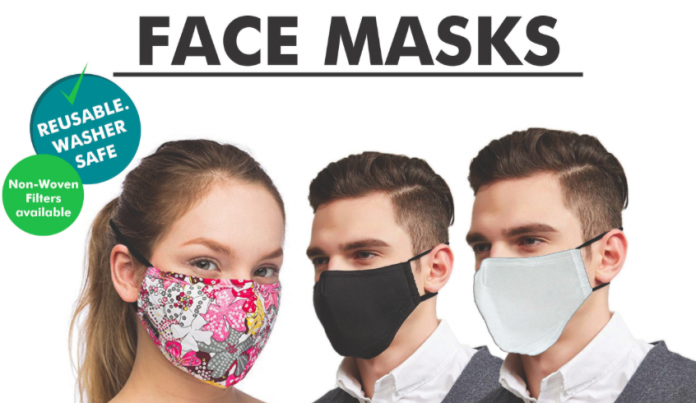
The face masks are available in plain black/white or printed. They have a variety of patterns to choose from, or customers can get face masks custom printed with their own design/logo. The 100% Polyester face masks come standard with a non-woven filter that is easily replaceable. Filter packs are sold separately.

Lucien Uys from SG Branding said, ‘We started manufacturing face masks before the Lockdown started for our staff to wear while they work but since the government has recommended that all members of the public need to wear face masks when leaving their homes the need for face masks became overwhelming. We then made the decision to manufacture fabric face masks full time during the Lockdown.’

‘The reason why people should wear face masks is that there is a severe shortage of surgical and medical face masks in South Africa right now, so to avoid it getting worse people should avoid buying masks that are meant for medical staff,’ Uys elaborated.

‘Our face masks are 3-layered: 2 Layers of woven Moisture Management Polyester and another layer of non-woven Polyester as the Filter. We are also offering printed masks in case people want to look towards the light in these dark times. We do designs for children as well as adults in a variety of options,’ he said.

Please follow the below steps to ensure proper use:

• Wash your hands before and after use.
• Avoid touching the mask while wearing it.

These face masks are not medically approved but do aid considerably in preventing particles from reaching your face.

SG BRANDING 
+27822237104
sales@sgbranding.co.za
sgbranding.co.za

Ensuring Your Company’s Data Is Secure During Lockdown

According to Paula Sartini, founder and CEO at BrandQuantum, many companies have shut their doors during the lockdown time, while others have implemented work from home strategies to maintain their operations and meet their customer’s needs. Whether employees are working from home or the office, customers expect them to keep their data secure at all times. 

To equip employees to work from home, many companies have put fundamentals in place, arranging laptops, providing connectivity for employees and access to virtual private networks (VPN) to continue with business-as-usual.

These are the basic tools that employees need to conduct their daily tasks and meet the business needs, but employees will need additional tools and resources if they are to succeed in working remotely at this time.

Many businesses have developed business continuity plans (BCP) to mitigate risks and reduce the impact of a crisis. Further, they would have conducted a business impact analysis (BIA) to determine which functions are critical for the company to remain in business. However, the COVID-19 lockdown is the first time that many companies will be implementing a work-from-home contingency plan and putting their BCP and BIA to the test.

Increased data threats

With many employees sent to work from home during the COVID-19 lockdown, this is a prime time for hackers to target businesses. Employees have been given tools and access to secure company data without the stringent security in place or necessary training to prevent data breaches. This is supported by various reports stating that hacking attempts surrounding the Coronavirus are on the rise.

According to Wired, coronavirus phishing scams already started circulating in January, preying on people’s fears about the virus. This is supported by Cnet, which reported that the coronavirus is one of the fastest-growing tactics used for hacking attempts with phishing attacks and malware campaigns being the main categories of attack.

While companies strive for business as usual, they need to have measures in place to protect their employee and customer data. Customers have taken precautions to safeguard their personal information and verify the companies they provide personal information to, trusting that these companies have measures in place to keep their data secure. Whether employees are working from home or the office, customers expect them to keep their data secure at all times. 

Securing data

There is no single solution to keeping data secure, particularly with a remote workforce as often homes have fewer security defences than that of an office. Hackers are aware of this. Further, they prey on the vulnerability of employees and customers that would be distracted by the circumstances surrounding them and more likely to fall for a scam.

To help prevent employees and customers from falling victim to these scams, companies should incorporate layered security measures to boost security and add extra peace of mind. Many companies have VPN access as a security mechanism for employees to access company information. For companies that do not have a VPN or those looking for added security for their VPN, a cloud network should be used to keep company documents and data secure.

Secure access to resources

To perform their jobs effectively, employees will need quick and easy access to the most up-to-date company resources. They will also need relevant content that is consistently branded and compliant that can be shared with customers timeously.

This content should be housed securely on a cloud platform to allow easy access to relevant documents via the internet. Access should be restricted to those departments and individuals that need access to perform their job function. In addition, access should be tracked to monitor which employees access what documents and when.

All company documents should also be saved and managed centrally to allow for changes to be made and shared rapidly and easily with employees, ensuring that all employees use the most up-to-date and relevant documentation. To prevent non-compliant documents from being sent to customers and prevent possible fraud, no employees should be able to save documents to their desktops for future use as these can easily be tampered with or shared with employees that do not need access to them.

Secure email communications

Emails solutions used by the remote force should be designed with segmentation of risk in mind. This means the solution uses independent silos to safeguard the content of the email as the content is not associated with the context of the email. This is key to preventing security breaches and keeping employee and customer data secure.

To give the recipient’s peace of mind that the emails are authentic, emails should have built-in verification that allows users to verify the emails sent from one user to another with a pass/fail verification report. In addition, users can check if the content of the email has been tampered with when receiving replies to emails. To prevent false reports, emails should have email signatures and banners applied during the drafting of the email to prevent the need for system intervention as this could impact on emails reaching recipients and being flagged as spam.

By putting your customers and employees’ security needs at the fore, companies demonstrate their commitment to their customers’ safety, building brand trust and establishing the foundation for a long-standing partnership.

BRANDQUANTUM
www.brandquantum.com

The Value Of A Like In Social Media Marketing

Charlotte Fafa MacAuley, digital campaign manager at Dentsu Aegis Network Ghana, says: a ‘like’ on social media feeds the internal vanity monster, hiding in the insecure recesses of self, and delivers an infusion of dopamine that boosts confidence and adds a little excitement to an otherwise dull day.

In 2017, the internet served up a popular meme about a user who made an Excel spreadsheet tracking how his followers liked his posts.

‘I have noticed that although I have 300 followers, I am not receiving 300 likes on my photos.

I’m not sure if this is being done intentionally or if these ‘friends’ are forgetting to click ‘like’.

Either way, I’ve had enough.

I have compiled a spreadsheet of individuals who have ‘forgotten’ to like my most recent posts.

After two consecutive strikes, your name is automatically highlighted (shown in red) and I am immediately notified.

Three consecutive strikes and you can expect an in-person ‘consultation’. Think about your actions.’

He must have missed the memo about Instagram’s algorithm, which might explain why he wasn’t garnering likes, (and Instagram has since removed visible like counts), but there’s a hint of him in all of us. The hankering for attention applies equally to a business and an individual. According to the above meme, likes don’t hold any monetary value, so they don’t carry much weight. Or do they?

A numbers game

Likes are an easy measure of engagement. It’s the face-value metric you can use to determine if your strategy is working and if your content is interesting or relevant enough to please the capricious internet user. It’s very easy to settle on that as your sole measure of success. However, for a business, likes (or the lack of them) can be very misleading.

A few hundred likes on your post might not necessarily result in even one sale, and vice versa. I recently ran a social-media campaign to clear stock for a shoe store client where each post earned less than 20 likes, yet the store cleared 80% of its stock in a week. As there is no scale to weigh the relevance of one metric over another, it would not be accurate to posit that likes aren’t as important as, say, shares, comments or clicks.

Identifying your tribe

Page or post likes can earn a business exposure and validation, and build a customer community. When a person rewards your content with a like, it means they connect with it in some way, and you start to see your community – those who are at least a little interested in what you have to say – crystallise. One thumbs up might encourage the social platform to recommend it on a friend’s timeline, which, in turn, builds exposure for the person or business.

Setting new goals

In this view, the key to measuring your social impact is to adjust your view of the metrics. In addition to likes, other organic metrics you should be monitoring to inform your social strategy are:

Reach: how many people are aware of your brand.

Audience growth rate: the rate at which your business is becoming relevant to users.

Average engagement rate: likes, shares, comments and expansions, which compare engagement per post to number of followers, making engagement numbers more meaningful and actionable.

Video watch time: gives an indication of how engaging your video content is.

Click-through rate: the intention of an individual to take an action.

It’s clear that a like cannot be seen in isolation and can be considered a weak endorsement if it’s not followed up with something more concrete. Brands should remember that while they are counting likes, there is a plethora of other metrics they can monitor, depending on their objectives. Keeping sight of the objectives will help them build a more actionable, holistic and rewarding social strategy, even as users are constantly pushing for deeper, more meaningful connections.

DENTSU AEGIS NETWORK 
+27214425600 
HelloSSA@dentsuaegis.com
www.dentsuaegisnetwork.co.za

Weber Shandwick Appoints African Operations CEO

Ipelegeng (Ipi) Thibedi, new CEO African operations at Weber Shandwick.

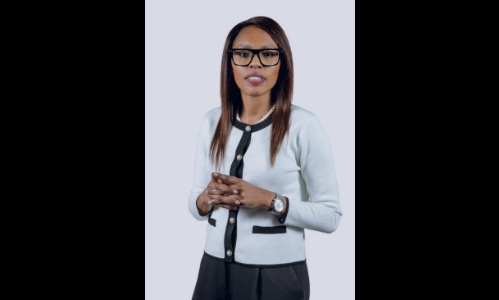
Weber Shandwick has appointed Ipelegeng (Ipi) Thibedi as the new CEO of its African operations.

Weber Shandwick Africa, with offices in Johannesburg and Nairobi, and more than 13 partners in Africa, is a growing network within the firm’s EMEA region, serving clients across a range of practice areas.

Based in Johannesburg, Thibedi will lead in developing business and further strengthening multi-market client relationships in Africa, and help manage and expand Weber Shandwick’s growing network across the regional operation. She will report to Weber Shandwick EMEA COO, Jonas Palmqvist.

Palmqvist said, ‘By applying her experience in building teams focused on creative, strategic communications initiatives, Ipi will help us continue to strengthen our African operation as a leading partner for clients in the market.’

Thibedi brings more than 15 years’ experience in communication and business development, with great knowledge of strategic communications across consumer and business-to-business, as well as media relations. Most recently a business leader in Deloitte Greenhouse Africa, Thibedi is an expert in developing teams and driving operations and will apply this expertise in broadening Weber Shandwick Africa’s offering.

‘I have joined Weber Shandwick to help drive an important transformation of this innovative, strategic and creative communications agency. I see an opportunity for Weber Shandwick to continue to develop its influence in marketing in Africa by further building and merging data, technology and great storytelling to offer best-in-class, channel-agnostic, creative campaigns that drive change,’ said Thibedi.

WEBER SHANDWICK
webershandwick.co.za

Toyota Asks Motorists To Give Up Driving During COVID-19 Lockdown

FCB Joburg conceptualised and recorded a 30-second mini-film for its client, Toyota South Africa, urging the country’s drivers to give up driving during the COVID-19 lockdown.

Briefed to reinforce the fact that Toyota moves South Africa every day while urging the country’s citizens to hang up their car keys and stay put, the agency responded with a montage of the current Toyota vehicle line-up followed by images of car keys being placed on tables and, suddenly, empty streets.

The film was released on social media channels on 27 March and is airing on national television channels. Toyota SA has diverted substantial media budget to public service announcement-style messages and FCB Joburg donated its conceptualisation and production time.

Executive Creative Director at FCB Joburg, Tian van den Heever said, ’I have to say that this is the one brief I never expected to receive from the Toyota marketing team. But it’s one of the most important the agency has ever had to respond to.’ 

‘The team made clear that, while we needed to demonstrate the contribution Toyotas have made to keep this country moving, it was vital we convinced South Africans to stay home for the good of all. At the same time, Toyota wanted to be upbeat and create a sense of hope, which we did by ending with the belief that we’ll all be back on the road again,’ van den Heever said.

FCB  
www.fcb.co.za

Corporate Social Responsibility Can Boost Brand And Product Communication

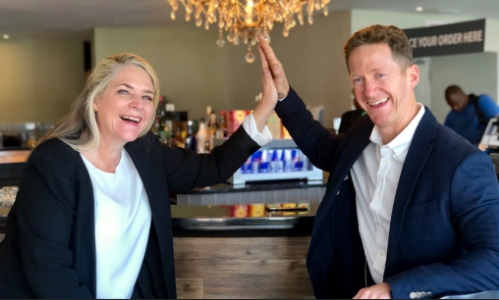
Leanne Peachey and Billy Lascaris from Matriarch.

According to Billy Lascaris of Matriarch, positivity feeds positivity and good news drives sentiment, creating jobs and stimulating growth. Corporate Social Responsibility/Investment (CSI) is an opportunity for companies to include their socio responsible attitude and actions in brand and product communication.

Broad stakeholder value replaces narrow shareholder interest. A responsible attitude towards society and the environment makes business: more competitive; more resistant to economic slides; and more likely to attract consumers, investors and the best employees. Ideally, a dedicated division that focuses on CSI by strategically identifying and creating relevant, meaningful initiatives that not only do good but build brand equity and even drive sales is necessary. I believe that credible brand communication results from brand promises being carried out and reflected in reality.

Companies have not leveraged substantial investments to positively enhance their reputation and brands. The belief seems to be that doing good and being a good corporate citizen is not something that should generate a return. I believe this is an antiquated approach. Why? Because it is common cause that positive sentiment drives economies and markets, thereby creating much needed jobs and opportunities for South Africans.

The media and their content have a profound influence on sentiment and consumer mindset, but sadly headlines are consistently dominated by negative stories that have the opposite effect. Based on my decades of experience in the marketing industry I believe that if you do something good you have a responsibility to showcase and tell people about it. This not only enhances brand equity and goodwill, but it also has the multiplier effect of inspiring and challenging others to do the same.

Now with the COVID-19 pandemic in play, there has never been a better time to create meaningful CSI platforms that can assist those in need whilst getting customers involved and bringing them closer to your brand. Marketing spend can also be leveraged to support and stimulate small business development, thereby symbiotically creating new customers for brands. Let’s follow our President’s lead and ensure that the concerns of the nation are the concerns of the corporation.

MATRIARCH
+27873539606
hellojhb@matriarch.co.za
matriarch.co.za
This is Modern Marketing