Home Blog Page 333

MediaShop And Nedbank Create First To Market Campaign

DStv viewers were quite surprised when they experienced a completely new form of advertising while pausing their favourite series on DStv’s Catch Up service. In a first for the South African television industry, DStv launched its ‘Pause Screens’ function where, in the Catch Up environment, viewers are served an advert when pause is pressed on the remote.

The MediaShop, together with client Nedbank, were quick to take advantage of this new concept by purchasing the first Paused Screen campaign. According to Gareth Grant, Business Unit Manager at The MediaShop, Nedbank has always been willing to test new and innovative platforms. Over lockdown, The MediaShop progressed this idea with the DStv Media Sales team. ‘Being first to market for Nedbank and ourselves was important because we consider both companies thought leaders and pioneers within the media industry. To make it easier, the DStv Media Sales team have always been a real pleasure to work with, not only through this process but with everything that we throw at them.’

‘We were exceptionally pleased with the results of the campaign. We know that viewers make use of the pause facility often, whether on live TV or within the Catch-Up environment and this is a fantastic way to make use of that on-screen time. Suitable Catch Up series were selected based on the target market and each delivered their fair number of impacts.’ 

THE MEDIASHOP
www.mediashop.co.za

Loeries Announces New Chairperson And 2020/21 Board

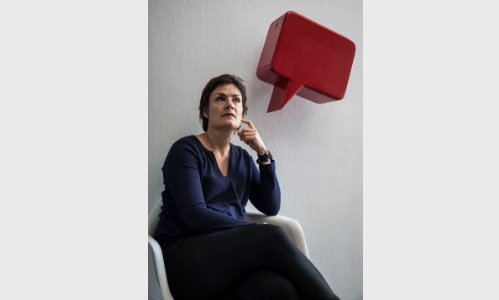
Fran Luckin, Chief Creative Officer at Grey Africa and new Loeries chairperson. Image credit: The Loeries.

Loeries recently held its annual general meeting, where a new board was appointed for 2020/2021. Fran Luckin, Chief Creative Officer at Grey Africa, was elected as the new chairperson, taking over from Tseliso Rangaka, Chief Creative Officer at FCB Joburg and Hellocomputer.

‘I am delighted to be joining this incredible team of industry captains to propel the Loeries vision forward and nurture budding creative talent,’ said Luckin. Also joining the new board is Sydney Mbhele, Chief Executive of Brand at Sanlam.

The new board comprises:

– Fran Luckin (Loeries Chairperson): Chief Creative Officer, Grey Africa.
– Preetesh Sewraj: Chief Executive Officer, The Loeries Awards.
– Tseliso Rangaka: Chief Creative Officer, FCB Joburg and Hello Computer.
– Neo Mashigo: Chief Creative Officer, M&C Saatchi Abel.
– Gareth Leck: Group CEO, Joe Public.
– James Barty: Co-Founder and Chief Executive Officer, King James.
– Gaby de Abreu: Creative Director, Switch Design.
– Linda Bogle: Executive Producer, Your Girlfriend.
– Dawn Rowlands: Chief Executive Officer, Dentsu Aegis Network Sub-Saharan Africa.
– Suhana Gordhan: Executive Creative Director, FCB Africa.
– Sydney Mbhele: Chief Executive: Brand, Sanlam.

In his Chairperson’s Report, Rangaka reflected on the success of Loeries Creative Week in 2019, ‘Around 2500 entries were received. A total of 646 brands were represented by 281 agencies from 15 countries across Africa and the Middle East. The awards were judged by over 140 regional and international industry leaders in their fields, including international Jury Presidents Nedal Ahmed, Tara McKenty, Ralf Heuel and Katja Thielen.’

He further added, ‘2020 is no doubt a defining year for the Loeries. It has also shown itself as a year of many firsts. For the first time ever, entries to the awards are free. This is to assist agencies with a cost burden many cannot afford to have right now. We would like to thank the outgoing Loeries board for its hard work, commitment and guidance over the last 12 months. The board made immense strides to deliver on its mandate of supporting creativity across Africa and the Middle East,’ said Preetesh Sewraj, Loeries CEO.

The new board’s focus now turns to deliver on the aptly named theme of #CreateChange for Loeries 2020. ‘This year’s Loeries Creative Week will deliver deep insights into how creativity helps business and society in general move forward, even if they face one of our toughest challenges,’ he concluded.  

Under the board’s leadership, the Loeries will deliver an innovative roadmap with the aim of recognising, rewarding, inspiring, and fostering creativity for positive change within the Africa and Middle East region.

LOERIES 
www.loeries.com

Immersive Digital Experiences Create Love For Brands

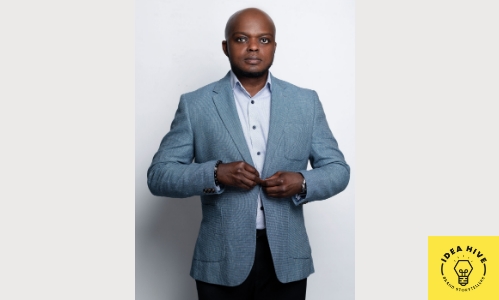
Yaw Dwomoh, Chief Executive Officer at Idea Hive.

Yaw Dwomoh, Chief Executive Officer at Idea Hive, states that with virtual reality (VR), augmented reality (AR) and gamification, we are able to create multi-sensory experiences that evoke those same powerful emotions that make us essentially human.

Our first experiences define us: the first kiss, our first day at school, the first broken arm, baby’s first smile and that first broken heart. Whether bitter or sweet, first experiences are what make us who we are and set the example against which we measure all our life experiences. Experiential marketing has come a long way from traders in roadside markets offering passers-by samples of their produce and goods. The technological revolution and the Covid-19 digital disruptions has injected new life into old.

The New York Times has done this well, adding an array of tech-related companies to their publishing platform that makes the best use of their biggest asset: telling great stories. On their website, you can find a collection of immersive storytelling features, including AR and VR experiences. In their quest to modernise, they have positioned themselves as the overwhelming authority on all things tech, stepping out of their traditional publishing grave clothes and into the future.

Thanks to a reduction in the cost of hardware and software as the years go on, and an increase in local skills, South Africa is now more than capable of providing immersive and interactive digital experiences with quantifiable results, which ultimately creates the love for a brand.

Think, for example, of buying your first car. What went through your mind? Maybe the sweat and tears that went into paying for it? Or the leather interior you had mapped out in the back of a schoolbook years ago? 

Recently Volkswagen partnered with New Reality to create a ‘demo’ experience their customers won’t forget. Prospective buyers were able to check out and test-drive the new Polo SUV (the T-Cross) before it was released for months before it could be physically test-driven in South Africa. Customers were able to play with interiors and features and even order their vehicle, all using VR.

Virtual and augmented reality and gamification is effective when it takes the customer on a journey they never expected. In fact, it is when brands find a way to become a part of the customer’s life journey – like first cars, having a baby or choosing your next renovation project – that brand love is born. It allows us to overlay a digital lens onto the real world.

Traditional advertising does an excellent job at providing awareness at its different touchpoints, but in some ways, it tells the consumer how to feel and keeps them passive. Creating moments of immersion builds experiences that what will leave the customer changed forever and elicits emotion that money can’t buy.

Coupled with clever activations, the technology available to us is able to activate every one of the senses: sight, smell, touch, hearing and taste. And depending on the mode of immersion used, the experiences can be directed at 100 or 100,000.

Four examples of experiences created using VR, AR or gamification that worked:

1. Martin Garrix puts on a music show for the deaf community – Tactile audio systems and Projectors

In 2016, Dutch DJ Martin Garrix partnered with 7 Up to host an extrasensory concert for the deaf community. The resulting ‘Music Lifts You Up’ video premiered during Ultra Fest in Miami and received viral media coverage.

Together with immersive experience artists, Fake Love, they incorporated motion, vibration and stunning visuals to help the concert-goers ‘feel’ and ‘see’ the music. With walls of speakers, LED boxes of water that moved with the music, platforms to stand on that vibrated to the beat, and even a special backpack that vibrated the sound right through their chests, his guests were euphorically happy.

What did 7 Up get out of it? A phenomenal amount of brand capital, but a moving comment from one of the attendees said it all, ‘It really was the best night of my life’. The 7 Up gig taught us that the experience doesn’t need to have anything to do with your actual product. Communicating the personality or character of your brand can be enough to create magic.

2. Glenlivet tests the palates of whisky connoisseurs – Gamification and AR

AR-enabled product packaging can double as a brand’s owned media channel speaking directly to their consumer. In 2018, would-be whisky connoisseurs jumped at the Glenlivet augmented reality whisky-tasting experience in partnership with Shazam.

When customers opened the app, master distiller Alan Winchester came to life, challenging users to mini-games to identify and isolate ingredients by selecting the four aromas for the nose and flavours of the whisky. He also engaged and immersed them in the mysterious back-story behind Glenlivet’s distinctive taste. Tasters were given a score which they could share to social media. Because of the extra value offered to customers post-purchase, they upped the brand loyalty and reached a completely new demographic to boot.

3. Samsung and NASA Moon Walk – VR and 4D

The experience, titled ‘A Moon for All Mankind’, opened to the New York public in July 2018 through to July 2019, in honour of the big 50th-anniversary celebration of the moon landing in 1969.

An extensive support rig and flight suit supported participants, while attached to a load-bearing system similar to the Active Response Gravity Offload System used at the Johnson Space Center in Houston to train real astronauts. Wearing a helmet with Samsung’s Gear VR goggles, users went on a mission to explore the moon surface and plant their own flag. The experience combined tech, awe and an emotionally charged moment in history to create an unforgettable experience for those who tried it, and plenty of the right coverage.

4. Merryl Trailscape Experience – VR and Motion capture and Tactile elements

Merrell created a VR experience called Trailscape to launch its newest hiking boot, the Capra. Participants could walk (carefully) along with a stage set that simulated a mountainous trail, mapped to the virtual experience to create a new level of immersion.

It featured tactile elements such as rope walkways and shaking wooden planks, while motion capture allowed adventurers to explore the mountainside. Merryl created such a powerfully immersive experience that it was showcased at the Sundance Film Festival.

The brands that inspire us, tell stories we can relate to. The brands we love and remember tell stories that cast us as the main character. Using technology, we can create unforgettable experiences and bring customers on board as co-creators. It’s an exciting time to be a digital marketing agency.

IDEA HIVE
www.ideahive.co.za

Kantar Releases BrandZ Top 100 Most Valuable List

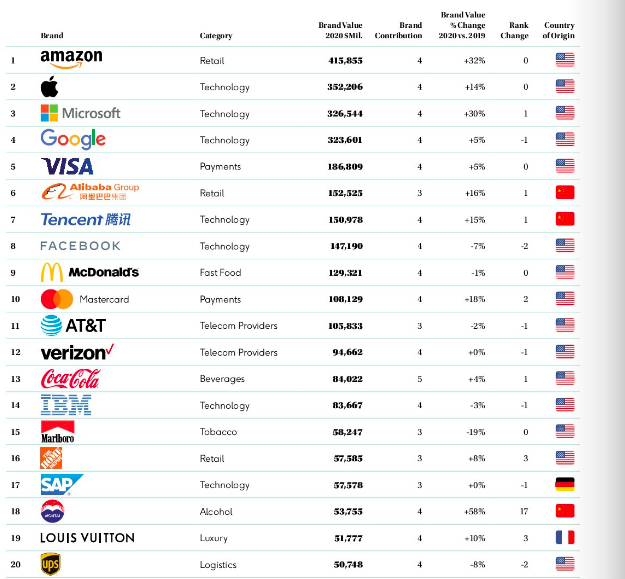
The BrandZ Top 100 Most Valuable Global Brands 2020 have increased their total brand value by 6 percent, adding $277 billion over the past year to reach $5 trillion in total value.

The global pandemic has impacted brands regardless of size or geography, but brands with a point of difference, through creativity and innovation have proven their resilience, and are set to find growth faster during recovery.

Amazon is the world’s most valuable brand, growing 32% to US$415.9 billion and accounting for a third of the BrandZ Top 100’s total growth. The retail sector has grown the fastest by 21% in brand value, driven by major ecommerce players.

Technology brands continue to dominate the top of the ranking, growing overall by 10%. Over half of media and entertainment brands appeared in the top 20 risers. TikTok (no. 79, $16.9 billion) was the highest new entry.

Top 20 brands of the BrandZ Top 100 

To download the report, click here.

KANTAR 
www.kantar.com

TBWA\South Africa Announces Sting Video Content Production Unit

Africa has seen explosive growth in consumption of video content with the rise of short video platforms and faster connectivity and, with this in mind, TBWA\South Africa has announced the launch of Sting Content Production. The creative unit will focus exclusively on agile video production to cater to the growing demand for fast, cost effective and high-quality video content.

Sting, based in Johannesburg, will operate as an independent unit backed by TBWA\ with the ability to create video content at speed from creative ideation through to production. As part of the TBWA\ collective, Sting will also be able to leverage the agencies’ strategic and creative collective in an agile and pragmatic way for clients.

Luca Gallarelli, TBWA\South Africa GCEO commented, ‘Sting is a natural extension of our growing culture. With the speed of change in South Africa, it is increasingly critical to scale up our in-house ability to unleash creative possibilities focusing on video content. Add to this our hard-nosed ability to work within budgets, timelines and streamlined processes, Sting offers clients a compelling avenue for their creative needs. We are very excited to launch Sting as part of our collective.’

‘In an attention-deficit economy, great storytelling is what keeps consumers glued to the content. The biggest opportunity for brands is to close that unnatural separation between concept and execution, particularly as it relates to video, animated and digital content.’

Raphael Gavin, Sting Content Executive Producer, will lead the content production unit as the executive producer. With over 12 years of experience in advertising, Gavin was instrumental in securing and growing clients such as Hollard, Incredible Connection, MTN, BMW and Bradlows. Gavin will work with a collective of young film directors within the company and has forged strong alliances within the industry to build Sting’s capabilities and extend service offerings.

Gavin said, ‘I’m thrilled at the opportunity to head TBWA\’s content production unit. Brands today are competing with everything in modern culture for attention, and they need content that is timely, culturally relevant, on-brand and in-tune. That’s what Sting, an agile filmmaking collective built to produce creative and engaging content at the speed of culture, will deliver. The studio will add to the creative strength that makes the TBWA\South Africa collective so unique.’

TBWA
www.tbwa.co.za
 

Best UI And UX Tools For Designing A Website Or App

Bluegrass Digital CEO Nick Durrant says it takes a number of engagements to reach a final design. Additionally, preparing wireframes and mock-ups consumes a tremendous amount of time and also requires a lot of back and forth between designers and clients.

Driving customer engagement through user experience (UX) is critical in today’s highly competitive business environment. However, one of the biggest challenges when designing a new app or website is the confusion between designers and clients when it comes to the requirements.

All these challenges can be avoided by using design and UX collaboration tools. They not only provide improved collaboration between clients and designers, but clients can now have a visual overview of the project. These tools enable designers to easily produce a proof of concept and various iterations of the final product.

There are also many user interfaces (UI) and UX tools that could help designers stay on the cusp of innovation, but it is critical that these tools accommodate new practices, approaches and trends in web design. Although UI and UX complement each other, they are still two distinct facets of web design. Whilst UX emphasises the user experience when interacting with the app, UI focuses on the design interface and how the user interacts with it.

Some UI and UX tools that to consider:

InVision

InVision is the world’s leading product design collaboration platform. It has simplified every aspect of the workflow and collaboration between development and design. Designers can design better, faster and more collaboratively with real-time in-browser design collaboration and presentation tools.

It gives designers all the tools they need to create fully realised and functional prototypes with animations and dynamic elements. Along with these tools, InVision also makes communication easy, offering collaboration features that enable developers to share their work as they design it.

InVision also boasts a digital whiteboard that allows team members to share their ideas, interact and get final sign-off. One can seamlessly launch meetings and create guided tours with clients.

Its project management feature enables developers to organise design components into a status workflow. Designers can define columns and then drag and drop their design components into the respective columns.

Sketch

Anyone that has any UI design experience must have heard of Sketch. It is one of the most highly regarded design tools. Sketch is a design toolkit built to help designers create their best work, from their earliest ideas through to final artwork.

Designers are able to make universal changes, from the library of symbols, text or layer styles or smooth resizing and alignment. It saves them a huge amount of time to deliver consistent prototypes. It also enables designers to be creative. There is a multitude of third-party plugins that integrate with Sketch and certainly no shortage of tools.

Axure

This is a tool for creating prototypes and specifications for apps and websites. It’s a quick way to create highly interactive prototypes that are accessible on the web. Designers can also use it to create user flows and site maps with detailed functional specifications. Axure is the most powerful way to plan, prototype and handoff to developers, all without code. It also offers drag and drop placement, resizing and formatting of widgets.

Craft

Craft is a plugin for Sketch and Photoshop that revolutionises the design process and also offers a sync function. In addition, Craft offers everything for prototyping and collaboration, and its placeholder content sets it apart from other UI design tools. It also offers access to iStock and Getty images.

Origami Studio

A tool for designing modern interfaces, built and used by designers at Facebook. Origami Studio has more complexity than tools like InVison and Sketch and is ideal for designers that need a more advanced prototyping tool. However, it does also integrate with Sketch, it allows one to copy and paste layers directly. Origami Studio has tools to build complete prototypes and gives designers the opportunity to integrate advanced functionality.

Adobe XD

Adobe XD is a powerful, collaborative, easy-to-use platform that helps you and your team create designs for websites, mobile apps, voice interfaces, games and more. Adobe XD offers vector-based tools for creating prototypes and mock-ups with an interface that is familiar to designers that have used other Adobe products.

It has everything you need to work efficiently, collaborate seamlessly, and scale effortlessly. Adobe XD has a number of sophisticated tools for designers and offers many other dynamic elements that can be integrated into prototypes or mock-ups. Work together with team members in the same document in real-time, no more duplicating efforts or merging changes.

Create design elements to re-use throughout your designs or across multiple documents from a design system. Create animations between elements across artboards to add micro-interactions and motion to your designs. Share designs with your team, clients and stakeholders so they can experience your vision first hand and provide feedback.

Proto.io

It allows designers to create fully-interactive high-fidelity prototypes that look and work exactly like the app and no coding is required. It enables one to test an idea on a real device in no time and share it for feedback.

Proto.io bridges communication gaps, bringing designers, developers and product managers together under the same platform. It allows designers to test before they build. They can test the flow, interactions, and animations of the app without writing a single line of code.

Figma

Figma helps teams create, test, and ship better designs from start to finish. Packed with design features plus unique inventions like the Arc tool and Vector Networks, Figma helps designers keep the ideas flowing. No need to stop to install, save or export, it’s all in the cloud.

It allows designers to design and prototype in tandem and bring ideas to life faster. Animated prototypes feel like the real thing, it helps get insights from users and test concepts earlier. Figma allows one to share a link to design files or prototypes, and get feedback in context. Or, one can jump into the same file with teammates, no matter where they are in the world – and co-edit live.

Balsamiq

UX Professionals also use Balsamiq Wireframes because it’s the fastest, most focused low-fidelity wireframing tool in the industry. It reproduces the experience of sketching on a notepad or whiteboard but using a computer. It really forces one to focus on structure and content, avoiding lengthy discussions about colours and details that should come later in the process.

Prototypes certainly provide better insights and by testing the design with clients beforehand, one can discover which solutions work and which don’t. With these insights, one can evolve the design to better suit the needs of the users. The exchange of information through prototypes forms the basis of human-centred design. Users can help shape the apps they interact with each day and designers can learn how to build apps that clients actually want.

BLUEGRASS DIGITAL 
hello@bluegrassdigtal.com
bluegrassdigital.com

D&AD Reveals 2020 New Blood Award Pencil Winners

D&AD revealed the Pencil winners for this year’s New Blood Awards, the organisation’s annual awards programme which celebrates emerging creative talent.

The announcement coincided with the New Blood Digital Festival, which took place from 6-10 July 2020 and offered a virtual platform to support and stimulate emerging creatives despite the coronavirus pandemic.

This year, emerging creatives were invited to respond to a series of creative briefs set by a wide range of global brands: Audible, Barclays, BBC, Burger King, Connect4Climate & World Bank Group, Durex, giffgaff, Google and HMCT, HSBC, Intel, Lego, Martini, Nike, Penguin, Rare and Xbox, The Case for Her and Teen Vogue, Twitter, Vbat and Superunion and Yula. Covering wide-ranging disciplines including advertising, branding, typography, experiential and game design, the briefs were designed to provide new talent the experience of working on client briefs that tackled both commercial challenges and social issues. Each brief was supported by learning content designed to help students to transition from education into employment.

213 Pencils were awarded for outstanding work, including 2 Black Pencils, the most prestigious creative accolade. D&AD also awarded 1 White, 39 Yellow, 43 Graphite and 128 Wood Pencils to new creatives this year in recognition of their exceptional creative potential.

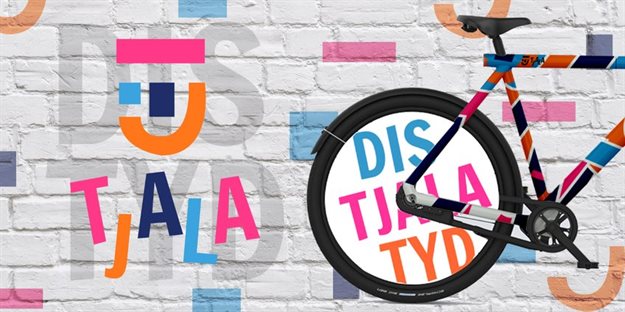
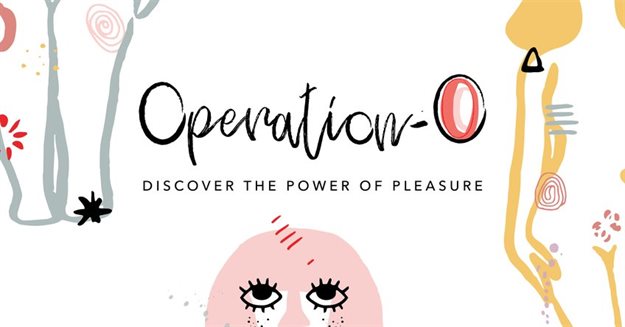
Suné Liebenberg, with tutor Pam Lansdell from AAA School of Advertising, won a Wood Pencil for ‘Dis Tjala tyd’ (VBAT Superunion brief). Creative team, Carla Ehlers, Chante Harding and Tulsha Booysen, with tutors Anka Joubert and Mandy Speechly from IIE Vega School (Cape Town), also won a Wood Pencil for Operation-O (The Case For Her and Teen Vogue brief).

Dis Tjala tyd was created to function within Cape Town, which has been rated as South Africa’s most congested city. For this reason, ‘Tjala’ was created with its main aim to alleviate the traffic pressure found within Cape Town. The name came from the Afrikaans saying ‘Dis tjala tyd’ which means it’s the end of the work day and time to go home. The look and feel of the whole scheme was centred around the African culture and liveliness of its people. It aims to create a fun and easy way to travel via a smart e-bike.

The ‘Operation-O’ campaign will seek to normalise conversation on female pleasure because society makes it difficult for women to learn about personal sexual pleasure. The campaign will facilitate self-exploration by creatively using an interactive and entertaining in-browser game, featured on the Teen Vogue website. It will allow young girls to learn useful and interesting facts about sexual pleasure, and consequently put the Power of Pleasure into their hands. The in-browser game will be promoted through an integrated campaign via the relevant Teen Vogue channels.

Since 1980, New Blood has championed and inspired emerging creatives as they prepare to enter the workforce. 2020 marks 40 years since the launch of the programme, and the anniversary comes at a particularly significant moment for the creative sector, as the coronavirus pandemic continues to affect educational institutions and creative businesses. It is now more important than ever to give emerging creatives access to essential learning content and live updates on job opportunities in the ever-changing industry landscape.

For information on all of the Pencil winning entries, please see the D&AD website.

Both a Black and White Pencil were awarded to Inside Stories, an entry in response to the Penguin brief. As books donated to prisons must be brand new, Alex Morris and Jay Parekh from the School of Communication Arts 2.0 conceived the idea to give prisoners the first read of new Penguin books, which ethically conscious readers can purchase afterwards to establish a connection between them and the prisoner. With reading in prison statistically proven to reduce the re-offence rate, giving prisoners access to better quality books is a way to help young offenders find the joy in reading, improve their skills and have a better chance when they reach the outside again.

Her Snkrs also won a Black Pencil, which looks to find equality in the sports community by giving young female athletes the chance to showcase their potential. Clara Laorden, Dani Navajas, Karolina Sosa and Pia Volpino from Miami Ad School Madrid approached the Nike brief by envisioning a new feature in the brand’s app that allows people to sponsor young athletes by buying their Nike merchandise before they get famous, helping to channel young women into becoming professionals in their respective sports field.

Other winning work this year explored the diverse ways that creative thinking can help affect social change, ranging from the power of gamification to leverage important conversations about climate change, to harnessing technology to establish stronger social bonds across communities. Responding to briefs that address topical issues such as inclusive representation, sexual health and body positivity, this year’s Pencil winners exhibit the wide-reaching thinking of the emerging talent pipeline.

D&AD AWARDS
dandad.org/en/d-ad-awards

Local Media Organisations Need To Evolve To Keep Up With Global Competition

Roman Magis, Principal Director of Video, Advertising and Content for Accenture Africa.

Roman Magis, Principal Director of Video, Advertising and Content for Accenture Africa, states that the world has experienced enormous disruption in the broadcasting arena.

As newer and more innovative technologies change how content is created, distributed and consumed, the entry of global players is threatening the local South African market share and compelling local media organisations to rethink their traditional business models to take up the competition in the global context.

Today we see an increased takeover by digital video in broadcasting and fierce competition among video content creators, and more so between the numerous available platforms that host them. Way back in 1981, MTV (the first 24-hour video music channel) launched onto television in the most ironic way. The first video they aired was by a small UK band, The Buggles, with their debut, hit single ‘Video killed the radio star’. Did this band know that they were so accurately predicting the beginning of a massive takeover of video in the broadcasting and media industry?

Radio stations, for instance, are moving towards Digital Audio Broadcast (DAB+) and internet distribution, enhancing their offers into video distribution and alternative advertising models. Norway switched off analogue FM radio broadcast in 2017 and Sweden plans to switch off analogue radio in 2022. South Africa has also run a DAB+ trial with 21,5% population coverage initiated by Sadiba.

Our research at Accenture (NYSE: ACN) indicates that by embracing digital technologies, South African media could generate an additional R93 billion in value by 2026 for the local media industry and society. This is a huge opportunity for broadcasters to unlock greater value from their offerings.

Times are changing on the African continent

The monopoly of broadcasters delivering generic packaged content to the audience is over as distribution methods are widely available even for user-generated content on video and social media platforms, creating new stars. With audience demographics becoming more varied and a wider choice of video and internet-based distribution channels available, viewers are more selective about what content they spend their time and money watching, and most importantly, on what platform.

South Africa’s media industry in particular, has so far been an essential engine for nation-building. It gives voice to a plurality of views, offers entertainment choices to a diversity of cultures and provides employment to journalists, artists and the technical and support staff required to produce news, drama, sport and general entertainment. However, the growth of the industry has not been substantial in former years as it has depended on the traditional broadcasting model with the limitations of the technology and related broadcast frequencies for Free to Air (FTA) available.

The main public broadcaster, the SABC, has held a monopoly share of the industry, covering almost 77%-91% (SABC 3 vs SABC 2) of the population and sustained itself mainly via advertising revenue, which makes up 70% of their earnings of R6.46 billion in 2019. Their major competition has so far been a private FTA station with eTV (with a 90% reach and R1.6bn revenue) as well as pay-TV providers such as Multichoice with a population reach of only around 15-20% (8,2m subscribers in 2018).

Relying on subscriptions, the pay-TV earnings in advertising are only a fraction of the total revenue which can be seen as an additional gain rather than the main revenue source. Although this may seem more sustainable, they too have been disrupted by newer models, i.e. digital broadcasting platforms where ‘content is king’ and service offerings are consumer-centric.

International players are entering the African market with digital solutions, creating new content hubs, going into head-on-head competition with the traditional broadcasters, all while delivering consistent cross-device user experience at very low cost and ubiquity access through internet and mobile devices.

Netflix is one such example. Earlier this year they announced that Africa will be one of their main hubs, following the success of ‘Queen Sono’, as they are already heavily producing content from within Africa with plenty of local content available even to other parts of the world.

Digital does not necessarily mean smooth

The launch of digital platforms in broadcasting is not entirely positive, especially if the rollout strategy is not carefully thought through. Traditional linear channels provided a trusted brand of choice and enabled constant content discovery, while digital video on demand (VoD) based offers are relying on the consumer engagement and information to enable discovery and choice of content. Although Netflix has enjoyed substantial success over the years based on a massive content catalogue which developed out of the initial DVD-rental business model and the best recommendation offer as content discovery was key, they have also experienced major losses.

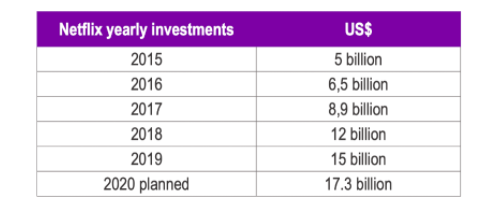
Netflix lost their most valuable and most engaged content from Disney, who left to develop their own network. Around eight out of ten of their top consumption pieces used to be Disney content. Losing most of your valuable content makes it very difficult to keep the subscription pricing low for the end-user, which could cause revenue problems in the near future unless a compelling content proposition is developed in parallel. Netflix started early and continues to invest heavily in different geographies across the world with localised operations to climb up the value chain, becoming a content producer rather than a distributor.

The table below shows their content investment over the years:
Only two years ago, we began to see these long-expected changes on the horizon but now the change for South Africa is imminent and begins to re-shape the South African media landscape. Broadcasters should position themselves to survive the future and avoid maximum disruption, which we have seen regarding Multichoice entering into strategic partnerships with two major streaming partners. By failing to update the business offerings, a media broadcaster can quickly enter a downward spiral, typically being forced into a cost-cutting exercise and inevitably losing out on the future due to disruption and the lack of utilising the cost-cutting exercise to enable digital transformation.

Transforming operations to enable cross-platform experience

Modern broadcasters can survive disruption by transforming from the operations perspective to enable a cross-platform experience, creating a horizontal capability-based operating model rather than vertically arranged (based on channels and distribution platforms) content chain. All content should be accessible from all consumer platforms running through the same content processing chain with common metadata models, ensuring optimised efficiency within the organisation.

This starts with content contribution/delivery, automated metadata creation, sports highlight generation, transcoding, marketing content generation and finally, personalised omnichannel user experience based on audience segments (also called ‘Personas’). These segments should be defined by robust and consistent consumption data and engagement patterns to enable the delivery of tailored user interfaces and personalised experience across all consumer touchpoints. To enable an outstanding user experience especially on digital platforms, CRM data and history of issues and problems are important to keep the new generation engaged and loyal.

As far as digital integration is concerned and content becoming platform agnostic, there is an opportunity for new providers in this geography to flourish. Platforms like Acorn TV is available across the Apple TV, phone, online and IPTV services where the consumer has a greater choice. However, success depends on the business model. Investing billions into content for example without a good strategy on subscription, content resale and advertising return on investment, can lead to failure. If the platform does not acquire enough users and engagement, they will not make enough revenue back. Careful phasing of the strategy is therefore essential to the platform’s success.

This was the case of Kwesé, who rolled out too quickly and made bold moves from the start. The platform purchased content for all territories at the same time, offering FTA Premier League content, which led to a reported debt of over $130 million. For such a big investment, a business needs to have a very strong advertising sales department with a very high profile and robust consumption data to convince advertisers and agencies that ad campaign money is well invested. It should be a careful balance between the speed of rollout versus the number of users, gaining a critical mass of users before expanding further.

Windows of opportunity to leverage on

While growth is still on the cards, most of it will come from digital. Local broadcast media needs to move quickly to maintain and grow its stake in this sector as Internet access explodes, and global players enter the market forcefully, enticing users to migrate toward their digital channels with outstanding user experience. The local media broadcasting industry needs to evolve at a similar pace to the global industry, investing in digital capabilities and infrastructure, deploying multispeed architectures and related operating models or risk being left behind. Additionally, significant network and infrastructure improvements are required to address the challenges local media players face in terms of reaching audiences.

Hyper-personalisation and contextualisation, content fragmentation across platforms and partnerships and convergence are the strategies media organisations must explore if they hope to compete successfully and grow.

ACCENTURE SOUTH AFRICA
accenture.com/za-en

Strategic Data And Genuine Relationships Can Lead To More Business

According to Lizelle McConnell, Head of Sales at Tractor Outdoor, data is now almost a basic passport to getting the deal.

Data is undoubtedly necessary when justifying why any medium should be on a schedule, especially for multinational brands who have strict tracking criteria, and where bonuses are dependent on key performance indicators (KPI) delivery.

I have almost forgotten what it was like to sell the outdoor medium years ago, when a picture, a street address and a three-year-old road traffic count was sufficient. With the registration of a local South African OMC based on international best practice, the outdoor industry exponentially expanded its potential, and continues to do so with the Outdoor Optimiser tool launched in 2019, which emulates TV and allows one to plan by budget or by GRP’s.

This, overlaid with mapping technology, digital innovation, and real-time geo-location mobile technology (something critical to consider in our Covid-19 reality for a day by day traffic flow), means planners can not only know how many people they are buying, but how frequently they are seeing the message, how to target for optimal product resonance by location and daypart, and how to target competitors through messaging and tactical placement. So yes, data will get you the deal, or it will certainly help.

But what I realised in Lockdown, when business has been really tough in the OOH spaces, is that there is another thing that gives you a far bigger advantage than the data, and that is relationships. It seems so obvious – well it certainly did to me – but then again, I am an extrovert and hard-wired to connect with people, and I have always worked very hard to build genuine relationships with my clients.

That is what good salespeople did before they gained another tool in their belt in the form of data – they built relationships. People deal with people. When all else is equal, you choose to work with people you trust and enjoy. Even when things are not equal, but time pressure, the volume of work, and sheer exhaustion sets in, you turn to people who are top of mind, and you know will deliver. Just like a friendship, to build this level of trust, and reliance takes time. It is built when you offer valuable advice, even if that advice won’t sell your medium today.

It is about the long game. Genuine relationships get built through consistency, so invite someone to that big rugby match (once events like these are allowed again), even if they don’t have that big client right now, because you never know when they will get appointed to be the media director of a big company. Do it to be genuine, not to be an opportunist – everyone knows the difference.

To win a seat at the table you need to truly add value. Like relationships, what you offer should be fluid, and adapt to what is needed, and you cannot do this unless you have an ear to the ground through ongoing discussions about their pain points and what they need. This often results in far bigger and far more long-term business opportunities than if you are constantly just there to sell.

I am so grateful for the relationships I have built over the years. It may have required me to see my clients after hours, or even occasionally on weekends, but it has been fun, and it always guaranteed that my calls are answered, and my meeting requests are accepted.

The best advice for someone starting in this industry, no matter what medium you represent, is: spend the time and build the relationship – the sale will come. This, coupled with smart, strategic data, will definitely result in getting you the deal.

TRACTOR OUTDOOR
www.tractoroutdoor.com

SACSC Awards Recognise Exceptional Shopping Centre Designs And More

The annual South African Council of Shopping Centres (SACSC) Retail Design and Development Awards (RDDA) identify and award outstanding design and economic success of shopping centres within the South African property industry.

The RDDAs are awarded annually to entrants that display a seamless integration of design excellence with innovation and environmental consciousness.

They look for:

– Excellent design resolution.
– The achievement of a clear overall development goal.
– A positive response to the market and surroundings.
– The use of innovative design and construction solutions.
– The adoption of environmental techniques.

The RDDA aims to encourage designers, architects and developers in the industry to strive consistently for high standards, as well as raising the bar for design and development. This results in an industry that is constantly innovating, creating and challenging itself – a mark of world leaders in retail design and development. Enter here.

The annual SACSC Footprint Marketing Awards seek to recognise exceptional shopping centre marketing, innovation and creative achievements, together with economic success, within the South African property industry. Enter here.

This article was sourced from www.sacsc.co.za

This is Modern Marketing