Home Blog Page 314

Adding Digital Signage To The Marketing Mix

An important reality to consider before diving head-first into a communication strategy is that buying habits have changed. People have become far more money conscious – especially in recent months – but more than that is their relentless pursuit of convenience, says Grant Kruger, Business Lead ID/IT at LG Electronics South Africa.

Key to advertising is a brand or product’s ability to change consumer behaviour. It is no wonder a large focus for many businesses is on the way they communicate with their consumers. After all, if people can’t see you or hear you, how likely are they to remember you?

Technology has accelerated this preference, so much so that consumers no longer need to leave their homes to buy anything. And, because of the availability of products and information online, there is a lot more choice. So, how do you capture the attention of buyers who are spoilt for choice? Enter digital signage – an interactive solution that acts as a direct line to consumers and delivers content in a meaningful and memorable way. 

Visibility and relevance

Arguably two of the most notable benefits of digital marketing are its ability to attract new customers and boost sales by increasing brand awareness and delivering information directly to customers. In fact, 86% of small business owners revealed during a study that their LED signs had brought them new customers. What’s more, 83% noticed an increase in sales after installation. 

Digital signage also enables agility and adaptability. Gone are the days where businesses would need to commit to a spot in a newspaper or magazine at the risk of their product or service changing or updating. Now, they are given the flexibility to update their content or messaging whenever they need to. This allows the retail store to use content changes to drive consumer behaviour in-store. The customer is in your store, so now you create the journey. Because of this, digital signage is one of the most effective ways of communicating with consumers. It is also one of the most cost-effective.

Meaningful investments

Businesses no longer need to fork out thousands to secure different spots in a print alternative to keep their messaging relevant. Nor do they need to factor in costs associated with updating billboards or printing out posters. Instead, they get to invest in a timeless solution that’s environmentally friendly, too. 

Fewer staff resources are needed to handle things, such as the design, admin and distribution, leaving employees more time to focus their energy on getting that message right. This can also save businesses overhead costs. Some studies even suggest that companies can save up to 30% in running costs within the first year of implementing digital signage. 

The customer journey

Besides the opportunity to make and save money, digital signage is attention-grabbing. This is hugely important considering that consumers are becoming less receptive to marketing ploys. In fact, a 2018 We Are Social study revealed that 43% of South African internet users use an ad blocker tool to prevent the display of online advertising content. 

Digital signage, however, offers a blank canvas on which businesses can tell a story full of emotion that evokes a reaction. The strategic use of colour and typography can add to their success, as does personalising it in a way that differentiates them from competitors and sits well in the mind of their consumers.

Advertising comes down to retaining existing customers while attracting new ones. Businesses should, therefore, consider the potential digital signage has, to help them realise that goal more quickly. 

LG ELECTRONICS
grant.kruger@lge.com
lg.com/za

Latest Superbalist Campaign Is A Fresh Reimagining Of Fashion Advertising

Egg Films’ Lebogang Rasethaba joined forces with M&C Saatchi Abel on the latest campaign for Superbalist. The creative team at M&C Saatchi Abel tasked Rasethaba to direct a campaign that would tap into people’s inner narrative about their sense of self-worth.

The team brought a strong and distinctive visual edge to the Superbalist Impress Yourself campaign, while simultaneously letting the internal dialogue of the performers take centre stage. The result is a fresh reimagining of fashion advertising underpinned with the powerful message that style is an attitude that starts within.

This work is a celebration of unique and eclectic individuals, and echoes a recent trend in fashion advertising that challenges conventions and celebrates individuality and difference. According to Egg Films’ Producer, Julia Schnurr, the team shot the entire campaign in just three days using only two houses as the locations, and they did it all while the stills for the campaign were being done at the same time. 

‘I was really excited to work with the creative team from the agency – probably one of the most exciting teams in advertising. Being able to experiment with a fashion ad that wasn’t overtly selling fashion but rather an attitude was interesting and complex,’ said Rasethaba. 

For M&C Saatchi Abel, Jake Bester was Executive Creative Director, Bella Evans was the Creative Group Head and copywriter, and Lubabalo Mtati was the Creative Group Head and Art Director, with Bronwyn Henry Sharon Martin producing.

‘I am obsessed with humanity’s inner dialogues – the existential stuff. In a lot of ways, we are the product of our own inner dialogues. I think it is important to acknowledge that we construct our views of the world through the things we tell ourselves … and don’t tell ourselves,’ said Rasethaba. ‘To explore all this depth with something as seasonal, playful and perhaps even whimsical as fashion is both challenging and fun.’

M&C SAATCHI ABEL 
+27 11 268 6388 
www.mcsaatchiabel.co.za
EGG FILMS 
eggfilms.tv

TikTok Partners With Webfluential To Bring Offering To African Brands And Agencies

TikTok has signed its first African influencer platform partnership with Webfluential. Brands and agencies are now able to collaborate with TikTok creators for paid influencer campaigns, based on each influencer’s reach, resonance and relevance to the partner brand.

Boniswa Sidwaba, TikTok Content Operations Manager, Africa said, ‘TikTok’s unique creator engagement solutions and immersive formats reach and engage audiences in innovative new ways. We selected Webfluential as our partner in Africa to bring our offering to African brands and agencies at scale.’

With new and innovative ways to engage African audiences, TikTok’s growth in Africa shows no sign of slowing down. This partnership is set to bolster TikTok’s position among the communication mix for brands on the continent. With Webfluential already connected to 500 million fans and followers across Africa, the partnership with TikTok extends the potential for brands to tap into the 1.2 billion-strong African audience to help inspire creativity and bring joy.

Ryan Silberman, CEO of Webfluential.

‘TikTok enables creator-led brand engagement that is relatable and authentic, simple and entertaining, allowing brands to supercharge audience engagement. Coupled with influencer strategy and our influencer expertise at the Nfinity group – Webfluential’s local execution partner – we can now work with brands and top TikTok creators to engage new audiences,’ said Greg Bailie, Lead Client Partner at Webfluential South Africa.

‘With access to influencers across eight different channels and a combined audience of over two billion people, the addition of TikTok as a Webfluential channel means that our customers and agencies will be able to work with the top TikTok talent and boost the uniquely talented creator economy in Africa,’ said Ryan Silberman, CEO of Webfluential. 

WEBFLUENTIAL 
greg@webfluential.com
webfluential.com

Scan Display And Zimstone Support PinkDrive With Branded Outdoor Display Products

Scan Display partnered with outdoor display equipment manufacturer, Zimstone, to provide PinkDrive with branded outdoor display products. Zimstone donated the hardware and Scan Display produced the branded flags, pop-ups, and parasol and gazebo canopies.

PinkDrive is a non-profit organisation that promotes awareness of gender-related cancers in South Africa. The organisation’s trucks with their mobile screening units travel throughout South Africa, bringing the opportunity for screening and early detection to towns and rural areas all over the country. During the last few months, the organisation has played an important role in managing the Covid-19 pandemic by adding testing for the virus to its services.

Zimstone and Scan Display donated portable branded display equipment including a gazebo, parasol, telescopic cluster flag, flag fountain, sharkfin flag, pop-open and A-frame for PinkDrive to use for its roadshows, open days and fundraising activities.

Zimstone’s display hardware is durable, lightweight and made from recycled materials that are, in turn, recyclable. Scan Display’s print division, Scan Print, designed and printed the fabric branding for the hardware.

Scan Display has supported PinkDrive for many years, including building displays for their activations at the Two Oceans Marathon and 94.7 Cycle Challenge. Scan Display’s Managing Director, Justin Hawes said, ‘It is good to be able to support PinkDrive, especially during October, which is Breast Cancer Awareness month. They play a very important role in the fight against cancer.’

SCAN DISPLAY
+27114474777
justin@scandisplay.co.za
www.scandisplay.co.za

Agencies Versus Clients: Who Has The Right To Quit?

Angelika Kempe, Executive Consultant at Ad Ops.

Angelika Kempe, Executive Consultant at Ad Ops, says that in 24 years of working with agencies and clients, she can recall only one instance where an agency directly resigned from an account. The agency claimed it was approached by a competitor with a much larger budget.

However, the client/agency relationship was already strained, and the agency was all too pleased to have an excuse to ditch its client. It is less unusual for an agency to shake off a brand by letting service levels drop and pushing the client to fire them.

It is not unusual for clients to change agencies, for reasons ranging from budget cuts or a policy of putting their business out to tender at the end of a contract to unhappiness with the incumbent’s delivery or the entrance of a new management team with its own preferred providers. It is less common for agencies to resign an account, but perhaps it shouldn’t be.

I attribute this in part to a culture in South Africa where we prefer to avoid conflict and hard, uncomfortable conversations. However, agencies should be aware of the pain points in a client relationship, when these can be resolved through dialogue, and when the client is a liability to the agency. Here are some of the warning signs:

Unreasonable, unorganised and ‘untrainable’ clients

The client does not understand how to collaborate with the agency in a way that creates benefit for both parties or the teams from the agency and client are unable to work together in a way that produces good work. Often, the client’s team refuses to produce written briefs because they don’t do any planning, and they don’t understand how agencies work internally to produce the work they need. There is a lack of engagement and accountability from the stakeholders who will sign off the work, which means the agency needs to work on endless debriefs and reverts without extra compensation. 

Abuse of power

The client team treats the agency as a scapegoat or inferior, with no respect for the agency’s working hours, capacity or processes. Many agencies know the nightmare client who routinely sends out last-minute requests at 5pm on Friday afternoons. They want the agency team on 24/7 standby. For such a client, chaos is the norm rather than the exception. They bully, blame, patronise and belittle the agency staff. 

Unreasonable expectations in terms of costs or resources

Many clients have a set idea about what a deliverable should cost, which does not align with the overheads of the agency or the resources it takes to produce the work. They demand that the most senior resources work on the account, but are not willing to pay for it. Or they expect the same expertise and output from the juniors working on the account. In some cases, an agency can pull off a miracle on a shoestring, but this should be seen as over-delivery rather than a reasonable day-to-day standard.  

Payment

Due to the recession, some clients are trying to impose unreasonable payment terms on their agencies. Agencies need to pay rent and salaries every 30 days. Clients that pay a 90-day+ cycle or expect agencies to commission large production jobs without paying a deposit are expecting the agency to be their bank. Their behaviour has a knock-on effect for freelancers and providers that the agency uses to deliver the work.

How does the above affect the client?

– The best agency team will decline to work on the client. Yes, they have that power.
– The agency will find ways to recoup lost margin.
– The agency team will be demotivated.
– The output will be compromised.
– Getting work out will be a long and painful process for both parties.

In some instances, agencies can navigate some of these pressures, especially in these difficult times when quality clients are hard to come by. However, when too many of these relationship issues compound into one account, the internal pressure can become too much to bear. The negativity created can spread through the agency, impacting on other clients and the agency product. When the scale tips, and all attempts at remedying the relationship have failed, it is time to walk away.

ADOPS
+27824988784
angelika@adopsvalue.co.za
adops.co.za

#Loeries2020 Creative Week Speakers Share Thoughts On Creating Change

Loeries 2020 Entries Now Open

Several renowned names on the global creative stage will enthral the advertising and brand communications industry when the Loeries Creative Week broadcasts its virtual event (taking place from 16-20 November 2020). The event will have three channels with over 75 hours of content. 

The Loeries called on the brand communication industry to create work that changes things and makes a difference and then submit their entries for the awards under the theme Create Change. Loeries media partner, Modern Marketing, asked some of the event’s speakers about the theme and what it means for them personally, the industry – in terms of diversity, a wider representation of people in advertising – and more.

LOERIES 
www.loeries.com
MODERN MARKETING
+27114501650 
info@modernmarketing.co.za
www.modernmarketing.co.za

Pride Month And The Role Of Brands In Our Society

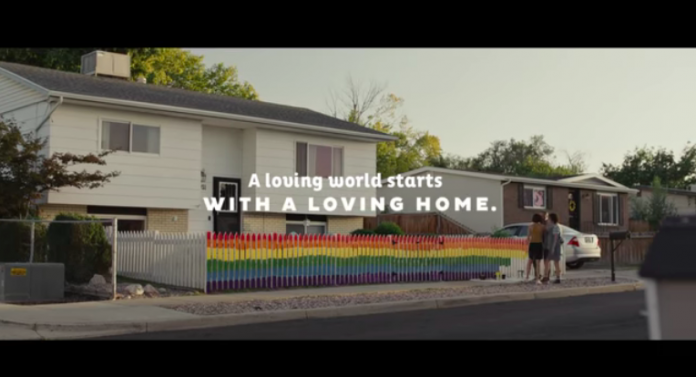
October in South Africa is Pride month. It marks the month when the first official Pride march was held on the African continent, 31 years ago this year. With this theme in mind, Lynn Madeley, CEO of Havas Southern Africa, and Larry Khumalo, Head of PR at Havas South Africa, had a conversation about Oreo’s recent advert and what it means for this moment. 

The advert is three minute story about a young woman who visits her family with her girlfriend. She gets home to a warm welcome from her mom but her dad is not so warm to her and her partner. Her siblings arrive and they, along with their partners and children, get a warm welcome from the dad.

After a couple of days showing the young woman spending time with her girlfriend, and the dad clearly being cold, we are shown the parents talking in their bedroom. The next morning, we are shown the dad painting the front picket fence with rainbow colours. There is happiness and hugs, and then a cut to a message of support about how loving starts from home. 

Madeley’s timeline was buzzing with people sharing how much they loved the new Oreo advert, which had her in tears. She shared the link with Khumalo, prompting him for a conversation after watching the piece of content. Excerpts from Madeley and Khumalo’s conversation are below: 

Khumalo: I hadn’t seen the ad or any of the engagement around it yet. I watched it with mild curiosity at first, because I didn’t know what it was about. My first thought was that it would leave people warm and fuzzy, like a pride march in Brighton, United Kingdom would. But beyond that, it was just OK. Not ground-breaking. 

Madeley: I burst into tears – maybe it’s a father daughter thing, I don’t know. I felt something there about how complicated the relationship between a father and daughter can be, especially around notions of being good enough.

Khumalo: I get how someone can interpret it like that, that relationships are complex and not just about one thing. However, this advert has a singular message and it is about confronting homophobia within families, and encouraging acceptance. It is precisely at that point that the ad lands a false narrative. 

Madeley: You are right. The human truth is not about being good enough to your parent, or any such ‘normalised’ dynamic between parents and children. The human truth is about homophobia in families.

Khumalo: That it’s so open to interpretation emphasises to me that the advert perhaps was not made for the LGBTQIA+ specifically. It’s a story about a lesbian woman, but the intended audience is heteronormative, and perhaps a bit of a wink to the LGBTQIA+ community. And maybe that’s OK, because heterosexual minds are largely the ones we want to change to help end homophobia. That change starts in families. 

Madeley: I never thought of it like that. It’s easy to think that work that is pointed to a cause will always be appreciated by people in that community. But this hits different. Cause-related work especially needs to be good and truthful work, because its impact is not only consumerism but human progress. 

Khumalo: The false narrative here is really how they clean up a messy process into this simple take. This is a situation that one visit to your folks will seldom fix, or make right. Your homophobic dad doesn’t change his mind about your same sex partner after just a few days. It takes work, and it’s messy. I would have loved for some mess there. There was some pink washing – trying to wrap everything up with a nice beautiful bow and present it to progressives and liberals.

Madeley: It’s tough to try and capture something so complex in a few minutes and make it make sense to all. But the issue here with something as material as homophobia is that one would rather not touch the subject, than misrepresent it. Purpose must always be followed through by honest and meaningful engagement, not purpose washing. 

Khumalo: They could have done a few tweaks to the script. Maybe add a timeline mechanic that shows a series of visits over time, and perhaps some aging too. To show that there is an element of time. Change takes time, especially on matters to do with sexuality in all sorts of families. That her dad turned around after a few days and painted a rainbow is a little on the ridiculous side.  

Madeley: I guess the question is about reflecting the truth as best as one can in a short space of time. And because this is advertising, one wonders what the effectiveness of well-meaning work that misses nuance could be? If people are seeing it and celebrating it, then it’s a success? 

Khumalo: And the rainbow too, is starting to be overtraded in my opinion. It’s the easiest way lately to get people to root for you as a brand. It does not matter whether you are committed to the cause, or whether you truly understand the issues. Rainbows are being thrown about, slapped on campaigns and merchandise and we are buying them. On one hand, this commonplace-ness of the rainbow representing LGBTQIA+ inclusivity is great, it asserts some kind of presence and advocacy. On the other end, it makes me wonder about how genuine these engagements are, especially when they get key things like the ‘conversion’ of a homophobic father, wrong.  

Madeley: I am not a fan of the product linkage. It makes little sense. In the content itself, the product is quite subliminal. I am not sure what the messaging intent is? It’s perhaps a message of solidarity to the LGBTQIA+ community. 

Khumalo: The question to ask now is what is the role of brands in our society? To stoke change? To challenge humanity? To reflect humanity? To contribute to culture? All the while selling product? The Pride flag will sell product, to both ‘pink money’ and to their allies, guaranteed. Perhaps we are ushering in an era where the pride rainbow is the new ‘puppies and babies and kittens’ of advertising? What does that mean for the LGBTQIA+, given the various issues that plague this community? Perhaps that’s the territory that brands wanting to make change ought to be stepping into.


HAVAS SOUTH AFRICA
+27115493600
info@havas.co.za
www.za.havas.com

IIE Introduces First Doctor of Philosophy In Brand Leadership Qualification

Dr Carla Enslin, Head of Strategy at The IIE’s Vega.

The Doctor of Philosophy in Brand Leadership qualification by The Independent Institute of Education (IIE) will equip students with advanced research and highly specialised knowledge within the field of Brand Leadership; add depth to the ever-evolving field by producing new knowledge within an African context and encourage trans-disciplinary research.

The qualification will also provide brand leadership professionals with the opportunity to make groundbreaking contributions to the development of the profession on the continent and globally. ‘The IIE Doctor of Philosophy in Brand Leadership is the first brand-specific doctoral qualification focused on the niche field of Brand Leadership in South Africa. It breaks new ground, both locally and internationally,’ said Dr Carla Enslin, Head of Strategy at The IIE’s Vega, where the programme will be offered from 2021 via full-time, part-time and distance learning.

Enslin said the unique focus on Brand Leadership addresses a particular social and economic imperative – the need for innovation by brands with shared stakeholder value and values-based leadership to create developmental opportunities for communities, organisations and the environment.

‘Our future graduates will extend the forefront of this academic discipline and through their research will aim to achieve an immediate impact on professional and academic practice through the inclusion of unique African perspectives and locally resourced knowledge,’ she said.

‘We will be welcoming those industry leaders and graduates who are passionate about this field, to help develop it by contributing new theories, innovative models and creative insights while producing scholarly research that is purposeful, challenge-led and responsive, thereby increasing the uptake of such research in industry practices and society,’ she said. ‘Ultimately, the aim is for our graduates to become the global pioneers who will develop and define the structures and forces that shape brands on the African continent and in a developing digital economy.’ 

Enslin said that D Phil qualifications are often much broader in scope, focused on Business, Economics or Management Sciences, for instance. ‘So this really is a game-changer qualification. IIE Vega is wholly focused on strategic brand building and brand leadership, which makes the IIE Doctor of Philosophy in Brand Leadership unique not only in South Africa, but on the continent. The launch of this qualification could not be more timeous, as we start the hard work of rebuilding brands and economies in the wake of the devastating strict Covid lockdowns. There is now a real need to rebuild, revitalise and restore faith in brands,’ she said.

‘With prospective students increasingly opting for respected private higher education institutions with a strong work-focus as their first choice, it is exciting that we are now able to offer this new option that will allow them to continue their educational journey in this exciting space right to the highest level. It is no longer business as usual, and we look forward to seeing the fruits of this new seed we are planting in the industry. In line with our values, this qualification’s focus is firmly on shared value creation and leadership at a time when our country and the world is in dire need of responsible and visionary leadership. Compared to other disciplines, Brand Leadership is a relatively young discipline, and we are delighted that our future graduates will be the pioneers who will make a defining contribution to its legacy,’ concluded Enslin.

THE INDEPENDENT INSTITUTE OF EDUCATION
iie.ac.za

E-Commerce Design Trends Are Leaning Towards Personalisation

Attic Rush discusses their top five design trends for e-commerce development for 2020 and 2021. Online shopping habits are constantly evolving, so it is no surprise that e-commerce design trends are evolving along with them.

1. Emphasis on data

The use of ‘big data’ is helping some e-commerce sites stay one step ahead of the game. Big data is a large collection of information that organisations can use to determine which product, price and advertising is best to maximise their profits.

One way an e-commerce business can better use their data: predictive analytics is used by e-commerce to predict what the consumer will buy. Amazon uses this better than anyone with science and not just relying on their marketing ability.

Although not a design trend, data has the potential to make design adapt with personalisation of content. Personalisation involves using big data to personalise not only emails but landing pages as well.

2. Dark Mode

Dark Mode is not new, but we have added it as it continues to dominate as one of the biggest trends in not only e-commerce design but all web design.

Besides the real user benefits such as improved battery life and reduced eye strain, here are two other reasons that Dark Mode is so popular:
• You can create an ultra-modern design.
• You can highlight and pop other website elements.

3. Availability of use

Digital accessibility refers to the practice of building digital content and applications that can be used by a wide range of people, including individuals who have visual, motor, auditory, speech or cognitive disabilities.

Accessibility for any user has become more important in the web design process. The last thing any brand wants to do is limit who can purchase your products online. Websites designed with accessibility in mind create a better experience for all users, not just disabled people. It makes designs more thoughtful and the user experience (UX) for all better.

4. Stunning product photos

In 2020, we saw a huge increase in e-commerce with the world staying at home. Having incredible photography may seem obvious but one good photo of a product is now not enough. E-commerce sites need to find a way to bridge the gap between the online and offline experience – and the ability to touch and hold a product before purchase.

The main idea is to showcase the product online in more ways – showing it from multiple angles, in and out of the packaging or even showing how it will fit into the consumers lives. For example, L’Oreal Professional allows you to try out their products in their virtual hair salon.

5. Personalised products

Like so many other industries, 2020 e-commerce design trends are leaning towards personalisation and a more human approach to addressing customers. While the more rigid format of ‘fluffy promotional description + bullet points’ has been a cornerstone of product pages for decades, today online stores are opting for something a little less mechanical.

Especially for first time visitors and potential new customers, they want to know how the product can work for them. You can add more humanity to your product descriptions with sections like usage advice, or even product recommendation quizzes.

Many expected 2020 to signal changes or adapt to the ‘new normal’. Rather, it has become a year of reflection and analysis of new user requirements. Better visuals, better technology and, interestingly, better communication. As e-commerce becomes more advanced, it is also becoming more human as many of the 2020 e-commerce design trends
focus on how the customer feels.

Attic Rush
charlie@atticrush.com
www.atticrush.com

EQ Is Necessary For Brands To Authentically Connect With Consumers

Janine Hills, Founder and CEO of Authentic Leadership, was a recent guest speaker at a Zoom session for employees and global students of the IMM Graduate School, sharing her case study on the Clicks/Unilever/TRESemmé issue. One of her key discussion points was the need for a rapid response from stakeholders in situations such as these.

Brands need to learn the art of tapping into emotionally intelligent leadership in times of crisis. With each passing day, it is becoming increasingly obvious that the ice that brands are skating on is simply getting thinner – with quite a few having fallen right through.

As the fallout from the Clicks/Unilever/TRESemmé debacle continues, brand managers/marketers need to take a long hard look at what they are bringing to the table. Gone are the days when marketers, especially multinational brand custodians, could adapt to the ‘one size fits all’ approach and expect great returns.

While it is to be expected that brands are not always going to get it right – the landscape is evolving daily to becoming more inclusive and accepting, after all – why are so many brands getting it so very wrong on a global scale? From the highly researched and specialised marketing campaigns built with the backing of massive budgets, right through to more intimate, reactive social media marketing, why are brands missing the mark resulting in such catastrophic consequences?

The answer: there seems to be a collective lack of emotional intelligence (EQ) required to make authentic connections with consumers. If a brand has any hope of navigating the not-so-still waters of successful advertising in 2020 and beyond, a sound awareness of the impact of the brand’s EQ is the first step in figuring out exactly what they are serving up, and whether their consumers are going to be asking for more.

Let us dig a little deeper into what went wrong with the Clicks/Unilever/TRESemmé advert to understand just how a brand’s EQ can be one of the most critical factors in delivering relevant content that ensures ethical advertising to an unprecedentedly diverse target audience.

Firstly, any brand that has made, or is planning to make an investment into the South African market needs to truly identify and gain a real understanding of their audience. It is critical that multinationals localise their content by investing the time to listen, to learn, to recognise and to redefine the antiquated narrative that has shaped our nation, and the way we have communicated, for so long.

Our diversification is one of the key reasons that South Africa is such a creative smorgasbord of untapped opportunities. Unfortunately, until authentic engagement, a true understanding of shared experiences and an openness towards differing opinions, debates and perspectives become the core of marketers’ messaging, these kinds of monumental advertising mistakes are going to keep on rearing their ugly, and highly destructive, heads. 

Secondly, when brands market on such a global scale, it should be an absolute non-negotiable to ensure that all the boxes are ticked when it comes to content checking. Facts are facts, and cannot be disputed, but how these facts are served to consumers, whether visually, verbally or wordsmithed, is where the line between fact and fallout becomes extremely blurry. In an already hyper-sensitive market such as South Africa, the necessity for a senior brand guardian, who understands, oversees, researches, respects and ultimately is fully accountable for content cannot be emphasised enough.

And finally, when mistakes that exclude, offend or alienate large segments of the target audience happen – and yes, they will inevitably continue to happen – well-informed decisions need to be made rapidly, and with conscious thought because, in today’s digital playing field, web-based wildfire gets out of control within minutes. What happened within Clicks was first and foremost a visual mistake, with immediate fallout. It happened on a Friday, yet it took the CEO an entire weekend before addressing the issue with a written apology on the Monday – too little and too late. It is evident that the apology did almost as much damage as the incident itself. It is vital to engage on a visual, audible and written platform.

The gravitas of the apology needed to match the hurt and pain inflicted on people seeing the social media post. Instead, Clicks could have cautiously crossed the bridge with a genuine heartfelt video and statement. Understanding the psychology of your consumer, and being sensitive to it, would have allowed the powers-that-be to test the temperature on an appropriate apology and keep it regulated until the audience moves on.

So, after all is said and done, what is the key take-away for marketers? While high intelligence is certainly an asset in any advertising landscape, high emotional intelligence is proving to be priceless.

AUTHENTIC LEADERSHIP
+27 (0) 82 490 0960
janine@janinehills.com
janinehills.com
This is Modern Marketing