Home Blog Page 312

#Loeries2020 Creative Week Speakers Discuss Transformation And Diversity In The Branding And Advertising Industry

Loeries 2020 Entries Now Open

Loeries media partner, Modern Marketing, asked some of the 2020 Loeries Creative Week speakers for their opinion on transformation and diversity in the branding and advertising industry and what could be done to address these issues.

Several renowned names on the global creative stage will enthral the advertising and brand communications industry when the Loeries Creative Week broadcasts its virtual event (taking place from 16-20 November 2020). The event will have three channels with over 75 hours of content.

LOERIES 
www.loeries.com
MODERN MARKETING
+27114501650 
info@modernmarketing.co.za
www.modernmarketing.co.za

The Best Marketing And Adverts Will Work Even Better In An Optimal Context

Creative Context In Marketing

According to Attic Rush, creativity in advertising, most of the time, refers to the creative itself. In the ‘good old days’, advertising media was limited to print, radio and TV. Then entered the digital world. As mobile devices become more common, mobile screens are where the majority of consumers’ eyeballs are.

Although the story and the creative itself will always be key – we need to include the context in which the advert is delivered to be as important as the storyline and visual itself. You need to discover how context influences the way your message is received.

What do we mean by context?

Let’s use Ed Sheeran as an example: he has sold more than 150 million albums worldwide. In 2014, his song ‘Thinking Out Loud’ was the most streamed song in the world. In 2018, his ‘The Divide Tour’ became the highest-grossing tour of all time with $429 million in revenue. He is most definitely not someone you would ever expect to be playing behind a curtain in a dodgy-looking venue. As this funny video shows, most of the people walking by don’t believe for a moment that a famous musician could actually be inside.

There is just no way someone of that calibre would be playing in that type of place. Finally, one brave couple decides to take the plunge. They are still not convinced as they pass through the door and even when the real-life Ed Sheeran appears, they still can’t quite believe it is actually him.

Why is this?

It is all to do with context. You expect Ed Sheeran to be playing to sell-out crowds in a large stadium and not behind a curtain in a dodgy-looking pop-up venue in a random street somewhere in Australia. This experiment is a good analogy for brands and marketing. You can have the best product in the world, but if you share it in the wrong place, it will go unnoticed.

Context is creative

We have discussed the importance of art directors and art direction, but creativity doesn’t stop once the artwork is signed off. What was once seen as admin – placing an ad, choosing an audience and a digital channel, is now the final step in the creative process.

It is one thing to develop the engaging content, banners and static ads, but that’s just half of the challenge. The other half of the challenge lies in delivering well-developed advertising to the right people, at the right time, in the right manner, to ensure that advertising resonates and brings about a return on investment. The very best marketing and ads will probably work in any context. But they are likely to work even better in an optimal context.

ATTIC RUSH 
charlie@atticrush.com
atticrush.com

Beware The Pitfalls Of Brand Purpose

Beware Of The Pitfalls Of Brand Purpose
Myles George, Global NeedScope Director.

Myles George, Global NeedScope Director, says that not so long ago, it seemed quite straightforward for companies to align with a purpose. Corporate social responsibility meant giving back in some way. For many companies it was a way they could drive their reputation and give their employees the opportunity to contribute to a worthy cause. It was a win-win.

But in recent years, expectations of brands have changed. Even before the global pandemic, a shift was well underway in the world of brand marketing. Brands were emerging with social and environmental values built into them. Purpose was no longer a box to tick in corporate communications; instead, it entered the marketing mix, becoming more prominent in brand advertising.

Many brands use purpose to connect more deeply with consumers. Yet with the best of intentions, some brands miss the mark. For example, take the household and personal care brand Seventh Generation. Whilst this is not a recent start-up, they have been on a mission to create a more healthy, sustainable and fair world since their beginning. Their name originates from an Iroquois philosophy to think about the impact of what you are doing for the next seven generations ahead.

These emerging brands seemed to tap into something missing from many established brands: an authentic and ‘human’ dimension, with a higher purpose than simply making money. Their values and messaging resonated strongly with consumers. Not be outdone, many existing brands spotted this and started to acquire a purpose too.

Nike is one example, with their recent ‘Just Do It’ re-launch – championing the cause of minorities in sport or challenging female stereotypes. In many ways, the current pandemic seems to have cemented this shift. Kantar’s recent Global Business Compass study (4500 organisations the world over) shows 34% of businesses plan to play an increased role in supporting society. And the business benefits go beyond altruism; an analysis of the BrandZ database from 2006 to 2018 showed that brands with a strong purpose grew their value by 175%, more than double that of brands with weak purpose.

Beware the pitfalls of purpose

You might think brand purpose is now an obvious thing to do, but not so fast. Some other brand purpose examples have drawn equal attention for all the wrong reasons. Examples include overly simplistic portrayals of complex societal issues, or using charitable donations as some sort of game – we will donate to X every time X happens – which can sit really badly with customers.

Simply declaring that your brand is purposeful will not win you points with consumers. Once ‘purpose’ becomes part of the marketing mix, a new set of expectations arise. Fail to deliver on the purpose authentically, and people will likely perceive that you are co-opting a cause to help you promote and sell things for your brand. So how can brands manage this?

Getting purpose right

To avoid failure with purpose, brands should ask themselves three things:

  • Is the purpose genuine? Social media has brought transparency. Any disconnect between a brand’s intention and its behaviour will be publicly called out. This is fundamental. If you cannot genuinely act on your purpose, don’t do it.
  • Does the purpose make sense? For an established brand, jumping on an unrelated social or environmental cause is confusing. The purpose must make sense with what consumers are looking for in relation to brand choice. It has a to meet a need in the category. For example, Patagonia’s purpose makes good sense. They are all about outdoor gear, so it therefore seems natural for them to care for the environment. Their purpose and everything they do to support the environment adds value to the consumer’s brand choice.
  • Does the purpose ‘fit’ with the brand? Consumers may not always come out and say it, but they certainly know intuitively when a purpose just doesn’t feel right. Whether it is the cause, the tone or the execution, something about it just feels awkward.

This last point is often the most challenging, because it involves emotion – to get it right, you must understand how people truly feel about your brand and about the cause you are championing.

Back to basics

All too often brands default to stereotypical expressions of purpose. For example, purpose advertising often adopts a ‘caring’ tone, as seen recently in a lot of pandemic advertising. The advertising then starts to all look the same regardless of the brand – and people tune out. Executed this way, brand purpose does nothing for differentiation or clarity in the brand’s positioning.

And herein lies the challenge. There are a lot of ways a brand could talk about purpose. Take Ben & Jerry’s – they are famous for taking on environmental and social causes without losing their sense of humour. Their causes are serious, but they don’t overshadow the brand, which is all about light-hearted fun as appropriate for the ice-cream category. This elegant ‘fit’ between brand and purpose comes from knowing your brand at a deep level and being consistent in your execution. It is a classic brand strategy process.

One thing is clear. Good intentions aren’t enough with brand purpose. Effective and successful brand purpose is subject to robust brand strategy development. If you are not prepared to do that, just stick with corporate responsibility.

KANTAR 
kantar.com

Agencies Have To Offer More Than Advertising And Communications Insights

Agile And Adaptive Strategic Communications
James Moffatt, CEO of Promise Agency.

James Moffatt, CEO of Promise Agency, says any business making use of an external agency to manage their communication needs will probably have heard the two cardinal business buzzwords for 2020: adaptability and agility. But has this sentiment impacted the service that has been delivered? Has your company’s strategic messaging changed as a result? Has your corporate communication been reactive or responsive? Was it impactful or impotent? 

If not, then circle back to the words. Agility and adaptability, at their best, require a strategic communications firm to incorporate a company’s steep learnings during times of crisis into their creative thinking. This requires a deep relationship that is close enough for the agency to fathom the effect of a change in systems or approach, which appreciates the complexities behind operational thought processes and the risks embedded in the new landscape of business. When this is in place, agility becomes about value, learning from the past and growing as a result. Adaptability morphs into an innovative mindset focused on responding effectively and with flexibility to solve complex problems. 

Both buzzwords are essential to current and future brand communications and both underline the new direction in which agency-client partnerships must evolve. Most importantly, both words are more layered than the ‘speed’ and ‘changeability’ boxes into which they have been neatly assigned. 

If your existing business model has been radically disrupted and turned on its head by the current crisis, and if you have had to transform the way you operate and come to market, then your communication needs will be far more strategic and more closely aligned to your business objectives. 

‘Clients are looking for different things from their agencies at the moment,’ explained Marc Watson, Promise co-founder and Executive Creative Director. ‘In our experience, clients are looking for responsiveness from their communications partners, but also a deeper understanding of their business and a commitment to weathering this storm together. This means that agencies have to offer more than advertising and communications insights, they need to step into the shoes of their clients and actively work to understand their pressures, challenges and long-term ambitions.’ 

By taking on the role of ‘change-preneurs’, agencies have the potential to deliver real and lasting value to clients. The significance of partnering with an agency that ‘gets your world’, delivers on its promises and exceeds expectations is critical at this point in time, said Watson. This calls on agencies to ensure they are delving into client challenges and perceptions and asking questions that take into account the current flux, as well as rapidly shifting consumer trends and ways of working.

It is very easy to focus on surface issues and shifts such as working from home or digital pitching as examples of agility, adds Promise’s Director: Strategy and Innovation Verushen Reddy, but everyone has been forced in this direction – so ‘these are hardly differentiators’. Instead, said Reddy, the ability ‘to walk with clients and mould a service offering that adapts and embraces the present and future needs of the client’s business and the operational context is what we believe will set agencies apart in the future. And that means putting palpable and creative solutions on the table for clients’. These shifts are not new, The client-agency relationship has been steadily evolving in this direction over recent years – the current crisis merely accelerated the push.

This fluidity of communication needs, coupled with the ability to respond with intelligence and brand awareness, favours the partnership approach of smaller and mid-level agencies, believes Watson. It is a shift that offers dynamic and innovative agencies an edge over big, globally-aligned firms. 

But are communications professionals across the board prepared to interrogate their own skills-sets using the lens of 2020 as a learning platform to transform the client-agency relationship into a fertile partnership? Many are not, said Watson. ‘Those that are will be heavily focused right now on securing top talent and ensuring that their teams are fit for purpose,’ he said. ‘Agencies that refuse to adapt themselves will certainly be caught on the back foot.’ 

As 2020 rolls to a close, Reddy suggested that every company stops to reflect on what 2021 has in store and how they need to communicate in this context. ‘Ask yourself if your communications agency is well-equipped to deal with current global changes,’ he said. ‘And, as you do, remember that the ability to anticipate and embrace change will increasingly be the differentiator in the world of strategic communications.’

PROMISE AGENCY
+27114632413
hello@promisegroup.co.za
promisegroup.co.za

How Brands Can Capitalise On Digital Strategies

2020 Digital Wrap-Up For Brands

Co-founder and Executive Creative Director of G&G Digital, Desirée Gullan, says one key learning is that the internet is the only place not locked down in a global lockdown. This has inspired communications agencies to create digital work which showed care, love and empathy. Research shows an increased reliance on digital mediums for many aspects of consumers’ lives.

Brands across the globe are slowly but surely coming to terms with a world in the midst of Covid-19. Doing so has resulted in major campaigns being placed on ice or pivoted to a digital execution. The latter has significantly increased as brands used the opportunity to talk to their target audience online.

Desirée Gullan, co-founder and Executive Creative Director of G&G Digital.

In addition, consumers have also increased their usage of streaming platforms using mobile devices or smart TV’s. To remain in touch with your core target audience, communication must take place where consumers spend their time.

Here are some tips to meet your audience digitally:

Take learning online

Online learning has seen a surge during the global pandemic as many people opted to use their time to achieve personal growth and learn new skills. Smart organisations have implemented e-learning programmes to initiate professional growth for their staff and to give their businesses a much-needed boost in performance.

Make use of live-streaming

Brands are making use of platforms such as Instagram Live, Facebook Live or Twitch to livestream product launches and other important announcements. This is proving to be immensely successful as the conversion rate from viewer to customer surpassed the 12% mark, resulting in increased sales. In addition to converting viewers into customers, many brands find success in creating memorable experiences for their target audience, which goes a long way in retaining and attracting new customers.

Use webinars to educate and inform

Webinars were once a frowned-upon digital strategy. This has changed as consumers are now connected by a minimum of three devices at any given time. Use webinars to create content that is easily digested, relevant and available for future reference. Webinars are an effective tool for internal communications for B2B and B2C brands, as well as educational tools for external audiences.

To capitalise on digital strategies, brands should meet their audiences where it matters, online and in channels of their choice. This is an opportunity to not just grow the cultural relevance of your brand, but also convert traffic into customers and increase market share.

G&G DIGITAL
www.gullanandgullan.com

Data Is Digital Marketing

Shaune Jordaan, CEO Hoorah Digital.

Shaune Jordaan, Hoorah Digital CEO, states that today’s consumers are more discerning and demanding than ever before. These days, data is not just a modern marketing panacea, data is digital marketing. 

Gone are the days when businesses could get away with gut instinct à la Mad Men and a one-size-fits-all approach. Going into 2021, implementing marketing and advertising campaigns without drawing on data is akin to entering a war without a weapon – with your bottom line as the casualty.

That means if you want to increase your marketing ROI, and keep customers engaged and satisfied, you need to tailor your campaigns, and personalise and enhance your customers’ experience at every touchpoint – both physical and digital. To achieve this, you need to understand your audience better than they understand themselves. 

With the right tools, you can approach your marketing far more effectively. Segmenting customers according to demographics, psychographics, locations, social networks and behaviour, for example, is a good place to start. Then you can use this data to create targeted creative campaigns, choose the right delivery channels, and assess impact in order to optimise them further. You can also use past and present data to highlight patterns, spot trends and predict the future. All of this helps ensure you are investing your time, effort and marketing budget as effectively as possible. 

Data also underlies your capability of personalising the customer experience. This is no longer just a competitive advantage – it is a prerequisite for success. Personalisation is most effective at the micro-level, but today’s customers expect far more than just their name on a mailer. Artificial Intelligence and machine learning make it possible to analyse vast quantities of data, enabling businesses to deliver relevant, creative content personalised to a customer’s needs, and at the moment when they need it. This has a massive impact on results at every level, including customer satisfaction, conversion rates, average order value and, of course, your bottom line.  

With all the inexpensive technology on the market expressly designed for the purpose, it’s easy to gather, store and analyse an abundance of data. That’s only one part of the equation, however. Raw data, on its own, is close to useless and quickly becomes irrelevant. The far more difficult, and more critical part, is interpreting that data, contextualising it, and then translating the results into actionable insights and usable recommendations. For that you need a skilled data specialist.

Good data specialists need to be part analyst-part statistician, and often part programmer too, depending on your business – and they also need to understand your industry. Add to this scarce combination of skills the ability to communicate effectively, which is essential as they need to collaborate with teams across your business, and you have an extremely valuable resource. Not surprisingly, data specialists are very much in demand and will become even more so in the next few years, commanding ever-higher salaries.

For those businesses without the budget to hire full-time data specialists, not to mention the creative expertise required to translate those insights into marketing and digital campaigns, an alternative is to work with a company that specialises in this field. They can provide a team of experts across the various disciplines as and when you need them.  

It is worth bearing in mind that data and even insights are only useful up to a point. As Elea Feit, assistant professor of marketing at Drexel University said, ‘In the end, analytics won’t tell you the next big creative idea. But it will tell you when the next big creative idea is working.’

Data will never replace real connection, which has been the underlying driver of sales since time immemorial. But using data-driven insights creatively can certainly help you strengthen that connection with your customers, and build your business in an efficient and cost-effective way. That is the true power of data.

HOORAH DIGITAL
www.hoorahdigital.com

Alkemy Investments To Create A Stir In Advertising With Penquin Partnership

Alkemy Investments To Create A Stir In Advertising With Penguin Partnership

Alkemy Investments has partnered with integrated marketing agency, Penquin. This partnership is set to create even more award-winning work in the advertising industry.

Penquin already boasts a range of impressive clients and offers a 360 degree solution to brands, which includes design, strategy, traditional and digital media buying, social media management, inbound marketing, event management and production. Alkemy will provide strategic guidance and scaling the agency to work towards not only growing the agency and its footprint but also its people.

The firm is known for consciously partnering with companies that share their vision for building sustainable businesses that hold relationships and meaningful work at its core. A two-year search for the perfect partner in the advertising industry led Alkemy Investments to Penquin. Together, they took the first steps on their journey to building a business that continues to place people at its heart and treating every employee and client like family.

Zodwa Mlangeni, Chief Alkemist at Alkemy Investments, started the firm through her desire to combine the best of what she enjoyed in the investment and marketing industries. Along with her team, she enjoys being hands-on and becoming part of their partners’ stories whilst providing specialised skills and business guidance.

‘Penquin already has a solid foundation to build on, cares about its employees, does great work and we have good chemistry. Alkemy’s intention, as with all our partnerships, is to create a business that is sustainable and add tangible value to the future,’ commented Mlangeni. ‘Together we are creating magic in the world of marketing and advertising.’

‘The value of a strong partnership is priceless. Investment deals can be taxing, but you know you have the right partner when there is synergy in thinking and in action. Penquin has been ready to take the next step in growth for a while now and with Alkemy as a partner we are now on the trajectory to even bigger success,’ commented Veronica Wainstein, CEO at Penquin.

PENQUIN
+27118791900
penquin.co.za

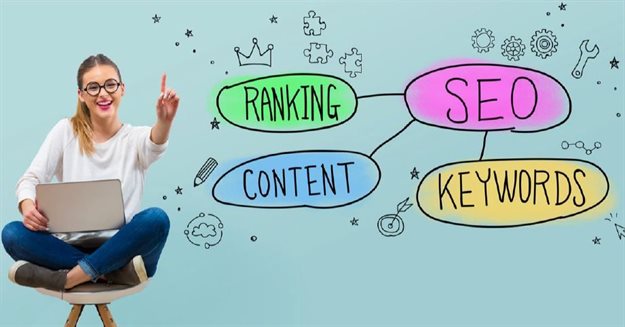
Tips On Creating An Effective Content Strategy And Being SEO-Savvy

Entering The SEO Kingdom

According to GMU Online, the challenge is to write smarter and become SEO-savvy by creating compelling and engaging content that will not only appeal to readers but that will simultaneously be optimised for search engine results.

As a content writer or copywriter, you are no longer only writing for readers (a target audience), you are also writing for Google – a demanding and ever-changing external force. This requires fortitude and nuanced skills.

Wearing two hats 

As a content writer, you need to get your head around these dual expectations, and for that, you will need to wear two hats. The success of your online business or e-commerce store will require more than just writing good content.

Your strategy includes two main goals:

1. Appeal and resonate with the end-user: your customers, clients, prospective audiences and target readers.

2. Solve a particular problem or answer a search query – keywords.

By wearing two hats – the hat of ‘creative writer’ and the hat of ‘keyword/SEO copywriter’ – you will not only be writing killer content, but you will see the results in your Google rankings. When a user types a term or phrase into a search engine, a list of websites will magically appear that will ‘match’ – or are relevant to – the specific search query keywords inserted. This matchmaking service is dependent on SEO.

Writing for SEO means optimising your content for search engines to make sure your website ranks higher than others for the same targeted keywords or search terms and phrases.

When a blog is more than just a blog 

Blogs are probably one of the biggest ways of connecting with customers and audiences, and they are your biggest chunks of online content. But when it comes to optimising your blog content within the kingdom of SEO, there are helpful plugin tools that will ‘audit’ your blog for effective use of targeted keywords – making sure your site content meets the highest SEO standards (Squirrly and Yoast are two of the big names).

These tools do not care how good your blog is, (they are not Grammarly), they just care how often and strategically the relevant keyword combinations are spread throughout your article so that your blog can rank. They are two of Google’s matchmaking minions, behind the scenes, detecting and analysing.

Your reader, on the other hand, does care how well written and engaging your blog is, and they don’t want to stumble over ill-placed, clumsy and over-used keyword terms randomly placed throughout an article. The tension, as a content writer, is having to please two masters, and both are hard taskmasters.

Woven through your inspired blog copy needs to be these technical little search terms, and they need to fit into the sentences and phrases as naturally, creatively and organically as possible. That takes skill.

The devil is in the detail…always 

As a copywriter, before you can even think of putting ‘pen to paper’ with inspirational content, you are embroiled in a fact-finding mission that involves attention to detail, and that means you have to become a keyword collector. Because your content is so much more than just content – your first call of duty is collecting highly-effective keywords. Basically, you need to become a ‘keyword junkie’ – that is the price you pay when writing for SEO. This requires research and data collection.

How do you figure out what keywords and search terms your potential customers are using? This is one of the key pieces of the SEO puzzle.

  1. Be tech-savvy: use free keyword generator tools, such as Google Trends and Google Search Console to help you determine your optimal keyword list, check your indexing status and optimise visibility of your website. (Also take advantage of Google autocomplete and Google Adwords Planner). Hubspot’s content strategy tool will help you plan your SEO strategy and optimise your content.
  2. Be a networker: ask your friends, employees, customers and potential customers – those familiar with your business, service or product – what questions they need answered, what topics are trending for them, and what problems they need solving. 
  3. Be a social butterfly: social media channels are a wonderful place to hang out, (even if you are an introvert), where you can find out the best keyword search terms you need to be focusing on. Facebook’s graph search tool allows you to find out what is trending and what people are searching for, and Twitter’s search functionality lets you in on trending topics, keywords and hashtags.

As search engines crawl your site, they are programmed and on the prowl to index pages based on the keywords to help determine the purpose of the content. This affects rankings, and that directly impacts your content and copy.

Copy, SEO and action

In moviemaking, lights + camera + action = the super trio of celebrity success. But in the world of digital technology and performance marketing, the equation is copy + SEO + action = the super trio of content success. If you want to push out killer content that will achieve your action goals, then this is your magic formula.

Your action goals (CTAs) are to convert customers – to get them to take some action that will benefit you and them. That could be awareness (getting them to visit your website), subscribing, liking, sharing, requesting a quote, adding to cart, buying, donating, etc.

Entering The SEO Kingdom

The means of these action goals is your content and SEO combo. Once your keyword collection data is sorted, then, and only then, can the fun begin – you can start writing. You now get to find your voice, your muse and your writing mojo – you get to write your story, (which will, of course, include strategically placed keywords). We are all wired for story – it is primal to our human make-up. As a content writer, you need to tell a good story, whether your role or focus is informer, persuader or influencer.

SEO keywords and technical search terms need to be couched in the wonder of creative storytelling, and as a wordsmith, this is where you live and breathe. Your reader may well be searching for a solution, an answer, a product or a service, but they are looking to find that within the world of story. Once they click on your ranked link (because you did your SEO homework), they are wanting to emotionally connect with the credibility and trustworthiness of your brand beyond the keyword search – that is what will make a difference, and that is what will make your website content stand out above that of your competitors.

Power of a story

You may be writing content for SEO, but you are actually writing content for people. Show them respect by ensuring your content is excellent, authoritative, substantial and relevant. As you take the user on a journey, your words need to capture their imagination, allowing them to connect with your brand story as they connect with your product or service.

This ‘content packaging’ will hopefully be leading the user to an action goal and to your cart. Besides being a blogging wizard, you also need to be on top of on-page optimisation and make it a constant priority.

On-page optimisation (aka on-page SEO/on-site SEO) means optimising your individual website:

  • To help search engines understand your website and its content.
  • To help search engines identify whether your website is relevant to a search query.
  • To rank higher and earn more relevant traffic in search engines.

All the content on your website needs to be high quality and relevant (not just blogs) – this includes page titles and category descriptions, headers, meta descriptions, titles, as well as alt text for images. When all these aspects are creatively optimised for SEO, your website’s visibility will improve in search results. It is simple cause and effect, and Google always rewards high-quality content. 

Effective on-page SEO will result in users not bouncing, but continuing to view and interact with the content on your website. They will stay a while. Helpful tip: the aim of text optimisation should always be to create content that is not only built around one keyword, but that covers term combinations and entire keyword clouds in the best possible way.

Google Analytics – the proof of the pudding

When writing content for SEO, Google Analytics is the Big Friendly Giant of the performance marketing world. It is an invaluable tool to guide your content strategy, telling you the good, the bad and the ugly. It will be the left brain messenger giving you scientific insights on what is working and what isn’t and how to optimise your website, campaigns and content.

Entering The SEO Kingdom

Google Analytics is a free tool tailor-made to help you refine your content, increase your audience and keep them engaged, and improve your rankings and drive sales. There are many factors at play and you need to know which questions to ask and which metrics to consult. As a content writer writing for SEO, we suggest you sign up for Google Analytics 101 ASAP or else make good friends with someone who really understands the ins and outs of Google Analytics.

Google Analytics can give you insights on how much organic SEO traffic your website is getting and where that traffic is coming from, which keywords are driving traffic to your website and to a particular page, and where to concentrate your SEO efforts going forward.


GMU ONLINE
+27858887305
info@gmu.online
gmu.online/e

The Odd Number Announces 62 Finalist Spots In 2020 Pendoring Awards

The Odd Number has taken the lead in the Pendoring Awards 2020 finalist list with 62 finalist spots. The agency is no stranger to the awards, as it was ranked number two with 136 points for its exceptional performance in 2019.

The Odd Number has been nominated under the print communication, film, and radio categories for their creative and conversational work for clients such as Assupol, Mass Discounter, Population Services International and Salvation Army.

‘With our team’s vast experience, we are able to continue rising to the occasion and produce global level creative and story-telling work without losing our core value, which is to produce truly African creative and strategic work. The fact that we are the leading finalists this year further demonstrates our impact within the industry and our growth as an agency,’ said Sibusiso Sitole, chief creative officer and co-founder of The Odd Number.

The Pendoring advertising awards are a truly unique initiative that celebrates the 10 indigenous languages in South Africa. The awards have been around for 25 years, originally created in 1995 to promote and stimulate the use of Afrikaans in advertising. Pendoring has gone through several changes to celebrate South Africa’s indigenous languages. The move to include and reward the best indigenous language advertising without any separation has been lauded as groundbreaking and as the most meaningful platform for the acknowledgement of local creative work by creatives and marketers across the board.

‘Our agency has continued to grow and evolve over the years, and so have the people that we work with. We appreciate our clients who have trusted us with their brands over the years and we are excited about the nominations and the recognition of the work that we do,’ concluded Sitole.

THE ODD NUMBER
www.theoddnumber.co.za
This is Modern Marketing