Home Blog Page 31

Brave Group Announces Significant Boost To Its Leadership Team

Key promotions and two senior appointments buoy a 100% Black-owned agency with a transformative, inclusive vision.
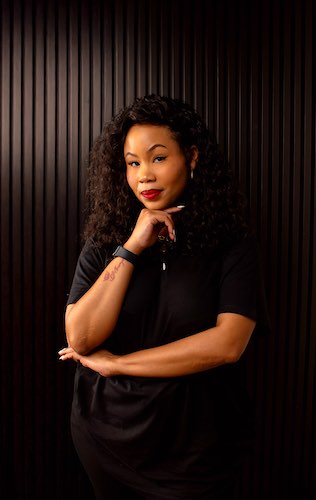
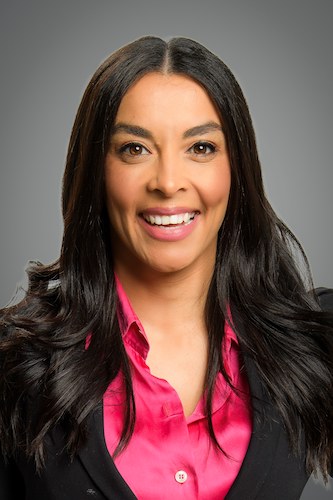
Bibi Bonnecwe, Brave Group.

Brave Group has promoted Bibi Bonnecwe to Executive Creative Director and has appointed Mosa Ntwampe as Head of Strategy and Collin Makhubela as Executive Creative Director. The moves underscore Brave’s commitment to attracting, retaining, and promoting world-class talent to deliver even greater impact for its clients.

‘People are the real differentiator in our industry,’ said Musa Kalenga, CEO of Brave Group. ‘Bonnecwe, Ntwampe, and Makhubela bring not only deep expertise but also a hunger to push creative and strategic boundaries. This is the kind of leadership that will drive brave thinking and brave action for our clients.’

Earlier in April 2025, Brave Group transitioned to a 100% Black-owned business when existing shareholders Kalenga, and chairperson Andile Khumalo, acquired the holding company from its founding shareholders. The move represented a breakthrough moment in an industry that has long been criticised for its slow pace of transformation, Kalenga said at the time.

Bibi Bonnecwe – Executive Creative Director

Bonnecwe steps into her new role after more than two years as Creative Director at Brave Group, where she has led with a mix of sharp creative vision and a strong culture of mentorship. Her career spans leading agencies, including TBWA\Hunt Lascaris, FCB Global Promise Group, Joe Public, and The Odd Number. A concept-driven creative with a background in journalism, Bonnecwe has built a reputation for storytelling that blends strategic insight with emotional resonance. As a member of the agency’s EXCO, she plays a pivotal role in shaping the Brave Group’s creative ethos and developing the next generation of creative talent.

Mosa Ntwampe – Head of Strategy

Brave GroupBrave GroupBrave Group promotions and two senior appointments buoy a 100% Black-owned agency with a transformative, inclusive vision.
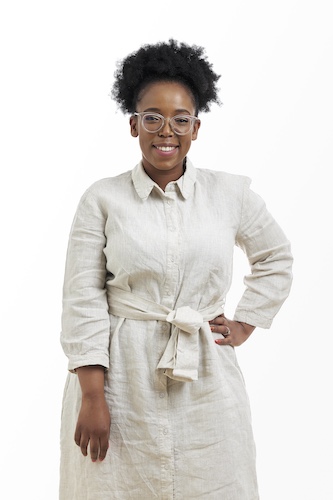
Mosa Ntwampe, Brave group.

Ntwampe joins Brave Group from Sakhumnotho Group Holdings, where he served as Group Head: Marketing and Corporate Communications. With degrees in communications and strategic communications, alongside qualifications in digital marketing and graphic design, he offers a rare combination of analytical and creative skills. His career journey, which began behind the counter of his parents’ small convenience store, has given him an instinctive understanding of brands, consumers, and markets. At Brave, Ntwampe will lead the strategic function, ensuring campaigns are not only creative but commercially effective.

Collin Makhubela – Executive Creative Director

Brave GroupBrave GroupBrave Group promotions and two senior appointments buoy a 100% Black-owned agency with a transformative, inclusive vision.
Collin Makhubela, Brave Group.

Makhubela brings 16 years of diverse creative experience, having worked with top agencies and blue-chip brands across Africa. His portfolio includes leadership roles at MultiChoice Group, Showmax, WPP ScanGroup, and Ogilvy & Mather Johannesburg. Known for his ability to tell inclusive, culturally resonant stories, Makhubela’s work has earned prestigious awards, including the D&AD Craft Yellow Pencil and Gold Loeries. His appointment signals Brave’s ongoing investment in crafting world-class creative that connects deeply with audiences.

BRAVE GROUP
https://bravegroup.co.za/

DNT Fund Appoints SoulProviders Collective And PR Powerhouse For Its Digital Communications And PR

SoulProviders and PR Powerhouse Appointed as Communications Execution Partners for Digital News Transformation Fund

SoulProviders, a digital creative agency within the Matrix Communications Group, has been appointed as lead communications partner for the Digital News Transformation Fund (DNT Fund). Reputation positioning, strategic media engagement and thought leadership will be led by PR Powerhouse.

The Fund is an initiative by Google in partnership with the Association of Independent Publishers (AIP) and is independently administered by Tshikululu Social Investments.

The DNT Fund will invest in the sustainability and digital future of independent and small news publishers in South Africa, supporting a diverse and representative news ecosystem as the media landscape undergoes rapid disruption. From community papers to niche digital outlets, the Fund recognises that journalism is essential to democracy but requires strategic support to thrive in a digital-first world.

‘This partnership allows us to do what we do best: build stories, brands and communities that matter,’ said Nosipho Ginindza, Managing Director of SoulProviders. We are proud to shape the voice and visibility of a fund that will change the future of independent media in South Africa.’

SoulProviders will lead the communications strategy, branding, and digital storytelling, while PR Powerhouse will focus on thought leadership, reputation positioning, and media relations. Together, they will support the Fund’s rollout through targeted campaigns, stakeholder engagement, and narrative building that speaks to both community and corporate audiences.

The DNT Fund supports publishers at three levels of readiness:

– Build: Early-stage news publishers in need of foundational digital tools (such as websites, content management systems, cameras, audio-visual equipment) and guidance to formalise operations.
– Grow: Mid-stage news publishers with an established online presence who require strategic and technical support to grow audiences, launch new products, or diversify revenue.
– Engage: Established publishers with fewer than one million monthly unique website users who are ready to experiment with sector-wide innovations or new business models that can be replicated.

With shrinking newsrooms, economic pressures, and the collapse of traditional news hierarchies, South Africa’s independent publishers play an increasingly vital role in informing, empowering, and reflecting communities. The DNT Fund meets this moment and looks ahead.

‘The Fund is here to provide not just financial support, but strategic capability,’ said Leanne Kunz, Head of Fund, Digital News Transformation Fund. We are thrilled to have SoulProviders and PR Powerhouse helping us elevate the stories of grantees and grow public awareness around the value of independent, public interest media.

SOULPROVIDERS COLLECTIVE
https://soulproviders.co.za/

PR POWERHOUSE
https://prpowerhouse.co.za/

Taking It Personally Is A Critical Quality Of A Challenger Mindset

The Value of Taking it Personally.
Nomonde Keswa, Delta Victor Bravo.

According to Nomonde Keswa, Strategy Director at Delta Victor Bravo (representing eatbigfish in Africa), we’ve been taught for decades ‘not to take things personally’ in various contexts – leadership, work, life, conflict, and even your mother’s advice on practically anything. But in many ways, Challenger brands take things personally when they set themselves up to break convention and change something fundamentally wrong with the categories they play in.

Professionalism is often regarded as a compliment, and understandably so. Treating yourself and others with respect, being reliable, behaving ‘appropriately’, remaining calm and objective in conflict situations, keeping your personal and work life separate – the list is endless, and well-meaning. However, when detachment and dispassion start becoming proxies for professionalism, the world becomes infinitely duller, which is tragic.

As Adam Morgan writes in The Pirate Inside, ‘If you look at people who we regard as highly successful, and the relationships they have with their work, their jobs or businesses, their challenges and what they demand of them – it’s not a professional one, but a personal one’. Although this perspective may seem contrary to conventional wisdom, ‘taking it personally’ is one of the most critical qualities of a Challenger mindset. When done with intention, it fosters depth, accountability, excellence, and meaning in our work. It’s how we create work that, dare I say, actually makes a difference.

The Power Of Personal Conviction

Conviction is often perceived as easier when it involves your own brand or idea. For example, the founder of W Hotel started the chain to address all the pet peeves he had with hotels and their lack of wit, warmth, and character – and that’s exactly what he’s infused into the hotel industry.

While this is often the case, you don’t need to be the founder or owner of a business or brand to take it personally. It’s about making a conscious choice to believe that what you’re doing, whether small or big, makes a difference to the organisation and the mission that organisation is set up for. You may have heard the story of the NASA janitor whose response to the question ‘What do you do here?’ was, ‘I’m here to put a man on the moon.’ That’s it. Ultimately, it’s about caring deeply and simply giving a damn. This is not the soft and fluffy care that is often assumed, but a deliberate act of stewardship to sustain and nurture what matters, with high standards.

In my work in strategy consulting, I often switch between brands and categories daily. Some I am naturally excited about, and others require me to work harder at activating a personal sense of stewardship. Undoubtedly some of my best work has come from projects I genuinely believed in, and felt personally invested in. It’s simply not possible to convince someone of something you aren’t convinced of yourself. While I understand that not everything about our work will feel exhilarating and life-changing, it is the power of personal conviction that allows us to dig deep, show up, and get things done.

Why Should You Care?

In a world where there’s so much competing for our time, resources, and attention, we need to engage in work and activities that feel personally important.

Firstly, when we produce work or perform any task without care, our personal identity is at stake. This is not about seeking external validation, but about taking pride in our thinking, our ideas, or our output – no matter how big or insignificant we may perceive them to be.
Secondly, when we detach from our work (out of fear, professionalism, or self-preservation), the unfortunate result is often bland output that reinforces the status quo. For most, that’s too great a risk to bear.

How To Take Things Personally (And Not Get Fired)

– Be unrelenting in your standards, not your ego. Uphold your standards about quality, values, or anything else that is important to you, but ensure your emotional investment remains constructive, not volatile.
– Fight for what you believe in but demonstrate this through the rigoUr and application of your thinking. Show you care about the outcome, not just about being right (despite how good this may feel to all humans).
– Focus your passion or constructive disagreement on a shared mission, not personal frustration.
– When under pressure, try to activate the qualities within yourself that shift you from ‘victim’ mode to ‘neutraliser’ mode (finding a way around the problem). Even better, aim for ‘transformer’ mode where you use constraints as catalysts for new opportunities.
– Always push to let the right idea win, even if that idea isn’t yours.

Above all, taking it personally requires you to set boundaries. I firmly believe that caring deeply does not mean being consumed to the point of burnout. We don’t need to glamourise hyper-productivity for our work or contributions to have weight in the world.

Taking it personally is not about fragility or weakness, it’s about being fiercely responsible for what you put out into the world. If for no other reason than to defeat dullness.

DELTA VICTOR BRAVO
www.deltavictorbravo.com

Africa Creator Festival To Tackle Creator Economy Growth Beyond Brand Deals

Africa Creator Festival to Tackle Creator Economy Growth Beyond Brand Deals

Founded by Jolene Roelofse, the Africa Creator Festival empowers creators across the continent to shift their mindset from content as passion to content as enterprise—equipping them with the tools to build long-term sustainability in an industry often reliant on unpredictable brand partnerships.

Johannesburg will once again play host to Africa’s premier gathering of digital creatives as the Africa Creator Festival returns on Saturday, 6 September 2025, at the Focus Rooms.

The festival will unite some of the continent’s most dynamic digital storytellers, influencers, and creative entrepreneurs for a full day of inspiration, collaboration, and insight. This year’s theme, ‘How to grow the Creator Economy through more streams of revenue, outside of brand deals,’ highlights a pressing conversation in the industry — how African creators can diversify income streams and build sustainable businesses.

‘The creator economy in Africa is exploding with potential, but too often we only look at brand deals as the end game. This Festival challenges creators to think bigger, through diversifying revenue streams, developing products, leveraging IP, and building businesses that last. It’s about taking ownership and creating true impact,’ said Roelofse.

Running from 09:00 to 16:30, the Festival programme will unpack practical ways creators can expand their income potential. Through interactive panels, masterclasses, and networking sessions, attendees will explore:

– Monetisation beyond brand deals.
– Turning creativity into enterprise.
– The business of influence.
– Spotify, TikTok and Youtube masterclasses.
– Join brand experts from SABC, JC Le Roux and more to find out how they have built long-term relationships with influencers; with influencers like Jaxx Amahle, Thobi Rose and Mohale sharing how they have built their brand and niche.

Why This Matters

The African creator economy is one of the fastest-growing in the world, yet the industry faces challenges: over-dependence on brand partnerships, inconsistent income streams, and limited access to growth opportunities. The Africa Creator Festival positions itself as the solution, a space where creators can:

– Learn to build sustainable businesses anchored in diverse income streams.
– Network with industry leaders, brands, and media to open new avenues for collaboration.
– Access practical insights distilled into ‘digital playbooks’ they can implement immediately.

For the media, the Festival also showcases a new generation of African talent transforming storytelling, commerce, and culture.

More information about the Africa Creator Festival can be found here. Pre-registration is required for entry. No under-18s are permitted.

CREATOR FESTIVAL
Tickets

The Pool Team’s Brand Campaign Features Local Actor

The Pool Team Just Keeps Swimming with 60 Stores, Glen Biderman-Pam, and Pool Safety

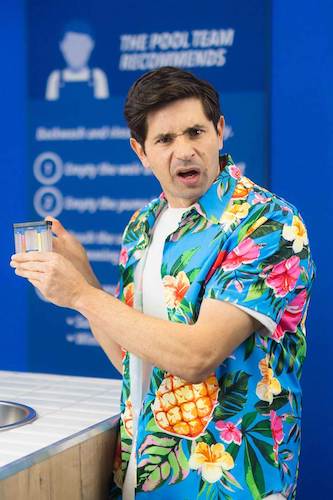
The Pool Team is celebrating the launch of its 60th store with its first-ever through the line brand campaign, ‘Just Keep Swimming’ with actor, Glen Biderman-Pam. The Pool Team hopes to celebrate its legacy by entertaining consumers and educating South African’s on pool tips and water safety ahead of the peak swimming season.

The campaign launched on Social Media, YouTube, OOH and in-store. This well-thought-out brand strategy is made up of a six-part video series humorously touching on the pain points of pool maintenance and will conclude with education on pool safety ahead of summer.

‘In celebration of our milestone 60th store opening, and over 50 years as a proudly South African brand, we wanted to deliver a message that resonates beyond swimming pools,’ said Dani Kaplan, CEO at The Pool Team. ‘In life there are moments when you simply need to keep your head above water and keep going. Just Keep Swimming reflects both our industry and a universal truth: resilience matters. It speaks to pool owners, but also to the human spirit and we hope it inspires people across the country.’

Kaplan said the decision to work with Glen Biderman-Pam for the Just Keep Swimming campaign was a simple one, ‘Biderman-Pam brings a uniquely South African humour to the campaign that is both clever and relatable. Collaborating with him was an absolute privilege. He was professional, humble, and brought the perfect mix of creativity and energy to the project.’ He added that Biderman-Pam’s witty, quirky style and wonderfully human qualities perfectly matched the spirit of Just Keep Swimming.

More than a brand campaign, Kaplan explains the company’s desire to use this opportunity to educate consumers on pool safety. He shared that our sunny, warm climate means swimming is second nature to South Africans, but along with pool ownership comes the responsibility of pool safety. ‘Pools are our daily business, they should be a place of joy, relaxation, and family time, never tragedy. Pool safety is critical and along with our brand campaign, we hope to educate families to make their pools safer.’

‘In the coming months, ahead of peak swimming season in the country, we’ll be sharing pool safety knowledge, tips and precautions to place a spotlight on pool safety and provide critical safety information that could prevent tragic water accidents,’ said Kaplan.

THE POOL TEAM
https://thepoolteam.co.za/

Converse’s Outdoor Campaign Honours Legendary Street Artist

Converse Honours Legendary Street Artist Tapz with Bold Outdoor Campaign in Johannesburg

Converse launched a groundbreaking outdoor campaign in Johannesburg, paying tribute to one of South Africa’s most elusive and iconic street artists: Tapz. Known for his (or her) anonymity and defiant creative style, Tapz has spent over a decade turning city walls into canvases of political commentary, youth expression, and cultural resistance.

Often described as ‘South Africa’s Banksy,’ Tapz has earned legendary status in the local and international street art scene.

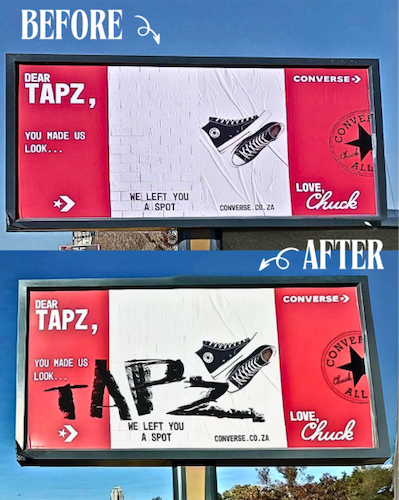
In a bold call to action, Converse transformed billboards and murals across Johannesburg into open canvases, featuring a simple but powerful message: ‘Dear Tapz, We left You a spot.’

The brand’s gesture was not a commercial partnership, but an open invitation, a celebration of Tapz’s legacy and a statement about giving space to authentic, often-underground voices shaping contemporary culture.

In a matter of days, the spaces were claimed. Tapz ‘tapped back’ with his signature tag that infused the Converse ethos of individuality and rebellion with his raw street style.

Despite the public response, Tapz remains anonymous. Converse issued a follow-up statement affirming that they are still searching for Tapz, not to commercialise, but to honour and collaborate with them.

‘We didn’t commission Tapz, we invited him,’ said Converse South Africa’s Marketing Manager, Tebogo Mothlamme. ‘This campaign is about creating space, not taking it. It’s about amplifying the artists who move culture forward.’

CONVERSE
https://www.converse.co.za/

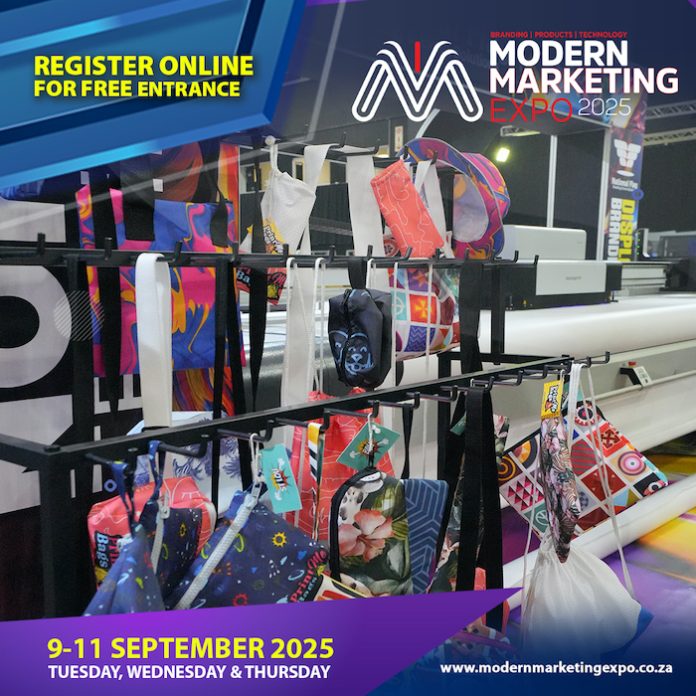
Take Personalised Product Branding To The Next Level At The Modern Marketing Expo

Take Personalised Product Branding To The Next Level At The Modern Marketing Expo

Personalisation and customisation is increasingly important in a world where people want to stand out and post their unique products all over social media. The Modern Marketing Expo will feature solutions to help you create unique and memorable solutions for maximum brand exposure. The event will be held from 9-11 September, (Tuesday, Wednesday and Thursday) at Gallagher Convention Centre.

See how to personalise various promotional products, create eye-catching T-shirts and unique tote bags, cellphone covers, water bottles and more. The expo will also feature solutions in branding, marketing, graphics, signage, digital signage, point of sale displays, promotional clothing, in-store branding, digital printing, T-shirt printing, vehicle graphics, promotional gifts and more.

Entrance to the Modern Marketing Expo, taking place from 9-11 September at Gallagher Convention Centre from 9am-5pm, is free, please register online.

MODERN MARKETING EXPO
+27 11 568 1894
https://modernmarketingexpo.co.za

Leadership Principles That Modern Marketers Need To Future-Proof Themselves

Leadership Principles That Modern Marketers Need To Future-Proof Themselves

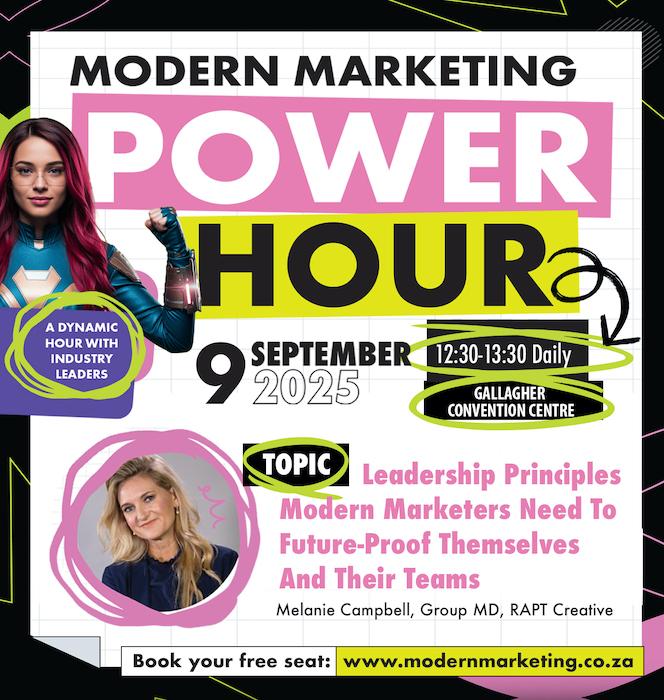
Melanie Campbell, Group MD, RAPT Creative, will speak about leadership principles that modern marketers need to future-proof themselves and their teams at the free Modern Marketing Power Hour, taking place at the Modern Marketing Expo at Gallagher Convention Centre.

Campbell will take a deep dive into the marketer’s evolving role in shaping not just comms but company strategy, innovation, and culture. Looking at marketing as a leadership function: the CMO reimagined. Book your free seat here for Campbell’s presentation on 9 September at 12:30-13:30.

You can also book your free seat to these presentations from industry experts:

Jonty Fisher, Chief Strategy and Integration Officer, Publicis Groupe Africa

Topic: Influence Or Illusion? Cracking The Code Of Effective Creator Partnerships

Unpacking the latest research and practical insights on driving real impact with influencers — what works, what to watch out for, and how to keep your brand’s story intact.

Date: 10 September. Book your seat here.

Graeme Stiles, Founder and CEO, Algorithm Agency

Topic: Why Your Performance Marketing Isn’t Performing: From Data Chaos to Growth Clarity

Today’s CMOs are under relentless pressure to prove performance, but despite sophisticated tools and growing media budgets, many brands still struggle to generate predictable, profitable growth. Why? This session goes beyond the usual platform tactics to expose the real reasons your performance marketing efforts may be stalling. Learn how your data layer, when unified and structured correctly, becomes the single most powerful growth lever in your performance marketing arsenal.

Date: 11 September. Book your seat here.

In addition to seeing these speakers, you can also attend the Modern Marketing Expo, which will be a showcase for the latest branding, marketing, graphics, signage, promotional products, commercial print, digital printing, T-shirt printing, vehicle graphics, digital packaging and other solutions.

MODERN MARKETING EXPO
+27 11 568 1894
https://modernmarketingexpo.co.za

Why OOH Success Can No Longer Be Measured By Reach Alone

Why OOH Success Can No Longer Be Measured By Reach Alone

According to Ruchelle Mouton, Chief Marketing Officer at Glynt, parent company to Tractor Outdoor, for years, out-of-home (OOH) advertising was measured by audience size and impressions. Easy to report, yes – but those numbers only tell us who might have seen an ad, not whether it connected or drove any shift in awareness, perception or intent.

Attribution changes the game. It measures how many people not only saw a campaign but remembered the right brand. It asks a far better question than reach ever could: not ‘how many passed by,’ but ‘how many remembered us.’

Measuring OOH has always been tricky. Billboards and forecourt screens don’t live in closed, trackable feeds like digital display ads. But tools have caught up. Advances in mobile data, programmatic digital OOH (pDOOH) and cross-channel analytics now reveal how exposure drives behaviour across the funnel, from recall and recognition to consideration and purchase.

Success Isn’t About Who Sees Your Ad. It’s About Who Remembers It

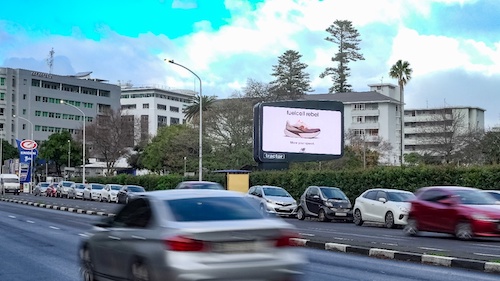
Brand lift studies show how powerful OOH can be when creative, format and placement align. One static OOH campaign for a leading e-commerce brand, built around a single high-traffic site in Cape Town with clean creative, achieved a +17-point lift in brand attribution and 55% ad recall, which is among the best global benchmarks. The lesson is simple: strategic sites, clear messaging and repeated exposure embed brands in memory.

Digital formats add another layer. A programmatic campaign for a software brand delivered a +37-point uplift in brand image and +32 in ad likeability, showing how dynamic delivery and real-time optimisation deepen resonance. By reaching the right people at the right moment and adjusting mid-flight, pDOOH combines OOH’s visibility with digital precision.

Attribution also highlights the unique roles of different formats. Large format DOOH captures attention and builds brand visibility, often outperforming benchmarks for recall. Proximity placements near points of sale, like forecourts, are especially effective for influencing purchase decisions – one snack brand campaign saw a +34 uplift in consideration among 18-34-year-olds.

We’ve seen that static OOH builds long-term brand presence, while DOOH adds flexibility, fine-tuning frequency and context for efficiency. Used together, these formats deliver both reach and impact.

Attribution Reveals What Works And Where To Go Next

Attribution insights need to inform every stage of planning. Use data to understand which formats and environments consistently shift perception or intent, and apply those learnings to media mix, site selection and creative refinement. Sometimes, the fix is as simple as making the logo more prominent or reinforcing distinctive brand cues. These small tweaks can have measurable impact.

It also deepens understanding of audiences. Younger demographics often show bigger uplifts in purchase intent, while older groups lean toward positive brand perception. These insights shape campaigns that speak differently to different segments, ensuring every placement works harder.

Challenges remain. Consumers move fluidly between channels, making OOH’s role harder to isolate. Data quality and inconsistent benchmarks complicate comparisons. But these are opportunities, not barriers.

By combining mobility analytics, surveys and behavioural data, we’re building a fuller view of how outdoor media influences the wider journey – and that journey is becoming more dynamic every day. Programmatic DOOH is shifting attribution from retrospective reporting to real-time optimisation. Soon, campaigns will adapt mid-flight based on live attribution signals, reallocating spend, refining creative and amplifying what works. Advances in mobile data, AI and modelling will push this further, showing not just whether the campaign worked but which message, screen or moment drove the strongest result.

OOH has always been a powerful brand-building medium. Attribution now proves it delivers measurable business outcomes, too. What matters isn’t how many people could have seen an ad. It’s whether the right people recognised the brand, remembered the message and acted on it. Because the true measure of a campaign isn’t how far its message travels, but how deeply it lands.

GLYNT GROUP
https://glyntgroup.co.za/

The Cost Of Keeping It Together And Being The ‘Strong Woman’

The Cost Of Keeping It Together And Being The 'Strong Woman'
Jill Snijman, 1st for Women.

According to Jill Snijman, Head of Marketing at 1st for Women, the term ‘strong woman’ is often seen as a high compliment, a badge of honour for those who navigate life’s challenges with remarkable resilience. We see her everywhere – in the boardroom, the classroom, the single-parent household – a figure of unwavering resolve, capable of juggling endless responsibilities with a seemingly effortless grace.

Yet, this praise and this very archetype of strength can also be an immense, and often invisible, burden. What if the same resilience that earns admiration is also the source of exhaustion?

In South Africa, where women have long been the bedrock of families and communities, this duality is acutely felt. The ‘strong woman’ archetype is not just a personality trait; it’s a pervasive societal expectation of being able to hold it all together as an emotional anchor, a financial provider, and a caregiver. Not surprisingly, being praised for this is a powerful positive reinforcement for the behaviour of appearing strong, even when the internal state is one of feeling overwhelmed. It unwittingly creates a performance trap where women feel the compulsion to maintain a facade of unwavering strength to continue receiving validation, and to avoid the perceived failure of disappointing others or themselves. 

We recently surveyed 4000 South African women to see how they are navigating the landscape of power and success – with the findings in Her and Now: Insights into the Women of South Africa 2025 Report. In it, the data is clear: more than 90% of the respondents say people assume they can handle everything because they’re resilient. This pervasive belief places an unyielding pressure on women to perform, to never falter, and to consistently meet the expectations of others.

The Cost Of Keeping It Together

This expectation is more than a feeling – it’s a daily reality for most women. A staggering 67% of the women we spoke to say they feel they’re expected to keep it all together every day. This isn’t a one-off event; it’s a constant, low-grade hum of responsibility that permeates all aspects of their lives. It manifests in the pressure to be the perfect employee, attentive mother, supportive partner, and reliable friend, all while maintaining a poised, polished exterior. 

The demand this places on women is emotionally and physically draining, leaving little room for self-care or vulnerability. It’s a burden further amplified by the fact that 68% of women report that others depend on them emotionally, financially, or socially. Women become the central pillar in a web of dependencies, and the fear of this pillar crumbling is often a source of anxiety.

This pressure intensifies dramatically with motherhood. Sixty-five percent of mothers strongly agree that this expectation becomes even more pronounced with motherhood, while 61% say they sacrifice their own needs to maintain family stability. For them, support often feels scarce, and softness even scarcer. Life feels like a multitasking marathon, with days starting early, ending late, and each packed with emotional and logistical labour. There is capability, but not capacity. Empowerment is real, but so is the burnout. The insights from our report reveal that 34% feel emotionally drained daily, and 33% say they’re praised for resilience even while feeling overwhelmed. Strength, it seems, is often mistaken for wellness.

The Unseen Battleground

Relentless strength doesn’t come without a cost. The emotional toll of being everything to everyone often reveals itself through physical symptoms, our bodies becoming a silent battleground where the stress of constant responsibility manifests in tangible ways. Concerns like weight gain, fatigue, and chronic pain are not just isolated issues; they are the body’s quiet protest, absorbing what can’t be said or shared. 

The unspoken rule is that a strong woman doesn’t need help; she gives it. But this role as a perpetual caregiver comes at a steep price, leading to burnout and even a sense of isolation.

The strong woman is not allowed to be tired, to be overwhelmed, or to simply say ‘no.’ Instead, she internalises this pressure. A self-imposed standard of perfection becomes her greatest adversary, with 68% of women admitting to judging themselves more harshly than others. This internal critic is a direct result of external praise for her strength – she must be strong, so any sign of weakness is seen as a personal failure. However, relentless self-criticism makes it incredibly challenging to acknowledge vulnerability, to admit to struggling, or to seek help. It’s a cruel irony that women are frequently lauded for their resilience even while grappling with feeling overwhelmed – nearly 33% of our respondents reported experiencing this unsettling disconnect daily. 

The pressure to provide for everyone else also comes at the expense of a woman’s own well-being, evidenced by the deep-seated guilt many feel when they dare to prioritise themselves. An alarming 64% of women in our survey shared that they feel guilty when they spend money on themselves. It’s a statistic that is not just about financial decisions; it’s a window into a mindset where self-care is viewed through a lens of indulgence rather than necessity.

Redefining Strength For A Softer Future

Our report’s findings clearly highlight the fact that the most profound and lasting power comes not from pushing harder, but from nurturing a life that is both peaceful and purposeful.

True sustainable strength, then, is not about how much a woman can endure, and it’s not about never breaking; it is about knowing when to bend, when to ask for help, and when to prioritise one’s own well-being without guilt. It is about recognising that capacity is just as vital as capability.

The time has come to challenge the societal praise of resilience and instead advocate for systems and support that reduce the need for constant struggle. True empowerment isn’t about glorifying the ability to endure hardship; it’s about creating a world where that hardship is less necessary. 

The path forward involves a collective redefinition of strength by women to include vulnerability, self-care, and the right to rest. This will create a powerful ripple effect that can normalise seeking support and put pressure for necessary societal and systemic changes. We must also advocate for more equitable parental leave policies, flexible work arrangements, and accessible mental health support, and we need to challenge the societal narrative that equates a woman’s worth with her ability to sacrifice.

The true measure of a progressive society will not be in how many strong women it produces, but in how it supports them, allowing them the space to be both resilient and rested. It’s time to move beyond the duality of strength and exhaustion and build a world where women are not just seen as capable, but are truly cared for.

1ST FOR WOMEN
https://www.firstforwomen.co.za/

This is Modern Marketing