

Home Blog Page 24

How Brands Can Connect With Consumers Who Crave Real-World Connection

Andries van Wyngaard, VML.

With online content becoming more dazzling by the day, it’s getting harder to wow people and harder still to make content that leaves any kind of lasting impression. Add to that the growing trend towards screen fatigue and digital detoxing, and the message is clear: if brands want to stand out, digital-only is not the way. But pairing it with a little old-school in-person marketing just might be.

Back To Humanity

Andries van Wyngaard, Production Manager at VML South Africa, is a big believer in experiential marketing, because there’s something special about putting a product right in someone’s hands. For all the convenience of e-commerce, streaming, and social platforms, plenty of people still want to touch, feel, and try products before buying them. That physical connection makes all the difference. It lets customers check the quality themselves and understand features that are hard to get across on a screen.

What brands gain from in-person interactions goes beyond awareness. It gives them a chance to actually connect with their customers face-to-face and build real confidence in what they’re selling. Never underestimate the power of a simple in-person smile to create relationships that last.

With the rise of digital fakes, interpersonal encounters build trust, and trust builds repeat business. Brands need these connections to turn one-time buyers into loyal customers who keep coming back.

Building Real Connection

This is especially relevant now because it taps into a wider cultural swing. VML’s Future 100: 2025 report revealed that, globally, there’s a rebellion against digital saturation. People want to unplug, re-engage their senses, and connect face-to-face. It’s a trend brands shouldn’t ignore – because it creates opportunities for more immersive experiences.

Depending on what you’re selling, good-old mall activations and trade shows are still goldmines for getting products into people’s hands. The beauty of these spaces is you know your target audience is already there – so you’re not wasting effort on people who aren’t interested. This dramatically cuts down the hit-and-miss factor and boosts your chances of making sales. Many brands get so caught up in digital that they forget these proven opportunities.

Blending Physical And Digital

The big game-changer in modern experiential marketing is how we’re blending physical and digital experiences together. This is especially important for customer relationship management and lead generation.

Instead of keeping these worlds separate like we used to, brands can create seamless experiences that connect in-person interactions with digital follow-up. It gives you the best of both worlds – the human connection people crave plus all the convenience and measurement capabilities of digital. It’s also what customers want.

In the newly launched VML Future Shopper Report: 2025, 66% of South African shoppers surveyed said they wished brands communicated seamlessly across different channels and 70% indicated they that want physical shopping experiences to be immersive, futuristic and showcase creative flair.

Imagine a shopper trying your product in-store and instantly receiving a follow-up on their phone with personalised content or an offer. Or a trade-show attendee scanning a QR code that links to a deeper digital journey. Done well, this hybrid approach gives brands the best of both worlds: a moment of human connection that resonates, reinforced by the data and convenience of digital.

3 Rules For IRL Experiences In The Digital Age

The real breakthrough lies in connecting the sensory immediacy of physical experiences with the efficiency and measurement of digital.

– Know Your Audience. Know exactly who you’re trying to reach and create opportunities to get your product in their hands in a way that’s friendly, engaging, and educational. Don’t just demonstrate features – think about how the experience can answer a real need or spark delight.

– Partner with the right agency. It may be tempting to DIY, but one thing I’ve learnt over many years in the experiential marketing game is that behind every seamless activation is a mountain of logistics, permits, and planning. Trust me, you don’t want to tackle this alone.

– Be audacious. Push yourself to do something completely unique and exciting; something no one has seen before. Consumers remember the unexpected. When they encounter something genuinely novel, they’re much more likely to engage deeply and recount the experience long after it’s over. That lasting impression is what turns experiences into sales.

When people are craving real-world connection, brands that are willing to logoff and meet them offline will be the ones making memories.

VML SOUTH AFRICA
https://www.vml.com/south-africa
Razor Wins At PRCA’S 2025 Global Platinum Awards

Razor Wins At PRCA’S 2025 Global Platinum Awards

Voted for by members of the PRCA from around the world, the Platinum Awards provide true global recognition from global peers on work that sets new standards in creativity and strategic excellence Razor Public Relations has won two awards at this year’s PRCA Platinum Awards in London.

Presented annually by the PRCA, the world’s largest professional body for PR and communications, the Platinum Awards set the benchmark for global PR excellence as judged by PR experts across the world.

Critically, these awards are open exclusively to campaigns that have already won or been shortlisted at other leading global awards over the past year. They are designed to celebrate the very best in international public relations, representing work that exemplifies the highest standards of creativity and innovation.

Razor secured wins in the following categories:

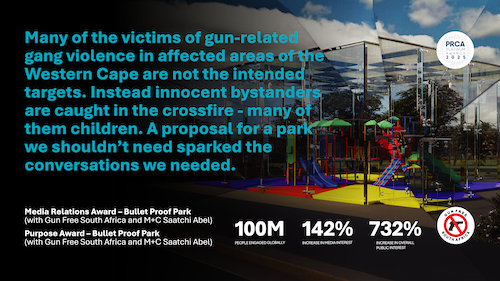
– Media Relations Award: Bullet Proof Park (with Gun Free South Africa and M+C Saatchi Abel).
– Purpose Award: Bullet Proof Park (with Gun Free South Africa and M+C Saatchi Abel).

The agencies data analyst Basetsana Baholo was runner up Global Rising Star of the Year.

‘Integrated world-class creativity is what will set the future of effective public relations programmes apart, especially as we seek to drive distinction and cut through in an ever-demanding news cycle. Success is no longer about generating ‘just’ awareness, it’s about sparking powerful conversations that elevate and build trust, and inspire positive behaviour change,’ said Razor PR CEO, Dustin Chick.

‘Creativity has become business critical in modern PR. What’s important is that it’s not just ideas for the sake of ideas, but more a focus on using well considered strategic insights to trigger bold thinking that cuts through the noise, establishes a new debate and elevates thought leadership,’ said Razor PR Executive Creative Director, Chris Lazley.

‘Working with our colleagues at M+C Saatchi Abel, we were able to build a truly compelling earned first creative platform that moved the needle on one of society’s most urgent social needs, especially in the Western Cape. Being earned first requires ideas that cross the divide between interesting and compelling, that go from memorable to behaviour change. Bullet Proof Park is just such a campaign, and it’s this approach that resulted in its win at the Platinum Awards and its shortlisting at Cannes,’ said Lazley.

RAZOR PR
www.razorpr.co.za

BRC Ushers In New Era For Radio Audience Measurement

BRC Awards RAMS Contract to GfK

Following an extensive RFP process, managed by Independent Agency Selection (IAS), the Broadcast Research Council of South Africa (BRC) has selected GfK Media Measurement (an NIQ Company) to spearhead the next phase of the radio audience measurement in South Africa. A comprehensive system design commenced in July, with data collection phase starting in September 2025. It is expected that GFK will deliver the first initial insights to the market in Q1 2026.

This appointment marks a significant milestone for the South African marketing, business, media, and advertising sectors, ensuring the delivery of robust, innovative, and actionable radio audience data for the industry.

Gary Whitaker, CEO of the BRC, commented, ‘We are pleased to partner with GfK Media Measurement for the next chapter of radio audience measurement in South Africa. The selection process was thorough and competitive, and GfK’s proposal stood out for its commitment to methodological rigour, and proven global expertise. This solution will provide the industry with data that is both reliable and future-ready, supporting strategic decision-making across the marketing, media, and advertising landscape.’

Lee Risk, VP, Commercial, Media Measurement at GfK said, ‘We are delighted to have been selected by the BRC to deliver the next generation of radio audience measurement in South Africa. Our approach is grounded in methodological excellence and a deep understanding of the local market, supported by global best practices. We look forward to working closely with the BRC and industry stakeholders to deliver data that empowers the sector to innovate and grow.’

GfK Media Measurement brings a wealth of experience and a proven track record in radio audience measurement, both locally and internationally. As part of NIQ, GfK leverages the expertise of a highly skilled South African team, many of whom have previously held key roles in radio audience research. This local capability is further supported by GfK’s globally recognised Media Measurement group, which has successfully delivered RAM systems in markets worldwide.

Whitaker added, ‘GfK’s hybrid approach Radio360, combining traditional paper diaries with digital e-diaries, ensures that the new RAMS will reflect the evolving ways in which South Africans engage with radio. Their commitment to quarterly public data releases and the integration of live streaming data in future phases aligns perfectly with the BRC’s vision for a modern, actionable, and inclusive radio audience currency.’

‘This win is a powerful validation of our innovative approach to media measurement,’ said Deb Hishon, Media Measurement Director, Pacific at GfK. ‘It reflects the global confidence in our Radio360 system and builds on the success we’ve already achieved in Australia. Our collaboration with NIQ South Africa showcases the depth of expertise we can bring to any media measurement market. We’re proud to contribute our capabilities as a global leader in this space.’

‘This is more than a contract win – it’s a testament to the power of innovation, collaboration, and global expertise,’ said Esti Prinsloo, SA&I Commercial Director at NIQ South Africa. ‘We’re proud to collaborate with GfK to bring world-class media measurement solutions to South Africa and look forward to a successful partnership with the BRC.’

Key Features Of The New RAMS

Hybrid recruitment system: GfK will use a dual approach, combining face-to-face recruitment for paper diaries with online research panels for e-diaries. This ensures broad reach and inclusivity across demographic groups.

Rolling data collection schedule: Quarterly public releases will provide up-to-date, actionable audience insights, supporting agile decision-making for media owners, advertisers, and agencies.

Integration of streaming data: In Phase 2, GfK will work closely with the BRC to incorporate industry streaming data, testing and implementing a Radio360 model similar to that used in Australia, reflecting the increasing importance of digital audio consumption.

Proven methodology: GfK’s approach is built on decades of experience in data collection, data science, and audience analysis, ensuring accuracy and reliability.

Future-proofing: The system is designed to adapt to ongoing changes in media consumption, providing a flexible, stable measurement solution for the industry.

Supporting the industry’s evolving needs: The South African radio landscape is dynamic, with audiences increasingly accessing content across multiple platforms. Accurate, timely, and actionable audience data is essential for media owners, marketers, and advertisers to make informed decisions and demonstrate value to stakeholders.

Whitaker concluded, ‘The BRC’s mission is to provide trusted, independent audience data that underpins the growth and innovation of the media sector. By partnering with GfK, we are confident that the new RAMS will deliver on this promise, supporting the industry as it navigates the challenges and opportunities of a rapidly evolving audio landscape.’

The BRC and GfK will work closely with industry stakeholders throughout the design and data collection phase, ensuring that the new RAMS currency meets the needs of all users. Regular updates and engagement sessions will be held to keep the market informed and involved in the process and look forward to the launch of a new, world-class radio audience measurement system in Q1 2026.

BRC
https://brcsa.org.za/ 

Tractor Outdoor Announces Revitalised Digilites Measurement

Tractor Outdoor announces revitalised Digilites measurement, bringing new levels of accountability to DOOH

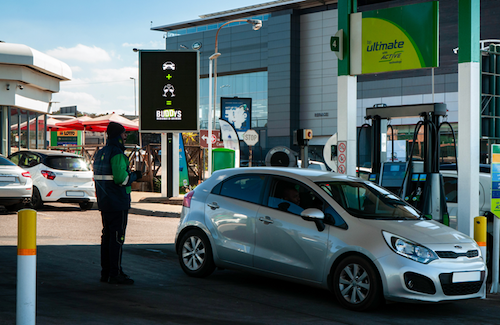
Tractor Outdoor’s deep investment in its forecourt audience measurement allows advertisers to establish the real reach of their campaigns. Powered by AllUnite and underpinned by the globally recognised Visibility Adjusted Contacts (VAC) framework, the new system introduces verified and quantified audiences, while the +165-screen Digilites network delivers brand presence and messaging frequency at scale.

‘This investment is an ongoing part of our strategy to innovate and engage the latest tech to ensure our clients stay top-of-mind in everyday environments,’ said Ruchelle Mouton, Chief Marketing Officer at Glynt, the parent company of Tractor Outdoor.

‘With the new measurement in place, advertisers can finally ‘buy’ certainty; not just in impressions, but in the true reach of their campaigns.’

Mouton says the updated methodology incorporates sensor and mobility data, capturing real movement patterns, dwell times, and audience flows around Digilite sites, while the VAC adjusts for angles, distance and site-specific factors to calculate viewed impressions.

This information is then validated against ground truth benchmarks. ‘Moreover, the three-sensor modelling provides a triangulated framework that ensures data consistency and reliability. Should one sensor be affected by power outages or signal issues, the model engages additional sensors to maintain accuracy, providing a credible measure of audience exposure by hour, day and location.’

Mouton says that owing to this new investment, Tractor is able to demonstrate scale and impact across the network, with a single booked slot delivering an average monthly reach of more than 400,000 unique individuals and over 5.5 million monthly viewed impressions, providing a highly accurate indication of reach and ensuring campaigns are measured on actual exposure. In total, the network delivers an audience universe of more than 65 million monthly viewed impressions.

‘For advertisers, this means Digilites campaigns can now be planned and reported with the same rigour as other digital media, with programmatic enablement, demographic insights for more precise targeting, and post-campaign delivery reporting included – which is verified data on actual campaign delivery, not just forecasts’, she added.

‘This offers a clear link to ROI, allowing them to connect their investment directly to audience delivery and business outcomes.’

TRACTOR OUTDOOR
www.tractoroutdoor.com

Loeries Student Expo Powered By Publicis Groupe Africa

Loeries Student Expo Powered By Publicis Groupe Africa

The Loeries Student Expo, powered by Publicis Groupe Africa, will once again take centre stage during Loeries Creative Week 2025, shining a spotlight on the brightest final-year brand communications students from across the region.

This year, students have submitted their finest work in the form of A2 ‘brag boards,’ which will be exhibited at the Homecoming Centre in Cape Town throughout Loeries Creative Week from 8 to 10 October. The Student Expo provides agencies with direct access to fresh perspectives and emerging talent, while giving students an invaluable platform to showcase their creativity to the wider industry.

Publicis Groupe Africa will host a dedicated launch event at the Expo. The event, taking place on 8 October, will bring together students, educators and agencies in a dynamic networking environment designed to break down barriers and open doors.

Publicis Groupe Africa CEO, Koo Govender, said the initiative reflects the Groupe’s deep commitment to nurturing young talent: ‘Our partnership with the Loeries is about creating pathways for the next generation of creatives to thrive. It’s about displaying their work and giving them the confidence and the opportunity to introduce themselves to the industry. This is a chance for agencies to share insights and for students to ask the questions that matter most.’

The Groupe’s investment in the Student Expo builds on its broader commitment to industry development through programmes like Le Cubs. This initiative offers young professionals access to mentorship, hands-on experience, and skills development to prepare them for meaningful careers in advertising and communications.

Pete Little, Chief Creative Officer, Publicis Groupe Africa, added: ‘Creativity is at its most powerful when it is unfiltered and bold, and that’s exactly what these students bring. By putting their work on display, we’re not only celebrating their talent, but also reminding the industry that fresh thinking drives progress.’

‘We see young talent not merely as an asset, but as the future we are actively cultivating and empowering,’ said Neo Selwe, Chief People Officer, Publicis Groupe Africa. ‘Events like the Student Expo are vital to shaping our people pipeline. Meeting these students face-to-face gives us the chance to inspire, guide, and invest in the leaders of tomorrow. It’s about building an industry where young voices feel they belong from day one. The Loeries Student Expo is a highlight of Creative Week, offering both agencies and students the chance to connect, collaborate, and co-create the future of the African creative industry.’

Publicis Groupe
www.publicisgroupeafrica.com

The Business Of Belonging: Is Cultural Capital Paying Off?

Following a successful debut in Johannesburg, MIC returns with ‘Business of Belonging: Is Cultural Capital Paying?’ at Loeries Creative Week 2025.

Marketing, Influence, and Culture (MIC) is proud to announce its second conversation series, ‘Business of Belonging: Is Cultural Capital Paying?’ As belonging increasingly drives brand loyalty, the question on every marketer’s mind is: Is cultural capital truly paying off? On 8 October 2025, MIC will take the stage at Loeries Creative Week to explore the powerful intersection of business, brand, and culture.

Created in partnership with dentsu X South Africa, MIC is a next-generation masterclass platform designed for Africa’s emerging brand builders and culture shapers. Positioned at the crossroads of creativity and commerce, MIC provides marketers with direct access to the insights, tools, and mentorship needed to lead with impact and authenticity.

This upcoming session will examine how cultural capital shapes campaigns that resonate with genuine meaning and relevance, unlocking new pathways to build lasting loyalty.

‘The first MIC session in June revealed a clear appetite for deeper conversations around culture and belonging in marketing. Therefore, it’s no surprise the next stop will be at the Loeries, bringing together marketing leaders, cultural strategists, and rising voices to explore how cultural capital can fundamentally transform the way brands cultivate loyalty and trust,’ said MIC.

Marcel Swain, Managing Director of dentsu X SA, affirmed, ‘MIC is committed to elevating conversations that redefine the future of marketing and culture on the continent. Loeries is the perfect platform to showcase these transformative ideas.’

The Loeries edition features two dynamic panels in one power-packed session:

Panel 1: The Business of Belonging

Moderated by Deshnie Govender, this panel will explore how brands are quantifying cultural relevance and converting it into tangible business results.

Panel 2: Culture at the Core

Moderated by TJ Njozela, Executive Creative Director, Dentsu Creative SA, this discussion delves into the economics of culture and the evolving value of artistic partnerships.

‘Belonging is no longer just an emotional connection. It’s a strategic business driver,” says Roxana Ravjee, CEO of dentsu SA. ‘Our mission is to challenge brands on how they measure and reward cultural capital in meaningful ways.’

Event Details

Date: 8 October 2025
Time: 3:30 PM – 6 PM
Venue: Loeries Creative Week: The Homecoming Centre
Tickets: Attendance is free of charge; however, seats are limited.

Brands Need To Prepare For The Future Of Media Measurement

The future of TV is digital: Know the metrics that matter to your brand
Leslie Adams, Reach Africa.

The Broadcast Research Council of South Africa (BRC) has appointed GfK (an NIQ company) to design and deploy the next-generation Total Video Measurement service. Leslie Adams, Sales Director at Reach Africa, says while this evolution is somewhat overdue, it is certainly worth recognising both the trust and consistency that Nielsen brought to the industry in establishing an uninterrupted benchmark for television measurement, so that media planners and buyers could offer their brands an indication of ROI (even if the data was arguably flawed or incomplete).

Without this universal yardstick, the medium would have found itself facing the very same challenges as radio: the Radio Audience Measurement Survey (RAMS) has been on pause since 2023, which has meant less granular insights, slower campaign optimisation, and reduced trust and accountability in the medium across the industry.

With the introduction of the Total Video Measurement, this will be a rather significant evolution and ‘level-up’ for advertisers, as our market moves towards a single currency that reflects how South Africans really watch content today. However, more than a step up, it is also a chance for South African TV to lead the way; adopting the best of digital – rich, granular, individual-level insights – while retaining the mass reach and impact of the traditional TV medium.

This evolution comes at a critical juncture, as streaming in South Africa continues to boom: 15.6 million South Africans now stream content compared to 10.8 million who subscribe to pay-TV. One in four South Africans is streaming, with heavy streamers averaging five hours of daily viewing. The question for brands isn’t whether audiences are watching, but where, how and why…and the answers lie in knowing the right metrics.

It’s time To Prepare

Richer measurement enhances the ability to determine success. With better data, brands can understand not just how many people saw an ad, but who they are, how they engaged, and what drove them to act.

As I often remind clients: what if broadcasters had access to the same level of data as Netflix? Suddenly, campaign planning and performance measurement would shift from blunt reach figures to nuanced insights, making every rand work harder.

This is what brands need to prepare for. The future of media measurement isn’t about chasing views; it’s about understanding audiences in a way that drives real return on investment.

If Content Is The Vehicle, Then Data Is The Compass

Are YouTube shorts still ‘TV’? TikTok clips? Micro-dramas? High-end streaming series? The current debate over ‘what counts as TV’ misses the point. Audiences don’t care about the definition of TV; but they do care about the experience of watching. Watching video across multiple screens is the new reality, and if you could measure across those with a single currency, the conversation around what is TV becomes irrelevant.

It’s about where the audience places their most valuable attention at any given time. For brands, this means content is still the vehicle, but data is the compass. Whether your audience is leaning back on the couch with a long-form drama, or leaning in on their phone for a short clip, what matters is that you can track, compare and plan across platforms in a unified way.

The Metrics That Matter

So what should advertisers focus on as we enter the new era of measurement? Four things stand out:

– Audience relevance: Know exactly who you’re targeting, and why they matter to your brand. Wasted reach is wasted spend; precision ensures your message lands with who it is supposed to.

– Engagement and community: Measure beyond impressions; look at shareability, conversations, completion rates and dwell time. True impact is not just about being seen, it’s being shared, discussed and remembered.

– Adaptability: Ensure your campaigns are designed for multi-screen, multi-format, and on-demand consumption. As audiences move fluidly across screens, your brand needs to move with them.

– Brand fit: Integration that feels authentic and natural, not bolted on as an afterthought. This builds trust and equity rather than irritation or rejection.

South Africa’s fragmented landscape with its mix of rural and metro audiences, varying technologies and uneven connectivity makes these metrics even more vital. The biggest challenge isn’t the technology itself, but solving how we measure one-to-one digital media versus one-to-many broadcast media. Crack that, and suddenly the ‘messy soup’ of disparate datasets becomes a clear picture of audience behaviour.

The media industry is at a crossroads. With new measurement tools on the horizon, advertisers have a rare opportunity to plan and prepare for what they want success to look like in a converged TV and streaming world.

Know the metrics that matter to your brand. Because the more robust the data, the better we can understand audiences – and the better equipped your brand will be to meet them where they are, with relevance, resonance and impact.

REACH AFRICA
https://www.reachafrica.com

PRISMS Summit 2025 Exploring How PR And Communications Can Drive Trust And Leadership

PRISA announces PRISMS Summit 2025: Shaping the future of PR & communications in Africa

The Public Relations Institute of Southern Africa (PRISA) is proud to announce the upcoming PRISMS Summit 2025, taking place on 16–17 October 2025 at the Radisson Blu Hotel, Sandton. Over two days, the summit will bring together leading professionals, academics, policymakers, and innovators under one roof to explore how public relations and communications can drive trust, credibility, and leadership in a rapidly changing world.

With plenary sessions, breakaway streams, leadership insights, and powerful networking opportunities, delegates will engage in high-level conversations and practical learning, all designed to raise the standard of practice across Africa by driving critical dialogue, innovation, and professional development.

Bradly Howland, President of PRISA, said the summit comes at a pivotal moment for the profession: ‘PR and communications are no longer peripheral functions; they are at the heart of reputation, trust, and leadership in society. The PRISMS Summit is not only a platform to share knowledge but a movement to redefine the role of communications in shaping Africa’s future.’

This year’s programme will include high-level discussions on:

– AI safety and governance: Ensuring ethical use of emerging technologies.
– PR professionalism: Building credibility and accountability in the industry.
– Leadership and agency excellence: Empowering practitioners to lead change in boardrooms and beyond.
– Professional roundtables: Collaborative exchanges with leaders from across Africa.

‘Technology is racing ahead, but communication professionals must ensure it is harnessed ethically and responsibly. We also need to champion credibility in our work and ensure our voice is heard in the boardroom. This summit is where Africa’s communicators will sharpen their skills, expand their networks, and co-create solutions to the challenges shaping our industry.

‘The PRISMS Summit 2025 is an opportunity to connect with peers, share experiences, and shape conversations that matter to the profession. It’s a chance to be part of a growing community committed to the future of the profession and communications as a whole,’ concluded Howland.

Register for the summit here.

PRISA
https://www.prisa.co.za

Brand Loyalty In SA’s Townships Is Being Rewritten By Survival Economics

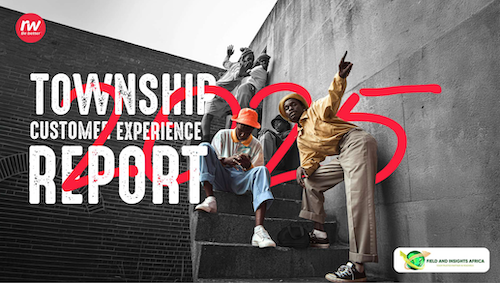
The 2025 Township CX Report is here, revealing how economic pressure is reshaping consumer behaviour across South Africa’s townships

Now in its fifth year, the 2025 Township Customer Experience (CX) surveyed more than 1600 township residents across the country’s nine provinces, providing an in-depth view of how price pressures, digital connectivity and cultural traditions are shaping the township economy. This was complemented by a MoyaApp survey of 3,820 township residents, offering further insight into how savings, insurance and banking trends reflect a survival-first reality.

Brand loyalty in South Africa’s townships is being rewritten by survival economics, where necessity trumps sentiment and households are forced to prioritise value in their daily spending. That’s the central finding of the report, released by Rogerwilco in partnership with Field & Insights Africa and MoyaApp.

According to Stats SA, food inflation hit 5.1% in June 2025, the highest level in 15 months, while the Household Affordability Index placed the cost of a basic 44-item basket at R5443.12, up 3.6% from a year earlier. These rising costs are leaving township households with less room to manoeuvre and forcing more deliberate choices at the till.

‘Conventional marketing wisdom assumes loyalty is fixed. What our research shows is that loyalty in the township context is highly rational and deeply tied to survival,’ said Mongezi Mtati, Senior Brand Strategist at Rogerwilco. ‘When 39% of consumers switch brands due to rising prices, it’s not disloyalty, it’s a calculated move to stretch every rand. Brands need to show up with consistent value, smarter pack sizes, and meaningful community engagement if they want to remain relevant.’

The report highlights how township shoppers are optimising across both formal and informal channels. Supermarkets are gaining traction, with 54% of respondents shopping there more often for bulk deals and promotions. At the same time, 29% have increased their spaza purchases, reflecting the complementary role these stores play in daily convenience and top-up shopping.

The government’s spaza registration drive, which ran from November 2024 to February 2025, appears to have paid unexpected dividends. Trust is on the rise, with 41% of residents reporting greater confidence in spazas after the process, while 49% favour shops run by familiar store owners. This renewed trust strengthens spazas’ position as neighbourhood hubs, even as supermarkets capture bulk spending.

Together, these trends reveal that township shoppers are not simply shifting loyalty from one channel to another; they are strategically balancing both, using supermarkets for bigger savings and spazas for trusted, everyday access.

While price remains the strongest driver of decision-making, township shoppers are not simply chasing the cheapest options. Among those who change stores when prices rise, 25% weigh price against quality, location and promotions, while 13% actively avoid products they view as poor quality, regardless of cost.

This reflects a sophisticated approach to value, where consumers balance affordability with standards of trust and quality. Even in households under strain, including 8% of store switchers who are unemployed and another 8% from households earning between R1000 and R4000 a month, shoppers are making calculated decisions about real promotional value and whether travel costs are justified.

For brands, the lesson is clear: loyalty cannot be won on price alone. Township consumers are shopping across multiple channels, supermarkets for bulk savings and spazas for everyday convenience, which means brands must be visible across this ecosystem. Consistent value, not once-off promotions, is what earns trust, while articulating worth beyond basic functionality and showing authentic community connection remain decisive advantages that pure price competition cannot replicate.

‘Trust is fundamental in the township economy, but brands should also focus on what makes them meaningful and different from their competitors. Even in a highly price-sensitive market, consumers are willing to pay a premium for brands they trust, ones that truly understand their needs and stand apart in meaningful ways,’ added Donald Mokgale, Managing Director of MoyaApp.

The 2025 report also uncovers a sharp rise in stokvel participation, with 71% of respondents belonging to at least one stokvel, a 39% increase from 51% just two years ago. Grocery and funeral stokvels dominate, reflecting township households’ need to pool resources for immediate essentials rather than long-term wealth building.

Just as collective saving is treated as a non-negotiable safety net, so too is digital access. The latest findings show that 37% spend R251-R500 per month on connectivity, often prioritising data over other essentials. While 40% have never used an app or website to buy groceries or fast food, women aged 25-44 are emerging as early adopters, driving the shift toward mobile-first commerce.

‘The township shopper is sophisticated, strategic, and pragmatic,’ concluded Mtati. ‘Brands that meet them with trust, relevance and respect for their realities will earn loyalty and build it for the long term.’

The full 2025 Township CX Report is available for download at here. The site carries all reports from 2021, the Township Marketing Podcast (TMP) launched earlier this year and other insightful content and trends that influence the township economy.

ROGERWILCO
https://www.rogerwilco.co.za/

Flow Celebrates Success At The 2025 New Generation Awards

Flow celebrates success at the 2025 New Generation Awards

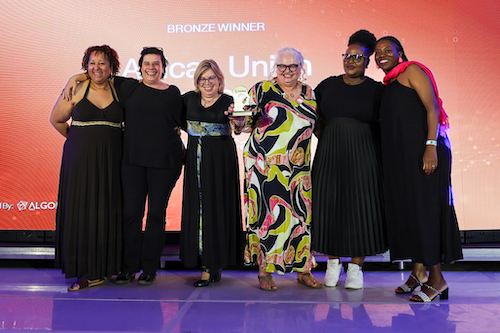
Flow Communications walked away with seven awards at the 2025 WesBank New Generation Awards, held at the NH Johannesburg Sandton hotel on 23 September. The New Generation Awards honour the agencies and brands pushing the boundaries of creativity and innovation in social and digital media while making a real impact, and Flow is proud to stand among South Africa’s leading agencies recognised at this year’s event.

‘These awards are all about celebrating social and digital brilliance, and we were so thrilled to be right there in the mix with some of the best and brightest agencies playing a role in positively influencing society through bold ideas and quality execution,’ said Flow CEO Tara Turkington.

Flow was awarded for the following clients:

MPA Alliance
– Gold – Best Social Media Reach from an Event/Activation by a Corporate – MPA Day 2024.
– Silver – Most Viral Campaign by a Corporate – MPA Day 2024.

Good Work Foundation
– Silver – Best Email Marketing Campaign by an Agency – Reimagining Rural Education campaign.
– Silver – Best Online Newsletter – Reimagining Rural Education campaign.
– Bronze – Best Email Marketing Campaign by a Corporate – Reimagining Rural Education campaign.

African Union Sports Council
– Bronze – Best Online PR Campaign by a Corporate – Keep Moving Campaign.

Travelisa
– Gold – Best Online Newsletter – Travelisa newsletter.

‘These awards celebrate the incredible team we work with. Every win at the New Generation Awards is the result of our Flowstars doing what they do best, which is helping our clients achieve growth and success,’ said Flow managing director Tiffany Turkington-Palmer.

FLOW COMMUNICATIONS
www.flowsa.com

This is Modern Marketing