
Home Blog Page 25

Unpacking The Best Channel For Business Messaging SMS + RCS + WhatsApp

Unpacking The Best Channel For Business Messaging SMS + RCS + WhatsApp

Selecting the right channel between SMS, WhatsApp for Business and RCS (Rich Communication Services) for Business can mean the difference between overlooked outreach, memorable engagement, and missed critical communications.

In an environment of evolving market conditions, regulatory developments, AI and emerging technologies, it is crucial to understand the use cases of SMS, WhatsApp for business and RCS for business and how these channels stack up in terms of today’s ROI, while building future-ready, secure communications platforms for forward-thinking brands.

Richard Simpson, Managing Director of Celerity Systems, which incorporates BulkSMS and Kero, said that the debate is not an either/or debate, but rather both/and, which looks at the co-existence between SMS, RCS for Business and WhatsApp for Business in a hybrid model. ‘SMS, RCS and WhatsApp are all channels that deliver messages to mobile devices, but they differ significantly in terms of features, reach and functionality. SMS retains its role as the trusted channel for mission-critical use cases, universal reach and reliability, while RCS for Business and WhatsApp for Business provide for engagement and interactive customer experiences. It’s about understanding the use case of each and then selecting the best messaging channels.’

SMS: Reach And Accessibility

SMS is reliable, universal and ready for urgent messaging. It allows for text messages limited to 160 characters and can include URL links. ‘SMS is available on virtually every mobile phone worldwide and it requires no apps and requires no internet access. Its simplicity and omnipresence ensure messages land in even the most basic handsets and in areas with the weakest mobile network coverage.’

‘For this reason, SMS remains among the most reliable channels in terms of reach and deliverability, and its use case remains strong even in the face of evolving technology. The shift however is towards utility, offering straightforward, text-only delivery that is ideal for time-sensitive alerts like OTPs, authentication, alerts, appointment reminders, service updates or flash promotions where deliverability is key,’ explained Simpson.

Realistically, SMS has its limitations in terms of branding and rich media, which means your interaction is limited to plain text and it is harder to track interaction beyond delivery. But this is where the combined use of Rich Business Messaging channels such as WhatsApp for Business and RCS for Business provides the perfect trifecta for communication that is impactful and engaging and always reaches the intended recipient with SMS as failover.

RCS For Business (Rich Communication Services)

 Unpacking The Best Channel For Business Messaging SMS + RCS + WhatsApp
RCS for Business is a platform that offers rich interactivity and branding opportunities.

‘RCS for Business transforms messaging with branding, carousels, images, videos, quick replies and more, that is directly available within the native messaging app. RCS for Business is an evolution of SMS, offering enhanced features and capabilities. While SMS is limited to text, RCS allows for multimedia content, interactive buttons and elements, and richer, engaging customer conversations. RCS for Business applies these capabilities to business-to-customer communications, allowing organisations to engage customers directly within their native messaging app through more dynamic and intuitive conversations.

As a result, read rates soar with 90% of rich media messages opened within 15 minutes. ‘Though RCS for Business may appear pricier initially for marketing messaging, its engagement and conversion benefits often outweigh the cost increases and are justified for businesses that want to attract attention and greater engagement. It is crucial to implement strategic segmentation and testing to help optimise the ROI,’ said Simpson.

One of the most significant advantages of RCS for Business is verified sender identity. Unlike standard SMS, where it is sometimes unclear who sent the message, RCS for Business requires that every sending brand undergoes a rigorous vetting process by Google and the participating mobile network operators before they can send a single message. Once verified, the brand’s name, logo, and a trusted verification badge appear directly in the message thread, so recipients know immediately and with certainty who they are engaging with. This dramatically reduces the risk of phishing and smishing attacks, cuts through the noise of spam, and gives consumers the confidence to engage, click, and transact, making RCS for Business a safer and more credible communication channel.

RCS for Business is available on many feature phones and smartphones and other mobile devices, however, the device message app on these devices needs to be RCS-enabled. RCS for Business is also not yet universally available across all geographies, and its availability still depends on a combination of factors including the country, the mobile network operators, and device and app support.

While RCS for Business as a channel is expanding globally, any business looking to deploy RCS at scale should assess country-by-country availability and work with a messaging partner like Kero that can confirm live carrier coverage and advise on appropriate fallback channels, such as SMS or WhatsApp, where RCS for Business is not yet supported. Kero is a specialist messaging provider that helps businesses reach customers across WhatsApp, RCS and SMS from one simple platform.

WhatsApp For Business

The business API (Application Programming Interface) utilised in WhatsApp is secure, global and adaptable. ‘With over 2 billion users globally, WhatsApp offers a secure channel for both iOS and Android users. It excels in centralised message delivery and is widely available in most markets where the WhatsApp app is a popular personal messaging channel,’ Simpson explained.

WhatsApp is an ‘over-the-top’ application which means that it delivers messaging over the internet, on top of the existing mobile or broadband network, rather than through the mobile operator’s traditional SMS or voice systems. Essentially, the mobile network just provides the data connection, and WhatsApp rides over that connection to deliver the service.

End-to-end encryption ensures secure exchanges, making WhatsApp ideal for sensitive conversations. ‘WhatsApp’s API allows seamless integration with CRMs and SMS, but you do need to consider that it is tied to opt-in, and template restrictions for outbound messaging do limit flexibility while messaging costs vary, particularly for large-scale promotional use. WhatsApp for Business API is best for building strong customer relationships, providing personalised support, and reaching a specific target audience,’ Simpson added.

With verified branding that builds trust and personalised customer engagement, WhatsApp Business provides rich media support with images, videos, and documents for more engaging interactions. With smart fallback options between RCS, SMS and WhatsApp, messages will get delivered if devices don’t support WhatsApp.

Maximising ROI With A Smart Hybrid Channel Mix
Adopting a layered approach by means of a smart channel mix plays on the strengths offered by all three of these channels:

– SMS is ideal for universal, reliable alerts. Think security tokens, billing reminders, alerts, authentication or urgent notifications.
– WhatsApp for Business is best for secure, personalised support and flows, which is ideal in the application of customer service, confirmations or follow-up.
– RCS for Business is the most engaging channel for marketing, which is perfect for interactive campaigns, rich promotions and immersive experiences.

As one practical example, appointment reminders are one of the most widely adopted use cases in business messaging, and SMS remains the backbone of this application. Its universal reach makes it indispensable in contexts where smartphone penetration and data connectivity cannot be assumed – rural clinics for example, rely on SMS to reliably reach patients regardless of device type or network quality, ensuring critical healthcare appointments are not missed.

However, WhatsApp for Business and RCS for Business build meaningfully on this foundation by introducing a richer, more interactive experience. Both channels support bot integrations that can handle reminders at scale without human intervention, and critically, they enable customers to take action directly within the message itself – confirming, cancelling, or rescheduling an appointment with a single button tap rather than having to make a call or send a reply. This reduces no-show rates, eases the administrative burden on staff, and delivers a noticeably more convenient experience for the customer. The result is a tiered approach to appointment communication: SMS ensures no one is left unreached, while WhatsApp and RCS elevate the experience for connected audiences who expect more than a one-way notification.

RCS for Business offers rich experiences that dramatically boost engagement, especially where supported while WhatsApp for Business provides unmatched global reach, trust and automation. SMS remains the foundation that offers fast, reliable and irreplaceable broad-based delivery regardless of internet connectivity or device. ‘The most savvy businesses will use all three – leveraging each channel’s strengths to optimise engagement, conversions, customer satisfaction and most crucially, return on investment,’ Simpson concluded.

TERESA SERRAS COMMUNICATION

https://tscommunications.co.za

Polygon Marks Major Step For Programmatic Digital Out Of Home Across Africa

Polygon Marks Major Step For Programmatic Digital Out Of Home Across Africa

Polygon, Africa’s largest aggregated programmatic digital out of home (pDOOH) publisher network, has announced the launch of its first full-scale Display & Video 360 (DV360) campaign in Nigeria; a milestone that highlights the growing maturity of pDOOH across the continent.

The campaign, executed in Lagos State for Schweppes, represents the first time a Google-based enterprise media buying platform has been used to deliver a pDOOH campaign at scale in Nigeria. It also marks Polygon’s first fully realised campaign in the market, following a series of earlier test runs.

At the centre of the campaign is a highly localised dynamic creative optimisation (DCO) approach, which sees the development of more than 500 unique creative executions, each tailored to the precise location of a billboard and its surrounding retail environment. Consumers are served context-specific messaging that directs them to nearby Schweppes stockists, with copy dynamically calling out store names and proximity, for example, ‘Get yours at Sessy and Folly Enterprises – just 140m away!’

Said Remi du Preez, Managing Director at Polygon: ‘This campaign is an exciting example of where the medium is heading in Africa, as we move beyond static messaging into something far more responsive and relevant.’

The campaign is currently live across Lagos, with screens strategically positioned in high-traffic roadside environments. Polygon’s infrastructure enabled the geofencing of retail locations within a defined radius of each screen, ensuring that messaging remained locally relevant and actionable. The campaign roll-out also saw the use of one of West Africa’s largest digital screens, a 600sqm large-format site, creating an even greater sense of presence for the brand.

Beyond its immediate impact, Du Preez said the campaign serves as a broader proof point for the African market. ‘Programmatic DOOH in Africa is now fully operational, scalable and delivering at a global standard. What we’ve demonstrated here is that markets like Nigeria can support geo-targeted, data-driven, dynamic campaigns in the same way more mature markets do. The infrastructure works.’

He added that unlocking new markets often depends on early adopters willing to test and learn, but that success tends to accelerate momentum quickly. ‘In every new market, you need a client that’s willing to lead. Once that first campaign proves itself, confidence follows and we’re already seeing increased interest from advertisers looking to enter the Nigerian pDOOH space.’

Polygon currently has access to the majority of roadside DOOH inventory in Nigeria, spanning key urban centres including Lagos, Abuja, Port Harcourt, Ibadan and Kano, positioning the network to scale future campaigns rapidly.

Du Preez says that this latest campaign forms part of Polygon’s broader strategy to build a unified DOOH ecosystem across Africa, offering advertisers a single point of entry into a fragmented but rapidly evolving media landscape.

‘And now by linking media exposure to real-world proximity and behaviour, we’re moving closer to bridging the gap between brand and performance in OOH, which is something advertisers have wanted for years,’ concluded Du Preez.


POLYGON
http://pdooh.co.za

Marketers And Creatives from South Africa Selected As Shortlist Jury Members For Cannes Lions 2026

Marketers And Creatives from South Africa Selected As Selected As Shortlist Jury Members For Cannes Lions 2026

Twelve of South Africa’s most respected experts in the creative marketing industries have been selected to sit on various Shortlist Jury panels to judge a number of categories for this year’s Cannes Lions awards.

‘As the official Cannes Lions Festival representative for the South African market, it is wonderful to have a broad range of industry representatives selected once again as members of the Shortlist Jury panels. We see it as a global acknowledgement of the very high standard of local talent that exists here,’ said Lynne Wylie, chief marketing officer of Ster-Kinekor.

‘The Lions Awards sit at the heart of the festival, and the jurors play a crucial role in shaping the work awarded at Cannes Lions. As such, it is important to uphold the standard of judging to preserve the value of the awards.’

The Shortlist Jury members have an important task ahead of them as they filter through the thousands of entries in their category to identify the best work. They perform the initial, large-scale review to select the shortlists, often working remotely or in the first phase of the festival. The Awarding Jury then reviews that filtered selection to determine the winners (Bronze, Silver, Gold) and the final Grand Prix.

Through its composition, the Shortlist Jury ensures fairness through a diverse mix of gender, location, and specialisation. It is essential that the work is judged by a stellar cast of world-class candidates comprising the very best creative talent.

‘We wish this year’s list of Shortlist Jury well as they go about their judging tasks, and trust they will come back to their respective agencies and corporates with many invaluable global learnings to share with their colleagues,’ commented Wylie.

The Cannes Lions Shortlist Jury Members from South Africa are:

CATEGORY
JURY MEMBER
AGENCY

– DESIGN
Bronwen Rautenbach: Co-founder, Owner, & Chief Creative Officer
Sunshinegun

– DIRECT Dudu Mokholo: CMO
Pernod Ricard

– ENTERTAINMENT
Justin Gomes: Founder & Chief Creative Officer
Bananas

– FILM
Graeme Jenner: Executive Creative Director
LePub

– FILM
Thabang Manyelo: Executive Creative Director
The Odd Number

– FILM CRAFT
Katlego Baaitse: Film Director
Spitfire Films

– OUTDOOR
Galaletsang Kgoathe: Creative Partner
Ogilvy

OUTDOOR
Thembelathu (Themba) Msibi: Head of Creative & Co-Founder
Black Swan Assets

– PR
Keri-Ann Stanton: Chief Strategist & Founder
KAMuses Consultancy

– PR
Nozipho Tshabalala: CEO
Conversation Strategists Agency

– SOCIAL & CREATOR
Bridget Harpur: Head of Marketing
Volkswagen Group Africa

– SOCIAL & CREATOR
Sibu Mabena: CEO & Chief Creative Officer
Duma Collective (Pty) Ltd

The 2026 edition of the annual Cannes Lions International Festival of Creativity takes place in Cannes, France, from 22 – 26 June.


CANNES YOUNG LIONS
cannesyounglionssouthafrica.co.za

Combine The Precision Of Modern Marketing With The Power Of Human Truth

Combine The Precision Of Modern Marketing With The Power Of Human Truth
Jacques Burger, CEO at The Up&Up Group.

Jacques Burger, CEO at The Up&Up Group, says as creative industry leaders, we like to believe we are in the business of rational persuasion. We talk about being data-led, insight-driven and optimised. We measure what works and we defend what we can prove. We build cases, not just campaigns.

And yet, quietly, often uncomfortably, we know that the work that really moves the needle does not just inform. It makes people feel something.

I was on a Teams call recently. It was a creative review with ten people. A few cameras were off, with a lot of polite agreement. The idea had already been through the system. It had been refined, de-risked and improved. What remained was competent, it was on strategy and it ticked every box. And yet, despite this, something was missing.

No one was asking the most important question: Will anyone actually feel something when they see this?

Later that day, my daughter forwarded me a piece of writing from a school friend. It was the words of a young boy reflecting on the loss of his mother. It was raw and unpolished. It was completely human. For five minutes, I was transported. I sat at my desk with tears streaming down my face.

And it struck me, not gently, but uncomfortably, later that evening: I cannot remember the last time an ad did that to me. Something that made me laugh out loud, or made me cry.

Now, before we declare the industry broken, it is not, much of the work we produce today is strategically sound. It is well-crafted and data-informed. In other words, it works. The problem is that while competence delivers, it is rarely remembered. This is because moving people is where disproportionate value lives.

Somewhere along the way, in our pursuit of certainty, we reduced risk. And in doing so, we diluted the very thing that makes work memorable. We did not do this deliberately or recklessly. It was incremental: A safer choice here, a broader message there.

The result of this is work that performs, but rarely resonates. And this is where the fertile opportunity sits, because emotion is not the opposite of effectiveness. It is a proven multiplier of it.

Les Binet and Peter Field’s analysis of the IPA Effectiveness Databank, spanning 30 years, more than 700 brands and 80 categories, is unambiguous: Emotional advertising is roughly twice as effective as purely rational advertising over the long term.

It also delivers significantly greater profit over time. Emotional campaigns are far more likely to produce sustained growth and pricing power, not because emotion replaces rational messaging but because it amplifies everything else.

Emotion does what logic alone cannot. It creates memory, drives sharing, builds affinity and lowers resistance. Ultimately, it influences behaviour, not by force but by connection. As Binet himself put it: ‘Emotions affect the prices people are willing to pay as much as they affect the volume that gets sold. In the long run, emotion is where the really big profits lie.’

So the question is not whether what we are doing is working. It is. Rather, the question is: How much more could it be working? For CEOs and CMOs, this is not a philosophical debate. It is a commercial one.

Under-weighting emotion shows up in very real ways: greater price sensitivity, higher spend to sustain sales, and brands that fade the moment media stops. Over-weighting short-term rational messaging can look efficient on a dashboard, but it quietly erodes memory, margin and desire over time.

Rebalancing towards emotion is not about being ‘softer’. It is about buying future cash flow at a discount.

This is not a call to abandon rigour or to romanticise a past that was no more perfect than today. It is a call to rebalance and recognise that effectiveness is not built on what people think alone, but also on what they feel.

Perhaps, in our reviews we should not just ask whether the work is clear, or if it is on strategy, or whether it delivers on the KPI. Perhaps we should also ask: Will anyone care? Will anyone remember this tomorrow? Would I send this to someone I love? And brands’ leaders would do well to ask: Will this still be earning for us in three years’ time?

The best work has always done both. It works. And it moves.

The most effective ideas tend to have three things in common:

– They are anchored in a sharp human truth.
– They keep at least one uncomfortable edge, something that makes people feel something specific.
– They are judged not only by what people say they think, but by what they visibly feel.

When those elements are protected through the process, the work may feel less ‘safe’ in the room, but it performs harder, and compounds longer in the market. We have proven, time and again, that creativity drives commercial growth, not as decoration but as a business tool.

The most powerful creativity does not just communicate. It recruits, it makes people want to be part of something.

We do not need to go back. We need to move forward, with everything we now know, and reintroduce the one thing we have quietly sidelined: Emotion.

When we combine the precision of modern marketing with the power of human truth, we do not just create better campaigns, we build brands with stronger pricing power, more resilient demand. We build far more valuable businesses.

THE UP&UP GROUP
https://www.theupandupgroup.com/

PSG Financial Services’ Brand Refresh Enhances Digital Engagement

PSG Financial Services' Brand Refresh Enhances Digital Engagement

PSG Financial Services’ brand identity update includes a revamped logo and visual identity, as well as a new website, bringing a more intuitive and accessible digital experience for clients, advisers and partners. PSG’s refreshed brand is supported by a new campaign centred on the idea that while the future is inherently unpredictable, clients can rely on a steady, consistent partner to help them navigate change.

PSG Financial Services CEO Francois Gouws said, ‘This isn’t just a new look. It’s about positioning ourselves clearly as an advice-led, fintech business, attuned to this fast-paced industry. It also reflects what sets us apart: our innovative nature and how we show up for our clients every day.’

Importantly, while the brand has been updated, the core of the business remains the same. ‘What will not change is the foundation on which our business is built: our values, our approach to advice, and our commitment to building long-term relationships,’ Gouws added. ‘The trust our clients place in us remains our greatest responsibility, and serving their interests will always be our highest priority.’

‘For PSG, value is not performative; it’s proven over time through the consistency of our approach and the strength of our client relationships,’ Gouws concluded. ‘I’m really proud of what our brand represents, and this latest refresh reflects the progress we’ve made together and the ambition we have for the future.’

PSG FINANCIAL SERVICES
https://www.psg.co.za

Corona Transforms High-Traffic Billboards With User-Generated Sunsets

Corona Transforms High-Traffic Billboards With User-Generated Sunsets

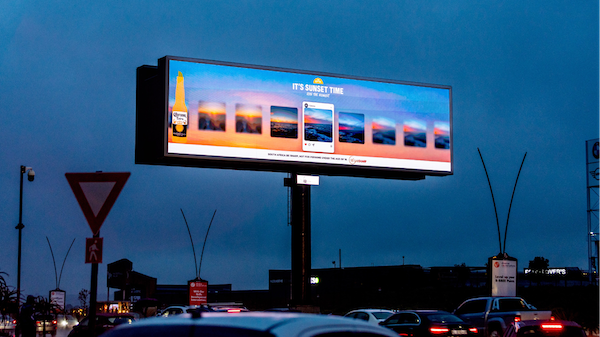
In a ‘first to market’ OOH Innovation never done before in South Africa, 2700 sunset moments captured by everyday South Africans were showcased over a month across premium digital Out-of-Home sites in Gauteng, the Western Cape, and KwaZulu-Natal, replacing traditional advertising with a continuous stream of golden-hour imagery.

In a bold reimagining of its media footprint, Corona recently transformed some of South Africa’s busiest commuter routes into immersive moments of calm, using the power of user-generated content to turn the country’s billboards into a shared celebration of sunset. Rolling out from the 16th March to 19th April 2026, the campaign-built momentum over a month before culminating in a nationwide billboard takeover, when South Africa’s busiest roads were transformed in real time.

At the heart of the campaign was a growing global shift toward ‘slow advertising’, where brands create value not through interruption, but through presence. In an environment defined by digital fatigue and high-intensity urban living, Corona repurposed its media inventory to deliver what it called ‘utility through beauty’, offering commuters a rare visual pause in the middle of peak-hour traffic.

High-density routes, including the N1 Western Bypass during rush hour, were transformed into moments of stillness, as sunset visuals replaced conventional messaging that invited drivers to slow down, even if just for a few seconds.

Built on Corona’s ‘Sunset Time’ platform, the campaign invited South Africans to submit authentic, unfiltered sunset photography via a dedicated microsite, which received 26,000 page visits in the process. These moments were then streamed in near real-time across digital billboards, effectively turning the country’s advertising infrastructure into one of South Africa’s largest ever collaborative public art projects.

‘Corona is synonymous with the outdoors and the sunset, and this campaign brought that to life at scale,’ said Melanie Nicholson, Head of Brand: Corona South Africa. ‘By connecting thousands of individual moments, we created a shared national experience that transformed everyday commutes into something more meaningful: a reminder to pause, reset, and reconnect.’

From ‘cheers’ between friends to the silhouettes of the Cape mountains and the coastline of Umhlanga, the billboards reflected the richness and diversity of South Africa’s natural landscape, and the universal pull of the golden hour. Each image offered a glimpse into a personal moment, yet together they formed a collective expression of what it means to be outdoors.

CORONA
https://www.coronaafrica.com/en-ZA

African Marketing Confederation Highlighting The Continent’s Growing Global Influence

African Marketing Confederation Highlighting The Continent’s Growing Global Influence
Helen McIntee-Carlisle, AMC.

As the African marketing sector prepares for the 5th Annual AMC Conference in Zambia this September, the African Marketing Confederation (AMC) is highlighting the continent’s growing global influence through its foundational role in the World Marketing Council (WMC).

This strategic global alliance will culminate on the continent at the highly anticipated 5th Annual AMC Conference, scheduled to take place from 23–25 September 2026, in Livingstone, Zambia.

Launched in August 2025 at the AMC Conference in Ghana, the World Marketing Council is a historic global collaboration between three premier continental bodies: the African Marketing Confederation (AMC), the Asia Marketing Federation (AMF), and the European Marketing Confederation (EMC). Uniting professional marketing associations from over 40 countries, the WMC was formed to drive innovation, inclusivity, and sustainable marketing growth worldwide.

Ensuring that Africa has a decisive voice in shaping global marketing frameworks, AMC President Helen McIntee-Carlisle currently serves as Vice President of the WMC. She sits on the executive board alongside WMC President Prof. Ferhat Anwar (Immediate Past President of the AMF) and WMC Vice President Ralf Strauss (Chairman of EMC).

‘The AMC’s leadership role within the World Marketing Council guarantees that while we adopt and align with world-class global standards, our home-grown, Africa-centric marketing approaches are preserved and championed internationally,’ stated McIntee-Carlisle, President of the AMC. ‘We have come full circle. Around 15 years ago, the first meetings to discuss the formation of the AMC were held in Livingstone. Now, we return to this beautiful city not just as a unified African body, but as founding members of a global marketing council.’

The WMC’s active presence at the 2026 AMC Conference, hosted by the Zambia Institute of Marketing (ZIM) at the Avani Victoria Falls Resort, dramatically elevates the gathering from a continental summit to a global industry milestone. For three days, Livingstone will effectively serve as the focal point for worldwide marketing innovation. By bringing representatives from its founding council, including senior delegates from Singapore, Indonesia, Thailand, Bangladesh, China, and Europe, the WMC is creating a rare environment where African marketing leaders can directly engage with, and influence, global standard-setters.

The WMC’s mandate to drive holistic, sustainable business growth is perfectly mirrored in the conference’s unprecedented cross-industry alliance. The WMC delegation will bear witness to a historic first: the AMC concurrently hosting its gathering alongside the Technology Information Confederation Africa (TICON Africa) and the African Supply Chain Confederation (ASCON).

Operating under the overarching theme, ‘Africa Rising,’ this joint conference models the exact type of multi-sector integration the global market strives for. It will demonstrate to the world the critical, connected pillars driving Africa’s economic future: marketing to communicate value, supply chains to ensure delivery, and ICT to make seamless integration possible.

The WMC’s attendance significantly heightens the stakes and prestige of the unified awards ceremony on 25 September 2026. Nominations for the 2026 AMC Awards are officially open, providing a definitive platform to celebrate the groundbreaking strategies and creative brilliance driving Africa’s markets forward. With the World Marketing Council’s executive leadership present, securing an AMC Award this year goes beyond continental recognition, it is an opportunity to showcase African marketing brilliance directly to international industry titans.

AFRICAN MARKETING CONFEDERATION
www.africanmarketingconfederation.org

New Innovation Designed To Connect Users Instantly To Campaign Content

New Innovation Designed To Connect Users Instantly To Campaign Content

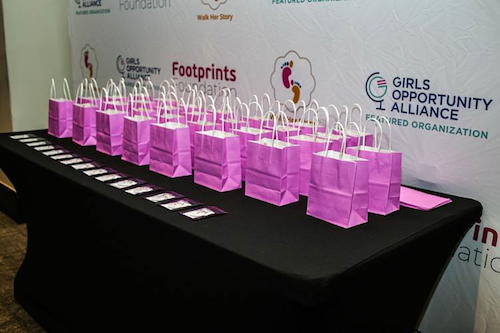
A new digital innovation aimed at transforming how social impact campaigns engage with the public was unveiled at the launch of Walk Her Story, as technology platform Portale introduced a tap-to-access NFC keychain designed to connect users instantly to campaign content.

Developed as part of Portale’s partnership with Footprint Foundation, the keychain serves as a portable media and engagement tool, allowing users to simply tap their phone to access real-time information about the Walk Her Story campaign.

The technology gives instant access to a range of content, including campaign updates, videos, impact stories, partnership opportunities, and media resources, all without the need for downloads or complex navigation.

The innovation was introduced as part of the broader Walk Her Story campaign, a national Gender-Based Violence (GBV) prevention initiative led by Footprint Foundation in partnership with FootGolf South Africa.

Eric Mlambo, Founder of Footprint Foundation, said the integration of simple, accessible technology is critical in expanding the reach of awareness campaigns.

‘If we want to reach people where they are, we need tools that are immediate, accessible, and easy to use. This keychain allows anyone to connect to the campaign instantly, and that’s how we begin to scale awareness into action.’

The NFC-enabled keychain functions as a ‘tap-and-access’ gateway, turning everyday interactions into opportunities for engagement. By removing barriers to information, it ensures that campaign resources remain continuously accessible to media, partners, and the public throughout the 24-month rollout.

Portale’s innovation highlights the growing role of technology in social impact,particularly in creating seamless, user-friendly ways to engage audiences and drive participation.

A representative from Portale noted that the goal is to simplify access while deepening connection.

‘Technology should not be a barrier, it should be an enabler. With this solution, we’re making it easier for people to engage with causes that matter, in real time.’

PORTALE
https://www.portale.co.za

Connected TV Is A Powerful Yet Underused Channel In Media Planning

Connected Is A Powerful Yet Underutilised Channel In Media Planning
Leslie Adams, Reach Africa.

Leslie Adams, Sales Director at Reach Africa, says Connected TV (CTV) receives just 7% of total media budgets, despite delivering a knockout punch on returns (30% higher ROI according to Analytics Partners). The question worth asking is why, because CTV is not new anymore, and the evidence is strong.

Audiences have already made the move, with viewers across income groups moving away from Pay TV to streaming and switching between apps as easily as they used to change channels. Yet proportionately, brand budgets simply have not yet followed suit, and understanding that requires being honest about where the industry is getting it wrong.

Part of the answer is that brands do not know where to place CTV. It has never had a clear home in the South African media landscape, sitting uncomfortably between digital and broadcast, and treated as an extension of one or the other rather than as a channel that deserves its own strategic weight. Digital teams see it as expensive video. TV buyers see it as a niche add-on. The result? A channel that gets chronically underweighted in plans that should have it at the front-and-centre.

In reality, there are now two ways to buy television audiences, ‘mass TV’, dominated by linear, and ‘targeted TV’, the space created by CTV, but most planning frameworks have not caught up to this shift.

The Industry Is Caught In A Loop Of Its Own Making

The deeper problem is one the industry has created for itself. Brands optimise for short-term clicks and conversions because those metrics are immediate and easy to justify to a CFO. This pushes budgets further toward performance formats, which causes advertising effectiveness to plateau, which makes the case for brand building even harder to make.

In a recent study by global media network dentsu, digital video’s impact on purchasing decisions was found to last up to three years, while short-term performance effects fade within three months. Brands chasing clicks are leaving literally years of value on the table. In other words, we are systematically over-investing in what is easiest to measure, not what is most effective.

CTV sits right at the intersection of this problem, and it is also the solution most planners are overlooking. It delivers the scale and attention of television with the targeting and measurability of digital, yet it is still being evaluated through an outdated lens. Many planners either see it as a premium ‘nice-to-have’ or a programmatic afterthought, which they can automate and then forget about. Neither approach fully leverages what the channel is actually capable of.

This is where the gap between audience behaviour and media investment becomes commercially significant. Streaming is no longer a niche or purely affluent behaviour, it is increasingly where broad, and often harder-to-reach, audiences are spending time. Yet budgets still skew toward channels optimised for reach, not attention.

Do Not Just Blindly Buy CTV, Plan For It

There is a further issue in how CTV is being bought. Programmatic buying has made the channel more accessible, but ease of access and strategic effectiveness are not the same thing.

Just throwing something against the wall and seeing what sticks does not maketh a media strategy. When CTV is reduced to a purely programmatic execution, the contextual placement, the premium inventory and the role it plays across the broader media mix all get lost. Brands end up in CTV environments without really capitalising on them.

That is a significant missed opportunity, because CTV offers exactly what marketers say they want: the ability to build awareness and consideration, strengthen brand recall, and improve downstream performance across search and conversion.

The old adage that TV builds brands and digital drives clicks is no longer a true representation because in reality,CTV does both. It holds attention in a way most digital environments cannot, while still influencing the lower funnel in measurable ways.

Most brands are investing in it at a fraction of what the returns justify, and until planning structures catch up with where audiences actually are, that gap is going to keep costing them.

REACH AFRICA
https://www.reachafrica.com

Botswana Department Of Broadcasting Services Removes Stipulation For Local Commercial Production

Botswana Department Of Broadcasting Services Removes Stipulation For Local Commercial Production
Mark Knocker, Marnox Media.

The Botswana Department of Broadcasting Services has removed the local production rule and has appointed Marnox Media as its South African agent. Marnox Media have been lobbying the public Broadcaster in Botswana for many years to remove the rule that all Television and Radio commercials flighted on BTV and RB2 have to be locally produced.

‘We worked closely with local strategy expert Peter Langschmidt to prove to the Department of Broadcasting Services (DBS) that multinational and South African advertisers could not justify producing a specific commercial for Botswana when the GDP was only 5% the size of South Africa,’ said Mark Knocker at Marnox Media.

DBS agreed and have removed the stipulation for local commercial production with immediate effect. Chris Botha, MD of Park Advertising, which places over R1 billion worth of advertising in Southern Africa stated, ‘This is great news for our clients, they can now easily flight existing material directly on the biggest commercial stations aimed at the Botswana market.’

In addition to this breakthrough, DBS have appointed Gaborone based Venture Bliss, led by Diks Ketlogetswe as their sales representative. Venture Bliss have in turn appointed Marnox Media to represent BTV and RB2 in South Africa, Kenya and other African markets.

Marnox Media
www.marnox.co.za

This is Modern Marketing