
Home Blog Page 14

Today’s Media And Creative Wastage Is Tomorrow’s Market Share

Todays Media And Creative Wastage Is Tomorrow's Market Share
Pieter Geyser, Humanz.

In this article, Pieter Geyser, Commercial Director at Humanz, explains how mistaking efficiency for effectiveness is costing brands on both fronts. He also emphasises on the 10/95 Rule: the reality that roughly 10% of creative work drives 95% of marketing value.

The Boardroom Ritual

Each month, the same scene plays out in boardrooms around the world. A media agency stands before a brand manager, pointing proudly to a glossy deck. ‘Last quarter, your media wastage sat at 15%,’ they declare. ‘But thanks to our new hyper-granular targeting parameters, we’ve managed to slice that waste down to just 4%. Look how much of your budget we saved.’

The brand manager applauds. The agency retainer is safely renewed. Everyone goes home happy.

But there is a dark, unspoken truth lurking beneath the applause. The agency did not save the brand money. They gave you a framework for thinking about marketing that is wrong in every direction it points. And the damage runs much deeper than your media plan.

The Wanamaker Problem

Most people in marketing know the quote. John Wanamaker, the 19th century retail pioneer, famously said, ‘Half the money I spend on advertising is wasted. The trouble is, I don’t know which half.’

It has been repeated in boardrooms for over a century. It feels honest. It feels relatable. And it is far too generous.

The reality is not a neat 50/50 split between what works and what doesn’t. The evidence points to something far more lopsided: roughly 10% of creative work drives approximately 95% of measurable marketing value. The remaining 90% does not fail catastrophically, it simply does not break through.

This is what statisticians call a fat-tailed distribution. A small number of outcomes produce a wildly disproportionate share of the results. It shows up in publishing, in music, in venture capital, and in marketing more clearly than almost anywhere else.

Call it the 10/95 Rule

Here is why it matters: if you cannot know in advance which 10% of your creative will deliver the outsized results, and the evidence strongly suggests you cannot, then the entire logic of modern marketing efficiency is built on a false premise. You are optimising a system that rewards the unpredictable as if it were predictable. And you are losing.

The Media Wastage Fallacy

To understand how badly this plays out in practice, start with how the industry thinks about media.

‘Media wastage’ has become the ultimate boogeyman. Fuelled by the rise of performance marketing and an industry obsessed with efficiency over effectiveness, brands are relentlessly pursuing the elimination of every impression that doesn’t lead to an immediate, trackable action.

But media wastage is not a leak in your budget. It’s a fabricated metric designed to make agencies look indispensable.

Think about what hyper-targeting actually does in practice. A brand selling a premium product targets women aged 35, driving a Mercedes, living in a specific zip code, working in corporate tech. An ad is served to a 33 year old woman driving a BMW who lives two blocks outside that zip code. The agency’s dashboard flags it as waste.

But that woman might be six months away from being the brand’s ideal customer. She might tell three friends. She might remember the brand when her life circumstances shift. The data doesn’t capture any of that, so the agency calls it waste and charges you to eliminate it.

What performance marketers call media wastage is actually long-term brand building and mental availability. When a brand serving products for women over 30 reaches a 23-year-old, the short-term dashboard screams inefficiency. But in seven years, when that woman enters the target demographic, she will choose the brand she has known for a decade over the competitor that starts aggressively targeting her the morning of her 30th birthday.

Brand building is about influencing people before they are actively in the market to buy. If you only target the fraction of people ready to purchase today, you are trapping your brand in a hyper-aggressive, low-margin price war with no exit.

There is also a practical problem with hyper-targeting that agencies don’t advertise. It drives up your cost per thousand impressions significantly. You are paying more money to reach fewer people, under the guise of efficiency. Broad reach looks easy, which makes it hard for agencies to charge a premium for it. Hyper-granular targeting looks like rocket science, which justifies high retainers. The incentive structure is not aligned with your growth.

The AI platforms have already solved the targeting problem, by the way. Meta, TikTok and YouTube don’t need a human strategist building 42 micro-segmented custom audiences. They need good creative and a broad audience signal. The algorithm will find the buyers. It is better at this than any team of people pulling levers in an ad manager. When you hyper-target, you are not helping the machine. You are constraining it.

The Creative Wastage Fallacy

Here is where the story gets uncomfortable. Everything just described about media targeting? Brands are doing the exact same thing to their creative. And almost nobody is talking about it.

The same efficiency logic that drives hyper-targeting in media now drives creative decisions too. Ads are pre-tested to death. Concepts are run past focus groups. Everything is optimised for recall scores and brand safety. Anything that feels unfamiliar, risky, or genuinely different gets killed before it sees daylight.

Brands are, in effect, trying to eliminate creative wastage. And in doing so they are systematically filtering out the 10% that would have mattered.

Think about what that means in practice: If breakthrough creative is by definition unpredictable, then every process designed to de-risk creative decisions is a process designed to remove your best outcomes. The pre-test doesn’t find the winner. It finds the inoffensive middle. And the inoffensive middle does not build brands.

The greatest campaigns in advertising history would not have survived a modern approval process. They were strange, bold, or counterintuitive. They looked like risks. They were risks. That is precisely why they worked.

The job of a CMO is not to make the 90% more efficient. It is to maximise the number of shots you take at the 10%. That requires volume, variety, and the courage to back ideas that might fail, because the alternative is a portfolio of safe, focus-grouped creative that is statistically guaranteed never to break through.

You cannot A/B test your way to a cultural moment. You cannot eliminate creative risk, without also eliminating creative upside.

The Bridge: Creative Volume Solves Both Problems at Once

So what do you actually do about it? The answer is less complicated than the industry wants you to believe. If 10% of your creative drives 95% of your results, and you cannot predict which 10%, then the most rational response is to increase the total volume of creative you produce. More attempts mean a larger absolute pool of potential breakthrough work. You are not trying to find the winner in advance; you are creating more chances for a winner to emerge.

But here is the part that connects everything: higher creative volume does not just solve the creative problem. It solves the media problem at the same time.

When you give a platform a single piece of creative and a hyper-targeted audience, you are making every decision yourself. You are telling the algorithm who to reach, and what to say to them. You are removing its ability to do the thing it is genuinely better at than any human team.

When you give a platform varied creative at volume and a broad audience, something different happens. The algorithm tests each piece of creative against real audience behaviour in real time. It finds the people most likely to connect with each execution. It optimises toward engagement signals you could not have predicted; and would not have thought to target.

The Creative Becomes The Targeting Mechanism. This is why the framing of ‘creative or media’ has always been wrong. And ‘creative plus media’ is only marginally better. The real relationship is multiplicative, not additive. Great creative amplifies media reach. Broad media reach amplifies the impact of great creative. Volume amplifies both, which brings us to the only formula that actually matters in modern marketing.

The Formula

(Creative x Media) x (Quality x Quantity x Continuity). Each element multiplies the others. Zero in any variable collapses the whole equation.

Quality means creative that is genuinely distinctive, not just competent. Quantity means enough volume to give the algorithm real signals, and give your 10% a chance to emerge. Continuity means staying in market long enough for brand memory to compound, because mental availability is built over years, not quarters.

The industry has spent two decades optimising individual variables in isolation. Better targeting. Cheaper production. Shorter campaigns. Every intervention made one number look better, while quietly degrading the system as a whole.

The brands winning long-term are not doing something complicated. They are producing more creative, running it broadly, and staying consistent for longer than feels comfortable. They are making more bets than everyone else. They are funding the search generously, because they understand this to be the only way to reliably find the solution.

Conclusion: Ask Better Questions

The next time an agency stands in front of you, proud of the four percent wastage figure on slide seven, do not applaud. Ask them how many pieces of your creative they tested last quarter. Ask them what percentage of your budget went to broad-reach versus hyper-targeted audiences. Ask them how long your best performing campaigns ran before they were pulled. Ask them how many shots you were given at the 10%.

If they cannot answer these questions, they are optimising your budget for their own metrics; not your growth.

The greatest brands in history did not build global empires by hunting down two percent variances in demographic targeting data. They built them through broad, unapologetic, emotionally resonant creative, run at volume, for longer than felt rational.

They understood something the efficiency experts never will. Today’s wastage, in media and in creative, is tomorrow’s market share. Stop trying to eliminate it, start trying to earn it.

HUMANZ
www.humanz.com

Brands That Want To Remain Relevant Need To Design For Attention From The Start

Brands That Want To Remain Relevant Need To Design For Attention From The Start
Nicolas van Zyl-Smith, Naritive.

Naritive is a brand sponsor of this year’s WesBank New Generation Awards. Media partner, Modern Marketing, interviewed Naritive’s Global Founder and CEO, Nicolas van Zyl-Smith. He discusses the future of advertising, the importance of using AI while strengthening the human skills that still matter most, and why being clicked is not always the same as being remembered.

Why did Naritive come on board as a brand sponsor for this year’s New Gen Awards?

The New Gen Awards celebrate the exact kind of work this industry desperately needs more of: work that is brave, measurable, culturally relevant, and built for how people actually behave online.

For us, this is about backing the agencies, brands and creators pushing the industry forward. Naritive was born here, built here and scaled from here. Supporting a platform that recognises the next generation of digital excellence feels deeply aligned with who we are.

But there is a more immediate reason for us, too. As relative newcomers to the industry, we are actively looking to build deep connections with value-aligned partners. Shifting an entire advertising ecosystem away from empty vanity metrics and toward real human engagement is a massive undertaking and we know we cannot do it alone. We want to pull up a seat at the table and connect with the forward-thinking brands and agencies who want to build that high-fidelity digital future alongside us.

The industry is entering a new era. Awards should celebrate real human attention, deep engagement and true business impact. That is the exact conversation we are here to help move forward.

What value will Naritive add to the awards?

Naritive brings a different lens to the awards. We sit at the intersection of creativity, technology, media and measurement, which means we are interested in what happens after an ad is delivered. Was it noticed? Was it experienced? Did someone engage with it? Did it create any meaningful impact?

The industry has spent years optimising for visibility, but visibility is not attention. A campaign can be served millions of times and still be ignored at scale. Through our platform, formats and attention-led approach, we want to help shift the conversation from media delivery to human engagement.

What are some of the biggest challenges the marketing and advertising industry is facing, and how can brands and marketers adapt?

The biggest challenge is attention. The industry has become dangerously good at putting more into the market while getting less meaningful engagement in return. Consumers are moving faster, filtering harder and ignoring more than ever before.

That means the old comfort metrics are no longer enough. Being served is not the same as being seen. Being viewable is not the same as being noticed. Being clicked is not always the same as being remembered.

Brands and marketers need to adapt by building for human attention from the start. That means stronger creative, better context, more interactive experiences and media choices that respect how people actually behave online. It also means measuring what matters, not just what is easy to report.

What does the future of advertising look like, and how can brands ensure they do not get left behind?

The real advantage will sit with brands that can create distinctive ideas, turn them into engaging experiences, and prove that people actually noticed, remembered and acted.

Cannes made it clear that creative, media, data, creators, commerce and measurement are no longer separate conversations. They are becoming one connected ecosystem. Brands that stay stuck in silos, build assets for single channels, or measure success through impressions alone will fall behind.

To stay relevant, brands need to design for attention from the start. That means making creative more interactive, more portable across channels and more accountable to real effectiveness.

For Naritive, this is the opportunity. We help agencies and brands take existing creative and turn it into attention-led experiences that work harder across the media plan they already have.

What does AI really mean for creativity, productivity, people and the future of work in digital advertising?

AI is going to make the industry faster and it is here to stay. That part is obvious. The more important question is whether it will make the work better.

Used well, AI can take a lot of the repetitive drag out of the system. It can help teams move quicker, test more ideas, personalise better and spend more time on judgment, strategy and craft. Used lazily, it can flood the market with average work at industrial speed. That is the real risk. AI can make average faster, but average is still average.

The Cannes conversation also seems to be moving beyond AI hype. Business Insider reported that senior marketers at Cannes were talking less about blind acceleration and more about human discernment, originality and creative taste as competitive advantages in an AI-shaped industry.

For people in digital advertising, the future will not be about competing with AI on output. It will be about using AI while strengthening the human skills that still matter most, like taste, cultural understanding, strategic judgment, originality and empathy. The people who thrive will be the ones who know how to use the tools without outsourcing their thinking to them.

You recently partnered with a local team in Kenya that will represent Naritive. Can you comment on the importance of having teams who understand the culture and nuances of the country they are in, and do you think some brands still fall into the trap of treating Africa as one homogeneous market?

Yes, and it is one of the reasons we are very intentional about how we expand. This is not a unique insight to Africa, but any business that has accumulated some transnational success will know it is not one market. It is a continent of different cultures, languages, behaviours, media habits and commercial realities. This is not to say that there are not some striking similarities, but arrogantly ignoring this fact is a short road to a messy end.

Having a local team in Kenya matters because representation is not just about sales presence. It is about understanding the market properly. It is about knowing the nuance, the humour, the consumer behaviour, the platforms people actually use and the way brands earn trust in that environment.

For Naritive, expansion is not about parachuting in with a one-size-fits-all adtech solution. It is about building with people who understand the country they are in, while giving them access to technology that can scale across markets.

What exciting developments does Naritive have in the pipeline?

Embedding basic AI features into a workflow is rapidly becoming a baseline commodity. In today’s adtech environment, if a company’s core strategy relies entirely on AI services or products, it will not last long. While our upcoming platform release will make smart, guardrailed AI creation native to the Naritive ecosystem, our truly disruptive developments lie elsewhere.

The real excitement in our pipeline surrounds our strategic infrastructure partnerships with Google and Lumen Research.

By completing our migration onto Google Cloud Platform, we have centralised a Unified Data Layer in BigQuery containing over 750,000,000 proprietary campaign data points. Leveraging this massive engineering foundation alongside Lumen’s eye-tracking methodologies allows us to train deep, predictive attention models rather than optimisation based on empty, accidental clicks. We use this data to deliver verified commercial outcomes tied directly to our proprietary Attention Per Mille (APM) score.

Furthermore, we are actively looking beyond ordinary display banners. While our interactive Connected TV (CTV) product line is already live and operational, we are currently establishing new partnerships to onboard entirely new activation channels, specifically Digital Out-of-Home (DOOH) and Retail media inventory.

Our ultimate ambition is to build the definitive, cross-channel Attention Intelligence Platform right here in Africa, prove its undeniable ROI locally and scale it as a world-class infrastructure export globally.

How is Naritive reinvesting directly into the community that backed you when you were just starting out?

Naritive’s growth is deeply tied to the South African ecosystem. We were fiercely backed by local clients, agencies, and talent who believed African adtech could compete globally. For us, reinvesting means moving past corporate platitudes to focus on three distinct pillars:

1. Keeping innovation local and continental

Too often, multinational companies treat African markets merely as sales destinations rather than places where technology is actually built. We are completely flipping that script. We keep our core engineering and product innovation firmly rooted in our local hub to scale capabilities within the continent. Furthermore, as we expand our footprint across Africa, we are turning our home market into a proud net-exporter of world-class adtech infrastructure.

2. Building industry connections

We are not just attending existing forums; we are actively designing and launching our own proprietary industry events. Our goal is to bring the local media, agency and tech communities together in dedicated physical spaces, creating a highly collaborative environment where industry peers can connect, share deep structural insights, and engage with each other directly.

3. Direct grassroots social impact

True community support requires real action on the ground. As our business scales, we have a responsibility to support the vulnerable communities surrounding us. We are currently investigating partnerships with vital local NGOs to channel resources, awareness, and direct support to the organisations doing the heaviest lifting.

Ultimately, giving back has to connect to what we do best: driving meaningful human connection toward the things that actually matter.

Naritive Aside

Van Zyl-Smith is also a partner of Lucky Hustle, which recently launched Lucky Chery, a purpose-built agency team.

Question for Darren Morris, CEO of Lucky Hustle: Do you think these purpose-built teams are the future, and can you speak about the changes happening in traditional agency structures in order to adapt to market needs?

Yes, because clients are no longer buying agency structures. They are buying outcomes, speed, ownership and specialist thinking.

Lucky Chery is a good example of that shift. It was built around a specific client, a specific category and a specific commercial ambition. That means the team is not trying to force the client into a traditional agency model. It is designed around what the brand actually needs, with the right mix of strategy, creative, content, digital and cultural fluency working as one unit.

I do not think the agency model is dead, but the old template is under pressure. Agencies have to become more flexible, more integrated and more accountable. Purpose-built teams allow you to keep the best parts of agency thinking, which are creativity, craft and strategic depth, while removing some of the bureaucracy that often slows the work down. For us, Lucky Chery is not just a resourcing model. It is a statement about how we think modern agency partnerships should work. Build around the client and the opportunity and not around an organogram.

WesBank New Generation Awards

The WesBank New Generation Social & Digital Media Awards are South Africa’s premier independent and performance-based digital accolades, and have become the definitive benchmark for digital excellence in the South African corporate and agency sectors. Mark your calendars for September 23rd, the night Johannesburg witnesses the pinnacle of South African digital achievement.

WESBANK NEW GENERATION AWARDS
https://www.newgenawards.co.za/

Nedbank IMC Announces Addition Of Panel To 2026 Programme

Nedbank IMC Announces Addition Of Panel To 2026 Programme
Thebe Ikalafeng, Brand Africa.

The Nedbank IMC is Africa’s biggest marketing conference. It has announced the Brand Africa CMO Panel as part of its 2026 programme, taking place on 17 September 2026 at Mosaïek Teatro, in Johannesburg or online. Modern Marketing is a proud media partner of the Nedbank IMC.

Under the 2026 theme Shift Happens™, the panel will bring together three influential African brand and marketing leaders for a conversation on how brands build trust, stay relevant and grow in a changing African market.

The panel will be facilitated by Thebe Ikalafeng, Founder and Chairman of Brand Africa and Chancellor of Sol Plaatje University. Ikalafeng has spent more than 30 years working across brand, identity and reputation, advising businesses, governments and institutions on how brands shape trust and influence behaviour. He is also the architect of Brand Africa 100™.

Joining him will be Khensani Nobanda, Group Chief Marketing Officer at Nedbank Group Limited, and Opeyemi Lawal, Chief Marketing and Communications Officer, Africa, NBA.

Khensani Nobanda, Nedbank Group Limited.

Nobanda leads marketing, brand and social impact across Nedbank Group. She is Chairperson of the Marketing Association of South Africa, sits on the boards of Effie Awards South Africa and the Loeries, and has been recognised as one of South Africa’s leading marketers.

Lawal brings a strong pan-African growth and sports-marketing perspective. At the NBA, she leads work focused on building audience connection, relevance and fandom across the continent, with experience spanning technology, telecommunications and consumer markets.

Opeyemi Lawal, NBA.

Together, the panel will explore what African brand leadership requires now: cultural understanding, trust, relevance and the ability to build brands that matter to the people they serve.

‘This panel brings together three people who understand what it takes to build relevant, trusted brands in Africa,’ said Dale Hefer, CEO of the Nedbank IMC.

The Nedbank IMC 2026 will blend global insight with African context. Thousands of students will also attend virtually at no cost through the YOUTH1000 programme, in partnership with MASA.

Nedbank IMC
www.imcconference.com

Registrations Are Open For The Modern Marketing Expo

Registrations Are Open For The Modern Marketing Expo

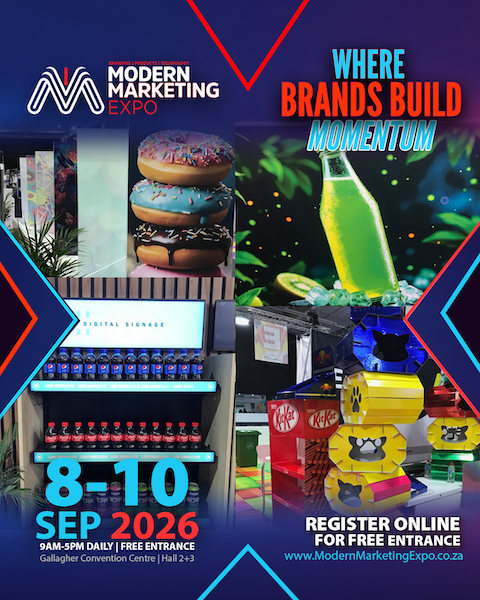
Registrations are now open for the region’s dedicated branding and marketing exhibition, Modern Marketing 2026, where brands build momentum. The event is taking place 8-10 September (Tuesday, Wednesday and Thursday) at the Gallagher Convention Centre, Johannesburg.

This is Africa’s focused marketing expo for marketing professionals to see the latest developments and innovations in: marketing, branding and technology including  advertising, media, promotional products, branded apparel, AI design and content technologies, marketing technology, signage, displays, visual communications, print, production technologies, digital experience and engagement, and retail and shopper marketing.

Supercharge Your Marketing At The Modern Marketing Power Hour

Industry leaders will share their expertise and insights in the ever-evolving field of marketing at the free-to-attend Modern Marketing Power Hour, taking place in Hall 3 at Gallagher Convention Centre. Book your slots here.

Anisa Fielding, Head of Marketing, IMM Graduate School

Topic: The African Consumer Decoded
Tuesday, 8 September 2026, 12:30-13:30

There is no single ‘African consumer’, and treating more than a billion people as one market is one of the fastest ways for a brand to get Africa wrong. The African Consumer Decoded uses compelling data, surprising marketing facts and real brand examples to unpack the cultural, economic, digital and generational forces shaping consumer behaviour across the continent.

From mobile-first commerce and informal retail to language, identity and community influence, the session reveals why consumers may use the same products very differently across markets. Entertaining, practical and evidence-based, the talk will examine campaigns that connected, campaigns that missed the mark and the lessons marketers can use to build more relevant, credible and effective African marketing strategies.

Camagu Sam, Senior Sales Manager, Mall Ads

Topic: Rethinking Retail Spaces and Retail Marketing
Wednesday, 9 September 2026, 12:30-13:30

As foot traffic patterns shift and e-commerce continues to place pressure on physical retail, malls are having to reinvent their value proposition. This talk explores how treating physical retail space as a structured media network, rather than simply a leasing asset, is reshaping the economics of shopping centres, with implications for retail marketing, and shopper engagement.

Tendai Rukwava, Founder and CEO, Coral Communications

Topic: Responsible AI in Marketing: The Governance Framework Every Brand and Agency Needs
Thursday, 10 September 2026, 12:30-13:30

While AI is a powerful tool, PR and marketing should still be human-led. Building a human-led, AI-supported business requires an AI usage policy to set up clear rules and terms of engagement up front. Learn about the frameworks your company should have in place to protect client data, prevent plagiarism, ensure responsible use, and more.

Please register online for free attendance to the Modern Marketing Expo, taking place 8-10 September, 9am-5pm at Gallagher Convention Centre. The event is co-located with: Sign Africa, FESPA Africa, Africa Print and Graphics, Print and Sign expos.

MODERN MARKETING EXPO
+27 11 568 1894
https://modernmarketingexpo.co.za

Win One Of 20 Virtual Tickets To Africa’s Biggest Marketing Conference

Win One Of 20 Virtual Tickets To Africas Biggest Marketing Conference

Your virtual ticket to the 2026 Nedbank IMC will give you access to industry leaders who can help you understand what is shifting creatively, culturally, technologically and commercially, and what to do next. Be part of Africa’s most relevant marketing conversation. Modern Marketing is a proud media partner.

To stand a chance of winning a ticket, tell us in the comments of our Facebook, Instagram or LinkedIn pages: What is the biggest shift affecting the marketing industry in 2026?

The 20 best answers chosen across all Modern Marketing social media platforms will win tickets. Competition closes 17 July.

Under the 2026 theme Shift Happens™, the Nedbank IMC programme brings a clear point of view to a day of marketing, creativity, culture, technology and leadership: the shifts shaping business are happening at once, and marketers need practical ways to respond.

The day will be hosted by Donovan Goliath, with Dale Hefer opening the conference. The event is taking place on Thursday, 17 September 2026. The full agenda is available here.

Nedbank IMC
www.imcconference.com

Springbok Campaign Rewards Repeat Viewing With Dozens Of Easter Eggs

Springbok Campaign Rewards Repeat Viewing With Dozens Of Easter Eggs

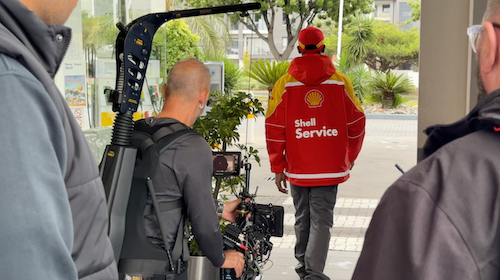
Pick n Pay is answering rugby’s most enduring question, ‘What are they feeding the Springboks?’, with Eat Like a Champion: a new Springbok campaign that puts food at the heart of the game, while also reminding South Africans that eating like champions isn’t reserved for elite athletes.

The television commercial, developed by Halo, is the centrepiece of an integrated campaign that transforms a familiar rugby joke into an emotional celebration of South African pride. Rather than retelling another Springbok story through South African eyes, it follows the rest of the rugby world as they marvel at the Boks’ size, strength and resilience, all asking the same question: ‘What are they feeding them’. And the answer, is Pick n Pay, as official sponsors of the Springboks.

Katherine Madley, Chief Marketing Officer at Pick n Pay, says on the creative direction, ‘We didn’t invent the insight, culture did. It became part of rugby culture, and for us, the answer was obvious. Pick n Pay exists to make fresh, nutritious food accessible to every South African family, and Eat Like a Champion became the perfect platform to bring together our passion for Fresh, our commitment to the Springboks and our belief that every family should be able to eat like a champion.’.

While the creative premise is simple, the ambition behind it was anything but, shared Dean Oelschig, Founder and CCO: Halo Advertising.

For Halo, the challenge wasn’t to create another sponsorship commercial, but to tell a Springbok story that felt fresh, emotional and unmistakably South African, one that gave audiences the same emotion as when the Springboks take the field.

‘We wanted goosebumps. Instead of telling another Springbok story from South African eyes, we told it through the eyes of the rest of the rugby world. That shift creates humour, pride and emotion while giving Pick n Pay a genuine role in the story. This isn’t a logo on a jersey, it’s a brand answering a question rugby fans have genuinely been asking for years,’ said Oelschig.

To make the story feel authentic, the production spanned four continents, five countries and seven cities, combining remote shoots, authentic social media content, archive rugby footage and newly filmed scenes. Halo worked with real Australians, New Zealanders, Englishmen, Irish, French and Argentinian rugby fans, alongside rugby personalities including Dan Carter in New Zealand and the hugely popular EggChasers podcast in Manchester, creating the feeling that the entire rugby world was united in one conversation.

The commercial also rewards repeat viewing with dozens of Easter eggs celebrating rugby culture. Dan Carter appears as himself, revisiting the infamous 2013 collision with Bismarck du Plessis, before the joke is cleverly paid off in the final Pick n Pay store scene, where Bismarck tells someone to ‘go for the ribs’, a playful nod to one of rugby’s most memorable moments.

Springbok Campaign Rewards Repeat Viewing With Dozens Of Easter Eggs

Fans will also spot Franco Mostert’s nickname inspiring an unexpected mustard gag, RG Snyman embracing the Viking persona supporters have long associated with him, appearances from cult rugby creators EggChasers and Big Jim, references to iconic commentary moments, and even a former Lions player cast as an Irish commentator.

Springbok Campaign Rewards Repeat Viewing With Dozens Of Easter Eggs

‘We wanted every viewing to reveal something new,’ said Oelschig. ‘Rugby has an incredible shared culture and history, and we wanted to celebrate that. If you’re a passionate fan, there are dozens of little details hidden throughout the film.’

Beyond the television commercial, Eat Like a Champion will come to life across Pick n Pay stores, digital platforms and its omnichannel ecosystem through exclusive nutrition content developed alongside the Springboks’ nutrition team, promotions, products and customer experiences designed to bring South Africans closer to the team they love.

‘This campaign is about more than celebrating world champions or our partnership with the Springboks. It’s about inspiring South Africans to make champion choices for their families, and bringing them closer to the team they love through the power of fresh, nutritious food, at affordable prices,’ said Madley.

‘Eat Like a Champion builds on our Come Home to Pick n Pay journey and celebrates the values we share with the Springboks – family, resilience, community and the power of bringing people together around good food. It reflects our commitment to helping South African families eat well every day – whether you’re shopping for tomorrow night’s dinner or feeding a future Springbok,’ concluded Madley.

Watch the Eat like a Champion Springbok TVC here.

CORPORATE IMAGE
+27 83 652 6018
janine@corporateimage.co.za
www.corporateimage.co.za

Social Media Summit For Government Spotlights AI

Social Media Summit For Government Spotlights AI
Minister of Communications and Digital Technologies, Solly Malatsi with Lorato Tshenkeng, Founder and CEO of Decode.

The fourth annual Social Media Summit for Government (the Summit) reaffirmed its position as South Africa’s knowledge exchange platform and community of practice for advancing excellence in government and public sector communication and its founding conviction that the future of that work depends on striking the right balance between innovation and authenticity, technology and empathy, and artificial intelligence and human judgement.

The Summit concluded at the University of Johannesburg Business School (JBS) with a strong consensus: unless artificial intelligence is deliberately harnessed to include citizens the government currently cannot hear, and unless public services become easier to access only for citizens who are already connected, digitally confident and able to afford data, South Africa’s digital transformation will fail to fulfil its democratic promise.

Convened by Decode., the Pan-African reputation advisory and strategic communications firm, in partnership with JBS and endorsed by the Public Relations Institute of Southern Africa (PRISA), the two-day Summit, held from 8 to 9 July, brought together public sector leaders, communicators, policymakers, academics, technologists, journalists and content creators under the theme ‘Reimagining Citizen Engagement through Human Intelligence + Artificial Intelligence.’

The theme was chosen to confront two challenges now converging in government and public-sector communication. The first is a digital divide hardening into a democratic divide: as public services and public information migrate online, citizens without affordable data, capable devices or meaningful connectivity are not merely inconvenienced – they are excluded from the information, services and participation on which democratic citizenship depends. The second is a deepening trust deficit: synthetic media, misinformation and manipulated content now move faster than credible public information and often reach excluded communities first.

It was these two fault lines that Minister of Communications and Digital Technologies Solly Malatsi addressed directly in the Summit’s keynote. ‘A promise made only to the connected is not a promise to the nation,’ the Minister told delegates. ‘If the digital state works beautifully for those with good smartphones, affordable data, high literacy, strong connectivity, English fluency and confidence online, then we have not built a digital state. We have built a premium service layer for the already included.’

Malatsi opened by drawing attention to ‘the intelligence we fail to gather when a citizen cannot get online to be heard’, the young person who cannot afford data to search for an opportunity, the small business owner who receives public information too late to act, and the citizen ‘spoken about in dashboards, reports and analytics’ but never meaningfully connected. ‘You cannot listen to a citizen you have not connected to. And you cannot serve a citizen you cannot hear,’ he said.

He warned that moving public services onto digital channels without closing the divide would not democratise the state: ‘Digital-first quietly becomes digital-only.’ On artificial intelligence, he cautioned that ‘human intelligence plus artificial intelligence cannot mean simply using AI to automate the old habits of government. We cannot simply digitise inefficiency.’

In a pointed message to technology platforms, the Minister called for robust self-regulation that is responsive to South Africa’s constitutional values, languages and social realities, with a clear caveat. ‘Partnership cannot mean that government carries the public-interest burden while platforms carry only the commercial upside,’ he said. ‘We will regulate where necessary. But we would much rather see platforms take responsibility before regulation becomes unavoidable.’

Lorato Tshenkeng, Founder and CEO of Decode., said the Minister’s address captured the Summit’s purpose. ‘For four years, this Summit has argued that government communication is not decoration after a decision has been made; it is infrastructure. It is how a democratic state listens, explains, accounts for and adapts. The measure of a digital state is not its dashboards. It is whether it reaches the citizen who has been excluded, unheard or priced out. That is the power shift this theme demands: from broadcasting to citizens to building trust with them, with AI as an instrument of inclusion rather than a faster way to leave people behind.’

Tshenkeng also acknowledged PRISA’s stewardship of the profession, ‘As the industry’s professional body, PRISA plays a vital role in advancing ethical standards for the use of artificial intelligence, upholding professional excellence, and ensuring that communicators are at the forefront of responsible, human-centred adoption of AI, thereby safeguarding trust and enabling innovation.’

PRISA President Dr Caroline Azionya told delegates that as synthetic media, smear campaigns and digital manipulation increasingly shape public discourse, communicators face mounting pressure to safeguard their credibility. Against a backdrop of overlapping geopolitical crises and declining citizen confidence, he argued, the profession has a critical role in fostering transparency, countering misinformation and rebuilding trust through ethical, authentic engagement.

A Programme Built For The AI Inflection Point

Across keynotes, panels, fireside conversations and practical breakaway sessions, the programme examined AI in the public sector, responsible technology use, digital storytelling, ethics, citizen participation, attention economics and the shifting relationship between social media and journalism.

In one of the Summit’s standout sessions, Professor JJ Tabane led a discussion with Qaanitah Hunter, Founding Editor of The DeBrief Network, and Phumi Mashigo, a founding member of Podcast Party, about the disruption of mainstream newsrooms. The panel argued that traditional media has increasingly spoken to audiences rather than with them, while podcasts have grown by building active, loyal communities. Delegates noted that this lesson applies as much to government communication as to journalism.

Summit Outcomes: From Conversation To Capability

Delegates further committed to deeper collaboration among government, academia, technology companies, and media and communications professionals to ensure that AI enhances rather than diminishes democratic participation.

The Summit closed with a concrete commitment to institutionalising its mission through a strategic partnership with JBS to introduce a dedicated short learning programme in government and public sector communication and to launch a set of prestigious awards in 2027.

The Social Media Summit for Government reaffirmed its position as South Africa’s leading knowledge exchange platform and community of practice for advancing excellence in government and public sector communication and its founding conviction that the future of that work depends on striking the right balance between innovation and authenticity, technology and empathy, and artificial intelligence and human judgement.

PRISA
https://www.prisa.co.za

The Industry Needs More Strategic Patience

The Industry Needs More Strategic Patience
Lindiwe Mncube, Tribeca PR.

According to Lindiwe Mncube, Account Director at Tribeca PR, the best PR advice might be: wait. PR has become very good at moving fast. A journalist needs comment in 20 minutes, a trend is taking off on TikTok, a client wants a response before the conversation moves on, or a crisis is unfolding and silence is not an option.

When this happens, speed matters. Quick thinking, quick writing and quick approvals can make all the difference when the pressure is on and the window to respond is small. But speed is not the same as strategy.

Over the years, PR has become much more than media relations. Today, agencies work across media, social platforms, owned content, paid campaigns and internal communication. As the work has grown, so have client expectations. Agencies are expected to be available, responsive and ready to act almost immediately.

This is not a bad thing. In many situations, quick action is exactly what clients need. A crisis cannot wait for a long discussion, and a good media opportunity may only be available for a few hours. Clients need partners who can move quickly when it matters.

The problem starts when speed becomes the main way value is measured. When teams are judged mostly on how quickly they respond, there is less time to think properly, ask the right questions and give clients the best advice.

This is especially important in South Africa, where communication is rarely simple. Audiences are diverse, context matters, and issues such as unemployment, inequality, governance, sustainability and social responsibility affect how people see and respond to brands.

This means communication cannot only be reactive. A trending topic might get attention, but does it make sense for the brand to respond or get involved? A newsjacking opportunity might lead to coverage, but does it fit with the company’s values? A fast response might show action, but will it still feel right once the pressure has passed?

These are the questions that separate a quick response from the right response.

AI and automation are also changing the way agencies work. Tasks such as monitoring, reporting, research and some content development can now be done faster with the help of technology. But this does not make human judgement less important. It makes it more important.

The real value of PR professionals lies in knowing how to read the room, understand context, spot risk and help clients make better decisions. Technology can help with the work, but it cannot replace good judgement.

This is why the industry needs more strategic patience. This does not mean moving slowly or overthinking everything. It means knowing when to act quickly and when to pause long enough to think clearly.

Before responding, we should be asking: does this moment matter to the brand? Will this response add value? Are we saying something useful, or are we only responding because there is pressure to say something?

The agencies that will stand out are not only the ones that can move quickly. They are the ones that can move quickly when needed, while still giving clients clear, thoughtful advice.

Being first is not always the win. Sometimes the real advantage comes from knowing when to pause. Clients do not need more noise. They need better communication. And better communication starts with better thinking.

TRIBECA
www.tribecapr.co.za

Three AI-Powered Strategies For South African Retail

Three AI-Powered Strategies For South African Retail

Driven by intense macroeconomic pressures, consumers in South Africa are actively rewriting the rules of the omnichannel shopping journey. Globally, AI usage has hit 70%, driven not by casual first-time experimenters, but by competent, habitual users. This behaviour is directly shaping how they shop. To meet growing AI usage among consumers, South African brands and retailers need to reinvent themselves as AI-competent and confident.

Using AI-powered strategies and new consumer trends from Google and Ipsos, here is how brands and retailers can improve AI maturity, meet evolving shopping behaviours, and increase sales.

1. Meet Generation Gaps: Utility vs. Inspiration

How people use AI for shopping depends heavily on their age. In the shopping journey, Millennials lead on using AI for automated shopping such as monthly grocery or pet food refills, and for data-rich answers for longer queries. Meanwhile, Gen Z uses it for inspiration and discovery for events or special occasions.

Furthermore, 22% of shoppers use AI to make better choices when hit with decision fatigue, and 21% use it for personalised recommendations such as meal inspiration for vegans; a trend driven significantly by both Millennials and Gen Zers over older demographics.

Solutions: AI Max And Creative Variety

Meeting double intent: Supercharging Search campaign with AI Max will automatically match the right creative asset to the Gen Z searcher, while delivering price-and-utility messaging to the Millennial planner, satisfying both types of intents simultaneously.

Creative asset variety: Create a bank of high-quality creatives with Asset Studio. This will support AI Max campaigns in capturing both types of shoppers. Lifestyle images, user-generated content, and short-form videos will help convert Gen Z searchers while reviews, pricing data, product specifications and FAQs will give research-based queries data-rich answers for Millennials.

2. Navigate The Cost-Of-Living Squeeze: The Cost-Conscious Budgeter

South Africans are facing severe inflation and cost-of-living constraints, making the country the fourth most price-first country globally, tied with the U.S.

A staggering 87% of consumers are strongly prioritising budgeting and financial savings, which is reflected in their online activity. Driven by drastic increases in petrol prices, search interest for ‘South Africa fuel price forecast‘ spiked an astronomical 28X in late May 2026.

To mitigate these transport and living costs, consumers are actively looking for ways to tighten their spending, such as cooking at home instead of eating out.

– Ad messaging: Instead of generic product ads, deploy upper-funnel campaigns built around local budgeting thresholds. For example: ‘Meals Under R50’ or ‘The Ultimate Grocery List for a Strict R2,500 Monthly Budget’ supported by a shoppable catalogue, so that customers can buy the entire list immediately.
– Keyword targeting and smart bidding: Using broad match and smart bidding, generalised, informational keywords about personal budgeting and cost-saving hacks will inform the algorithm. This will find users whose digital footprints signal that they are planning their household budgets right now.

Three AI-Powered Strategies For South African Retail

3. Retain The Fickle Consumer: When Brand Loyalty Is Swapped For A Discount

An astonishing 54% of consumers across four verticals (grocery, consumer electronics, clothing and home) made a purchase at a brand-new store they had never shopped at before within the last month, with price cited as the top driver for brand-switching.

Concerningly, traditional loyalty programmes are failing to act as a defensive moat. Having a loyalty subscription is ranked second-to-last as a reason for choosing a specific retailer.

Solutions: First-Party Data And Proof Of Trust

– Predictive refills with consented first-party data: Feed customer data from a loyalty programme into performance campaigns. If the data shows a customer buys a specific brand of baby formula every 30 days, campaigns can automatically serve them tailored reminders or automated click-to-refill ads at day 25 across search, social, and email.
– Review integration: Nearly half of consumers (49%) agree that reviews strongly influence their final purchase decision. Retailers can use dynamic creative optimisation to pull five-star customer reviews from their website and inject them directly into their ad creatives.

IRVINE PARTNERS
www.irvinepartners.co.za

Airports Are Presenting Better Opportunities For Advertisers

Airports Are Presenting Better Opportunities For Advertisers

Major infrastructure investment and new direct routes are turning regional airports into high-value gateways for travellers, brands and local economies. A wave of capital spending at regional airports across George, King Phalo International Airport, Upington International Airport, Chief Dawid Stuurman International, Bram Fischer International Airport and Kimberley is reshaping how, and where, we fly, with knock-on implications for brands wanting to reach travellers beyond the country’s traditional major hubs.

These airports are becoming high-attention environments in their own right, offering brands access to business and leisure audiences in premium, high-dwell spaces that are often less cluttered than larger transport environments.

The scale of investment is hard to overstate. Airports Company South Africa (ACSA) is rolling out a R22 billion capital programme that touches nearly every airport on this list. George Airport, gateway to the Garden Route, handled more than 911 000 two-way passengers in 2025, an 11% jump on the previous year, and is now operating at full capacity. ACSA has earmarked roughly R310 million to double the terminal’s capacity to around two million passengers annually, with construction due to start in October 2026.

Mzukisi Deliwe, Director of Airport Ads, said, ‘For brands targeting leisure travellers, second-home owners, local business operators and the wider Garden Route tourism economy, George’s expansion will create more visible points of engagement with travellers who have disposable spend and time in the environment.’

In the Eastern Cape, King Phalo Airport in KuGompo City is heading into its centenary year backed by a R450 million modernisation and a separate R213 million runway overhaul. Passenger numbers climbed sharply over the 2025 peak season, with the airport processing about 90 000 arriving and departing passengers, up from 83 000 the year before.

As passenger volumes rise, airports such as King Phalo become more commercially relevant for brands wanting to reach regional business travellers, families, holidaymakers and returning residents in a setting where attention is less fragmented than in many traditional media environments.

The biggest single project is in Gqeberha, where Chief Dawid Stuurman International Airport is undergoing a R4.6 billion, five-year upgrade, described as the city’s largest infrastructure investment since it hosted matches during the 2010 FIFA World Cup. The terminal will be expanded to handle up to 3.5 million passengers a year, while current annual traffic already stands at around 1.5 million.

Further west, Upington International Airport, home to the Southern Hemisphere’s longest runway, continues to attract global automotive manufacturers for extreme-climate vehicle testing, alongside a growing solar energy footprint.

The latest passenger data shows where that momentum is concentrating. Inland regional airports posted some of the strongest domestic growth in ACSA’s network in April 2026: Upington International Airport and Bram Fischer International Airport each grew domestic passengers 11% year-on-year, Kimberley climbed 6%, and Gqeberha’s Chief Dawid Stuurman posted a 6% increase. International travel also grew, up 2% year-on-year across ACSA’s major gateways. George and King Phalo, both mid-upgrade, remain ahead on a full-year basis following 2025’s record passenger growth.

These numbers point to the growing value of regional reach. As passenger growth becomes less concentrated around the traditional metropolitan hubs, brands have an opportunity to follow travellers into environments that are closer to the point of destination, decision-making and local spend.

Deliwe said, ‘Regional airports are no longer simply feeder routes to the big hubs. They are becoming destinations and gateways in their own right, with passenger growth and infrastructure investment to match. For advertisers, that means new opportunities to reach valuable audiences closer to their destination, when travel decisions and local spending are often top of mind.’

For brands and marketers, the shift matters because it changes who is reachable, and where. Regional airports serve audiences that have historically been difficult to target through traditional out-of-home or airport networks, including Garden Route holidaymakers, Eastern Cape business travellers and decision-makers, Free State and Northern Cape travellers, and a new wave of flyers using direct regional routes for the first time. These passengers often spend meaningful dwell time in smaller, less cluttered terminals, and travel through environments where they’re already thinking about meetings, accommodation, local experiences, retail, restaurants and transport.

Each of these airports also anchors a distinct regional economy, from tourism in the Garden Route, surf tourism and business growth in KuGompo City, and the automotive and university economy in Gqeberha, to renewable energy and industrial testing in Upington, inland business and government travel through Bloemfontein, and mining, agriculture and heritage tourism around Kimberley.

‘Brands do not have to view these airports in isolation. The value lies in being able to build a presence across multiple regional gateways as travel patterns decentralise and these audiences become more visible.’

As ACSA’s capital programme continues to roll out over the coming years, the media opportunity will mature with it. For brands, the timing is important: regional airport advertising still offers uncluttered access to emerging travel audiences, but that advantage will narrow as investment, passenger growth and route expansion draw more attention to these spaces, ‘The brands that move early will be better placed to own these gateways as they become busier, more connected and more commercially competitive.’

AIRPORT ADS
https://airport-ads.com

This is Modern Marketing