

Driven by intense macroeconomic pressures, consumers in South Africa are actively rewriting the rules of the omnichannel shopping journey. Globally, AI usage has hit 70%, driven not by casual first-time experimenters, but by competent, habitual users. This behaviour is directly shaping how they shop. To meet growing AI usage among consumers, South African brands and retailers need to reinvent themselves as AI-competent and confident.
Using AI-powered strategies and new consumer trends from Google and Ipsos, here is how brands and retailers can improve AI maturity, meet evolving shopping behaviours, and increase sales.
1. Meet Generation Gaps: Utility vs. Inspiration
How people use AI for shopping depends heavily on their age. In the shopping journey, Millennials lead on using AI for automated shopping such as monthly grocery or pet food refills, and for data-rich answers for longer queries. Meanwhile, Gen Z uses it for inspiration and discovery for events or special occasions.
Furthermore, 22% of shoppers use AI to make better choices when hit with decision fatigue, and 21% use it for personalised recommendations such as meal inspiration for vegans; a trend driven significantly by both Millennials and Gen Zers over older demographics.
Solutions: AI Max And Creative Variety
Meeting double intent: Supercharging Search campaign with AI Max will automatically match the right creative asset to the Gen Z searcher, while delivering price-and-utility messaging to the Millennial planner, satisfying both types of intents simultaneously.
Creative asset variety: Create a bank of high-quality creatives with Asset Studio. This will support AI Max campaigns in capturing both types of shoppers. Lifestyle images, user-generated content, and short-form videos will help convert Gen Z searchers while reviews, pricing data, product specifications and FAQs will give research-based queries data-rich answers for Millennials.
2. Navigate The Cost-Of-Living Squeeze: The Cost-Conscious Budgeter
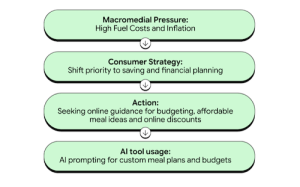
South Africans are facing severe inflation and cost-of-living constraints, making the country the fourth most price-first country globally, tied with the U.S.
A staggering 87% of consumers are strongly prioritising budgeting and financial savings, which is reflected in their online activity. Driven by drastic increases in petrol prices, search interest for ‘South Africa fuel price forecast‘ spiked an astronomical 28X in late May 2026.
To mitigate these transport and living costs, consumers are actively looking for ways to tighten their spending, such as cooking at home instead of eating out.
– Ad messaging: Instead of generic product ads, deploy upper-funnel campaigns built around local budgeting thresholds. For example: ‘Meals Under R50’ or ‘The Ultimate Grocery List for a Strict R2,500 Monthly Budget’ supported by a shoppable catalogue, so that customers can buy the entire list immediately.
– Keyword targeting and smart bidding: Using broad match and smart bidding, generalised, informational keywords about personal budgeting and cost-saving hacks will inform the algorithm. This will find users whose digital footprints signal that they are planning their household budgets right now.
3. Retain The Fickle Consumer: When Brand Loyalty Is Swapped For A Discount
An astonishing 54% of consumers across four verticals (grocery, consumer electronics, clothing and home) made a purchase at a brand-new store they had never shopped at before within the last month, with price cited as the top driver for brand-switching.
Concerningly, traditional loyalty programmes are failing to act as a defensive moat. Having a loyalty subscription is ranked second-to-last as a reason for choosing a specific retailer.
Solutions: First-Party Data And Proof Of Trust
– Predictive refills with consented first-party data: Feed customer data from a loyalty programme into performance campaigns. If the data shows a customer buys a specific brand of baby formula every 30 days, campaigns can automatically serve them tailored reminders or automated click-to-refill ads at day 25 across search, social, and email.
– Review integration: Nearly half of consumers (49%) agree that reviews strongly influence their final purchase decision. Retailers can use dynamic creative optimisation to pull five-star customer reviews from their website and inject them directly into their ad creatives.
IRVINE PARTNERS
www.irvinepartners.co.za