
Home Blog Page 13

Nedbank IMC Announces Exclusive Radio Partner

Nedbank IMC Announces Exclusive Radio Partner
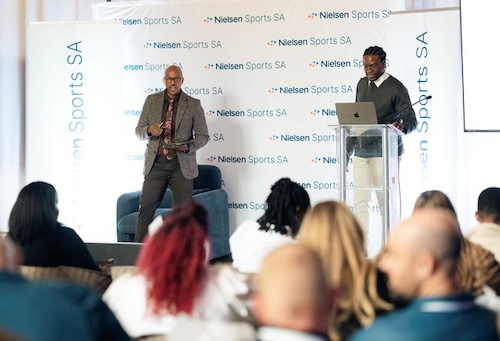
Tumi Rabanye, Kaya 959, and Dale Hefer, Nedbank IMC.

Kaya 959 is a leading Gauteng commercial radio station, connecting an influential audience through premium music, business, news, current affairs, culture and lifestyle programming. It has been announced as the exclusive radio partner of Africa’s Biggest Marketing Conference™, the Nedbank IMC 2026, marking a strategic partnership that will take the country’s most influential conversations on marketing, business and brand leadership beyond the conference stage and onto the airwaves. Modern Marketing is a proud media partner of the Nedbank IMC.

Held under the theme Shift Happens™. Are You Ready?, the Nedbank IMC 2026 will convene thousands of marketers, business leaders, entrepreneurs, agencies and innovators at Mosaïek Teatro in Johannesburg and online on 17 September 2026, exploring how organisations can remain relevant, resilient and commercially competitive in an era of constant disruption.

As the exclusive radio partner, Kaya 959 will transform the conference into an accessible national business conversation, connecting listeners with the ideas, people and strategies shaping the future of brands, business and economic growth.

More than simply promoting the event, Kaya 959’s partnership will shine a spotlight on the business of marketing through a series of exclusive live broadcasts, presenter-led interviews and digital content. Listeners will gain valuable access to some of South Africa’s most influential Chief Marketing Officers (CMOs), business leaders and industry pioneers through live interviews that unpack the commercial decisions, leadership thinking and innovations driving business success.

The station’s business, current affairs and digital platforms will explore how marketing creates sustainable growth, builds trust, influences customer behaviour, unlocks innovation and strengthens organisational performance. These conversations will bridge the gap between the boardroom and everyday business, making world-class marketing thinking accessible to entrepreneurs, professionals and decision-makers across Gauteng and beyond.

According to WhyFive Insights’ BrandMapp 2026, South Africa’s definitive study of the country’s top 30% of earners, Kaya 959 reaches 1.62 million regular listeners. This provides the Nedbank IMC with direct access to one of South Africa’s most commercially influential audiences, people who shape business, household and consumer purchasing decisions, while giving listeners valuable insight into how leading organisations compete, innovate and grow.

Tumi Rabanye, Head of Marketing at Kaya 959, says the partnership reflects the station’s ambition to become South Africa’s leading destination for commercially relevant cultural and business conversations.

Tumi Rabanye, Kaya 959.

‘Marketing has become one of the most important drivers of business growth, innovation and competitive advantage. Through our partnership with Africa’s Biggest Marketing Conference™, Kaya 959 is creating a platform where listeners don’t simply hear about marketing, they experience the thinking behind the brands shaping our economy. By bringing some of South Africa’s most influential CMOs and business leaders directly to our audiences, we’re opening conversations that inspire innovation, leadership and commercial growth while reinforcing Kaya 959’s position as a trusted home for ideas that move business, culture and society forward.’

Nedbank IMC Announces Exclusive Radio Partner
Dale Hefer, Nedbank IMC.

Dale Hefer, CEO of the Nedbank IMC, says Kaya 959’s editorial credibility makes the partnership a natural extension of the conference’s purpose.

‘Kaya 959 gets what the Nedbank IMC is really about: marketing as a business issue, not just an advertising one. Their audience is commercially smart and influential, and this partnership helps us take the Marketing is Business® conversation well beyond the conference itself.’

The Nedbank IMC 2026 is expected to welcome approximately 3,000 delegates in person and online, supported by a wider community of more than 15,000 marketing professionals, reinforcing its position as Africa’s Biggest Marketing Conference™.

Tickets are available here.

Nedbank IMC
www.imcconference.com

The Battle For Brand Relevance

The Battle For Brand Relevance
Matthew Nkala, The Catalyst Africa.

Matthew Nkala, digital director at The Catalyst Africa writes that Adidas’ decision to keep football at the centre of its campaign may offer valuable lessons in brand relevance, restraint and cultural marketing.

When the FIFA World Cup kicked off, I wrote about what I believed were two fundamentally different approaches to sports marketing. Nike appeared to use the tournament as the backdrop for a broader cultural story. Its creative celebrated the occasion – the spectacle, the emotion and the global community that gathers around football.

Adidas chose a different route. Its campaign wasn’t really about the World Cup. It was about football. That distinction felt important then. It feels even more significant now that the tournament has concluded.

Spain have deservedly lifted the trophy, adding another chapter to Adidas’ rich footballing heritage. But while the players decided the outcome on the pitch, another contest unfolded away from the stadiums: the battle for brand relevance. The question isn’t simply which campaign generated the most impressions. It’s which brand felt most synonymous with the tournament.

Credit: Adidas

Two Different Definitions Of Success

One of the challenges with judging marketing is that we often look for a single winner. The reality is more nuanced. Nike and Adidas weren’t trying to win the same game. Nike built a campaign around culture. Adidas built a campaign around football. Neither approach is inherently right or wrong. They simply optimise for different outcomes.

What The Numbers Actually Say

The data tells a fascinating story because it doesn’t hand Adidas a clean victory – it reveals that each brand excelled in different ways. On a raw scale, Nike came out ahead. Its Rip the Script campaign generated more than 400 million cross-platform views during the tournament, while Nike reported that it became the most-shared social post in the company’s history.

Industry analysis from Meltwater and Sprout Social also placed Nike ahead on total campaign impressions, approximately 3.64 billion compared with Adidas’ 3.43 billion, as well as overall social conversation.

If reach was the objective, Nike succeeded. But engagement tells a different story. On Instagram, Nike’s flagship campaign generated approximately 58.7 million views and 2.4 million likes, a like-to-view ratio of around 4%. Adidas’ hero campaign attracted a much smaller audience of around 7 million views, yet generated 2.56 million likes, producing an engagement rate of more than 36%.

Meltwater concluded that while Nike dominated overall visibility, Adidas outperformed on engagement efficiency. Independent creative testing from System1 reached a similar conclusion, rating Adidas’ campaign significantly above category norms for attention, emotional response and long-term brand recall.

The numbers suggest something marketers often forget. Scale and resonance are not the same thing. Nike maximised reach. Adidas maximised engagement. Both are valuable. But they represent different strategic objectives.

The View From My Couch

Statistics only tell part of the story. Watching from South Africa, my experience of the tournament was very different from what the global dashboards might suggest. Adidas owned the television environment. Their creative was everywhere. The opening film featuring Jude Bellingham and football’s biggest stars became the recurring narrative that accompanied the tournament from the opening whistle to the final.

By contrast, I struggled to remember seeing a Nike television commercial during live match broadcasts. That doesn’t invalidate Nike’s global success. It highlights an important truth about modern marketing: audience experience is often local.

A campaign can dominate globally while another dominates within specific markets and media environments. As a viewer, (a Nike and football fan if I have to be more honest) not a social listening platform, the World Cup simply felt like an Adidas tournament. That perception matters. Because brands aren’t built solely through dashboards. They’re built through memory. Football Remained the Hero. Perhaps the biggest lesson wasn’t about media buying or creative production values. It was about restraint.

Too often, brands approach major sporting events asking how they can become the story. Adidas appeared to ask a different question. How do we celebrate the thing people already love? Every execution felt rooted in football itself. The players. The rivalries. The joy. The culture. The brand didn’t try to compete with football. It amplified football. Ironically, that may be exactly why the brand became so memorable.

The Verdict

Start with the most literal measure of who “won” this World Cup, brand-wise. Sunday’s final was Spain against Argentina – Adidas’s two flagship federations, going head-to-head for the trophy. Third-place play-off belonged to France and England, both Nike. It isn’t a close contest: the two Nike teams that went deepest into the tournament played for bronze, while Adidas has both finalists.

That’s not entirely down to marketing. Obviously, Adidas doesn’t decide who wins penalty shoot-outs. But it isn’t irrelevant either. Adidas kits 14 competing federations at this World Cup to Nike’s 12, and it holds the FIFA match-ball contract into the bargain.

When your roster is that deep, at least some years the draw breaks your way at the top. This year, the draw and the marketing lined up in the same direction for Adidas.

If success is measured purely by reach, Nike had an outstanding tournament. If success is measured by engagement, creative effectiveness and brand recall, Adidas has a compelling case for victory. But perhaps the most interesting lesson lies somewhere in between. The strongest sponsorship marketing doesn’t try to overshadow the event. It understands why people showed up in the first place. Spain may have lifted the trophy.

But Adidas understood something deeper. At the biggest football tournament in the world, football didn’t need a bigger story. It simply needed a brand willing to put the game first.

THE CATALYST AFRICA
https://thecatalyst.africa

The Rapid Rise Of The Micro-Drama Economy

The Rapid Rise Of The Micro-Drama Economy
Brendan Rice, Buka Africa.

Buka Africa’s first locally produced micro-drama series After the Bell generated more than 2.3 million views on Buka Africa’s TikTok channel, with followers growing from zero to more than 12,000 in only one month. The most watched episode (ep. 4) on TikTok achieved more than 470,000 views, and the numbers are still climbing.

Since its launch in June 2026, the ten-episode After the Bell has generated more than 5.26 million views across TikTok and Facebook, and a total watch time in excess of 18,800 hours, offering evidence that South African audiences are embracing micro-dramas as a new form of mobile-first entertainment.

Through a channel partnership with Soapie Secrets South Africa (one of the country’s largest soapie-focused social media communities with a 5.5 million-strong audience) the series has enjoyed a total of more than 2.95 million Facebook views, with 1.65 million (1.5 million organic) views on the Buka Africa Facebook page alone. The most popular post on the Buka Africa platform reached over 513,000 views organically.

The After the Bell audience is 99% South African and predominantly women aged 18 to 44 years of age.

These numbers are catching the attention of advertisers and marketers looking for alternatives to reach audiences in increasingly crowded digital advertising environments, where Buka Africa’s micro-drama approach delivers a compelling solution.

Micro-Dramas: A Powerful New Channel For Advertisers

Unlike traditional streaming platforms, Buka Africa is not relying on subscription revenue as its primary growth model. Instead, the company has developed a brand partnership approach that integrates advertisers organically into narratives without disrupting the viewer experience.

‘The integrity of the story is everything,’ said Brendan Rice, CEO and co-founder of Buka Africa. ‘Audiences can immediately tell when a brand has been forced into content. Our approach is to weave brands naturally into everyday moments, making them part of the story rather than an interruption. It creates a better experience for viewers and a more meaningful engagement opportunity for brands.’

The model responds directly to growing advertiser frustration with declining attention spans and increasing ad avoidance. Rather than asking audiences to sit through pre-roll or banner advertising, brands become part of a narrative that viewers actively choose to watch, discuss and share.

For marketers, media buyers and advertisers, this presents an opportunity to participate in a format that remains largely untapped in South Africa, despite gaining significant traction internationally. More than 233 branded micro-drama titles were launched globally during the first eight months of 2025 alone, underscoring the growing role of the format within modern marketing strategies.

The Rapid Rise Of The Micro-Drama Economy

Micro-dramas are vertically filmed, short-form serialised stories designed specifically for mobile viewing. Episodes typically run for between 60 and 180 seconds and use cliffhanger-driven storytelling to encourage continuous viewing. What began in China less than a decade ago has evolved into a global industry estimated to be worth approximately US$11 billion in 2025, with analysts projecting continued rapid growth.

‘Micro-dramas are the biggest shift in scripted entertainment since streaming transformed television,’ said Rice. ‘People are consuming content on their phones, throughout the day, in short bursts. This format was built for exactly that behaviour.’

Globally, the format has evolved from a niche social media trend into a mainstream entertainment category. Revenue generated by micro-dramas in China exceeded traditional cinema box office revenue for the first time in 2024, while the United States market grew by an estimated 225% between 2024 and 2025.

South Africa could prove to be one of the format’s most promising markets. With approximately 124 million cellular connections, internet penetration approaching 79%, and an estimated 23.4 million adult TikTok users, the country is already deeply immersed in mobile-first content consumption.

When Audiences See Themselves On Screen

While South Africans have been exposed to international micro-dramas, Buka Africa’s founders believe there is significant demand for stories that reflect local cultures, communities and languages.

‘South Africans want stories that reflect their realities,’ said Philip Townsend, COO and co-founder of Buka Africa, ‘They want to hear their own languages and see experiences they recognise. Our research suggested there was a gap in the market for culturally relevant, locally produced stories, and the audience response has validated that belief.’

The company’s flagship production, After the Bell, follows a township schoolgirl pursuing a university scholarship while navigating family pressures and life choices. Produced in isiXhosa with English subtitles, the series incorporates authentic code-switching that reflects how many South Africans communicate every day. Early audience engagement has highlighted strong demand for local-language storytelling, with viewers frequently expressing appreciation for hearing their own language represented on screen.

Buka Africa’s second production, Mountain of Graves, explores themes of land rights, tradition, economic development and spirituality through a story set in Limpopo. Together, the two productions form part of a broader slate of stories designed to reflect the diversity and complexity of South African experiences.

‘We believe South Africa is ready for a storytelling format built around local culture, local languages and mobile behaviour,’ said Townsend. ‘The audience is already here. The demand is already here. Now it’s about building a sustainable ecosystem where great stories and great brands can grow together.’

BUKA AFRICA
https://bukaafrica.com

PR Is About Earning The Right To Be Part Of Conversations

PR Is About Earning The Right To Be Part Of Conversations
Nabiella DeBeer, Havas Red South Africa.

The recently celebrated World PR Day is more than an industry milestone. It honours the professionals who use communication to strengthen communities, influence change, and guide organisations through complexity.

This was a moment to reflect on how far public relations has come and how profoundly it shapes the future of brands, businesses and society.

The latest Havas Prosumer Report reveals a striking truth: 44% of people trust a brand more when it is recommended by someone, they follow online, while 40% value transparency and easy access to product provenance.

This is the new reality. Influence is no longer owned by brands, it is shared with the people who experience, discuss, and advocate for them. And in this age of the prosumer, a hybrid of producer and consumer, one thing has become clear: attention can be captured, but trust must be earned.

The Rise Of The Prosumer

The prosumer has rewritten the rules. No longer submissive receivers of brand messages; they investigate, compare, challenge, and co-create. They read reviews, ask AI for guidance, and share experiences that can sway purchasing decisions in seconds.
Brands do not own conversations anymore, their audiences do.

PR’s Revolutionary Era

Public relations is no longer about controlling narratives. It is about earning the right to be part of conversations. Nabiella DeBeer, Head of PR at Havas Red South Africa, calls PR ‘revolutionary’ because of its consistent power to create meaningful impact, ‘PR is far more than managing reputations or achieving KPIs. It has the ability to change lives, build movements, and create lasting impact.’

Her words remind us: PR is not transactional, it is relational. Brands succeed when they show authenticity, listen deeply, and build trust through action, not spin.

Reputation Is Built Before The Crisis

In a hyper-connected world, a single post can reshape perception instantly. Yet PR should never be activated only when a crisis erupts. The strongest organisations invest in trust before they need it building credibility, nurturing relationships, and creating a foundation that withstands challenges. As misinformation spreads and audiences grow more selective, credible communication becomes a competitive advantage. Consumers don’t expect perfection, they expect honesty.

The brands that thrive will be those that embrace transparency, respond with accountability, and root their communications in real human experiences.

Celebrating World PR Day

World PR Day is more than an industry milestone. It honours the professionals who use communication to strengthen communities, influence change, and guide organisations through complexity.

PR has moved beyond the press release. It now shapes culture, builds movements, and creates the connections that define relevance. In the age of the prosumer, brands are no longer defined by the stories they tell; they are defined by the stories people choose to believe and share. And that is why PR is not just important. It is revolutionary.

HAVAS
za.havas.com

Public Relations Bodies Across Africa Declare Collective Commitment To Best Practice

Public Relations Bodies Across Africa Declare Collective Commitment To Best Practice

On World PR Day 2026, a coalition of Africa’s leading professional communication associations, institutes, and bodies (spanning the continent and supported by key international partners) announced The Africa Declaration on the Professionalisation of Public Relations and Responsible Communication. The Declaration is a founding charter: a collective commitment to shared standards, ethical accountability, and the professionalisation of public relations and communication practice across Africa, built from African experience and designed to endure.

In a profession where anyone can claim to be a practitioner, where ethical failures carry no professional consequence, and where a continent experiencing rapid economic and democratic transformation has lacked any shared standard for responsible communication practice, Africa’s professional bodies have united to change that.

The Declaration does not attempt to import a framework from elsewhere. It is built from the ground up, shaped by the realities of Africa’s communications environment, the diversity of its regulatory landscapes, and the hard-won experience of professional bodies that have navigated the journey from voluntary association to statutory recognition. It establishes eight founding principles, six areas of institutional commitment, and a ten-point collective action plan with accountable leads across the signatory community.

Central to the Declaration is the African Responsible Communicator Standard (ARCS), a continental recognition framework that converts the Declaration’s commitments into a visible, verifiable credential. Through ARCS, any practitioner who holds active membership of a signatory professional body, meets shared continuing professional development requirements, and commits to the shared code of ethics, carries that recognition across every signatory market. The credential is portable, renewable, and employer-facing designed to make professional standing visible to clients, governments, and the organisations that hire communicators.

The African Public Relations Association (APRA), as the continent’s umbrella body for public relations associations, will play a central coordinating role in the initiative by driving continental engagement, supporting the expansion of the signatory base across regions, and representing the collective African voice in global professional forums.

‘Africa’s communications landscape is one of the most consequential in the world. It shapes public discourse, influences democratic participation, and tells the continent’s story to itself and to the world,’ said Bradly Howland, Co-Lead of the Africa Declaration, Immediate-Past President of Public Relations Institute of Southern Africa (PRISA).

‘Yet for too long, that landscape has had no shared standard for who practises in it or what responsibility they carry. The Africa Declaration changes that, not by importing a framework from elsewhere, but by building one from within, rooted in African experience, shaped by African institutions. Africa is not professionalising its communications industry to catch up with the world. It is doing it to lead.’

‘A continent that commits to a developmental programme such as the African Union’s Agenda 2063 cannot operate disparate standards of communication principles and practices. Therefore, this pronouncement is not just auspicious, it is reasoned, it is seminal and indeed an accountable demonstration of commitment to iterating the centrality of responsible communication to human progress, by those who have lived and understand the spectrum and intricacies of the African story,’ said Dr Omoniyi Ibietan, Secretary General, African Public Relations Association (APRA).

‘Africa has been at the heart of the Global Alliance since its foundation, with African leaders and professional bodies playing a vital role in shaping our organisation and strengthening the global public relations and communication profession,’ said Prof. Justin Green, President and CEO, Global Alliance for Public Relations and Communication Management.

‘For more than 25 years, the Global Alliance has proudly amplified Africa’s voice on the international stage, and it is particularly fitting that the World Public Relations Forum 2026 will be hosted in Nigeria this November, bringing the world’s leading communication professionals to the African continent under the theme Responsible Communication: The Voice of the World. The Africa Declaration on the Professionalisation of Public Relations and Responsible Communication is a landmark achievement that will resonate far beyond Africa. It demonstrates the continent’s leadership in advancing ethical practice, professional standards, and responsible communication at a time when these values have never been more important. As the global voice for more than 360,000 public relations and communication professionals across 126 countries, the Global Alliance is proud to support this historic initiative and to help showcase Africa’s leadership and innovation to the world.’

‘As a founding signatory of the Africa Declaration, PRISA stands firmly behind a vision of communications built on integrity, accountability and shared professional standards. This is a defining moment for our profession, one PRISA is proud to have helped catalyse by bringing together the conversations that made it possible. Professionalising our craft is how we safeguard public trust, strengthen ethical practice, and ensure communicators across South Africa and the continent are recognised as the strategic, values-driven professionals they are,’ said Dr Caroline Azionya, President, Public Relations Institute of Southern Africa (PRISA).

‘Nigeria’s journey from voluntary association to statutory recognition is proof of what is possible. NIPR is committed to sharing what it has learned with bodies across Africa,’ said Dr. Ike Neliaku, President, Nigerian Institute of Public Relations (NIPR).

‘Public Relations (PR) has evolved from a communication support function into a strategic leadership discipline that shapes decisions, protects reputation, builds trust, and creates lasting value. Today, strategic communication is no longer optional, it is indispensable. The Zambia Institute of Public Relations and Communication (ZIPRC) reaffirms its commitment to professionalism, ethical practice, continuous learning, and excellence in PR practice,’ said Patricia Luhanga, President, Zambia Institute for Public Relations and Communication (ZIPRC).

‘For 55 years, PRSK has carried the voice of Kenya’s communicators, proving that trust is not a luxury but national infrastructure. By joining the Africa Declaration, we are not simply adding Kenya’s name to a list of signatories. We are anchoring Africa’s communications profession in law, ethics and accountability,’ said Arik Karani, President
Public Relations Society of Kenya.

‘Kenya’s journey toward statutory recognition is a signal to the continent: professionalisation is not about catching up; it is about leading. In a world where misinformation destabilises democracies and erodes investor confidence, Africa must show that its communicators are guardians of truth. This Declaration is our collective promise that the story of Africa will be told with integrity by professionals who are accountable to the societies they serve.’

‘At ICCO, we believe the future of the communications profession depends on strong ethical standards, professional accountability and collaboration across borders. The Africa Declaration is an important milestone, demonstrating how African leadership can help strengthen the profession while contributing to higher global standards for responsible communication,’ said Massimo Moriconi, President, International Communications Consultancy Organisation (ICCO).

‘The Declaration reflects many of the principles the PRCA has championed for years around ethics, professional standards and raising the profile of public relations as a recognised profession. It strikes the right balance between ambition and practicality, setting out a clear vision for ethical, accountable communications across Africa. By focusing on standards shaped by the realities of the African communications industry, rather than adopting approaches developed elsewhere, it has the potential to become an important milestone in strengthening and advancing the profession across the continent,’ said Jo Brophy, Head of International Membership, The Public Relations and Communications Association (PRCA).

‘In endorsing the Africa Declaration, Lesotho takes its place alongside sister nations committed to a shared belief that communication carries responsibility. Across our region, misinformation and eroding trust know no borders, and neither should our resolve to practice our craft ethically and with accountability. Guided by the Declaration, Basotho communicators pledge to uphold honesty, serve the public interest, and strengthen the integrity of our profession. This is solidarity in action, and Lesotho is proud to answer the call,’ said Mamoabi Ralebitso-Phori, President, PRISA Lesotho Chapter.

ARCS operates on a federated model: enforcement authority remains with national professional bodies operating under their own governance frameworks. In countries where statutory recognition has been achieved, ARCS recognition is contingent on compliance with the legal requirements of those jurisdictions. The Declaration is designed to complement and amplify existing national frameworks, not to compete with or supersede the authority of statutory bodies such as the Nigerian Institute of Public Relations (NIPR) or the Zambia Institute of Public Relations and Communication (ZIPRC).

The announcement marks the formal beginning of the Africa Declaration initiative. The founding signatory group will continue to grow as engagement across the continent progresses. The Declaration will be formally signed and launched at the World PR Forum (WPRF) in Abuja, Nigeria, in November 2026, providing the runway for all signatories to endorse the document, for working groups to be constituted, and for the initiative to be properly activated before it goes live across the continent.

Professional bodies, associations, and institutions across Africa wishing to engage with the Declaration ahead of the formal launch are encouraged to make contact through any founding signatory body or through APRA.

The initiative is co-led by Bradly Howland, Immediate-Past President of PRISA, and Irene Lungu Chipili, Chairman of the Africa Regional Council at Global Alliance.

ALKEMI
https://alkemi.global

Technology Should Enhance Creativity, Not Flatten It

Technology Should Enhance Creativity, Not Flatten It
Nicole Glover, Penquin.

From A/B testing and scroll-depth analysis to the relentless optimisation of Click-Through Rates (CTR), the industry has prioritised the dashboard over the drawing board. However, Nicole Glover, Executive Creative Director, Digital at Penquin, warns that this obsession with metrics has led to a ‘homogeneity crisis’ that is eroding the very essence of brand connection.

Glover argues that the rise of bland, interchangeable digital marketing cannot simply be blamed on artificial intelligence. Instead, she believes the industry began losing its creative edge long before AI entered the mainstream.

‘The homogeneity crisis didn’t start with AI,’ said Glover. ‘It started the moment we decided a metric was more trustworthy than a creative’s instinct. We called it ‘accountability,’ but what we were actually doing was training a generation of creatives to make work that performs in the short term, instead of work that stays in the consumer’s memory.’

According to Glover, the industry’s obsession with optimisation has created a landscape where brands increasingly look and sound the same. It’s a sentiment backed by global research. Kantar reports that nearly two-thirds of consumers believe most brands are indistinguishable from one another, while long-standing IPA research has consistently shown emotionally led campaigns outperform rational campaigns by a factor of two. Separate industry studies have also found that award-winning creative work is significantly more effective and commercially efficient over time.

For Glover, these findings simply validate what many creatives already feel instinctively. ‘The numbers don’t tell us anything the industry doesn’t already know deep down,’ she explained. ‘Every creative has felt that moment in a meeting when the dashboard takes over the conversation and suddenly the safest option wins. Somewhere along the line, we stopped asking whether work would move people and only asked whether it would convert.’

She believes AI has merely inherited an ecosystem already conditioned for sameness. ‘AI didn’t corrupt the well,’ Glover continued. ‘It inherited one we’d already poisoned. If every campaign is built from the same best-performing references, optimised against the same metrics and approved through the same risk filters, then of course everything starts to feel identical.’

Rather than rejecting data entirely, Glover argues that the future of effective digital marketing lies in restoring balance between analytics and instinct. In a content-saturated environment where consumers scroll past thousands of messages daily, she believes the work that truly cuts through increasingly feels less manufactured and more human.

‘The irony is that the most effective digital work right now often looks like it wasn’t made by an agency at all,’ she said. ‘People are craving texture, imperfection, personality and emotional honesty again. Brands that understand this are the ones creating work people actually remember.’

As AI tools become more embedded across the creative industry, Glover believes agencies and brands face a defining challenge: whether to continue chasing efficiency at the expense of distinctiveness, or to rediscover the emotional storytelling that made advertising powerful in the first place.

‘Technology should enhance creativity, not flatten it,’ Glover concluded. ‘The brands that will win in the next era of digital won’t necessarily be the most optimised. They’ll be the ones brave enough to feel human again.’

PENQUIN
https://www.penquin.co.za

Reputation Is One Asset Every Business Can Build

Reputation Is One Asset Every Business Can Build

Advertising rents attention. Public relations buys the building. So says Madelain Roscher, CEO of PR Worx. Marketing budgets have long been dominated by advertising spend, digital channels, and campaign performance. The real question is not where companies spend their money, but what they’re investing in.

‘Advertising can put your message in front of millions of people almost instantly, but the moment the campaign ends and the budget disappears, so does the bought visibility. The rental agreement expires.’

Public relations, she argues, works differently. Every independent news article, media interview, executive profile, industry award, conference presentation and third party endorsement becomes part of a company’s permanent reputation. These are not simply communications outputs. They are business assets that continue working long after they are published.

It is a lesson South African business can ill afford to ignore. Analysis of JSE data reported by Moneyweb shows that intangible assets, the category that includes brand and reputation, have fallen from 27% to around 19% of market capitalisation over the past four years. The Chartered Institute of Business Accountants have warned that South Africa’s intangible asset values have flatlined at 2005 levels.

‘While the world’s most valuable companies are built on reputation and trust, South African companies are letting that value slip,’ said Roscher. ‘Reputation is the one asset every business can build, regardless of size, and too many are leaving it unattended.’

The stakes are rising because artificial intelligence (AI) has fundamentally changed how people discover information. Prophet’s 2026 research shows consumer use of generative AI has surged from 45% to 73% in just two years. Increasingly, customers are asking AI platforms which company to trust, which service provider to choose, and which expert to believe.

‘AI is not reading your advertising campaign. It is reading the independent evidence that exists about your business,’ said Roscher. ‘It reads credible journalism. It analyses executive thought leadership. It references industry publications, awards, expert commentary and authoritative sources. It looks for signals that other credible organisations have already validated your expertise.

‘In other words, AI behaves remarkably like a journalist. It doesn’t simply repeat what you say about yourself. It evaluates what respected third parties say about you.’

Roscher believes this changes the commercial value of public relations completely. A company that has spent years investing in earned media isn’t starting from scratch every morning. It has built a library of credibility. Every article strengthens that library. Every executive interview adds another reference point. Every independent endorsement becomes another piece of evidence supporting the organisation’s authority.

Unlike advertising, those assets continue to work. A feature published three years ago can still influence how AI understands a company today. An executive interview from last year may still be referenced when someone asks AI about leaders in an industry. A well earned industry award continues to reinforce trust long after the trophy has been placed on the office shelf.

Roscher adds that this does not mean advertising has become replaceable. The strongest brands understand that paid, owned and earned media each play different roles: advertising creates immediate visibility, while public relations creates lasting credibility and AI search results.

‘The organisations leading tomorrow won’t choose one over the other. They’ll understand that the real opportunity lies in building reputation that outlives every campaign.’

For boardrooms, she said, this requires a different conversation.

‘The question is no longer, how many people saw our advert? The better question is, what evidence exists that proves we deserve to be chosen? In an AI driven world, credibility is no longer just influencing people. It is influencing the technology millions of people rely on to make business decisions every single day.

‘Reputations are now read by machines and believed by millions. Start building yours today, because the next time a customer asks AI who to trust, the answer will already have been written.’

PR WORX
https://www.prworx.co.za

How AI Makes The Role Of The Researcher More Important

How AI Makes The Role Of The Researcher More Important
Credit: Igor Omilaev, Unsplash.

According to Claire Denham-Dyson, Head of Anthropology for Demographica, AI won’t replace qualitative researchers, but will make them more powerful. For years, qualitative research has been defined by a single trade-off: depth or scale. Researchers could spend weeks immersed in the lives of a handful of participants, uncovering the context behind decisions and behaviours. Or they could reach larger audiences through quantitative methods, sacrificing nuance for volume.

AI is beginning to challenge that trade-off. Not because it can replace qualitative researchers. It cannot. But because it can help us collect, analyse and engage with qualitative data in ways that were previously impossible.

The conversation around AI in research tends to focus on efficiency: faster analysis, faster reporting, faster surveys. But speed is arguably the least interesting thing AI offers qualitative researchers.

Qualitative Insight, At An Impossible Scale

Specialist qualitative research has always excelled at uncovering the stories behind behaviour. An ethnographic immersion, an in-depth interview or a diary study can reveal motivations, tensions and emotional realities that would never emerge from a survey alone. The challenge has always been going deep while still going wide. Beyond a relatively small number of participants, the sheer volume of qualitative data becomes difficult to manage without losing depth.

AI fundamentally changes what is possible. Researchers can now collect thousands of qualitative responses, images, videos and voice notes while still identifying themes, contradictions and patterns across the dataset. Rather than replacing interpretation, AI allows researchers to connect individual stories across hundreds or even thousands of participants without losing sight of what makes each one meaningful.

For those of us who have spent careers defending a sample of fifteen participants to executives who equate validity with volume, this matters. I do not advocate for the bias toward large numbers, but I am grateful that the depth versus breadth trade-off no longer limits our work. Humans have never been neat enough to fit into the boxes that quantitative research demands. Now we can hear hundreds of stories without losing the richness that makes them meaningful.

A Researcher In Your Participant’s Pocket

Perhaps the most exciting application of AI is not replacing traditional qualitative methods, but strengthening them. Ethnography has long been considered the gold standard for understanding human behaviour because it places people in context. Yet researchers cannot be present at every moment. Much of everyday life remains invisible between interviews and observations.

AI-powered digital diary studies change that. Throughout the day, participants receive personalised prompts that build on previous responses. They capture moments and reflect on decisions as they happen throughout their day. Rather than completing static diary entries, participants engage in ongoing conversations that better reflect real life. In many ways, it acts as a researcher in the participant’s pocket.

This matters because one of the greatest challenges in understanding human behaviour is that people rarely remember their lives accurately. We reconstruct experiences after the fact. We simplify, rationalise and forget. AI-powered diaries offer a continuous window into people’s worlds. Not just what they think, but how they actually live. Because behaviour rarely happens inside a focus group. It happens in the countless moments in between.

Why Researchers Matter More Than Ever

As AI capabilities continue to advance, a common question emerges: will AI replace qualitative researchers? The answer is a definitive no. If anything, AI makes the role of the researcher more important.

Without human interpretation, qualitative data loses much of its richness. AI can identify that people talk about trust, status, agency and power because, across large volumes of qualitative data, they often do. What it cannot do is understand how the evidence shapes the unique retelling of that story in this context, for this brand, in this cultural moment.

Good researchers learn to recognise what matters, trust their instincts and remain aware of their own blind spots. They provide the judgement that gives the evidence meaning. They connect findings to business decisions, challenge assumptions and put themselves in the shoes of their participants. That gives them a uniquely balanced perspective that reflects the complexity of human behaviour rather than flattening it.

Thick Data, At Scale

Anthropologist Clifford Geertz famously described the importance of ‘thick description’: understanding not just what people do, but the layers of meaning behind their actions. Thick data has always been the strength of qualitative research. The challenge was scale. AI genuinely bridges that gap.

We can now collect richer data, from more people, over longer periods of time, while maintaining the depth and context that make qualitative research valuable. The opportunity is not to choose between stories and scale. It is to have both. When we combine AI-enabled data collection with strong research design, ethnographic thinking and human interpretation, we move beyond gathering information. We create better storytelling, better strategy and much better decisions.

We can only do this by using people to understand people. If AI excels at recognition, anthropology remains concerned with interpretation. The future of qualitative research will depend on our ability to combine computational scale with contextual understanding, ensuring that patterns are never mistaken for meaning.

DEMOGRAPHICA
www.demographica.co.za

WARC Releases Insights Report With Focus On YouTube

WARC Releases Insights Report With Focus On YouTube
Alex Brownsell, WARC Media.

WARC Media’s latest Platform Insights report examines YouTube’s ad revenue trajectory and competitive position, how and where audiences are consuming content, and what the data says about campaign performance.

YouTube has become one of the world’s most powerful advertising ecosystems, now competing directly with linear TV for living-room attention. It has around 2.6 billion monthly users and annual revenue exceeding $60 billion in 2025, of which more than $40 billion is attributed to advertising, according to WARC Media.

However, the platform’s ad business growth is slowing, and it finds itself under pressure from rivals such as Netflix and TikTok.

Alex Brownsell, Head of Content, WARC Media, and lead editor of the report, said, ‘Rising consumption of video content on YouTube, and in particular on TV screens, has not yet translated into the kind of year-on-year ad revenue growth we see elsewhere in the digital ad market. YouTube has been less successful than rivals such as TikTok in its attempts to persuade marketers of its role in driving lower-funnel outcomes, hence its growing focus on winning a greater share of TV budgets.’

YouTube’s global ad revenue grew 11.7% year-on-year to $40.4 billion in 2025, while total platform revenue, including YouTube Premium subscriptions, exceeded $60.0bn for the first time.

However, YouTube’s year-on-year ad revenue growth decelerated from 14.7% in 2024 to 11.7% in 2025 and is forecast to drop to 7.0% this year ($43.2 billion) and 7.9% by 2027 ($46.6 billion).

In part, this reflects a maturing platform, but YouTube faces growing competition for performance ad dollars as marketers favour platforms like TikTok for social commerce. At current growth rates, TikTok’s ad revenue could overtake YouTube’s by 2028.

Netflix has also emerged as a key competitor. Its ad tier success positions it for long-term advantage in securing subscriber and advertiser investment and is expected to pull ahead of YouTube over the next 18 months.

Research from DoubleVerify’s 2026 Global Insights, Kantar’s Media Resources 2025, and WARC’sVoice of the Marketer carried out last year, all found that marketers globally intend to increase ad investment with YouTube this year, suggesting it remains a core component in media plans.

YouTube is used by nearly 2.6 billion people every month, who spend an average of 58 minutes daily on the platform in 2025, up from 48 minutes in 2024, reflecting deepening engagement rather than audience expansion.

India leads with 500 million users, followed by the US at 254 million, with Indonesia and Brazil close behind at 151 million and 150 million respectively.

Based on Similarweb App Intelligence data, YouTube generates the highest total time spent on any social or video platform globally.

The 25-34 age group is the largest demographic segment at 21.7%, the 35-44 group accounts for 18.5% and the over-65s represent the smallest segment at 9.5%.

YouTube viewing is shifting from mobile to larger screens. Connected TV accounts for 45% of total YouTube watch time in the US, with average session lengths exceeding 45 minutes and completion rates of 95% or higher.

YouTube Shorts, the platform’s vertical video format is reshaping consumption, and now averages more than 200 billion daily views globally.

Monetisation is steadily rising in response. In several major markets, including the U.S., revenue-per-watch-hour for Shorts has overtaken that of traditional in-stream formats. Further ad revenue growth will require advertisers to get on board with the creative requirements for the format.

YouTube’s content mix is broader than any other platform, spanning music, entertainment, gaming, news, education, children’s content, and an increasingly significant podcast offering.

According to Affinco data, music videos remain the most-watched content globally. MrBeast leads by subscribers at 503 million; Indian music label T-Series leads for views at 322 billion.

YouTube’s strength lies in local, interest-led, and creator-driven content, while traditional broadcast and SVOD platforms are better positioned to create global cultural moments.

For a third consecutive year, YouTube ranked as the most preferred and most trusted media brand among marketers globally, according to Kantar, and ranks second in brand safety, behind Netflix.

Ad format selection is driving variations in ad performance. In-feed ads have been found by Store Growers to deliver the strongest click-through performance, with CTRs ranging from 1% to 3%, above the all platform average of 0.65%. Non-skippable in-stream ads generate less than 0.3% click-through rates, making them better suited to awareness objectives than to direct response.

Gen Z is YouTube’s most valuable and commercially active audience. Half (51%) of Gen Z males and 43% of Gen Z females made a purchase after watching an ad on YouTube Shorts, making YouTube a direct commerce driver for younger cohorts.

YouTube has overtaken Spotify for podcast viewing. Viewers watched more than 700 million hours of podcasts on YouTube via TV screens in a month, up 70% year-on-year.

YouTube has eclipsed Reddit as the leading social platform source for large language models (LLMs), creating a new visibility layer for brands with a strong YouTube presence.

Platform Insights: YouTube is part of a series of reports exclusive to WARC Media subscribers that explore platform trends through the lens of investment, user engagement and performance. This latest report follows other Platform Insights including Meta, Netflix, LinkedIn, Reddit and Amazon.

WARC
https://www.warc.com

Today’s Media And Creative Wastage Is Tomorrow’s Market Share

Todays Media And Creative Wastage Is Tomorrow's Market Share
Pieter Geyser, Humanz.

In this article, Pieter Geyser, Commercial Director at Humanz, explains how mistaking efficiency for effectiveness is costing brands on both fronts. He also emphasises on the 10/95 Rule: the reality that roughly 10% of creative work drives 95% of marketing value.

The Boardroom Ritual

Each month, the same scene plays out in boardrooms around the world. A media agency stands before a brand manager, pointing proudly to a glossy deck. ‘Last quarter, your media wastage sat at 15%,’ they declare. ‘But thanks to our new hyper-granular targeting parameters, we’ve managed to slice that waste down to just 4%. Look how much of your budget we saved.’

The brand manager applauds. The agency retainer is safely renewed. Everyone goes home happy.

But there is a dark, unspoken truth lurking beneath the applause. The agency did not save the brand money. They gave you a framework for thinking about marketing that is wrong in every direction it points. And the damage runs much deeper than your media plan.

The Wanamaker Problem

Most people in marketing know the quote. John Wanamaker, the 19th century retail pioneer, famously said, ‘Half the money I spend on advertising is wasted. The trouble is, I don’t know which half.’

It has been repeated in boardrooms for over a century. It feels honest. It feels relatable. And it is far too generous.

The reality is not a neat 50/50 split between what works and what doesn’t. The evidence points to something far more lopsided: roughly 10% of creative work drives approximately 95% of measurable marketing value. The remaining 90% does not fail catastrophically, it simply does not break through.

This is what statisticians call a fat-tailed distribution. A small number of outcomes produce a wildly disproportionate share of the results. It shows up in publishing, in music, in venture capital, and in marketing more clearly than almost anywhere else.

Call it the 10/95 Rule

Here is why it matters: if you cannot know in advance which 10% of your creative will deliver the outsized results, and the evidence strongly suggests you cannot, then the entire logic of modern marketing efficiency is built on a false premise. You are optimising a system that rewards the unpredictable as if it were predictable. And you are losing.

The Media Wastage Fallacy

To understand how badly this plays out in practice, start with how the industry thinks about media.

‘Media wastage’ has become the ultimate boogeyman. Fuelled by the rise of performance marketing and an industry obsessed with efficiency over effectiveness, brands are relentlessly pursuing the elimination of every impression that doesn’t lead to an immediate, trackable action.

But media wastage is not a leak in your budget. It’s a fabricated metric designed to make agencies look indispensable.

Think about what hyper-targeting actually does in practice. A brand selling a premium product targets women aged 35, driving a Mercedes, living in a specific zip code, working in corporate tech. An ad is served to a 33 year old woman driving a BMW who lives two blocks outside that zip code. The agency’s dashboard flags it as waste.

But that woman might be six months away from being the brand’s ideal customer. She might tell three friends. She might remember the brand when her life circumstances shift. The data doesn’t capture any of that, so the agency calls it waste and charges you to eliminate it.

What performance marketers call media wastage is actually long-term brand building and mental availability. When a brand serving products for women over 30 reaches a 23-year-old, the short-term dashboard screams inefficiency. But in seven years, when that woman enters the target demographic, she will choose the brand she has known for a decade over the competitor that starts aggressively targeting her the morning of her 30th birthday.

Brand building is about influencing people before they are actively in the market to buy. If you only target the fraction of people ready to purchase today, you are trapping your brand in a hyper-aggressive, low-margin price war with no exit.

There is also a practical problem with hyper-targeting that agencies don’t advertise. It drives up your cost per thousand impressions significantly. You are paying more money to reach fewer people, under the guise of efficiency. Broad reach looks easy, which makes it hard for agencies to charge a premium for it. Hyper-granular targeting looks like rocket science, which justifies high retainers. The incentive structure is not aligned with your growth.

The AI platforms have already solved the targeting problem, by the way. Meta, TikTok and YouTube don’t need a human strategist building 42 micro-segmented custom audiences. They need good creative and a broad audience signal. The algorithm will find the buyers. It is better at this than any team of people pulling levers in an ad manager. When you hyper-target, you are not helping the machine. You are constraining it.

The Creative Wastage Fallacy

Here is where the story gets uncomfortable. Everything just described about media targeting? Brands are doing the exact same thing to their creative. And almost nobody is talking about it.

The same efficiency logic that drives hyper-targeting in media now drives creative decisions too. Ads are pre-tested to death. Concepts are run past focus groups. Everything is optimised for recall scores and brand safety. Anything that feels unfamiliar, risky, or genuinely different gets killed before it sees daylight.

Brands are, in effect, trying to eliminate creative wastage. And in doing so they are systematically filtering out the 10% that would have mattered.

Think about what that means in practice: If breakthrough creative is by definition unpredictable, then every process designed to de-risk creative decisions is a process designed to remove your best outcomes. The pre-test doesn’t find the winner. It finds the inoffensive middle. And the inoffensive middle does not build brands.

The greatest campaigns in advertising history would not have survived a modern approval process. They were strange, bold, or counterintuitive. They looked like risks. They were risks. That is precisely why they worked.

The job of a CMO is not to make the 90% more efficient. It is to maximise the number of shots you take at the 10%. That requires volume, variety, and the courage to back ideas that might fail, because the alternative is a portfolio of safe, focus-grouped creative that is statistically guaranteed never to break through.

You cannot A/B test your way to a cultural moment. You cannot eliminate creative risk, without also eliminating creative upside.

The Bridge: Creative Volume Solves Both Problems at Once

So what do you actually do about it? The answer is less complicated than the industry wants you to believe. If 10% of your creative drives 95% of your results, and you cannot predict which 10%, then the most rational response is to increase the total volume of creative you produce. More attempts mean a larger absolute pool of potential breakthrough work. You are not trying to find the winner in advance; you are creating more chances for a winner to emerge.

But here is the part that connects everything: higher creative volume does not just solve the creative problem. It solves the media problem at the same time.

When you give a platform a single piece of creative and a hyper-targeted audience, you are making every decision yourself. You are telling the algorithm who to reach, and what to say to them. You are removing its ability to do the thing it is genuinely better at than any human team.

When you give a platform varied creative at volume and a broad audience, something different happens. The algorithm tests each piece of creative against real audience behaviour in real time. It finds the people most likely to connect with each execution. It optimises toward engagement signals you could not have predicted; and would not have thought to target.

The Creative Becomes The Targeting Mechanism. This is why the framing of ‘creative or media’ has always been wrong. And ‘creative plus media’ is only marginally better. The real relationship is multiplicative, not additive. Great creative amplifies media reach. Broad media reach amplifies the impact of great creative. Volume amplifies both, which brings us to the only formula that actually matters in modern marketing.

The Formula

(Creative x Media) x (Quality x Quantity x Continuity). Each element multiplies the others. Zero in any variable collapses the whole equation.

Quality means creative that is genuinely distinctive, not just competent. Quantity means enough volume to give the algorithm real signals, and give your 10% a chance to emerge. Continuity means staying in market long enough for brand memory to compound, because mental availability is built over years, not quarters.

The industry has spent two decades optimising individual variables in isolation. Better targeting. Cheaper production. Shorter campaigns. Every intervention made one number look better, while quietly degrading the system as a whole.

The brands winning long-term are not doing something complicated. They are producing more creative, running it broadly, and staying consistent for longer than feels comfortable. They are making more bets than everyone else. They are funding the search generously, because they understand this to be the only way to reliably find the solution.

Conclusion: Ask Better Questions

The next time an agency stands in front of you, proud of the four percent wastage figure on slide seven, do not applaud. Ask them how many pieces of your creative they tested last quarter. Ask them what percentage of your budget went to broad-reach versus hyper-targeted audiences. Ask them how long your best performing campaigns ran before they were pulled. Ask them how many shots you were given at the 10%.

If they cannot answer these questions, they are optimising your budget for their own metrics; not your growth.

The greatest brands in history did not build global empires by hunting down two percent variances in demographic targeting data. They built them through broad, unapologetic, emotionally resonant creative, run at volume, for longer than felt rational.

They understood something the efficiency experts never will. Today’s wastage, in media and in creative, is tomorrow’s market share. Stop trying to eliminate it, start trying to earn it.

HUMANZ
www.humanz.com

This is Modern Marketing