Home Blog Page 83

How South African Families Drive Brand Loyalty Through Shared Experiences

Family-Driven Brand Loyalty - the Power of Shared Values

Family has long played a crucial role in shaping consumer behaviour, influencing everything from brand trust to purchasing decisions. Insights from KLA, in partnership with YouGov Profiles, highlight how South African families drive brand loyalty through shared experiences, recommendations, and deeply held values.

‘Family remains at the heart of South African society, and its influence on brand loyalty is evident,’ said Rakhee Naik, Managing Consultant – Insights at KLA. ‘The data shows that purchasing decisions are often shaped by family discussions, shared values, and generational influence. Brands that understand and respect this dynamic are better positioned to build lasting connections with their audiences.’

Key Findings From YouGov Profiles:

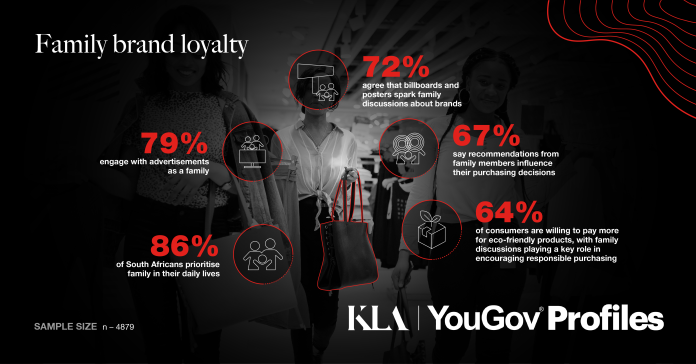
– 86% of South Africans prioritise family in their daily lives, reinforcing the need for brands to integrate family-oriented messaging into their marketing strategies.
– 79% of South Africans engage with advertisements as a family, creating opportunities for brands to create meaningful and memorable messaging.
– 72% of South Africans agree that billboards and posters spark family discussions about brands, reinforcing the value of out-of-home advertising.
– 67% of South Africans say recommendations from family members influence their purchasing decisions, highlighting the continued strength of word-of-mouth marketing.
– 64% of consumers are willing to pay more for eco-friendly products, with family discussions playing a key role in encouraging responsible purchasing.
– Children’s perceptions of brands are heavily influenced by their parents’ choices, ensuring that early brand connections can lead to long-term consumer loyalty. For 86% of South Africans who prioritise family values, parental choices significantly shape their children’s perceptions of brands.

As brands compete for consumer attention, these findings highlight the importance of creating meaningful connections that resonate across generations. As South African consumers increasingly prioritise family-centric values, brands that align with this sentiment can build long-term loyalty, trust, and advocacy – ensuring their influence extends beyond individual consumers to entire households.

KLA
https://kla.co.za/

Key Trends In Influencer Marketing In SA For 2025

Key Trends In Influencer Marketing In SA for 2025
Brooke Lark, Unsplash.

There’s an industry estimated to be worth $32.55 billion (Influencer Marketing Hub, 2025) this year — and it’s not going anywhere soon. Once seen as merely a hobby, influencer marketing has become the world’s largest marketing sector, ahead of paid search.

Although 98% of marketers feel that influencer marketing is effective, less than 1% of agencies are spending a proportional amount on it, says a new report by the IAB South Africa. This means that brands must find new methods of harnessing this channel creatively, effectively and ethically.

The Influencer Marketing Landscape In South Africa

What’s driving this exploding growth in South Africa and worldwide? SA varies in some respects: A high mobile penetration rate of 196% – nearly two mobile devices for every single consumer – means there are huge opportunities for influencers to reach the marketer’s audience, while our vibrant tradition of storytelling, combined with an entrepreneurial spirit, is fertile ground for exciting co-creation between brands and personalities. Some factors are applicable worldwide:

Data-protection regulations: with the decline of third-party cookies, marketers have to rethink how they connect with their audiences. When it comes to influencers on social media, consumers have chosen to follow them and opt in, allowing greater access to data.

Platform innovation: social media apps such as Facebook, Instagram and TikTok are placing the creator first by introducing subscription models. This reduces ad clutter and encourages users to stay on the platform, driving a need for more content.

Consumer behaviour: today’s consumers are savvy — they want content that reflects their real lives. Influencers can help bring authenticity to the brand message.

Social commerce: the social media ecosystem has become transactional. TikTok Shop, Instagram Checkout and YouTube Shopping allow consumers to buy products conveniently without ever leaving the platform.

Key Trends In Influencer Marketing for 2025

IAB South Africa has gathered data from brands and agencies in South Africa that explores the sector’s spend and viewpoints on influencer marketing. In this new report that examines both the challenges and the massive untapped opportunities that exist in this market, six key trends have been identified:

Marketers see the value of influencer marketing, but aren’t investing in it. This could be partly because of capacity (ad spend is already going to other media) and partly because of skill set (marketers lack the expertise and experience to launch an influencer campaign).

Brands and agencies have different expectations of influencers. A marketer may treat an influencer like any other creative, being satisfied by professionalism and efficiency, while the brand may have a more conservative outlook. Careful relationship management between a creator and the agency can help with this, although the time investment can be expensive.

Influencer marketing is seen as a byproduct of the main channel. Only 52% of brands have a dedicated influencer marketing budget. However, these campaigns need to be as carefully curated and planned as TV, print or radio, requiring more spend in some instances.

61% of marketers aim to increase their efforts in the influencer world. Despite the current lack of budget, marketers recognise that authentic content that engenders trust and delivers value takes investment.

SA tends to rely on KPI rates, whereas ROI is more important in other countries. ROI is difficult to track without the appropriate technology, but marketers can use metrics such as comparative engagement rate.

TikTok and YouTube are the biggest growth areas. Platforms that prioritise video content are thriving. Instagram now has a popular Reels function that allows users to post videos.

Influencer Relations = Trust, Transparency And Ethical Standards

Marketers can launch the best-designed influencer plans, but these are no good without principled implementation. Launched in 2024, the South African Content Creator Charter is endorsed by the Advertising Regulatory Board (ARB) and is a guiding document that focuses on ethical standards and best practices for influencer marketing. The goal is a three-way relationship of trust between the marketer, influencer and consumer. The key principles guiding the Charter include:

Be respectful and inclusive: this includes encouraging diversity and telling stories that appeal across gender, race and background.

Be authentic: the audience can tell if the influencer isn’t being true to their own identity. Are they talking marketing speak or using their own voices?

Be clear: marketers need to specify exactly what they expect from creators. Let them know about any relevant legislation and what they can and cannot say about the brand.

Be honest and grow organically: the creator cannot buy followers.

Be transparent: creators need to disclose to their followers when they receive freebies or other benefits.

Be truthful and ethical: never make false or misleading claims.

Collectively, the SA Content Creator Charter and the Influencer Marketing Perceptions Report represent a significant step forward in reshaping South Africa’s unregulated influencer marketing industry. In the absence of formal regulatory frameworks, these documents lay the groundwork for self-regulation and help define a shared vision for a trustworthy and ethical advertising landscape. The IAB South Africa Influencer Marketing Perception Report is now available at iabsa.net, while marketers, brands and content creators are encouraged to commit to the Content Creator Charter here.

This article was authored by: IAB South Africa Influencer Marketing Committee speakers: Casey Mantle, Head of Digital: Special Effects Media SA; Dashni Vilakazi, Managing Director: The MediaShop; Jolene Roelofse, Founder: Fluence Africa; and Sanesh Maharaj, Head of Influence: Ogilvy South Africa.

IAB SOUTH AFRICA
https://iabsa.net/  

Community Management Is The Heartbeat Of A Digital Strategy

Community Management Is The Heartbeat Of A Digital Strategy

Adelaide Tshabalala, Chief Digital Officer at Nerdware, says in digital strategy, the race for the next promotion never slows down – we’re tossing around buzzwords like ‘data-driven storytelling’ and tuning into webinars about algorithms no one really understands. But here’s a truth she stands by: if you’re not listening to what your audience is saying, your strategy is built on sand, and not the golden kind you enjoy on Camps Bay beach with your shades on and main character energy turned up to 100.

Community Management is not a junior job. Yes, you heard me. And if that stung a little, maybe it’s time to check your digital ego at the door.

Community Management is the heartbeat of digital. The Beyoncé of social media, not because it needs to be centre stage, but because it holds the entire show together. And much like Beyoncé, it does the work flawlessly rehearsed, disciplined, emotionally intelligent, and forever in tune with its audience.

In The DMs, We Trust

We spend thousands on analytics tools and dashboards, but the real gold is often buried in your mentions, tagged posts, WhatsApp groups, and TikTok stitch requests. You want to know what your audience thinks of your campaign? Open Instagram. Scroll the comments. Read the quote tweets. Listen.

I often ask, ‘What does your audience say?’ when we’re reviewing campaign performance. Not to be provocative ( okay, maybe a little) but because it’s the only question that truly matters. If your audience isn’t connecting, then you’re just pushing content into the void and hoping for miracles.

You can’t build brands on ghost engagement and empty impressions. And community managers? They know better. They know who’s dragging your brand nges’Zulu, who’s calling you out in is’Xhosa, who’s throwing shade kaSetswana and more importantly, why. That’s an insight you can’t fake.

Strategy With A Pulse

Imagine launching a campaign without community management. It’s like cooking a seven-colour Sunday lunch without pap. Technically still a meal, but you’ve lost the soul.

Great strategy is human. It listens, it adapts, it lives. And your community managers are the ones living inside the conversations, knowing what your audience wants before they even say it. They catch the sarcasm in the comments, the trends bubbling up in ‘vernac’, the viral moment before it explodes in your marketing deck.

They’re your first line of defence and your direct line to relevance.

Clout Won’t Save You

We live in a world where follower count is confused with influence. But trust me, Mzansi doesn’t care how blue your tick is if your brand feels cold.

Community management is where the warmth lives. It’s where trust is built. It’s the ‘Hey, thanks for your message, we’re looking into it’ that makes someone feel seen, and the “Happy birthday, Thuli! 🎉” that makes someone feel part of your brand family.

Brands think they’re being dragged for bad products (and sometimes they are) but often it’s just because people feel ignored. And if you’re not showing up for your audience, why should they show up for you?

Don’t Outgrow The Work That Matters

As people rise in their careers, they often leave community management behind – like it’s a pair of Bata Toughees after graduation.

But that’s a mistake. The best strategists I know still dip into the comments. Still listen. Still engage.

I’m not saying you must reply to every ‘Yoh, this admin is on fire 🔥.’ But I am saying that if you’re not in touch with your audience, your strategy becomes a guessing game.

And here’s the thing, brands don’t win by guessing. They win by connecting.

In Closing

If you’re building a digital strategy, ask yourself: are we treating community management like the gold it is, or delegating it to the intern because ‘it’s just replies’?

If you’re growing in your digital career, don’t rush to drop the community work, it’s where real insight lives. And if you’re a community manager? Know this: you’re not just replying to comments. You’re shaping narratives, building loyalty, and holding the culture in your hands.

As Dimamzo’Oprah might say: ‘People will forget what you posted, but they will never forget how your reply made them feel.’

NERDWARE
https://nerdw.com

Steenberg Wine Estate Introduces New Visual Identity For Flagship Wines

Steenberg Wine Estate Introduces New Visual Identity For Flagship Wines

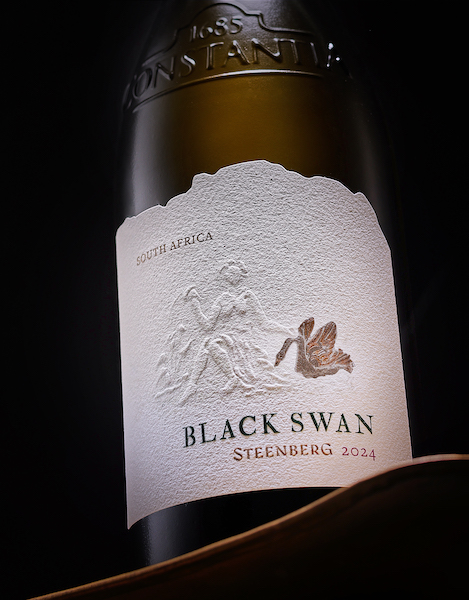
Steenberg Wine Estate has unveiled a sophisticated new look for its flagship wines, marking a significant evolution in its visual identity. The reimagined labels for Steenberg Black Swan Sauvignon Blanc 2024 and Steenberg Catharina 2021 showcase Steenberg’s blend of history and innovation.

The designs feature muted, nude-toned elegance that speaks to the estate’s premium positioning. Steenberg’s newly refined corporate identity inspires the Black Swan’s deep green label and Catharina’s regal purple hue. Embossed details, including a relief image of Steenberg’s historic wine cellar and a subtle die-line depicting the iconic Constantiaberg mountain range, symbolise the estate’s enduring legacy and sense of place.

Our new labels are more than just a visual update — they are a reflection of Steenberg’s mastery in winemaking,’ said Marketing Manager Carryn Wiltshire, Steenberg Wines. ‘By combining premium design with our long-standing focus on terroir and quality, we are ensuring that our flagship wines remain as aspirational as they are exceptional.’

‘Our flagship labels celebrate the depth and refinement of these wines,’ said Wiltshire. ‘They reflect the timeless values of quality and precision that have defined Steenberg since its founding.’

Steenberg Farm was founded in 1682, the first Cape Farm. The estate’s vineyards are planted on some of the oldest wine-growing soils in the world, dating back 500-600 million years. These ancient decomposed granite soils provide a distinctive minerality and complexity that defines Steenberg’s wines.

STEENBERG FARM
https://steenbergfarm.com/

ACA Confirms Placement Of Four Interns As Part Of Industry-Focused Training Initiatives

ACA Confirms Placement Of Four Interns As Part Of Industry-Focused Training Initiatives

The Association for Communication and Advertising (ACA) continues to drive meaningful transformation with its Graduate Programme, internship placements, and bursary support — expanding access, building skills, and enabling future talent in the advertising, marketing and communications sector. Following a call for applications in 2024, the ACA is proud to confirm the placement of four interns for 2025 as part of its industry-focused training initiatives.

These internship opportunities form part of a broader skills and transformation drive that includes the ACA’s Graduate Programme in partnership with the Red & Yellow Creative School of Business, now in its second year.

Additionally, 14 bursaries for 2025 have been awarded in partnership with Red & Yellow, the Media Development and Diversity Agency (MDDA), and the Economic Development Fund (EDF). Funding provided by the MDDA and the EDF has enabled both the internship placements and the bursary programme.

The ACA Graduate Programme, launched in 2024, was developed to provide new entrants to the marketing and communications industry with a comprehensive, structured learning journey. The curriculum covers key disciplines such as account management, creative, digital strategy, research, agency finance, media, and responsible advertising, and is delivered by industry experts with practical, real-world experience.

‘People entering our industry often lack exposure to the integrated nature of how agencies function,’ said Gillian Rightford, Executive Director of the ACA. ‘This programme addresses that gap by combining structured learning with real-world agency insight, and the feedback from both delegates and agency partners has been overwhelmingly positive.’

The four selected interns began their placements in February 2025, and are hosted by ACA member agencies Lobengula, Ebony & Ivory, and Singh & Sons. These interns are enrolled in the ACA Graduate Programme while working full-time in agency roles until January 2026. This dual-track approach ensures that interns gain practical, on-the-job experience while earning a National Certificate in Advertising (NQF 5), further strengthening the industry’s future talent pool.

The ACA also welcomed Dineo Mashiane into the organisation as Marketing & Project Coordinator in 2025. Dineo has also been enrolled in the Graduate Programme, demonstrating the ACA’s commitment to creating internal pathways to growth alongside its external industry support.

In an ongoing effort towards long-term transformation, the ACA partnered with Red & Yellow to allocate 14 bursaries for the 2025 academic year – covering tuition, with additional allocation of funds toward accommodation, books, and living costs. Of these, 10 recipients are pursuing a BA in Visual Communication, and four are enrolled in the BCom in Marketing. These students represent the next generation of diverse talent who will shape the future of the industry.

‘This is a clear example of what industry bodies can achieve when they take the lead,’ said Rightford. ‘By engaging the MDDA, we were able to secure the funding that covers the graduate programme, intern stipends, and the bursary programme. And through our partnership with Red & Yellow, we’re ensuring that learning is practical, applied, and relevant to the real needs of the agency environment.’

According to Andrew Allison, Chief Commercial Officer at Red & Yellow Creative School of Business: ‘One of the biggest industry-wide needs we’re addressing with the ACA Graduate Programme is the shortage of graduates and interns who are both ‘work-ready’ and who have a good understanding of agency fundamentals. In time, our hope is that this programme will set the benchmark for all new entrants, enable agencies to recruit talent who have completed it with confidence, and provide an environment in which agencies of all shapes and sizes can come together and collaborate in solving a shared challenge.’

‘As a creative business school built to serve industry, we know that nurturing skilled, work-ready graduates is not a nice-to-have – it’s a necessity. This partnership with the ACA reflects our shared belief in industry-aligned education and transformation through access. We’re proud to be helping shape the next wave of professionals who will bring new thinking, creativity, and diversity to the workplace.’

Shoeshoe Qhu, Media Development and Diversity Agency (MDDA) CEO, added: ‘Education is life-changing. Through the EDF bursary, in partnership with Red & Yellow and the ACA, we are not just providing financial support – we are investing in the next generation of media and advertising professionals, shaping future industry leaders and driving meaningful impact.’

Through the ACA’s Graduate Programme, and its internship and bursary initiatives, the association continues to invest in the development of a more inclusive, representative, and future-focused communications industry.

ACA

www.acasa.co.za

Tractor Outdoor Expands National Network

Tractor Outdoor Expands National Network

Tractor Outdoor has added new key sites in SA’s main metros to its network with the addition of two new digital billboard sites, strategically located in Ferndale (Gauteng) and Paarl (Western Cape). These acquisitions form part of Tractor’s continued investment in high-impact digital out of home (DOOH) solutions, bridging critical coverage gaps in key suburban regions.

Ferndale is an established, high-density suburb in Randburg. Positioned along Republic Road – one of the area’s main arterial routes – the site benefits from a constant stream of commuter traffic moving between Randburg, Sandton, and Bryanston. Its immediate proximity to Ferndale on Republic Shopping Centre, alongside surrounding residential and commercial zones, ensures consistent exposure to a diverse audience comprising working professionals, families and active shoppers.

‘This site is a key addition to our portfolio,’ said Steve Duck, Tractor’s Chief Revenue Officer – Media. ‘We’ve strategically chosen this location for its exceptional reach, commuter appeal, and proximity to high-footfall shopping destinations – making it ideal for brands looking to connect with consumers who are in a purchasing mindset.’

The Ferndale billboard offers brands access to an aspirational, middle-to-upper-income demographic and is particularly well suited to campaigns across retail, FMCG, tech and financial services. The City of Johannesburg, which includes Ferndale, is home to the largest metropolitan population in South Africa (~11 million people) and boasts the highest concentration of roadside digital screens, accounting for over half of the national total, according to research conducted by Outdoor Auditors (Feb 2025).

Paarl is in the heart of the Cape Winelands. Found along Main Road – a key route linking Paarl Central with Stellenbosch – this location serves as both a commuter and lifestyle corridor. Surrounded by luxury wine estates, gourmet restaurants and heritage landmarks, it presents a prime advertising opportunity for brands targeting affluent tourists, experience-driven travellers and high-income local residents.

‘The Cape Winelands remains a sought-after destination for both domestic and international visitors, and consistent client demand reinforced the need for a broader digital footprint in the region,’ explained Duck. ‘This site supports premium brand positioning and sees heightened footfall during weekends, festivals, and seasonal peaks.’

While Paarl is situated outside the metro, its proximity to the City of Cape Town – a fast-growing metro with over 5 million residents – makes it a natural extension of Tractor’s strategy. According to Outdoor Auditors, the Western Cape has one of the highest billboard occupancy rates nationally, indicating strong advertiser demand and sustained audience engagement. Tractor has also built a dominant footprint in this region, with nearly half of its national inventory concentrated in Cape Town and surrounds.

These acquisitions form a core component of Tractor’s growth strategy, which focuses on strengthening its national DOOH footprint across both metro and high-value suburban areas. By strengthening its presence in previously underrepresented but strategically valuable nodes, Tractor enhances its ability to deliver seamless, high-reach campaigns to advertisers seeking measurable returns.

TRACTOR OUTDOOR
www.tractoroutdoor.com

Effie South Africa Ipsos Trends Report Highlights What Sets Effective Campaigns Apart

Effie South Africa Ipsos Trends Report Highlights What Sets Effective Campaigns Apart

The 2024 Effie Awards South Africa Ipsos Trends Report, launched during a webinar hosted by Effie South Africa on 27 March and presented by Ipsos, offers key insights into what sets effective campaigns apart – making it a valuable resource for any campaign that seeks to resonate, connect with audiences and drive effectiveness in marketing communication. Naturally, it is of particular relevance for those preparing entries into the 2025 Effie Awards South Africa. Modern Marketing is a proud media partner.

Gillian Rightford, ACA CEO and Effie South Africa lead, commented: ‘The value of this report lies not only in its strategic insight, but in its timing. As we enter the 2025 Effie Awards South Africa season, these findings provide both inspiration and practical direction for creating work that works. At the heart of every Effie Award lies a simple yet profound truth: real marketing effectiveness matters. Our continued partnership with Ipsos allows us to ground effectiveness in evidence — and that’s what the Effies are all about.’

It focuses on Effie’s core judging pillars – Challenge, Context and Objectives; Insights and Strategic Idea; Bringing the Strategy and Idea to Life; and Results – with additional insights into creative content, the report provides a clear view of the strategic shifts, creative decisions, and executional excellence that characterised last year’s most effective ad campaigns. The research from Ipsos in distilling learnings from the winners provides a roadmap for future success, helping brands and agencies sharpen their focus on what truly moves the needle.

Key findings from the report include:

Creativity Is The Ultimate Differentiator

Distinctive, memorable advertising is more effective than simply increasing media spend. Being remembered matters more than just being seen.

Emotional Connection Drives Success

Ads that resonate on a deeper level, whether through storytelling, tension, or social responsibility, build stronger brand loyalty and influence consumer choice.

Brand Purpose Fuels Growth

Businesses that align with social good and solve real problems grow faster and earn greater consumer trust. Purpose-driven brands stand out and thrive.

Celebrity Endorsements Need Strategic Fit

Simply featuring a famous face isn’t enough; the connection between the celebrity, the brand, and the message must feel authentic to be effective.

Quantin Montello, Creative Excellence Lead at Ipsos SA, said: ‘This year’s Effie winners reaffirm the global truth we’ve long observed: creativity and empathy are the true drivers of marketing effectiveness. Campaigns that challenge norms and engage audiences meaningfully are delivering disproportionate results.’

Download the full 2024 Effie Ipsos Trends Report here.

The 2025 Effie Awards South Africa entry period is open, with final entries due by 28 May 2025. The eligibility window includes campaigns that ran between 1 February 2024 and 31 January 2025.

The 2025 Effie Awards are proudly hosted by the ACA, and sponsored by Nedbank, SAB, Unilever, GIB Insurance, with in-kind sponsorship by Lobengula Advertising.

Effie South Africa is also calling for judges to be part of this year’s adjudication panels. If you’re a senior marketing or agency professional and would like to be considered, click here to apply.

EFFIE AWARDS SOUTH AFRICA
www.effieawards.co.za

Halo Advertising Chosen To Create Campaign For This Year’s Loerie Awards

Halo Advertising Chosen To Create Campaign For This Years Loerie Awards

Last year a call was put out to design and creative agencies in Africa and the Middle East to submit a proposal for the Loeries campaign, with the understanding that this was pro bono work. Agencies from across the region responded to the brief and each of their submissions was evaluated. This was followed by a presentation to the Loeries Board, who then selected the campaign for the year, which was the Halo submission.

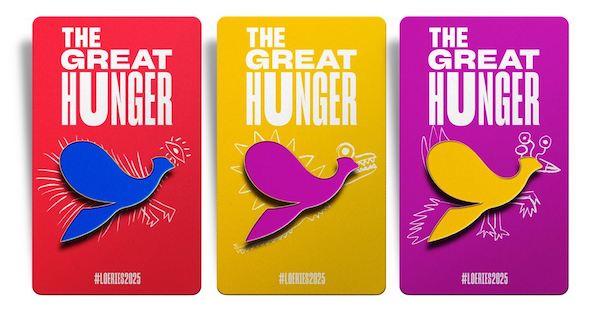
When the business was awarded to Halo, the adjudicating panel commented that the agency’s submission was ‘streets ahead’ of its competitors. They loved its playfulness and energy, the bright colours and fun executions, and the creative lines that extend across all elements of the campaign and speak to both marketers and agencies in the region.

‘We received nearly twenty submissions from agencies across Africa and the Middle East for the 2025 campaign. The presentation from Halo really resonated with the board as it spoke about an intrinsic desire in the brand communications industry – the hunger to create truly iconic work. I am therefore so excited to see this concept roll-out, and it is already resonating with the industry across our region,’ said Preetesh Sewraj, CEO of The Loerie Awards.

Conceptualising a creative campaign that would work across all the African and Middle East markets was a challenge. However, the hunger to stand out and succeed in this industry is universal and is the campaign’s driving force, explained Halo’s founder and managing partner, Dean Oelschig.

”The Great Hunger’ is what gets us up in the morning, and what keeps us awake at night. Of course, it’s the hunger to win awards, to be successful, to be recognised, to win the next big pitch, but it’s also so much more than that. It’s the hunger to learn more, to be inspired by colleagues and competitors alike, to achieve more, to be challenged more.’

Given the international status of The Loerie Awards and the international stage for the awards show, designing the creative elements of the 2025 campaign represents a significant win for the Halo team – and a definitive nod from the industry.

Coenie Grebe, Executive Creative Director of Halo, explained the creative approach. ‘This year, we’ re not just shining the spotlight on the metal at the end. We are celebrating all the moments that build up to it. From the big decisions to the small moments in between. This is the great hunger that drives us all.’

‘It puts the spotlight on everyone that forms part of this amazing industry, all the hard work, the endless craft and that little voice inside (or the hungry beast we constantly have to feed) that says: ‘Is this all you’ve got? Then, you are not yet done…!” said Grebe.

HALO ADVERTISING
https://www.brandhalo.co.za

How To Create And Share Content That Supports Your Business Strategy

How To Create And Share Content That Supports Your Business Strategy
Dylan Kohlstadt, Shift ONE Digital.

Banish the thought of you, a CEO, being handed a phone and awkwardly told to hop on the latest trend or share your thoughts on your business – while trying to make it sound spontaneous and authentic. All for the sake of having a social media presence. Dylan Kohlstädt, CEO of Shift ONE Digital, discusses how to nail your B2B social media strategy and see real business growth.

We all know the drill: you’re being encouraged to talk about yourself, your company, and your achievements, all while fitting into some viral hashtag or challenge that feels completely out of your comfort zone.

While that content has its place in the B2C world, your business deserves a social media strategy that’s unique to your organisation, your expertise, and your clients.

It should work for you, not the other way around. And I’m going to show you how to get started.

Have you aligned social media goals with business goals? Every decision you make about social media must align with your overall business objectives. This isn’t about posting for the sake of posting – your social media needs to directly fuel your business growth. Whether you’re looking to generate leads, raise brand awareness, or position yourself as an industry authority, your goals should be clear, measurable, and laser-focused.

If your company is a manufacturing business focused on growing its distribution network, your goal might be to increase engagement with supply chain decision-makers or procurement managers through case studies or product demos.

Your goals will drive the type of content you produce, the platforms you choose, and the budget you allocate. Get this right from the start.

How To Choose The Right Social Media Platform

Don’t waste your time (or resources) trying to be everywhere. Focus on quality over quantity. For most B2B manufacturing, engineering, and services companies, LinkedIn should be your primary platform.

Why? It’s where your target audience – C-suite executives, managers, engineers, and procurement officers – are active. You may also consider YouTube for product demos, and X (formerly Twitter) for quick industry updates or thought leadership.

Don’t spread yourself thin. Pick two or three platforms, research where your audience is most active, and double down on those.

Having multiple platforms is great, but only if you can manage them properly. Otherwise, you’ll end up diluting your brand message and wasting time.

Do You Know Your Audience?

Guessing your audience’s needs will leave you spinning your wheels. Use data-driven insights to understand your audience’s behaviour. Social media platforms offer robust analytics, so use them to get detailed insights into your target audience’s demographics, interests, and activity patterns.

Pro tip: If you’re targeting decision-makers in manufacturing, look for LinkedIn insights on job titles (e.g. Supply Chain Manager, Director of Engineering) and tailor your content to their pain points.

Once you know who they are, ask yourself: are they just learning about your product, or are they ready to pull the trigger? Knowing where they sit in the customer journey funnel is critical.

Also, make sure you’re measuring these insights regularly. Adjust your approach if you see content that’s not resonating.

What Metrics Matter To You?

Numbers don’t lie, but only if you’re tracking the right ones. Focus on metrics that help you achieve your business objectives. Here’s a guide:

If your goal is customer acquisition:

For many B2B businesses, social media is a crucial part of the lead-to-customer journey. Customer acquisition cost (CAC) tells you how much you are spending on social media to acquire a new customer. This is key for understanding ROI. It’s also worth tracking the number of closed deals or contracts that originated from social media channels.

If your goal is lead generation:

Click-through rate is the percentage of people who click on your social media post to visit your website, landing page, or other desired locations. A high CTR indicates that your content and CTAs (calls to action) are compelling.

Conversion rate is the percentage of visitors who take a desired action after clicking through, such as signing up for a newsletter, requesting a demo, or downloading a whitepaper. This helps assess how well social media traffic is being converted into leads.

If your goal is brand awareness:

Follower growth rate measures how fast your social media following is growing. A steady increase indicates that your brand is gaining recognition.

Mentions and brand sentiment helps you gauge public perception and awareness. Then there’s share of voice, which refers to how often your brand is mentioned compared to competitors on social media. It gives you an idea of your market position and how you’re stacking up in your industry.

If your goal is engagement:

Likes, shares, and comments help measure how well your audience is interacting with your content. Engagement rate is the number of interactions (likes, comments, shares) divided by the total number of followers.

Meanwhile, reach measures how many people saw your post, while impressions track how many times your post was displayed. High impressions indicate visibility, while high reach means you are reaching new audiences.

How To Create And Share Content That Supports Your Strategy

Now let’s get down to actually creating content. But not just any content. It must be strategic. The right content will drive your B2B goals, and you can start by defining your content pillars; these are the core themes your audience cares about.

Step 1: Define Your Brand’s Content Pillars

Content pillars are the foundation of your content strategy. They should align with your audience’s needs and the goals of your business. For example, if your company provides industrial automation solutions, your pillars might be:

• Educational and thought leadership content: Position your company as a leader in the industrial automation space by sharing valuable insights and industry knowledge. This type of content builds credibility and helps your audience understand the value of automation in their operations.

• Case studies and success stories: Highlight real-world examples where your automation solutions have transformed businesses. Show measurable results such as cost savings, productivity increases, and efficiency improvements.

• Product demonstrations: Share videos or interactive posts that show how your products work in action. This could include system integration, real-time data collection, or automation of specific tasks.

• Company culture and behind-the-scenes: While B2B marketing is largely focused on products and services, showing the human side of your business can help build rapport and trust with your audience.

• Networking and collaborations: Announce any partnerships, collaborations, or joint ventures that reflect your company’s influence in the industry.

Step 2: Create Your Content Plan

Now that you have your pillars, it’s time to plan out your content. This doesn’t have to be complex – simplicity works. Use a content calendar to map out your posts, including the format (video, article, infographic), topic, and the platform where each will be posted.

If you want to make your content creation process even more streamlined, use a content calendar to track what’s been posted, what’s in the pipeline, and what needs more attention.

Step 3: Feed Your Content Calendar

The key to maintaining consistency is organisation. Having a content calendar will help you plan ahead, schedule posts, and track performance. This structure ensures that you’re consistently sharing relevant content without scrambling for ideas every week.

Not convinced you need a content calendar? Read on.

• A content calendar helps you plan ahead, ensuring you’re always posting relevant content without last-minute stress. It’s the best way to align your content with business goals, industry events, and promotions.

• Avoid posting the same types of content too often. With a calendar, you can balance themes like product demos, customer stories, and industry insights, keeping your content fresh and varied.

• Align with campaigns. Sync your calendar with your sales cycles, product launches, or key industry events. If you’re preparing for a product release or a trade show, your posts should build awareness leading up to it.

Step 4: Repurpose And Recycle Content

Creating content from scratch can be time-consuming, so get smart about it. Repurpose your top-performing blog posts, case studies, or videos into new formats. A well-performing blog can be transformed into:

• An infographic highlighting key points.

• A series of shorter social media posts.

• A video summarising the blog’s main takeaways.

You don’t need to reinvent the wheel. Just leverage what’s already working.

Time To Take Up Space On Social Media

You’re now equipped with a no-nonsense B2B social media strategy. The next step is execution. Keep your strategy flexible – after three months, assess how well it’s working, tweak it, and add more fuel to your efforts. Consider paid advertising when you’re ready to amplify your reach.

Now go on and get started! The digital world is moving fast, and every second you spend debating strategy is a second you’re not building your brand.

SHIFT ONE DIGITAL
www.shiftone.co.za

Simply Black’s Inge Wulff Recognised For Shaping A People-First Workplace Culture

Simply Blacks Inge Wulff Recognised For Shaping A People-First Workplace Culture
Inge Wulff, Simply Black Media.

Inge Wulff’s approach to workplace culture is rooted in authenticity and purpose. In 2024, the Head of Brand and People at Simply Black Media led a company-wide revamp of job titles, descriptions, and performance metrics. Wulff has been named an Emerging Culture Creator in Culture Amp’s 2025 awards for her work in shaping a strong, people-first workplace culture.

A key part of the above-mentioned revamp was developing a robust competency framework, giving employees a clear view of how their skills align with distinct roles and growth opportunities within the company, and creating spaces where they can thrive.

To ensure employees feel supported and engaged, she has introduced structured initiatives, including:

– Annual goal setting: employees set both work-related and personal development goals at the start of the year, tracking progress each month.
– Monthly one-on-one meetings: employees meet regularly with their managers to discuss wins, challenges, wellness, and development progress.
– Bi-annual culture surveys: employees provide honest feedback on their workplace experience. Leaders then present findings to their teams and work together on action plans.

These initiatives provide clarity, encourage two-way feedback, and help to build a high-performance culture while keeping employees at the centre of decision-making.

For Wulff, workplace culture is about brand identity too. Simply Black Media is built on core values like People First, Purposeful, and Authenticity. Every initiative, whether related to branding or people, is shaped by these principles. ‘Our values dictate how we operate, and that’s the foundation of the Simply Black brand,’ she said.

One of the biggest challenges she has tackled is ensuring inclusivity across Simply Black’s diverse, pan-African workforce. Diverse cultural contexts means that policies must be flexible and equitable. A recent example of this is the company’s updated maternity policy, designed to better reflect the holistic needs of female employees.

Another challenge is securing buy-in for people-focused initiatives at all levels of the organisation. Wulff’s solution is the start with the ‘why’ before diving into the ‘how.’ ‘People and culture work require buy-in from leadership and employees alike. We always begin by explaining the purpose behind any initiative, ensuring alignment before moving forward.’

Culture Amp’s recognition celebrates forward-thinking leaders who integrate culture with business strategy, showing that employee well-being and engagement are essential to organisational success. Being named an Emerging Culture Creator has reinforced Wulff’s passion for designing meaningful employee experiences. ‘This recognition reaffirms that workplace culture is a strategic business priority, not just an HR function,’ she said.

Her advice for organisations looking to strengthen their workplace culture? ‘Start with a survey. Ask the uncomfortable questions and use that data to set clear, actionable goals. Culture isn’t built through posters and policies – it’s shaped by everyday actions and a shared commitment from leadership and employees.’

SIMPLY BLACK MEDIA
www.simplyblackmedia.com

This is Modern Marketing