Home Blog Page 68

Entries For iPendoring Awards 2025 Are Officially Open

Entries For Ipendoring Awards 2025 Are Officially Open

Entries for the iPendoring Awards 2025 are open, with submissions closing on August 22, 2025. The awards mark a major milestone in 2025: 30 years of celebrating indigenous language creativity in South Africa’s communication industries. And this year, the message is loud and clear: ‘Taal Never Die. We Multiply.’

For more information on entering, view the guide here. The awards are open to agencies, publishers, filmmakers, designers, digital creators, game developers and anyone producing work in South Africa’s indigenous languages. Categories include traditional advertising, digital storytelling, publishing, design and more.

The Prestigious Umpetha Award includes a single entry into the international One Show Awards, along with a trophy and certificate. The Overall Student Winner will receive R10,000, along with a trophy and certificate.

‘Taal Never Die. We Multiply’ – more than just a slogan, the 2025 campaign captures a bold, distinctly South African spirit. It is rooted in youth culture but speaks across generations. It celebrates the way we speak, remix and reimagine language in everyday life. Conceptualised by Sanele Ngubane (Toasted Samish) and Vumile Mavumengwana (VM DSGN), and supported by Breinstorm Brand Architects, the campaign is a call to all who qwel. Those who speak their truth, in their own language, with pride and conviction.

‘While honouring the legacy of indigenous storytelling, this year’s iPendoring also asks what comes next. For three decades, it has created space for work that reflects the multilingual heart of Mzansi. In a country where over 91% of people speak an indigenous language as a first language, this mission is more relevant than ever. iPendoring continues to champion creative expression in our own taal,’ said Eben Keun, iPendoring Awards’ General Manager.

Endorsed by UNESCO, iPendoring continues to bring together community and industry to celebrate the richness of South Africa’s indigenous language creativity.

IPENDORING AWARDS
www.pendoring.co.za

AdHive Group Appoints Human Capital Director

AdHive Group Appoints Human Capital Director
Poonam Ghela, AdHive.

AdHive Group has appointed Poonam Ghela as its first Human Capital Director. Ghela’s role will focus on aligning people strategy with business strategy, building scalable systems that help teams thrive and strengthening the agency’s reputation as a great place to work.

‘Precision marketing goes beyond the tools. It is also about the people who know how to use them,’ said Ghela. ‘I am excited to help shape an environment where our values are felt, not just framed and where HR becomes a growth partner, not just a support function.’

Ghela holds degrees in both Clinical and Industrial Psychology, as well as an MBA. She will be tasked with leading AdHive’s end-to-end people strategy, from workforce planning and leadership development to recruitment, coaching, onboarding, and performance. She will report directly to Managing Director Sizwe Dlamini.

Her immediate focus includes meeting teams across the organisation, auditing current people systems, and rolling out a foundational people analytics framework to inform and improve decision-making. Within her first 60 days, Ghela also plans to launch structured feedback loops, refresh onboarding, embed values in recognition practices, and introduce leadership coaching across the Group.

‘I see a thriving workplace as one where people feel safe, seen, and connected to purpose. My goal is to build a culture of psychological safety, transparency, and intentional development, where people are not only supported but empowered to grow,’ she added.

Ghela’s vision for employee experience goes beyond internal culture-building. She intends to turn AdHive’s employer brand into a competitive advantage. This includes measuring employee satisfaction and advocacy through tools like eNPS (Employee Net Promoter Score), increasing referral and retention rates, and aligning candidate experience with the Group’s values.

‘Success will mean our people strategy is measurable, human-centred, and felt at every touchpoint from the first interview to leadership conversations. It is about moving from buzzwords to systems that actually work.’

Dlamini welcomed the appointment, saying: ‘AdHive has always done things differently. As we scale into new markets and invest in immersive and influencer-led brand storytelling, it is time to elevate HR into a strategic, culture-driving function. Ghela’s expertise and empathy are exactly what we need.’

Ghela’s appointment comes as AdHive celebrates 10 years of growth and creative disruption, with divisions like TechHive and IdeaHive already transforming the agency’s data, storytelling, and digital capabilities. The spotlighting of Amplify Hive, its influencer and brand experience unit, further underscores the Group’s momentum.

THE HIVE GROUP
https://ideahive.co.za/

Five Truths For Building Wine Brands That Stick

Five Truths For Building Wine Brands That Stick

‘Products are made in factories, but brands are created in minds.’ Advertising executive Leo Burnett’s timeless insight has never rung truer, especially in the world of wine. In a market that’s crowded, fast-moving and increasingly visual, it’s not only your grape variety, terroir, wine quality or awards that will set you apart. It’s your brand memory: the emotional connection your packaging, positioning and story create in a split second.

In late May, Vinimark opened the doors of its premises in Klapmuts outside of Cape Town for a Packaging and Innovation Masterclass that brought together creatives, strategists and storytellers from across the wine world. The session, led by Vinimark’s Wine Training and Education Manager Ginette de Fleuriot, featured two provocateurs of design thinking: François Rey of graphic design studio Monday Design and Brenden Schwartz, co-founder of wine brand Orpheus & The Raven. These are their takeouts:

The Rise Of The Distinctive Asset

Walk into any bottle store and you’ll see it: shelf upon shelf of beautifully bottled ambition. But amid all that noise, only a few speak with clarity. Why? Because they’ve built what Schwartz called distinctive assets: visual cues that work harder than names, louder than labels.

Think Nike’s swoosh, Coca-Cola’s wave or the slant of a Johnnie Walker bottle. These are shortcuts to meaning, signposts that say ‘this is who we are’ before a single word is read. Schwartz reminded the Masterclass attendees that most people can recall only three brands on a shelf, and when recognition drives decision, colour, shape and imagery dominate the memory game, not text.

For Schwartz, this theory isn’t academic. With Orpheus & The Raven, he built a brand without leaning on heritage, only imagination. Through distinctive hand-drawn illustrations and narrative-rich design, his wine now stands out in international markets not only for its credentials but for its character.

Why Story Matters More Than Grape

Both Rey and Schwartz agreed that technical specs no longer sell wine. Story does.
From philosophies to places and the personalities who shape them, the modern wine drinker is looking for meaning, not just method. Rey’s rebranding of McGregor Winery is a case in point. Instead of a generic label refresh, he told a tale: ‘Where the road ends, our story begins.’ That one sentence, rooted in geography but rich in symbolism, helped reposition the brand with quiet power.

The label itself broke from tartans and tradition, moving towards bold typography and punchy colour palettes that modernised the visual language without losing the soul of the brand.

Generational Codes: One Shelf, Three Audiences

Design isn’t one-size-fits-all. Each generation brings its own lens.

– Gen X sticks with what they know. Familiar packaging. Traditional channels. A sense of trust.
– Millennials crave design that stands out in a scroll. They value meaning over status and find their brands online first.
-Gen Z are allergic to inauthenticity. They want bold, expressive, eco-minded brands that double as self-expression, and they find them on TikTok, not in tasting rooms.

As Schwartz pointed out, some wine brands, like Whiny Baby, are flipping the script, treating wine as content, entertainment and identity all at once.

Great Brands Aren’t Built Overnight

It’s tempting to look at global icons and assume their brand recognition was inevitable. But every giant earned its place through consistent storytelling, visual discipline and relentless refinement.

Schwartz unpacked how iconic brands like Coca-Cola, Nike and Johnnie Walker built lasting recognition, not overnight, but over decades of disciplined brand building. Coca-Cola, for instance, began developing its distinctive brand identity as far back as the late 1800s. The now-iconic script logo first appeared in 1887, but it wasn’t until the 1920s that Coke leaned into the red and white colour palette and contoured bottle that would cement it as a household name. Even today, Coke invests billions in keeping its assets fresh yet familiar. As brand strategist Mark Barden noted in the online business magazine Fast Company, ‘Coke’s brilliance lies not just in being known, but in being recognisably consistent across cultures and generations.’

Nike, similarly, didn’t become a cultural force the day it introduced the swoosh. When the logo was first designed in 1971, it was met with internal uncertainty. The breakthrough came in the late 1980s when the company paired it with a powerful story: ‘Just do it.’ With bold emotional advertising and athlete partnerships, Nike built an ethos that transcended product and stuck. As Phil Knight, Nike’s co-founder, famously said, ‘We’re a marketing company, and the product is our most important marketing tool.’

Johnnie Walker has been walking forward, literally and figuratively, since the early 1900s. Its slanted label and top-hatted striding man have endured because they evolved just enough over time. The brand’s 1999 relaunch with the ‘Keep walking’ campaign was a case study in storytelling rooted in heritage yet reimagined for relevance. That consistency gave Johnnie Walker a distinctive emotional posture: progress, confidence and boldness in motion.

The takeaway? Distinctiveness isn’t a quick win; it’s a long game. It’s earned through patience, vision and the courage to stay the course while refining along the way. Wine brands that aspire to stay top of mind must also think in decades, not just quarters.

Five Truths For Building Wine Brands That Stick

From Rey and Schwartz’s work, five enduring truths emerged:

– Lead with story, not grape. The bottle is your vessel, but the narrative is your engine.
– Build what no one else can copy. Hand-drawn illustrations, bespoke typography, and a visual voice that’s unmistakably yours.
– Think in decades, not campaigns. Avoid fleeting trends. Own something timeless and refine it with intention.
– Design for the digital shelf. Your label might show up as a thumbnail before it hits the table. Make it legible, striking and scroll-stopping.
– Blend the familiar with the unexpected. Evolve your brand without alienating loyalists. Surprise without severing ties.

Redefining Heritage For A New Era

The wine brands that will win tomorrow aren’t throwing out their history. They’re reimagining it, translating provenance into personality and craft into connection. As this Masterclass made clear, lasting brand equity isn’t just about what’s in the bottle. It’s about building memory, shaping meaning and creating an emotional shorthand that lingers long after the cork is pulled. In a world of choices, the boldest thing a wine brand can do is be unforgettable.

VINIMARK
https://www.vinimark.co.za

How Marketers Can Truly Engage With South African Audiences

How Marketers Can Truly Engage With South African Audiences
Nicky James, Tribeca.

According to Nicky James, managing director, Tribeca Public relations,
South Africa isn’t one audience with the same tastes and tick boxes, but millions of people with different ways of talking, living and seeing the world. If you’re hoping to win people over, you can forget a copy-paste approach. Simply swapping ‘color’ for ‘colour’ doesn’t work here.

You need to listen, adapt and share your story in ways that feel familiar, whether that’s landing your message on a local podcast, working with trusted community voices or showing up in the neighbourhoods where conversations actually happen.

And let’s not forget that our population is young, the youngest in the world, in fact. We’re scrolling Instagram and TikTok all day, chatting with our kids and each other on Snapchat but we’re also showing up for family braais or hanging out wherever there’s Wi-Fi and good company. We’re urban and rural, high-tech and word-of-mouth all at the same time.

What does this mean for brands? It means you have to do more than plaster a clever slogan onto a billboard or send out a localised release and hope for the best. Tailor your messages for local media and build genuine relationships with journalists and influencers who understand their communities and speak in ways that make sense here. Make sure you can back up your words with action on the ground, in our languages and in our neighbourhoods – the places where people gather and talk. You need to understand that what works in Sandton might flop in Soweto.

Take Coca-Cola’s ‘Share a Coke’ campaign. The first time we saw it here was in 2014, and it was a hit. Why? Because they didn’t just stick with the standard global names, but instead learned our nicknames and local quirks that made us smile. Now in 2025 they’ve taken it up a notch. They’ve combed through name registries, tapped into social media slang and asked locals what really matters. They’re not just slapping out a campaign either, but supporting it with localised PR, pop-up activations, community partnerships and stories that feel personal. Over 300 names plus pop-ups where you can customise your own can? Love it.

When you see your name or, even better, your nickname on a can of Coke, it’s more than just a drink. It’s a small moment of feeling recognised in a way that feels truly South African. Too many brands still talk at people, but the ones that stick find ways to show they understand our slang, our sense of humour and the little things that make us feel like we belong.

There are many other brands also getting it right here. SPAR, for example, sponsors netball tournaments, fun runs and community events in places where big-brand billboards don’t even bother to go. They’re having real conversations with local media, community groups and customers, and chatting to your aunty while she’s handing out oranges at the finish line. That kind of community presence backed by authentic PR sticks with people long after the race is done.

And while SPAR may not be my go-to grocery store, because well, Checkers… they’re the one I look for when we pass through small towns because they’ve been part of those main streets for generations. They just get what it means to show up where people really live.

So, what’s the secret? It’s not rocket science. Listen more than you talk. Trust your local comms partners. Build real relationships with journalists. Use words people actually use, not marketing jargon. Partner with people locals already trust, whether it’s a community radio DJ, a high school soccer coach or a micro-influencer next door.

Tuning into the local heartbeat shouldn’t be an afterthought, but should sit at the heart of your strategy. When brands stop treating us like a cut-and-paste market and invest in PR that feels local, people notice and they remember.

TRIBECA
www.tribecapr.co.za

Travel Social Media Awards Will Celebrate The Digital Excellence Of Tourism Brands

Travel Social Media Awards Will Celebrate The Digital Excellence Of Tourism Brands

The inaugural TourismX Social Media Awards will celebrate the digital excellence of tourism brands and travel services that excel in creating meaningful and authentic online connections with their audiences. The recently launched Social Media Marketing Institute (SMMI) announced that these awards are taking place in Johannesburg on 26 September 2025.

TourismX aims to honour the most engaging tourism brands across various categories, showcasing the power of social media in the evolving tourism landscape.

The focus will be on genuine interaction on social media, measuring engagement through likes, shares, comments, and community-building rather than just follower numbers.

‘Social media is transforming the way businesses and brands communicate with their customers, and these awards aim to highlight those leading the charge in creating authentic, impactful digital content,’ said Gerrit Davids, Head of the SMMI.

‘Through the TourismX Social Media Awards, we want to celebrate creativity, innovation, and the power of digital storytelling in the tourism sector.’

Social Media Champion Of The Year Categories:

– Game Lodges.
– Local Tourism Association (LTAs), Destinations.
– District Destinations.
– Tourism Heritage Sites.
– Tourist Attractions.
– National Hotel Chains.
– Airlines x 2 Categories: (South African and other African airlines flying to South Africa).
– Airports.
– Industry Associations.
– City Destinations.
– Provincial Destinations.
– Travel Media Publications (Digital/Online/Print).
– Tourism Promotion Events: B2B and B2C.
– Government Tourism Agencies (National Entities).

Grand Prix Award

– Social Media Brand of the Year.

Tourism entities are encouraged to simply email their public page Facebook profile to tourismx@gerommedia.co.za There is no cost attached to enter the awards.

GEROM MEDIA
www.gerommedia.co.za

Telkom Reveals New Visual Identity

Telkom Reveals New Visual Identity

Telkom’s visual refresh signals a renewed commitment to agility, clarity, and inclusivity in a fast-evolving digital world. It signals a shift from rigid hierarchies to more fluid, empowered ways of working; from broadcasting messages to engaging in real conversations; from being a utility to becoming a brand that sparks imagination and inspires action.

‘This is more than a cosmetic change,’ said Gugu Mthembu, Chief Marketing officer at Telkom. ‘Our new identity is a symbol of the internal transformation already underway at Telkom. It’s about bringing more colour, humanity and vibrancy into everything we do while staying rooted in our purpose to make the future possible for all.’

The unveiling is underpinned by a strong internal movement designed to anchor the change within Telkom’s culture, acting as a transformation catalyst, bringing the brand’s renewed energy to life in everyday interactions and touchpoints.

‘We are creating space for new ideas, new voices, and new ways of thinking,’ added Mthembu. ‘This identity reflects our belief that we can be both bold and grounded, digital, and deeply human. We want South Africans to feel seen, heard, and included every time they interact with Telkom.’

The new visual language, which is vibrant, expressive, and unmistakably confident will be rolled out across all brand and customer touchpoints, marking a pivotal moment in Telkom’s evolution as a purpose-led business.

TELKOM
https://www.telkom.co.za/

How South African Brands Are Moving Beyond Vanity Metrics

How South African Brands Are Moving Beyond Vanity Metrics

Henri Bam, CEO of revX, says for many South African businesses, surface-level success is no longer enough. In a competitive, cost-conscious market, the spotlight is shifting away from likes, shares and impressions, and toward something far more meaningful: measurable sales outcomes.

Today’s most effective marketers are no longer asking: ‘How many people saw this?’ but rather, ‘What business result did this drive?’ That mindset shift is transforming how brands approach digital growth and reshaping the role of marketing itself.

From Visibility To Value

Engagement metrics can be helpful indicators, but they don’t always reflect true performance. A campaign that attracts thousands of clicks may still fall short if it doesn’t generate qualified leads or convert interest into action.

This is why so many South African companies are rethinking the way they measure marketing success. They’re moving beyond passive lead generation and towards active revenue generation: performance-led strategies that are anchored in real results, not vanity.

Clicks Are Only the Start

Clicks alone don’t pay the bills. The real value lies in what happens after someone engages. What led to that moment of interest? What comes next? And how seamless is the journey from curiosity to conversion?

When campaigns are designed to guide users through a full-funnel experience, not just stop at awareness, results begin to compound. The most successful brands are those that understand the psychology behind the click, and build systems that nurture leads, reduce friction, and ultimately drive action. This is where performance-led strategies shine: they combine strong creative with data intelligence to deliver revenue, not just reach.

Performance Is Personal

There’s often a misconception that performance marketing is overly analytical or devoid of emotion. But in reality, it requires a sharper kind of creativity, one that speaks directly to a person’s intent, motivation, and context.

It’s not about blasting a message to as many people as possible. It’s about precision: the right message, in the right place, at the right time.

This might mean segmenting audiences based on buying stages, designing dynamic content that adapts to different triggers, or refining landing pages so the path to purchase feels intuitive and easy. Small changes, when informed by insight, can yield disproportionately powerful results.

When Sales and Marketing Align, Revenue Grows

One of the clearest signs of a performance-led company is internal alignment. When marketing, sales, and operations share common definitions of success and are working toward the same revenue goals, growth tends to accelerate. Silos disappear. Feedback loops tighten. Data becomes shared currency. And marketing evolves from a cost centre into a powerful engine for business development.

This alignment doesn’t just improve outcomes, it transforms how organisations make decisions, measure value, and adapt to change.

Why This Matters Now

In South Africa’s current economic landscape, marketing leaders are under more pressure than ever to demonstrate impact. The brands breaking through are those that can show direct attribution between ad spend and actual revenue, not abstract KPIs or click-through rates that don’t translate into sales.

The advantage belongs to those who:

– Measure what matters.
– Optimise consistently.
– Cut what doesn’t work.
– Build with revenue in mind from the start.

This isn’t just a new way of working, it’s a new expectation from boards, CFOs, and leadership teams who want to see clear ROI.

The Road Ahead

Marketing is no longer just about reach or awareness, it’s about outcomes. The organisations that understand this and act on it will be the ones that grow, scale, and lead in the years to come.

The shift away from vanity metrics isn’t just timely, it’s essential. Because in today’s market, the only metric that matters is revenue.

REVX
https://www.revx.ai

ACA Welcomes New Board And Leadership Team For 2025/26

ACA Welcomes New Board And Leadership Team For 2025-26

The 78th Annual General Meeting of the Association for Communication and Advertising (ACA) took place on Wednesday, 16 July 2025, where the new Board of Directors and Executive Committee (Exco) for the 2025/26 fiscal year was confirmed. The incoming Exco will be led by Luca Gallarelli, Group CEO of TBWA\South Africa, who assumes the role of Chair.

He is joined by Kagiso Musi, Group Managing Director of Meta Media, as Vice Chair. The Exco also includes Mpume Ngobese of Joe Public, Jarred Cinman, CEO of VML South Africa, and Gillian Rightford, Executive Director of the ACA. This dynamic leadership team brings together diverse experience and complementary skillsets to ensure a forward-focused, delivery-driven approach to the ACA’s mission.

Reflecting on the past year, outgoing Chair, Sharleen James, Managing Director at Razor, described the 2024/25 term as one of meaningful progress and collaborative achievement. ‘We entered the year with a clear focus on delivery,’ she said. ‘Together, we committed to driving real outcomes and were deliberate in our approach to execution.’

Under her leadership, the ACA drove several key initiatives forward: cementing the role of the six Tribes as core to the ACA’s structure and execution; launching the GenEra platform for young professionals; and strengthening its commitment to transformation, education, and advocacy. ‘We moved from setting intentions to implementing programmes, from ideas to impact,’ she added. ‘The progress made was made possible by a highly engaged Board, an exceptional Exco, and a Secretariat team that remained consistently focused.’

The full Board of Directors for the new term is as follows:

BOARD MEMBER AGENCY DESIGNATION
Luca Gallarelli: Chair TBWA/South Africa Group Chief Executive Officer
Kagiso Musi: Vice Chair Meta Media Group Managing Director
Mpume Ngobese: Exco Joe Public Co-Managing Director
Jarred Cinman: Exco VML SA Chief Executive Officer
Gillian Rightford: Exco Association for Communication and Advertising Executive Director
Adeshia Singh Singh & Sons Managing Director
Alison Deeb MetropolitanRepublic Group Chief Executive Officer
Andrew Brand Ninety9cents Chief Executive Officer
Brenda Khumalo Lobengula Advertising Founder and Managing Director
Derek Coles McCann Joburg President
Gareth Leck Joe Public Group Chief Executive Officer
James Moffat Promise Brand Specialists Chief Executive Officer
Jason Harrison The Up and Up Group Co-Founder & Chief Operating Officer Founding Partner
Karabo Denalane TBWA\Hunt Lascaris Chief Executive Officer
Koo Govender Publicis Groupe Africa Chief Executive Officer
Pete Case Ogilvy South Africa CEO & Creative Chairman
Preetesh Sewraj The Loeries Chief Executive Officer
Roxana Ravjee Dentsu South Africa Chief Executive Officer
Sarah Dexter MullenLowe South Africa Chief Executive Officer
Sharleen James Razor Managing Director
Sibuyiel Mabena Duma Collective Co-Founder and Chief Creative Officer
Sinqobile Mjali The Odd Number Managing Director
Vicki Buys Ogilvy South Africa Managing Director
Wayne Naidoo DUKE Group Group CEO
Xola Nouse The Odd Number Chief Executive Officer
Sharon Bergmann-Stanley Association for Communication and Advertising Finance Manager


ACA Executive Director Gillian Rightford welcomed the incoming Board and praised the work of the previous leadership team, noting the shift in 2024/25 from ‘promise to performance’.

‘I’m excited to be working with the dynamic new ACA Board and Exco as we continue to build on the strong foundations laid over the past year,’ she said. ‘Together with the outgoing Exco, Wayne Naidoo, Luca Gallarelli, Brenda Khumalo, and Sharleen James—and through the collective effort of our Tribes, Committees and Task Teams, we identified tangible deliverables across our strategic focus areas and made real headway.’

She added, ‘This kind of progress doesn’t happen by chance. It’s the result of sustained commitment from a team of professionals who manage this work alongside demanding agency and corporate roles. I’m incredibly proud of what we’ve achieved and deeply grateful to all who contributed—including our tireless Secretariat team.’

In his first statement as Chair, Gallarelli shared his perspective on the formation of the Exco and the intention behind it: ‘The choice of Exco came down to two key principles. Firstly, that it should be made up of credible, diverse and complementary personalities and skillsets to create a high-functioning, delivery-oriented and dynamic posture. It is important for this dynamic to strike a balance between the need for continuity and the ability to look ahead, not only to the challenges of today, but to those of next week, next month, and the years ahead. I have no doubt this group achieves all of this and look forward to the impact they will bring in partnership with the Secretariat and Tribes.’

ACA

www.acasa.co.za

Loyalty Must Evolve From Static Rewards To Sparking Emotion

Loyalty Must Evolve From Static Rewards To Sparking Emotion
Alex de Bruyn, Let'sCreate.

According to Alex de Bruyn, CEO of Let’sCreate, if you were to go purely on stats from the 2024/2025 edition of the South African Loyalty Landscape Report, which shows that 82% of South Africans use loyalty programmes or that they use 10.3 loyalty programmes on average, you’d assume the sector was in rude health. Dig a little deeper, though, and the picture quickly becomes much more complex.

For example, grocery retailers and fuel stations do very well out of loyalty, with 77% and 51% of consumers saying that loyalty programmes shift where they buy from in those categories. Health and pharmaceutical companies (30%) and restaurants and coffee shops (26%) benefit significantly less.

It’s also clear that there’s still a gap in making loyalty programmes attractive, especially among mass market consumers, where just 63% make use of them. Among the 18% of economically active and 37% mass market consumers who don’t use loyalty programmes, the biggest reasons given are not spending enough to earn decent rewards (22%) and taking too long to earn decent rewards (15%).

What Loyalty Programmes Get Wrong

Before we can reimagine loyalty, we have to acknowledge where most programmes go wrong. They are built for a customer who no longer exists. Legacy models like earn points, get discounts, or buy nine and get the tenth free rely on extrinsic motivation and outdated habits. But today’s consumer wants more than a transaction. They want an experience.

Loyalty must evolve from static rewards to systems that spark emotion, foster progression, and feel deeply personal. Modern users expect immediate feedback, tailored challenges, and rewards that reflect their behaviour, not just their spend. They want to feel seen, understood, and in control.

This is where most programmes fall short. They ignore the core drives that keep people engaged: curiosity, autonomy, achievement, and social status. Instead of building systems that adapt and respond, they offer blanket discounts and slow, linear reward loops. It’s no surprise that even high-earning users disengage when there is no narrative, no tension, and no sense of progression.

The shift is clear: loyalty must become a game worth playing. One where the user’s effort is recognised, their journey is personalised, and their rewards are not just earned, but felt.

Learning From The Leaders

Some loyalty programmes are already ahead of the curve, and Discovery Vitality stands out. According to the South African Loyalty Landscape Report, it’s the one programme consumers ‘can’t live without’. Why? Because it doesn’t just reward, it motivates.

Vitality understands that relevance drives engagement. Goals are personalised based on where you are in your journey, meaning a beginner and an athlete can both succeed. This taps into development and accomplishment, letting members progress on their own terms, an essential driver in game design.

But what truly sets it apart is how it weaves game mechanics into everyday behaviour. Weekly goals unlock dynamic, chance-based rewards, a play on a digital gameboard, that combine unpredictability (what will I get?) with instant gratification. This layered design triggers emotional engagement while reinforcing habit loops. Rewards range from instant treats to versatile Discovery Miles, all delivered through a system that feels earned, not given. It’s not just functional, it’s fun, and that’s why it’s been Discovery’s most successfully exported product.

Loyalty Is Ripe For A Game-Changing Shift

The future of loyalty isn’t in more points, it’s in more play. Customers today aren’t just transacting; they’re engaging, comparing, and constantly switching. In this attention economy, brands that win will be those that turn loyalty into an experience, not a ledger.

Gamification, done right, taps into human motivation: curiosity, progress, purpose, and belonging. It’s why users chase badges, complete challenges, and return for streaks. But most South African programmes are still built for yesterday’s consumer: linear, transactional, and static.

We need dynamic, personalised systems that adapt to behaviour and inspire action. Loyalty must feel alive. The Octalysis framework gives us the map: psychological drivers, real-time feedback, and game mechanics are the tools.

Disruption won’t come from bigger discounts. It’ll come from brands bold enough to build loyalty people love to play.

LET’SCREATE
https://www.letscreate.global/

Younger Consumers Calling For Authenticity Over Artifice To Build Brand Trust

Younger Consumers Calling For Authenticity Over Artifice To Build Brand Trust
Credit: Emiliano Vittoriosi, Unsplash.

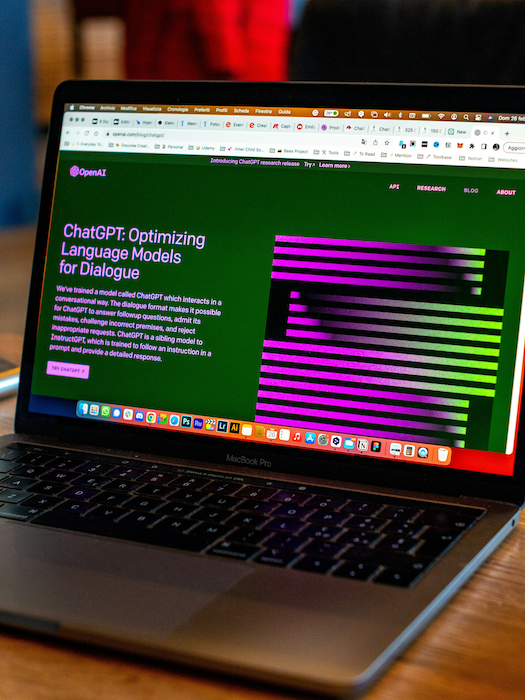
With platforms such as ChatGPT becoming pretty much ubiquitous in the past few years, generative artificial intelligence (AI) has moved swiftly from the realm of science fiction into everyday reality. It already plays a big role in the advertising industry, with estimates putting the global market revenue of AI usage in marketing at around $47 billion in 2025.

We may expect younger consumers to be attracted by the latest innovations; however, tech-savvy Gen Zs and Millennials who have grown up immersed in digital technology are only too aware of its pitfalls. These consumers are starting to question the use of AI in advertising, calling for a more authentic, human-centred approach. So, when should we be using AI, and what are the alternatives?

This year’s IAB South Africa Youth Action Council Townhall looked beyond the ease and simplicity of generative AI usage to question whether marketing and influencer content has lost its authentic edge.

As part of the IAB SA Insights webinar series, the Townhall took place at a crucial moment intersecting between the remembrance of Youth Day and forward-looking trends for the next generation of digital marketers.

Balancing Data And Authenticity

AI may present a challenge for creatives, but it’s a market researcher’s dream. It is a powerful tool for brands trying to reach a market of one, allowing them to take a deep dive into market trends and user preferences, understanding individual customers’ needs and matching them with the right products. It also has consumer-facing uses, from bots addressing user complaints on airline sites to virtual influencers promoting Versace, Red Bull and Tinder. Despite this widespread use, a survey measuring consumers’ comfort with brands using AI saw a drop from 57% in 2023 to 46% in 2024 (Statista, 2025).

Luzuko Tena, IAB SA Youth Action Council Chair, who has held senior roles in social media, brand and advertising, is uniquely positioned to offer insight into this tension. ‘The next generation of marketers has two very tricky, but also exciting roles,’ he said. ‘On the one side, there’s an expectation to be data-driven, to use insights, to use performance metrics and audience signals, to guide a lot of their decision-making. But, on the flipside, there’s also a need to stay really grounded and get in touch with the human side of marketing.’

The Influencer Game

If AI-generated influencers arouse suspicion in some consumers, what about real-life spokespeople? Surely the very concept of influencers, with their carefully curated feeds and perfect lives, is antithetical to authenticity? As PR and Influencer Lead at Unilever, Anele Maphanga is a fan of using influencers in marketing. She feels that an influencer is seen as being authentic when they create content with a purpose. ‘I think you have to stand for something, whether it’s mental health, sustainability or cultural storytelling. Who are you beyond the product partnerships?’ The kind of content that allows the consumer to see into the influencer’s life while making the consumer feel seen is a winning formula for Maphanga.

Lineo Msimka, Marketing Trends Specialist at The Foschini Group, said that streaming is the ultimate in authentic online content. ‘It asks you to come as you are. It asks you to be natural.’ By its very nature (generally live and without the dazzle of professional production values), it is unfiltered and real. She cites streamer Kai Cenat, who went from recording comedic videos alone in his bedroom to hosting celebrity guests and having more than 18 million followers. Imagine the power of linking your brand to a personality with that kind of reach.

Using influencers can add the human touch, but only if done correctly. Pierre Cassuto, Global CMO at Humanz, a collaborative creator marketing platform, said that audiences can see right through it when influencer content is scripted. Marketers shouldn’t treat influencers as machines, expecting them to toe the line and repeat the brand message word for word. Instead, they should be allowed to speak in their own voices, lending their personalities to the product.

Creating Communities

Cassuto said that consumers are also turning to social media, seeking human interaction and a sense of community. AI may provide instant access to information, but humans inspire. As he put it: ‘People don’t scroll to learn what they already know; they scroll to be moved, to be surprised and to feel something real.’

So, how can you use social media to promote your brand without losing the authenticity that comes from one-on-one online interactions? Cassuto said if you’re thinking that you should create a community around your brand, you’re throwing a party that no one asked for. He explained that it’s not about bringing the consumer into your space but adding value to theirs. Brands need to tap into existing conversations and add value. They also need to understand how audiences engage with platforms and mimic that behaviour.

When is AI Alright?

Part of the appeal of using AI is that it’s simply more cost-effective in some situations. As Cassuto put it, AI content sells faster, smarter and cheaper, and converts better than humans do. Maphanga said that using AI depends on the context. For example, the cornerstone of the Unilever Dove campaign is celebrating real beauty and real women, so they would never use AI-generated images of women; when it comes to product images, there’s no problem.

There’s no fooling younger consumers when it comes to AI, either. They can spot computer-generated content a mile away. But this doesn’t mean marketers and brands have to eliminate it to regain their trust. The solution lies not in choosing between data and storytelling, but combining them into a human-centred approach that brings authenticity that consumers can feel.

IAB SOUTH AFRICA
https://iabsa.net/  

This is Modern Marketing