
Home Blog Page 4

Humanz Appoints New Country Manager For South Africa

Humanz Appoints New Country Manager For South Africa
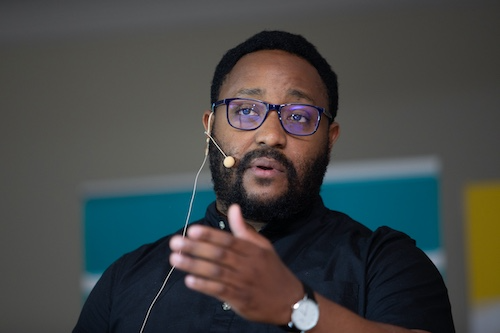
Mpumelelo (Mpumi) Zondi, Humanz.

Mpumelelo (Mpumi) Zondi joins Humanz at a defining moment, as the marketing ecosystem undergoes a massive structural shift towards AI-driven automation. In his new role, Zondi will spearhead local operations from the Johannesburg office, scale brand partnerships, and drive Humanz’s next phase of African market expansion.

His appointment coincides with a series of major upcoming AI releases from Humanz set to redefine how marketers deploy budgets, how creators commercialise their work, and how the broader industry operates. Zondi has built a formidable reputation for helping organisations simplify corporate complexity, and unlock high-impact brand experiences.

Leading The AI Frontier In Marketing

As social media platforms shift third-party data targeting entirely over to proprietary algorithms, creative and data-verified creator media have become the ultimate growth levers for brands. Humanz sits at the absolute intersection of this shift, utilising a compounding AI engine to integrate creator data with deep full-funnel attribution across key ecommerce marketplaces.

Zondi, who has over 20 years of heavyweight experience across communications, advertising, and public relations, is uniquely equipped to lead this charge. Prior to joining Humanz, he was Head of Brand and Global Client Lead at Edelman, managing critical footprints across the likes of Amsterdam, Riyadh, Lagos, and Johannesburg. He is also the Founder of PROMPT189, a pan-African brand innovation consultancy dedicated to integrating AI-powered efficiency and cultural intelligence into commercial business models.

‘Africa is hugely commercially viable,’ Zondi enthuses. ‘The challenge with life on the continent is that beyond investing in and building big companies, we need to think about the role that a brand can play, not only as a line item, but as an investment that increases a company’s overall valuation.’

Empowering Youth Beyond The Transaction

Beyond technical innovation, Zondi’s leadership addresses a critical industry need: inspiring, mentoring, and challenging human standards in an AI-dominant world. An alumnus of Harvard Business School Online, Zondi describes himself as an innovation and AI enthusiast, a mentor, and a self-styled ‘VP of Book Consumption and Academic Curiosity.’

‘What drew us to Mpumi isn’t just his corporate track record; it’s how he develops people,’ said Pierre Cassuto, co-founder and global CMO at Humanz. ‘The global tech landscape is sprinting towards AI, but technology is only as good as the community it powers. As we roll out major AI updates that change the game for marketers and creators alike, we need leaders who can challenge standards and inspire young talent to rise to their full potential. Mpumi has spent his career doing exactly that.’

Zondi will leverage his executive coaching expertise, notably his proprietary ‘Spheres of Influence’ framework, to sharpen internal company culture, mentor senior leaders, and bridge the gap between corporate marketing needs and the agile, fast-moving creator economy.

‘We find ourselves at the absolute forefront of turning influencer marketing into a quantifiable business growth lever,’ said Zondi. ‘But in a world increasingly run by algorithms, transformative human leadership is more vital than ever. I am a firm believer in the rise of the African century and the immense potential of our youthful continent.

‘In a country like South Africa, where we face massive challenges with youth unemployment, a platform like Humanz has an incredibly important role to play. This goes far beyond the transactional element of just creating content; it is about giving people the dignity to earn a living, build pride, create their own businesses, and go on to generate sustainable wealth. By using leading-edge technology, we can enable young Africans to rise financially and look after their families. I look forward to working with our agile team to help South African brands move and scale with absolute confidence.’

HUMANZ
www.humanz.com

Communication Is A Line Item That Reduces Risk

Communication Is A Line Item That Reduces Risk .

Sue Blaine, senior writer and editor at Flow Communications, outlines why communication is a risk management tool. If you have ever felt a jolt of annoyance when someone solved a problem for you without asking what you actually needed, you already understand community resistance. It is a reasonable response to being handed an outcome you had no hand in shaping.

Consider what happened when e-tolling was imposed to fund the Gauteng Freeway Improvement Project. The design and engineering was technically expert, and the gantries, cameras and billing platforms worked precisely as designed from the system’s December 2013 launch. But the system was formally scrapped in 2024, defeated by years of mass non-compliance, protest and litigation led by the Organisation Undoing Tax Abuse (OUTA) and others.

‘The failure of the e-toll scheme was evident within months of its launch,’ said OUTA CEO Wayne Duvenage. ‘Compliance levels peaked at around 40% during the first six months and then declined steadily thereafter. By mid-2014, it was clear that the scheme lacked public support and was not financially sustainable.’

In the years when the South African National Roads Agency was trying to get people to comply with e-tolling, it made a common mistake. It repeatedly presented a technically sound argument that all over the world the ‘user pays’ principle is used to fund large public infrastructure projects. Gauteng’s residents were having none of it. The problem, among others, was that they felt that they had not been consulted before funding and other project decisions were made.

Communities don’t evaluate a project against its technical specification, they look at what a project means for them. They worry about dust, noise and commute disruption from an infrastructure project, or how they remember they felt when visiting researchers left, never to be heard from again, after asking them probing questions about their personal lives.

The costs of a consent failure are concrete and can be enormous: delays, litigation, security, redesign and, as the e-tolls show, even abandonment. Set against those, the cost of consulting properly is negligible.

Yet, often communication is viewed as part of marketing, something to be done once the project has been beautifully built, when actually, it is a risk management tool.

After the 2017-2022 National Strategic Plan for HIV, Tuberculosis (TB) and sexually transmitted diseases (STIs) drew criticism for being insufficiently consultative, the South African National AIDS Council (Sanac) set out to make sure the government’s 2023-2028 plan did not suffer the same fate.

The award-winning campaign that followed included social media, radio, influencers, media relations and thought leadership and used a number of the country’s official languages to reach tens of millions of South Africans.

Sanac brings representatives from all sectors of society, including health workers, scientists, civil society, government, development partners and ordinary South Africans, together to develop a collective response to HIV, TB and STIs in South Africa, making it one of the best-placed organisations to ensure proper consultation on the government’s national plans.

The campaign, which won a silver PRISM award from the Public Relations Institute of Southern Africa in 2023, was a large part of the reason the 2023-2028 national strategic plan was dubbed ‘the people’s plan’.

‘We drew up a communications strategy that put a coordinated mix of social media, radio, influencer partnerships, media relations and thought leadership to work to deliver this goal, in multiple official languages, and we are thrilled that we helped Sanac’s message reach tens of millions of South Africans and invite them into the conversation,’ said Flow Communications head of public relations Caroline Smith.

South Africa’s National Research Foundation and Human Sciences Research Council are working on a multi-year research project into how young people in the Global South use their relationships to other people and the environment to promote their well-being. A fascinating aspect of this project, which is called u’Good?! and funded by the Swiss philanthropic organisation Fondation Botnar, is that it views it as foundational to involve the subjects of this research, young people, in the development and execution of what it examines.

‘By centring young people as collaborators rather than subjects, working across disciplines and across the South, and holding open the question of what well-being actually means in different contexts, the programme contributes to a realignment of theory, practice and politics towards a more just world for young people in the Global South,’ said one of the research leaders, Dr Angelique Wildschut.

The participatory research methods that the u’Good?! project is using recognise the complex nature of human behaviour, and the limitations of qualitative research methods, which, while useful, cannot tell the full story. Research has shown that when people are encouraged to take part in developing social research programmes from the start, the result is more meaningful community engagement throughout the project.

This is the part that tends to get lost when communication is filed under marketing. Consultation is not a sign-off you collect once the decisions are made. It is the process of giving people something real to influence, early enough that their input can still change how a project is planned.

A community that has shaped a project has a stake in its success. A community presented with a finished project has only the option of accepting or resisting it, and opposition is very often the response, purely because a community feels that decisions are being imposed on them.

The practical implication is a scheduling one. Communication belongs in the project plan alongside the technical surveys and the legal due diligence, not in the launch budget at the end. It is a line item that reduces risk, and it should be costed and timed as such.

FLOW COMMUNICATIONS
www.flowsa.com

Virgin Bet South Africa Launches First Brand Campaign Outside The UK

Virgin Bet South Africa Launches First Brand Campaign Outside The UK

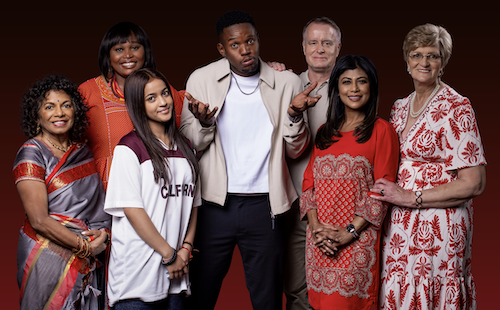
Created by South African agency Joe Public and shot by Darling Productions, Virgin Bet South Africa’s first brand campaign outside the United Kingdom moves away from the outcome-led conventions of the betting category.

Rather than leading on winning, ‘A Good Bet’ focuses on the enjoyment across sport and entertainment, from the entertainment of watching a game and the excitement of casino play, to the conversations and shared moments around both – introducing South African audiences to the Virgin Bet proposition through a distinctly local lens.

Brendan Hoffmann, Executive Creative Director at Joe Public said, ‘To launch Virgin Bet in a highly competitive market we needed to make it look, sound and feel different to the usual betting ad. The TV ad is a celebration of what A Good Bet is, and that’s so much more than just winning. It’s the highs and lows, the excitement and anticipation, the big moments and little ones, brought to life in a uniquely Virgin way for a richly diverse South African target market.’

Chloe Coetsee, Director, Darling Productions said, ‘The idea was to hone in on the human truth of how a good bet really feels. The small, instinctive moments of celebration and delight. The slower frame rate meant we could suspend the performances just enough to give it a subtle but still cinematic confidence to cut through a category that usually shouts. It was great to work with a brand and creative team doing something so different in the category.’

The campaign is being rolled out across television, out-of-home, sports programming, digital and social, with the start of the sporting season providing a key moment to build brand visibility.

Television will play a major role in reaching audiences at scale, with sport providing a strong contextual environment for Virgin Bet to connect with audiences. OOH will further build visibility beyond TV, while digital and social activity will extend the campaign’s reach and engagement across the channels audiences use every day.

Gail Odgers, General Manager, Virgin Bet South Africa said, ‘We’re taking a considered approach to building Virgin Bet in South Africa. Right now, it’s about establishing the brand, building familiarity and giving people a clear sense of what we stand for. Once we’ve built that foundation, we can start to place greater emphasis on our products and propositions, giving consumers more reasons to choose Virgin Bet.

‘For us, it’s about building the brand in the right way and making sure we have a strong foundation to grow from. ‘A Good Bet’ is an important first step in that journey.’

The activity represents a significant investment in building Virgin Bet as a brand in South Africa, with this first phase focused on making the brand known, establishing its credentials and building familiarity with ‘A Good Bet’. As that foundation is established, Virgin Bet will place greater emphasis on its products and propositions, and broaden its channel mix over time.

Campaign TVCs are available here, including the 30-second film here and 20-second film here.

Virgin Bet launched in the United Kingdom in 2019 and has since grown into a leading betting brand in that market. Its entry into South Africa earlier this year was the brand’s first expansion outside the UK, and strengthens the presence of parent company LiveScore Group on the continent, alongside LiveScore Bet’s operations in Nigeria. Virgin Bet South Africa operates under licence from the Mpumalanga Economic Regulator.

Responsible gambling is central to the Virgin Bet South Africa platform. The brand provides a full suite of responsible gambling tools, including deposit limits, time-outs and self exclusion options for all customers, alongside rigorous age verification protocols. These are supported by dedicated local customer support teams, with further initiatives planned in South Africa to support safer gambling as part of Virgin Bet’s broader corporate social responsibility commitments.

IRVINE PARTNERS
www.irvinepartners.co.za

Register For The Modern Marketing Expo Now

Register For The Modern Marketing Expo Now

The marketing, branding and graphics industry is changing rapidly and agencies and businesses need to keep up with innovations and trends. Supercharge your offerings with the latest branding and marketing technologies demonstrated live at the Modern Marketing Johannesburg expo. The event is taking place 8-10 September at the Gallagher Convention Centre, Johannesburg.

Speak to experts about solutions that will open new markets as well as increase consumer engagement, brand awareness and profits.

See opportunities and solutions in:

– Branding, advertising and media.
– Promotional products and branded apparel.
– AI design and content technologies.
– Marketing technology.
– Signage, displays and visual communications.
– Print and production technologies.
– Digital experience and engagement.
– Retail and shopper marketing.

Supercharge Your Marketing At The Modern Marketing Power Hour

Industry leaders will share their expertise and insights in the ever-evolving field of marketing at the free-to-attend Modern Marketing Power Hour, taking place in Hall 3 at Gallagher Convention Centre.

Please register online for free attendance to the Modern Marketing Expo, taking place 8-10 September, 9am-5pm at Gallagher Convention Centre. The event is co-located with: Sign Africa, FESPA Africa, Africa Print and Graphics, Print and Sign expos.

MODERN MARKETING EXPO
+27 11 568 1894
https://modernmarketingexpo.co.za

Sign Your Clan Campaign Puts Deaf South Africans At The Heart Of Cultural Heritage

Sign Your Clan Campaign Puts Deaf South Africans At The Heart Of Cultural Heritage

When South Africa recognised South African Sign Language (SASL) as its 12th official language, it marked a historic step towards inclusion. Now, Castle Milk Stout builds on that milestone with Sign Your Clan, a new campaign creating what are believed to be the world’s first formally recognised sign language representations of traditional African clan names.

Sign Your Clan brings SA Sign Language, African heritage and linguistic innovation together, creating a more inclusive way for more than 4 million Deaf and hard-of-hearing South Africans to connect with their cultural identity and heritage.

Rather than translating existing language, the campaign creates new signs for clan identities that have historically been expressed primarily through spoken or written language.

Language As Culture, Not Translation

Clan names carry deep significance across South African cultures, representing lineage, ancestry and belonging. Yet many had no established signs within SASL.

Castle Milk Stout worked with SASL specialist, educator and Hands-On Creatives founder Mmatlou Moloto, to develop seven clan signs. The signs were vetted and approved by the Pan South African Language Board (PanSALB), formally integrating them into South Africa’s linguistic framework.

‘Language is far more than communication; it is an expression of who we are, where we come from and where we belong,’ said Moloto.

‘SASL becoming our 12th official language was a historic step, but language is living and continues to evolve. Sign Your Clan demonstrates how language, culture and identity can come together to create greater inclusion and participation.’

From Campaign Idea To Cultural Practice

Sign Your Clan was taken beyond traditional advertising and into a real cultural setting through the traditional wedding of a Deaf couple, where the newly developed Zulu clan sign was incorporated into the celebration and family gift exchange.

The wedding also featured calabash, blanket and reed mat designs inspired by various cultural motifs and African heritage, alongside hands and clan totems, bringing the language innovation into a lived cultural experience.

For Castle Milk Stout, this campaign extends its longstanding connection to African culture into a contemporary context.

A New Model For Brand-Led Inclusion

Rather than simply adapting existing communication for accessibility, Sign Your Clan contributes to language development itself, shifting the conversation from representation towards participation.

‘Castle Milk Stout has always celebrated richness in flavour, culture and identity,’ said Thomas Lawrence, Brand Director at South African Breweries.

‘Helping expand South African Sign Language through clan names allows us to honour heritage while making it more accessible and shareable across communities.’

Why It Matters

For marketing and advertising, Sign Your Clan demonstrates how a brand can contribute to moving communities forward with something tangible to culture and African heritage.

By creating new clan signs that have been formally approved and can continue to evolve, the campaign has the potential to live beyond the advertising itself, turning a brand idea into a lasting cultural contribution.

To learn, sign and share your clan, watch video here or visit Sign Your Clan.

SIGN YOUR CLAN
https://www.castlemilkstout.co.za/signyourclan

Building The Foundation For A Robust Radio Currency

Building The Foundation For A Robust Radio Currency

The Broadcast Research Council of South Africa’s (BRC) chief role is to commission and oversee the delivery of radio and television audience measurement research for broadcasters and the advertising and marketing industry. The BRC has issued an update on the progress of its new Radio Audience Measurement Survey (RAMS), as the programme moves towards completion of its first full annual reporting sample. The survey has now passed 29 000 respondents as Wave 4 fieldwork nears completion, marking a key milestone towards the country’s next radio trading currency.

Following the successful completion of the first three waves of fieldwork, RAMS has achieved a cumulative sample of 29,380 respondents, exceeding the three-wave target of 27 000. This means that more than 75% of the designed annual reporting sample of 36 000 respondents has already been completed.

Wave 4 fieldwork is currently under way and is expected to conclude at the end of September 2026. Its completion will mark an important milestone for the new measurement system, providing the first complete annual sample on which the new RAMS currency has been designed.

The new RAMS was commissioned by the BRC to establish a robust, independent and future-focused radio audience measurement currency for South Africa. GfK, an NIQ company, was appointed by the BRC to design and deliver the new service, bringing established audience measurement expertise and experience from markets internationally.

The study has been designed around a large national sample of 36 000 respondents per annum, providing the scale required to measure South Africa’s diverse radio market across demographic groups, provinces and geographic areas.

The first three waves of RAMS fieldwork were conducted by GfK between September and November 2025, January and March 2026, and April and June 2026 respectively.

Importantly, the sample has continued to strengthen as successive waves have been added, with improvements in representation among demographic groups that required additional sample development, including white respondents, males and people aged 55 and older.

The RAMS sample is deliberately disproportionate across metropolitan, urban and rural areas to ensure sufficient sample sizes for meaningful analysis within different population groups. The resulting data is then weighted to restore the correct population proportions and ensure that the final outputs are representative of the South African population.

A Picture of South Africa

Beyond its role in measuring radio audiences, the scale of RAMS provides a detailed view of South Africa’s population aged 15 and older.

The RAMS universe currently represents approximately 45.3 million South Africans aged 15+. Of this population:

– 49% are male and 51% female
– 22.4% are aged 15–24
– 23.2% are aged 25–34
– 21.8% are aged 35–44
– 13.9% are aged 45–54
– 9.6% are aged 55–64
– 9.0% are aged 65+

The population is also geographically diverse. Gauteng represents approximately 26.7% of the 15+ population, followed by KwaZulu-Natal at 18.9%, the Western Cape at 12.8% and the Eastern Cape at 10.8%. Limpopo accounts for 9.4%, Mpumalanga 8.0%, North West 6.5%, Free State 4.8% and Northern Cape 2.1%.

This data set gives media planners, agencies and advertisers a current, evidence-based view of the South African population that extends beyond radio listening alone.

Designed For South Africa

RAMS uses a combination of face-to-face recruitment and digital data collection to ensure that different parts of the South African population can participate in the study. Across the first three waves, 85.3% of diaries were placed face-to-face, while 14.7% were placed through online panels.

This blended approach is important in a market as diverse as South Africa, where levels of connectivity and digital participation differ considerably across geographic and demographic groups.

The methodology is supported by a comprehensive weighting framework designed to account for the disproportionate sample design and ensure that the final data reflects the underlying population.

From Rebuilding To Currency

The completion of Wave 4 represents more than another fieldwork milestone. It will complete the first full annual sample for the new RAMS and provide the industry with the depth of data required for the next stage of the currency’s development.

BRC’s CEO Gary Whitaker said the progress represents an important milestone for South Africa’s radio industry.

‘When we embarked on the new RAMS, our objective was not simply to replace the previous survey. We wanted to build a radio measurement currency that reflects South Africa today and provides the scale, methodological rigour and stability required by broadcasters, agencies and advertisers,’ said Whitaker.

‘With almost 30 000 respondents already represented across the first three waves, we are now approaching the completion of the first full annual sample. That is an important milestone, not only for the BRC but for the entire radio and advertising industry.

‘The focus throughout this process has been on getting the foundations right. A trading currency carries a significant responsibility, and it is important that the industry can have confidence in the methodology, the sample and the governance behind the numbers,’ Whitaker added.

What Happens Next

The BRC will provide further information on the RAMS release programme following completion and validation of Wave 4. This will include confirmation of the timeline for the next stage of reporting, building on the methodological review process the BRC has followed throughout the RAMS development.

No radio audience, listening or station-level data is being released as part of this update. The purpose of this communication is to provide the market with an update on the progress of RAMS and the development of the population and sample foundation underpinning the new currency.

The BRC thanks broadcasters, media agencies, advertisers and research partners for their continued engagement and support as RAMS is established to the highest standards of audience measurement governance and technical rigour.

BRC
https://brcsa.org.za/

Ornico Strengthens Leadership With New Appointment

Ornico Strengthens Leadership With New Appointment
Hopolang Mothibeli, Ornico.

Ornico, an African brand intelligence company, has appointed Hopolang Mothibeli as Commercial Director: Strategic Partnerships and Market Intelligence, strengthening its leadership across advertising intelligence, media research and ad-spend analysis.

Mothibeli joins Ornico from AGB Nielsen Media Research South Africa, where she served as Associate Director and Commercial Lead. She played a leading role in Nielsen’s advertising intelligence offering, working with agencies, advertisers, broadcasters, media owners and other industry stakeholders to interpret advertising activity, identify ad-spend patterns and extract greater value from market data.

Her appointment comes as the industry’s need for dependable advertising intelligence becomes increasingly important. Agencies need to benchmark investment, advertisers need to understand competitor activity, and media owners need visibility into the categories and brands driving the market.

Ornico intends to help provide that continuity while developing advertising-intelligence capabilities that reflect South African market realities and international best practice.

‘We’ve been in the ad-spend game for over two decades, but the arrival of Hopolang Mothibeli still feels like a massive win for us. She’s a veteran who truly ‘gets’ the perspective of both broadcasters and agencies. After years of collaborating on industry councils, I know her experience is second to none, but it’s her commitment to the industry’s growth that makes this partnership so exciting. Welcome to the team, Hopolang,’ said Oresti Patricios, CEO of Ornico.

Mothibeli brings more than 15 years of experience in business development, account management and media research, including nine years focused specifically on media research and measurement.

Her expertise spans advertising intelligence, ad-spend analysis, audience measurement and custom media research. She has developed and commercialised data-led solutions, managed strategic industry relationships and supported clients across retail, automotive, telecommunications, FMCG and financial services.

In her role as Commercial Director: Strategic Partnerships and Market Intelligence, Mothibeli will spearhead Ornico’s next phase of commercial growth during a pivotal transition for the local landscape. As traditional legacy providers move out of the South African market, a significant gap has emerged for dependable, locally-rooted data. Mothibeli will lead the charge in filling this void, deepening relationships with key clients and industry partners while evolving Ornico’s intelligence capabilities to ensure the industry retains the continuity and precision it requires to navigate this new chapter.

‘I am inspired by Ornico’s mission to provide an All-in-One brand and reputation management solution, offering both advertising and media monitoring, and I am excited to lead Ornico into the era of comprehensive advertising intelligence services with global taxonomy standards,’ sayid Mothibeli.

Mothibeli holds a Master of Management degree in Strategic Marketing from Wits Business School and an Honours degree in Strategic Brand Communication from Vega School. She is also a member of the IAB South Africa Research and Measurement Council, where she contributes to industry discussions around research, data and measurement. Her appointment is an early indication of Ornico’s broader ambitions in advertising intelligence, with further developments to be announced in due course.

ORNICO
https://ornico.co

Publicis Groupe Africa Announces New Head Of Influential

Publicis Groupe Africa Appoints Jarred Trembath To Lead Influential
Jarred Trembath, Publicis Groupe Africa.

Influencer marketing is now one of the fastest-growing media channels globally. As marketing investment faces greater scrutiny, brands need influencer marketing to deliver measurable business outcomes, not just content and engagement. Publicis Groupe Africa has appointed Jarred Trembath as Head of Influential, Sub-Saharan Africa, to lead the growth and evolution of the group’s integrated creator marketing capability across the region.

Trembath brings 15 years of EMEA experience in paid media, performance marketing, creator marketing and leadership and continues to lead the group’s Performance B2B and Affiliate Marketing capabilities.

The industry is shifting from creators, followers, reach and organic campaigns toward audience intelligence, AI-powered planning, paid media integration, commerce and measurable business outcomes.

Influential is a capability within Publicis Groupe Africa’s broader Connected Media proposition, combining AI-powered audience intelligence, ConnectedID deterministic identity, first-party data and cross-channel measurement. The real differentiator is how creator marketing connects to AI, audience intelligence, identity, data, media and measurement within the Publicis ecosystem. Publicis starts with audience identity and data, identifying the communities that shape behaviour, then the creators who authentically influence them.

Ashish Williams, Senior Vice President Media said, ‘Creator marketing is evolving from a standalone communications channel into a measurable growth driver powered by data, technology and intelligence. At Publicis Groupe Africa, we are focused on integrating creator capabilities within our broader Connected Media ecosystem, enabling brands to connect creativity, audience intelligence, commerce and measurement in a way that delivers meaningful business outcomes. Jarred’s appointment reflects our commitment to building future-fit capabilities that help our clients navigate this evolving landscape with greater precision and impact.’

Jarred Trembath, Head of Influential SSA said, ‘The creator economy has matured beyond a content-led discipline. We are entering an era where influencer marketing is becoming one of the most accountable and intelligent media channels in the marketing mix.’

‘At Publicis Groupe Africa, we are redefining how brands connect with people by combining AI, audience intelligence, data and tech and creator expertise within a single integrated ecosystem. This enables us to identify the creators who genuinely influence culture and connect those relationships to measurable business outcomes. The future of influencer marketing will be defined by who can connect intelligence, media and creativity to drive real business growth.’

PUBLICIS GROUPE AFRICA
https://publicisgroupeafrica.com/

Nostalgia Gives Memory A Present-Day Role

Nostalgia Is A Powerful Commerce Lever
Bonita Christie, Digitas.

Bonita Christi, Business Unit Director at Digitas writes that the most interesting thing about nostalgia in marketing right now is how quickly the past is being turned into something people can book, buy, wear, watch, collect and share.

Hannah Montana returns not as a rerun, but as merchandise, content, collaborations and fan experiences. Clinique brings back Chubby Sticks and turns a familiar beauty product into a fresh moment of colour and play. None of this is accidental. And none of it is really about the past. This is how brands are using familiarity to reduce the distance between attention and action.

Nostalgia has typically been treated as emotion, a warm layer applied to a campaign to make people feel something familiar. That framing undersells what is actually happening. Nostalgia is increasingly functioning as a trust shortcut, reducing the friction people feel before they engage and buy. In a market shaped by economic anxiety, algorithmic fatigue, cultural fragmentation and constant change, familiarity is commercially useful.

This is why nostalgia is no longer limited to people remembering their own past. Adults are buying back childhood products. Gen Z is romanticising eras it never lived through. Retro aesthetics are resurfacing across fashion, beauty, entertainment, packaging and social media, often reinterpreted rather than reproduced. In each case, the familiar cue is doing real work in the decision-making process. It helps a brand feel recognisable before it has to explain itself.

At its strongest, nostalgia offers a fixed point in a market that will not stop moving. Brands that can provide that fixed point are finding that it changes how people engage with them and how quickly they move from interest to purchase.

From Feeling To Transaction

For most of its history, nostalgia lived in brand-building. A well-made ad could take people back to a moment and leave them with a warm feeling. What has changed is that consumers no longer want only to remember a moment. Increasingly, they want to step back inside it. Once a brand can offer that, nostalgia stops sitting quietly in brand perception and starts actively shaping the purchase journey. It reduces hesitation at the point where people are deciding whether to engage.

That is where it becomes commercially interesting. The most effective nostalgia today does not simply remind people of something they once loved. It gives that memory a present-day role: something to book, buy, wear, watch, collect, share or experience.

When Brands Get It Right

The clearest signal that nostalgia has moved from sentiment to strategy is not a single campaign. It is a pattern. Brands across categories identifying what their audience once loved, translating that emotional territory into something participatory and building a clear commercial path around it. The memory becomes the entry point. The experience, the product, the collaboration or the event becomes the reason to act.

What these activations share is architecture. Recognition is the hook, but it is never the whole offer. The most effective work makes nostalgia immersive and transactional, something people can step inside, buy into and share rather than leaving it as a passive feeling that fades once the campaign ends.

The Trap

Many brands experimenting with nostalgia make the same mistake. They bring back the look, the old logo, the familiar packaging, the retro colour palette, the jingle people remember. They do not build the commercial architecture around it. There is no urgency or participation. No clear path from the emotional hook to checkout. The result is content that is liked, shared and forgotten.

The brands seeing real returns treat nostalgia as a designed system. They identify what people loved in the first place, translate that feeling into something relevant now and make it easy for consumers to act on it.

The Asset In The Archive

For any brand with real history, nostalgia is one of the most underused assets available. It is already sitting in the archive in the form of old products, packaging, campaigns, characters, rituals, slogans, sounds and design codes. The opportunity is to reinterpret the past.

Consumers can tell the difference between a revival that simply repeats what came before and one that understands why it mattered. The most effective nostalgia revives the values that made people care in the first place, then gives those values new relevance.

It is also a trust play. In a landscape crowded with newness, speed and short-lived trends, familiar brands and stories offer reassurance. They feel known and easier to choose.

The Opportunity

The question for any brand sitting on heritage and history is not whether nostalgia has commercial value, but whether the right architecture exists to release it. The connected experiences, the participation mechanics, the routes from emotional recognition to transaction that turn a nostalgic asset into a genuine growth lever.

The archive is not a vault of old ideas. It is a live commercial asset. Nostalgia is not just a moment of recognition; it is a catalyst for relevance, connection and growth.

DIGITAS LIQUORICE
https://liquorice.co.za

Bookmark Awards’ Marketer Of The Year Sets A Benchmark For The Wider Industry

Happy Friday M
Andrea Quaye, HEINEKEN Beverages.

Andrea Quaye from HEINEKEN Beverages was recently named Marketer of the Year at this year’s Bookmark Awards. The win recognises here leadership and her contribution to advancing marketing excellence, innovation and industry growth across Africa.

Quaye has spent her career championing digital-first marketing, from Carling Black Label’s ‘Be the Coach’ to more recent work including HEINEKEN’s ‘Social Screens’ and Savanna’s ‘Try January.’

After serving as Global Vice President for the Coffee Category at Coca-Cola in Ireland, she returned home to join HEINEKEN Beverages as CMO in late 2024, tasked with aligning the business post the Distell acquisition and driving digital transformation across the group’s marketing delivery. Her insistence that every plan pair creativity with a digital-first focus has given agency partners a clear mandate: digitally integrated, creatively effective work.

That approach shows up across the portfolio, from a data-reactive billboard mirroring Max Verstappen’s race-day speed at the Dakar rally, to a Returnable Star Bottle initiative using QR codes and WhatsApp to reward consumers, driving the return of more than four million bottles. It also underpins campaigns for Windhoek, Bernini, Amstel, J.C. Le Roux and Savanna, each built on digitally led ecosystems that turn ideas into participation at scale.

Koo Govender, CEO of Publicis Groupe Africa, credits Andrea’s partnership with agency LePub as a driving force behind this integrated work, ‘It’s her ability to drive a digital-first marketing approach with clarity and courage that aligns stakeholders and creates the conditions for brand and agency partners to deliver breakthrough, integrated work. Andrea raises the standard of how modern marketing should be done in South Africa.’

Luca Gallerelli, Group CEO of TBWA\Hunt\Lascaris, echoes the sentiment, ‘Andrea leads in a way that makes digital transformation practical and scalable. She is rigorous on strategy, but equally committed to the craft of digital ideas. That leadership elevates the client-agency relationship, accelerates the digital agenda, and sets a benchmark for the wider industry.’

Her impact reaches beyond her own brands. Andrea has championed emerging talent through HEINEKEN’s sponsorship of the Cannes Young Lions Digital category over the past two years and her team’s digital work helped HEINEKEN Beverages secure a strong share of honours at the Loeries 2025, where she ranked as the festival’s second-best marketer in her first year in the role. Coenie Grebe, ECD at Brand Halo, points to Klipdrift’s ‘Legends’ work as further proof of the digital-first thinking now spreading across the wider HEINEKEN Beverages portfolio.

Quaye embodies a marketer who not only champions a digital mindset in her own role, but actively drives that ethos industry-wide and this recognition celebrates the impact she has delivered in a remarkably short space of time.

PUBLICIS GROUPE AFRICA
https://publicisgroupeafrica.com/

This is Modern Marketing