Home Blog Page 395

Advertising Professionals Thrive In Environments That Nurture Creativity

Utopia Managing and Creative Partner, Carl Cardinelli, believes that being the best agency means having the best people – a hardworking, brand-loyal team who say ‘what’s the solution?’ not, ‘we have a problem’.

Cape Town’s Utopia is ranked the number one small agency in the Loeries Official Rankings, the most authoritative index of creative excellence across Africa and the Middle East, and the only creative award in the region that informs the global WARC Report (previously the Gunn Report).

‘You need to put your staff’s health and happiness above the client’s. People don’t say that enough, but creatives need to feel safe and managers need to feel the agency has their back,’ said Cardinelli.

Nedal Ahmed, the Loeries 2019 Film and Radio Jury President and speaker at the DStv Seminar of Creativity during Loeries Creative Week, agreed that advertising professionals thrive in an environment that nurtures creativity and excellence. ‘For creatives, when we are around each other, we spur on each other’s creative thinking. When we’re exposed to work that other people do, it pushes the boundaries of the way we approach our own work, it opens avenues of possibility that we may not have thought about and expands our frame of reference. And this happens not only when we work as a cohesive team, but it thrives on an arena of respectful competition such as the Loeries.’

Small agencies should not be intimidated in competitions by the presence of the global giants, but should rather see it as an opportunity to have their creativity and successes viewed on the world stage. ‘It is generally acknowledged that brand communications is an industry of inspiration,’ said Loeries CEO Andrew Human. ‘Awards offer an opportunity to show brands and fellow creatives what you’re capable of, and to help you improve your product.’

‘Used in a healthy way, awards like the Loeries are a good way to push each other and motivate each other,’ Ahmed agreed.

Human, however, pointed out that awards should not be given out just for the sake of it, nor should work be done just for awards. ‘The authority, confidence and economic validation awards can impart is one of the reasons the Loeries are judged by people who understand the industry from the inside, with industry professionals judging the work, people who know what it takes to produce great work, what is truly effective, and that results are not as black and white as ROI,’ he explained.

Cardinelli believes it is important for smaller agencies to enter and pursue awards like the Loeries because, ‘awards give clients the confidence that a smaller or younger team is as capable as the larger heavyweights. It’s also a way to benchmark and test your own quality of work.’

LOERIES 
www.loeries.com

Capturing Customers Using Retailtainment

Eben Esterhuizen, General Manager, OnShelf Pharma, states that retailtainment doesn’t need to involve the latest high tech gadgetry; a sale can still happen in an inviting analogue (non tech) environment, using skilled sales people. With these elements in place, we’ve already ticked the retailtainment boxes of ambiance and emotion. 

1. The Analogue experience

To a certain extent it is a design misconception that retailers need virtual reality and robotics etc to create a memorable retailtainment experience, it is very much dependent on product and situation. This is particularly relevant to South Africa where just getting great customer service right could be a quick win for many brands, particularly for those without the funds to revamp their stores with new technology.

As Jared Hauser from Valence Insights said about retail sales, ‘The means of implementation have changed, but the concept of curated experiences is as old as retail itself.’ Hauser also talks about using the draw card of nostalgia as a means of capturing the customer’s imagination. This includes things like the retro appeal of vinyl, revival of Polaroid, desire for sustainable couture-crafted products and artisanal food.

In the local pharmaceutical industry we still rely on dynamic sales reps to help get products to market, this in itself could be defined as an analogue retailtainment experience as it is certainly an activity that gets our customers interested in purchasing a product.

An example of a brand not using’ tech for tech’s sake’ is the US women’s work clothing brand MM.LaFleur. Their retail strategy is to take the ‘angst’ out of dressing for work with a direct-to-consumer model, focusing on simplicity using personal stylists, giving bespoke service.  They believe the human element of good service is vital to their target market and intentionally keeps tech out of its showrooms. They seem to be on to a good thing, as the founder and CEO of MM.LaFleur, Sarah LaFleur said, ‘The concept of personal styling for women with better things to do than shop, has found a following: Sales are 50 times what they were five years ago.’

2. The full tech experience

This is largely where the thrill of retailtainment lives, the sense that we’re shopping in a science fiction landscape. But we’re not seeing huge retail tech experiences in South Africa yet. Technology is pricey and needs to be updated more than every five years and our retail sector is not in a positive growth space. But enough about us, here are a couple of international brands doing interesting things.

‘If you want people to know who you are, you have to do something different, and that’s not cheap,’ said Almira Cuizon, Vice President of Retail Operations at Roots. Farfetch’s Store of the Future is touted as an augmented retail solution that links the online and offline worlds, using data to enhance the retail experience. This includes having connected clothing racks, touch-screen-enhanced mirrors where you can request different sizes, customised order taking, sign-in stations with purchase history, as well as the technology to pay for your shopping without actually leaving the dressing room. 

Recently Farfetch has unveiled a ‘new content experience’ allowing customers to shop selects and edits chosen by the global Farfetch community, sharing inspiration from around the world. This fuses technology, Influencers and the global community together, to create uber-brand retailtainment.

In the pharmacy/beauty arena, the Sephora shopping experience has evolved with innovative technology and hands-on customer service. The ‘New Sephora Experience’ has a beauty hub with digital apps to test products, shoppable connected terminals, the latest trend tutorials taking the customer on a journey of what people are ‘crushing on’ at the moment and in 327 of its French stores they have Snapchat geofilters featuring store highlights. In addition to the technology retailtainment, flagship stores are offering beauty classes with makeup lessons, workshops by beauty professionals at their Beauty Hub and personal skincare services.

3. The community experience

One way to describe community experience regarding the retailtainment trend is to compare it to a local shopping mall – if the mall had one brand and many activities aligned to create a phenomenal (largely free) customer theme park. Foot Locker’s ‘power store’ that launched in Detroit in the US is a concrete example of this. It is an over 790sqm (8500 square foot) space and described as a ‘Hub for local sneaker culture, art, music and sports’. Footlocker has consciously positioned the brand within a lifestyle adventure of art, culture and music in a massively shareable (think Instagram) environment. Kambiz Hemati, Vice President of Global Retail Design at Foot Locker said, ’It’s almost like the store is just one point of the whole shopping experience.’

Another version of this is the House of Vans in London. Again, the brand seems almost secondary to the vast array of experiences on offer: live music, art, street culture, fashion, cinema and a BMX track designed by skaters and a cafe. The size of this community retailtainment hub is 2787sqm (30,000 square feet). Inside all of this lives the Vans brand, part of the unconscious mind as the customer (who may not know they’re a customer yet) has an amazing retailtainment experience. The community designed experience takes shopping out of the shop and into a sports arena, art gallery, restaurant or all three (or more), it is a retailtainment hub where Gen Alpha will meet regularly in the future. 

Lastly, a note on customer-generated content and augmented reality. The ideal buy-in for a brand is to have their shopper brag about them on social media. This is one of the most powerful and cost-effective ways of marketing – as long as you can design the cool experience instead of the cringe factor – steer clear of hashtags or media walls.

On the technical side of user-generated content, it is key for retailers to know about Apple’s recently unveiled augmented reality IOS tools, which are going to make the ‘dream’ of integrating AR easier for developers to build. This could be another giant stepping stone to creating alluring, cost-effective retailtainment, making it even easier to superimpose a product on our customer’s view of the real world.


ONSHELF 
opportunity@onshelf.co.za
www.onshelf.co.za

Philips Display Solutions Introduces Virtual AR Signage Displays App

Philips Professional Display Solutions’ Augmented Reality Configurator (ARc) app is developed for end users to get an idea of how its PDS signage displays would look on any wall.

Joseph King, senior director, commercial displays, North America, Philips said, ‘Innovation is at the heart of Philips’ brand identity, so finding a way to use emerging technology like AR to make our customers’ lives easier is always a priority for us. We want each and every customer to find the display solution that fits their unique needs and workspace on the first try and with the ARc app they can do just that.’

The app measures a selected space and gives customers feedback on what display would work best for that area. The ARc app has a fully functional augmented reality toolkit that can be accessed via a connected tablet or smartphone. By using the device’s camera, the app captures and measures the selected space and allows users to see which models and screen size will deliver the best results for their businesses by showing selected models mounted on the virtual wall right in front of them. The app can even automatically populate the space with multiple screens, allowing users to configure a full video wall with the click of a button.

PHILIPS PROFESSIONAL DISPLAY SOLUTIONS www.philips.com/Professional-Display-Solutions

Registrations Open For Modern Marketing Expo

Registrations Open For Modern Marketing Expo

Registrations are open for the Modern Marketing expo, being held at Gallagher Convention Centre, Johannesburg, from 11-13 September.

Are you in the business of helping brands to be seen? To be noticed? To be inspired? Then the Modern Marketing Expo is for you. It’s an opportunity to see the most innovative promotional, display and marketing products. Interact with advertising and marketing professionals who can deliver solutions to help you deliver on your brand objectives and campaigns.

The expo will feature a #ModernMarketingTrendCamp with presentations from industry experts, covering branding, new-age marketing, technology and campaigns across the marketing and branding industries. The full line-up will be announced shortly.

The exhibitor profile comprises of: visual communication companies, digital signage specialists, event and branding companies, point of display manufacturers, corporate clothing and promotional clothing and gift manufactures, conference venues, advertising and design agencies, media owners, marketing technology specialists, software, in-store design, building and branding companies.

The event is co-located with Africa Print, Africa LED, Sign Africa and FESPA Africa, and aims to educate visitors about advertising and marketing trends.

Entrance is free. For more information and to register, click here.

MODERN MARKETING EXPO 
+27114501650  
info@modernmarketing.co.za
www.modernmarketingexpo.co.za

Primedia Outdoor Celebrates 25 Year Milestone

Primedia Outdoor is celebrating its 25th anniversary throughout July and on this notable milestone looks back on the evolution of the company and the accomplishments over the last 25 years.

Formerly known as Primedia Ad Displays, Primedia Outdoor was established in 1994 as an outdoor advertising company focusing on the marketing and sales of outdoor advertising signage for effective media placement solutions in the outdoor environment.

Primedia Ad Displays bought a number of outdoor companies to become the biggest contender in the outdoor industry. The company was originally headquartered in Cape Town, and moved to the present headquarters in Constantia Kloof, Johannesburg in 1998 when current CEO Dave Roberts joined Primedia Outdoor as Finance Executive for Primedia Outdoor.

For 25 years, Primedia Outdoor has had the privilege of working closely with brands and clients, media agencies, local municipalities, as well as landlords, who have collectively contributed to the success of the company. The Primedia Outdoor team wishes to express gratitude to all the valued clients and stakeholders. Roberts further expressed his appreciation, ‘Primedia Outdoor wishes to say ‘thank you’ to everyone involved in making our business a successful Out-of-Home media company. We look forward to continued collaboration and shared successes in the future.’

In June 2008, Primedia Outdoor developed the first large format roadside digital billboards in South Africa. The Urban LED network started with only five sites in and around Sandton. In 2013, Primedia Outdoor launched the first large format highway LED in South Africa on the N1 Highway – today Primedia Outdoor has seven 4.5m x 18m digital billboards along the busiest highways in South Africa.

Spectrum, the Primedia company that was responsible for the technology and operations of the LEDs, was consolidated into Primedia Outdoor in 2017. The Township LED network has recently been developed further into five locations across South Africa. This year saw the launch of the largest airport roadside LED in South Africa, which was installed at King Shaka International Airport in Durban.

In total, Primedia Outdoor has over 1000sqm of digital roadside display. The powerful Rank TV digital product in the taxi ranks also continues to grow from strength to strength, ensuring Primedia Outdoor delivers the best-digitised offerings to clients and the public across all the diverse markets in South Africa.

A level 1 BBEEE company, Primedia Outdoor believes in their employees and always gives them the best opportunities, as it is the people and their talent that shapes the future of Primedia Outdoor. Primedia Outdoor and its employees live and are led by eight values that constitute how people are treated and how business is conducted as a whole.

In 2003, Primedia Outdoor empowered operational staff working at the company to establish eight dedicated teams and independent contractors across the country to manage operational processes in the different regions. They were assisted in starting their own companies and entered into service agreements with Primedia Outdoor.

Today Primedia Outdoor continues to work together with these independent contractors to deliver outstanding service to all stakeholders and ensure their structures are always maintained to high standards.

Talent has played a major role with the digitisation of Primedia Outdoor’s inventory over the years. Primedia Outdoor values the global affiliations it has with the Outdoor Advertising Association of America (OAAA) and World Out-of-Home Organisation (WOO) formerly known as FEPE, ensuring that they are on top of global trends, innovation and best practices.

Primedia Outdoor is positioned as a dynamic Digital Out-of-Home expert after being nominated in the Top 3 in the world for an international technology innovation award from the World Out-of-Home Organisation in 2019.

PRIMEDIA OUTDOOR
+27114751419 
jorja@primeoutdoor.co.za
www.primediaoutdoor.co.za

#Loeries2019 Supports Efforts To Challenge Gender-Based Stereotypes In Advertising

As the Women’s Decade 2010-2020 of the African Union draws to a close, women the world over are standing firm in their push for gender equality, and they want men to walk and work with them, to change perceptions of how women are viewed and implement changes right where they are.

Men should feel powerfully emboldened to be counted as feminists – this is at the very core of the United Nations HeForShe campaign – a place where men can feel powerfully emboldened to be part of the movement and the solution.

The strides governments are making are laudable, said Anne Githuku-Shongwe, Representative at the United Nations Women South Africa Multi-Country Office. However, the real work of gender equality has to continually happen in our communities, in our thinking, in our advertising and our perceptions of women. ‘That’s what the United Nations HeForShe campaign is all about: taking personal responsibility and change that will cascade into thought and community change.’

Anne Githuku-Shongwe, Representative at the United Nations Women South Africa Multi-Country Office.

‘With the advertising industry, we’ve created the Unstereotype Alliance, and we’re really challenging private companies who spend billions on advertising to make sure that every single advert that goes out does not stereotype or reinforce images of women as weak or as sexual objects, but actually promotes the image of the future that we really want, which is one where gender equality thrives,’ explained Githuku-Shongwe.

The Unstereotype Alliance is a thought and action platform which uses advertising as a force for good to drive positive change. It seeks to eradicate harmful gender-based stereotypes in all media and advertising content. Convened by UN Women, the Unstereotype Alliance contributes to empowering women in all their diversity (including race, class, age, ability, ethnicity, religion, sexuality, language and education) and addressing harmful masculinities to help create a gender equal world.

The Loeries, the globally recognised awards for the advertising and communications industry across Africa and the Middle East, are ally members of the Unstereotype Alliance. One aim is to engage with communications students through a dedicated Unstereotype Alliance and HeForShe Facebook Challenge.

HeForShe campaign.

‘We really want students to engage themselves on the issue of stereotyping. If we can begin to impact on students who themselves are moving into this creative industry that shapes how we believe men and women should be in society, if we can start changing that, and every billboard that comes up and every ad that is on the table, imagine what that would do? A strong woman with a strong man, and positive families. These are the images we want portrayed. And just one powerful ad can make such a difference.’

‘This is the kind of conversation that we want to have at Loeries Creative Week in August this year, with men who are not ashamed to promote feminism, and who can stand and be counted as a feminist. We’ve got to impact everywhere there are influencers. Creatives are influencers, so if we can influence the influencers to influence the world, then we’re really influencing.’

Githuku-Shongwe explained, ‘In much of Africa and the Middle East, gender-based violence is normalised. It actually should be considered a state of emergency, the way you would deal with a cyclone or other disaster, because really there is a serious issue here. Rape in particular, and sexual violence, is prevalent in many countries, and it’s an area that really has to be dealt with because women will make progress in their education and in their economic advancements, but then they get into a situation of rape or some form of violence from a loved one, and all of that reverses,’ she
lamented.

Gender equality has to go far beyond just the number of women who sit in high positions; it has to translate to having actual impact on women’s lives. Economically, governments spend billions on procurements every year. ‘Barely one percent of that goes to towards women-owned businesses, and that’s a global average,’ she said.

‘Just imagine if 50 per cent of government procurement went to women-owned businesses? That would transform the world, because we know that women-owned businesses employ more people and impact on more people just because automatically they are households. So the economic upliftment of women is not something to do just because it’s cute, it actually makes transformational economic sense. It’s good business actually. And it starts with changing the way women are viewed and treated,’ concluded Githuku-Shongwe.

Githuku-Shongwe will be speaking at the Unstereotype Alliance Masterclass as part of Loeries Creative Week, from 22-25 August.

LOERIES 
www.loeries.com

#ROOTS2019 Analyses Modern Based Marketing Trends

According to CEO of SPARK Media, Gill Randall, the latest ROOTS 2019 data that has just been released enables users to analyse and interpret the evidence-based discoveries of modern based marketing. These detail how marketers can communicate meaningfully to potential consumers, influence their decisions and ultimately their actions.

Marketers, advertisers and brand growth specialists are in the business of building brands, looking for opportunities to talk to potential buyers or product users by geographic area and potentially influence behaviour. That is why there is a need to understand buyer behaviour. This works best when we understand what makes consumers tick.
 
Loyalty
 
According to Professor Andrew Ehrenberg from Ehrenburg Bass Institute (EBI), ’Your consumers are just someone else’s consumers who occasionally buy from you.’ What the ROOTS data reveals is the detail for each local geographic area of the sharing of shoppers.
 
Take Diepkloof for example. Pick n Pay is by far the biggest food and grocery retailer in the area at 87%. However, 31% of these Pick n Pay shoppers also shopped at Shoprite, 31% at Cambridge Food and 18% at Checkers in the past month.
 
Area by area and category by category, this non-loyalty discovery holds true. Media platforms are not immune to sharing audiences either. The local newspaper, Boksburg Advertiser, is read by 87% of Purchase Decision Makers (PDMs). Of these PDMs, 7% also read the Sunday Times, 5% read Daily Sun and Move magazine. 26% of these same readers go to the movies, 31% access the internet (several times a day) and 26% read news on an online news site.
 
Randomness
 
Professor Ehrenberg said evidence shows that, ‘Consumer behaviour is random and unpredictable – adjusted for our mood or need at a particular moment in time.’
 
ROOTS reveals that high incidences of markets are thin, therefore look for high aggregate propensities, clusters or catchment areas. Consumers that are interested in food, cooking or baking can be found in Kimberley, Uitenhage and Jo’burg North whereas consumers in Constantia, Knysna and Milnerton show high instances of buying wine (once a week or more often) while those in Nelspruit are interested in home and décor.
 
Of the 51,000 shoppers in Midrand, 77% bought small electrical appliances in the past 12 months, 3250 in the past month and 813 in the past week. These hard to find shoppers also have so much choice! Competing for their customers in this category is Game, HiFi Corp, Checkers Hyper, Clicks and Pick n Pay Hyper, etc.
 
Decision making
 
Daniel Kahneman, author of Thinking Fast and Slow stated, ‘We think much less than we think we think.’ ROOTS reveals just how competitive markets are across categories at a local level and that customers are spoilt for choice. ROOTS measures mindshare or mental availability of brands in the category.
 
While spoilt for choice, changing consumer needs over the years results in different shopping patterns emerging area by area. We know the need for convenience has changed behaviour and area by area we see market share changes where possibly newer entrants like retailers at garage forecourts have had an effect.
 
The real battle for market share is at local level. The Pick n Pay Hyper in Krugersdorp has over the last two ROOTS surveys increased from 3% to 20%, in the large electrical appliance category.
 
Local imperative
 
The principle is to understand your shoppers and users at a local level. Geo-segmentation is the priority segmentation tool. ROOTS reveals and identifies high incidence areas for users and stores, based on people with a likelihood to purchase a specific category.
 
The average time that consumers are willing to travel differs by category and area. On average, shoppers are only willing to travel 13 minutes for food and groceries. However, the real value for helping make strategic decisions is again realised at the local area. In Dobsonville, consumers travel for 20 minutes while in Amanzimtoti it is only 7 minutes.
 
‘While buyer behaviour will adapt to changing market realities, our brains don’t physically change and are hard-wired to respond in certain ways. ROOTS helps markets unpack many of these buyer behaviour traits and assists us to understand what makes consumers tick,’ concluded Randall. ‘To grow a brand, although difficult (and sometimes expensive), attract the attention of light and non-users. Be mentally available, making it easy to be thought of by as many people as possible and be physically available, through distribution, location, accessibility and ease of purchase.’

SPARK MEDIA
+27104928391 
info@sparkmedia.co.za
www.sparkmedia.co.za

Creative Excellence Equals Better Return On Advertising Spend

Creativity Makes Business Sense

Two studies by Donald Gunn, who founded the Gunn index of creativity, have shown that 84 percent of campaigns that are highly-creative and award-winning ‘met or exceeded their clients’ objectives’ in terms of business growth. This research also shows that award-winning, highly creative advertising is more effective than average advertising. Peter Field, researching the same topic in the UK, found that ‘creatively awarded campaigns were 11 times more efficient at generating a market share increase.’

In his book, The Case for Creativity, the New Zealand-based Planning Director James Hurman looked at whether creative excellence translates into better return on advertising spend. He started with a direct comparison between agencies that ranked highly on the Gunn Report (recently renamed the WARC Report, a global benchmark for creativity), with high performing agencies on the Effies, which ranks agencies that produce the most effective brand communication work. His finding? The most creative agencies were more than 2.5 times more effective than less creative agencies.

Researchers from the University of Cologne (Reinartz & Saffert, 2013) confirmed this finding. They found that a ‘Euro invested in a highly creative ad campaign had, on average, nearly double the sales impact of a Euro spent on a non-creative campaign.’

It’s a sentiment echoed by South Africa’s most creative brand in 2018 – financial services company Sanlam. ‘If the idea is strong, you don’t have to spend as much to be noticed. Which, in the end, is more efficient and makes business sense. The Rands spent on a strong creative idea are more effective than the Rands spent on a weak one. It’s as simple as that,’ said Mariska Oosthuizen, Head of Brand at Sanlam, the number one brand in the Loeries Official Rankings 2018, a remarkable achievement for a company that provides technical financial products.

As Oosthuizen pointed out, in a crowded field, brands need a creative edge to stand out, ‘Creative work has a better chance of breaking through the clutter. With consumers being bombarded by hundreds of thousands of messages constantly, this is becoming more and more important.’

For Sanlam, it’s about connecting with people on an authentic level, ‘Storytelling has always been a critical part of human communication. It is one of the most powerful tools to engage people with brands and ideas. The best speakers, leaders, writers and brands are good storytellers.’

The prestigious Loeries Awards, whose theme this year is to Tell Better Stories, is the definitive yardstick for all businesses when choosing creative agencies that will best showcase their brands and bring in new business. It is also the only award across Africa and the Middle East that informs the Gunn Report’s successor, the global WARC Report; one of the main reasons why, said Loeries CEO Andrew Human, international creative industry leaders and luminaries act as Jury Presidents each year.

‘We work with creative leaders who bring profound experience and professional expertise to the judging process. As the most authoritative creative award covering Africa and the Middle East, brands depend on the Loeries to identify the most creative brand communication work, according to the highest international standards. It’s a responsibility we take incredibly seriously,’ said Human.

LOERIES 
www.loeries.com

New Contacts For We Do Pro Displays

We Do Pro Displays designs and manufactures acrylic, perspex, wood and plastic displays all over South Africa and abroad and promotes clients’ products through these displays.

The company also offers branding products such as engraving, large format digital printing, vinyl cutting/stickers, direct UV printing, brochure holder branding and display stands. They have recently changed their phone number, which is listed below.

WE DO PRO DISPLAYS
(+27 10) 013 0961
ricky@wedopro.co.za
www.wedopro.co.za

VMLY&R South Africa Wins Cannes Lion Award

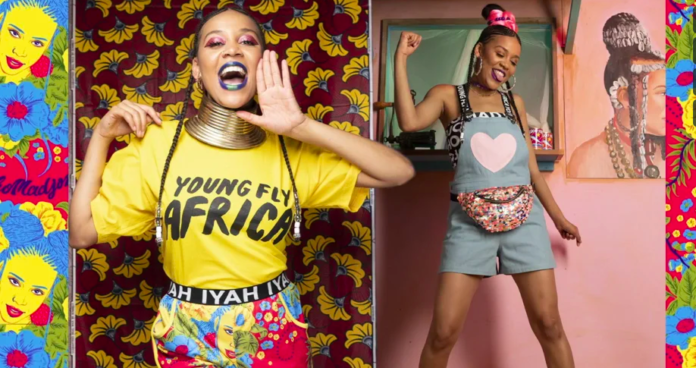
VMLY&R South Africa’s campaign for Edgars resulted in a brand repositioning that took Edgars from being on the outside of local culture to a culturally relevant connected brand. The agency won Edgars its first Cannes Lion with a Bronze Lion in the Entertainment category and two shortlists in Brand Experience and Entertainment.
 
VMLY&R Regional Chief Creative Officer and Cannes 2019 judge, Ryan McManus, remarked on the importance of African work that celebrates our unique culture and diversity being recognised on the global stage. ‘For Edgars, we took a 90-year old department store brand struggling for relevance and transformed it into a cultural catalyst for self-expression. To be awarded for producing some of the best work in the world is an important accolade for locally-relevant creative content and we couldn’t be prouder.’
 
The content includes make-up tutorials, body-positive poems, choir performances, personal stories, and more – all of them with Edgars merchandise at the core. In addition, an original song by Africa’s rising icon Sho Madjozi was released, as well as an entire fashion collection inspired by fabrics from Sho’s home province, Limpopo.
 
‘As marketers, we should be creating work that is worthy of an audience’s time, and a brand’s investment. The Entertainment category at Cannes is extremely tough to win in, so we are thrilled with the Lion. We could also have never have created this work without our brave clients and an incredible partnership,’ said Edgars Head of Marketing, Nicky Correia. ‘Cannes win isn’t just for the brand, but a win for South African culture.’
 
‘We have become a brand driven by a diversity of very real people who are all culture creators in their own inspiring ways, so this campaign was so much more than a brand message for us. It is a call to self-expression for all South Africans, and it’s this incredible melting pot of culture that led the way and shone through so powerfully,’ Correia concluded.

The winning work can be viewed here.

VML SOUTH AFRICA
+27115553800
www.vml.com/south-africa/

This is Modern Marketing