Home Blog Page 381

Survey Shows 46% Of SMMEs In SA Carry Out Consistent Marketing Campaigns

Firejuice Marketing conducted a survey aimed at exploring how small, medium and micro enterprises (SMME) in South Africa carry out marketing plans. 100% of the surveyed businesses believe in marketing as an effective tool, however, only 46% carry out consistent marketing campaigns. 

The questionnaire answered by individuals in key decision-making positions in the SMME sector highlights that half the respondents see marketing providing positive results while only 14% feel it is a driver of their sales pipeline. Another key factor is the lack of attention to marketing, as 76% do not employ dedicated marketing staff.

Positioning and morale are also notable contributors: the majority of respondents (46%) viewed themselves in a ‘growth’ phase while 14% felt stagnant.

What marketing tools are the most popular?

Graphic design is the area of marketing where the most amount of budget is spent (48%) with 25% on copywriting, 18% on photography, 4% on interior design and 30% on none of the above.

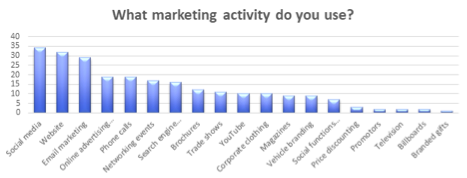
Digital marketing dominates the type of marketing tactics employed followed by phone calls and networking. 64% of respondents are cognisant of customer relationships through the usage of an internal CRM software package.

The survey shows that SMMEs feel frustrated by marketing expectations due to cost, great input and low ROI and ineffective delegation by business owners and blame ill-equipped marketing strategies for a lack of proper industry-related leads.

Bernard Jansen, founder of Firejuice said, ‘Clearly, marketing is a powerful tool for growth but this exercise found that it is not carried out consistently due to lack of knowledge and poor planning, with very few accepting outside help.’ SMMEs end up wasting resources on marketing simply because a clear strategy that commands a good ROI is not adopted. 

FIREJUICE
bernard@firejuice.co.za
www.firejuice.co.za

Online Reviews Impact Customer Decisions

Ashleigh Wainstein, Director of Social Places.

Most businesses will have a good experience by opening themselves up to reviews on social media – around 80% of reviews are positive. This is according to Ashleigh Wainstein, Director of Martech firm, Social Places.

An effective strategy for responding to online reviews is good for business and can help companies enhance their reputation and improve operations. Consumers are increasingly using online reviews as their primary source of recommendations for goods and services. Engaging effectively with online reviews is an important way for companies to improve relationships and customer loyalty with existing customers and to attract new business. The data and insights gained from reviews can also be used to improve operations internally.  

Realistically, there’s nowhere for businesses to hide online and managing and responding to reviews on social media, even if they are negative, has a positive outcome. Reviews are important for brands because they create credibility in the mind of consumers – 84% of people trust online reviews as much as a personal recommendation. People looking for recommendations online typically won’t approach a business with fewer than four out of five stars – they’ll simply look elsewhere.

Generally, consumers will search online for a business near them and these proximity stats have shot up 500% in the last two years. When those listings are displayed on search results, the one with the highest review score will get the click to call or navigate to the location.

Businesses accept the need for reviews and understand that they should embrace them. Not having a review strategy is the equivalent of consumers calling a customer care line and having no-one answer the phone. Companies that don’t monitor reviews lose the chance to win back negative customers as well as get feedback from those who are happy.

They also lose out on valuable business insights.  Step one is to acknowledge the customers’ complaints or compliments by taking note of feedback from reviews. Instead of using mystery shoppers, for example; decision-makers can use review data from thousands of people to identify what is working in their business, and what isn’t. It helps them gauge how the company is performing.

However, the numbers that large companies and brands have to deal with are substantial. In one month alone, some fast food brands in South Africa can receive up to 30,000 reviews.

Our technology to deal with communication at this scale is advanced. There are review consolidation tools that measure consumer sentiment and help to inform operational and marketing functions. From the data, we collect we can categorise review sentiment into primary and secondary, positive and negative.

Brands like Spur answer 100% of their reviews, as do RocoMamas, Panarottis and John Dory’s. Ocean Basket is also very proactive in answering all customer feedback– from customer reviews on social media to feedback from their website.  

When dealing with reviews, it is key that a response sounds like it’s personal and that the customer feels that they have been heard. Even though we’re starting to use higher levels of artificial intelligence to process and respond to consumers, there’s always a human, personal touch on top – responses go through a check process before they are published. Responses to good reviews should include strategic keywords that boost search rankings. With bad reviews, it’s important to provide balanced responses that have strong calls to action, taking the conversation offline.

All industries – from restaurants and retail to financial services and telecommunications – are showing growth in online consumer interaction, so the effective monitoring and management of online reviews is crucial.

SOCIAL PLACES
+27215513170
letschat@socialplaces.co.za
www.socialplaces.co.za

Seven Tips For Brands To Dominate The Retail Space For Black Friday

Cindy Diamond, Group Sales Director at Mediamark, states that recent surveys conducted separately by Jacaranda FM and East Coast Radio revealed similar learnings, with an overwhelming number of participants (75% +) stating that they actively engage in shopping on Black Friday either in-store or online. 

These audience surveys disclosed that the most popular Black Friday shopping categories include groceries, clothing, shoes and home décor. Furniture, electronics and gadgets, as well as travel and leisure, also featured prominently.

With only a few trading weeks left, brands have a limited time to finalise their plans for Black Friday – which has grown into one of the most important fixtures on South Africa’s annual retail calendar in recent years.

Despite negative consumer spend trends, brands remain optimistic that shoppers are ready to open their wallets for the right deal. Stats from BankServ Africa show that the nation racked up R3 billion in card transactions on Black Friday 2018, up 16% from 2017.

A pressure point exists for brands this year, as Black Friday falls in the last week of November, essentially collapsing its sales into the retail month-end and festive season push. The net result is that merchants have less time to drum up holiday sales. The same challenge is being felt at the media owner level with the pressure on inventory to accommodate both retail month-end and Black Friday campaigns.

The following media tips can help ensure that your brand is well positioned and that it stands out over Black Friday:

1. Make sure you are well prepared for the onslaught

If you haven’t already, engage with media owners and partners, evaluate their Black Friday deals on offer and secure your inventory early. These are most likely to be in high demand and short supply.

2. Go premium

With the knowledge that content is king (or queen), the opportunity exists to amplify your generic price and product offering with customised solutions. Premium inventory is limited by nature and aims to cut through the clutter of standard advertising formats. Think native advertising, branded content, power spots and home page takeovers.

3. Run awareness and teaser campaigns ahead of the day

Many consumers start saving for Black Friday months in advance. Start engaging with them in the weeks prior to getting on their radar. Let them know you have great promotions coming up and tease your deals ahead of time.

4. Don’t forget to target your message

When Black Friday comes around, many brands forfeit the principles of personalised and targeted engagement, in favour of mass communication. A deeper understanding and targeting of specific audiences is guaranteed to boost campaign results. Engage media owners to share the behavioural nuggets of their audiences and use these insights to target more effectively. The magic happens when brands overlay these insights with their own data analytics.

5. Integrated solutions

Given the level of marketing material consumers are exposed to, it’s important to reach them across multiple channels. An integrated media solution enables you to reach consumers through their medium/channel of choice, driving better uplift and response rates.

6. Keep the campaign alive through to Cyber Monday and beyond

Published data reveals growing participation in Cyber Monday. In fact, in the same radio surveys referenced earlier, over a 1/3 of the participants shop on Cyber Monday.

7. Think strategically

Sure, Black Friday can be a useful way to clear stock/inventory, but which brands and media owners are thinking beyond serving bargain-hunters? We are all compelled to invest in analytical insights before planning our campaigns and media deals. As with brands, media owners can too use the demand on Black Friday to improve satisfaction scores among existing advertisers as well as acquiring new ones.

MEDIAMARK
+27112357600
info@mediamark.co.za
www.mediamark.co.za

Developing Customer Centric Strategy Through Automation

Image source: https://www.marketingweek.com

Paula Sartini, founder and CEO of BrandQuantum, says that to be successful today, companies need to develop a customer-centric strategy that is built from the customer’s perspective and designed to meet their needs. 

With tech-savvy customers, companies are adopting technology solutions that aim to delight their customers and enhance customer experiences. According to the 2019 Global Customer Experience Benchmarking Report from Dimension Data, ‘CX is recognised as the number one driver of digital transformation.’

Customer experience is a growing priority for organisations, and it should be as it is becoming the most critical factor for customers selecting your brand over another. As such, companies need to implement measures to meet customer expectations and deliver consistent customer experiences at every customer touchpoint. 

However, this can seem like a monumental task, particularly for organisations that work as silos, assigning specific responsibilities to specific departments. In today’s environment where the customer is king and should be central to every business decision, customer experience can no longer lie on the shoulders of a single department. It needs to be the top strategic measurement for the entire organisation.

In addition, legacy systems can also hamper companies from implementing technologies that could potentially be key in improving customer experiences. However, companies should start by putting the I before the A. This means implementing information automation which utilises intelligent automation and only once this is in place, implement AI.

Igniting customer experiences

Although technology brings great promise to companies and is able to increase productivity and drive cost-saving, customer experience is about more than the technologies that companies implement. Customer experience is about creating a customer-centric business where the customer is at the centre of everything the business does.

So while there is a benefit in giving customers the tools they need to access self-help services at their convenience, employees need to be given the tools that empower them to deliver high-touch customer experiences at critical times. To ignite customer experiences, the customer needs to be at the top of the agenda in all boardroom discussions and solutions need to be developed and tailored with the customer in mind. 

Only when the customer is central to the business strategy and employees across the organisation are equipped with the right tools to meet customer expectations across the entire customer journey, will the company be able to create meaningful customer interactions and enhance the customer experience that drive business success.

Automating functions and humanising interactions

Some technologies can sound like the silver bullet your organisation needs to improve customer experiences and drive company success, but companies should not adopt technology for the sake of technology. Rather solutions should be used to enhance the customer experience and assist employees to meet customer needs. Even though customers are tech-savvy and accustomed to using technology solutions to meet their specific needs, technology cannot replace the human touch.

Automation can enhance customer experiences by improving self-help functions that require limited involvement from employees. At the same time, by automating tasks that take time and resources but add little value to the client, employees are freed up and empowered to focus on high-quality, lasting customer engagements that delight the customer.

For example, if a customer is looking for a statement, rather than placing the customer in a queue to speak to an employee, the customer is able to help themselves to access the information they need. However, if the customer has a query on the statement, it would be more appropriate to have an employee handle the sensitive issue and spend more time meeting the customer’s needs and making a difference where it matters the most.

Making magic with data and automation

Automating repetitive tasks can have a significant impact on improving customer experiences by removing repetitive tasks and empowering employees to give customers the personal touch they seek in specific instances. In addition, it can reduce costs and help drive sales and growth. 

These benefits alone present a good case for companies to adopt automation technology, but they would stand to benefit significantly more by using data to firstly determine which tasks should be automated and then understand how customer data can be used to enhance experiences even further.

At the crux, automating repetitive tasks has a significant impact on driving employee satisfaction, which directly impacts on customer engagements. However, when companies put the I (information) before the A (automation) and strategically and intelligently drive automation, this is just the cusp of how the marriage of data and automation impact the customer experience.

Customer data should be used to add personalisation into your customer engagements. By understanding your customer behaviour, you are able to target them with offers and deals that are specific to their previous behaviour. You are able to engage them when it matters most and enhance the customer experience beyond the standardised content companies have traditionally relied on to reach out to their customers.

This is supported by the Dimension Data 2019 Global Customer Experience Benchmarking Report, which states that ‘by transforming big data into customer and market intelligence, they’ll be able to align their analytics strategy with their business strategy and design personalised experiences that proactively address customers’ needs – using self-service and automation at the right time in the customer journey.’


BRAND QUANTUM
+27100450905
ignite@brandquantum.com
www.brandquantum.com

Measure, Benchmark And Optimise Digital Media To Ensure Brand Safety

Federico de Nardis, GroupM Africa CEO

According to Federico de Nardis, GroupM Africa CEO, brand safety is any risk that an advertiser may face in the digital supply chain. There are three main categories of risk: financial, reputational and legal. Since the London Times exposé, actions taken by the platforms to identify and limit high-risk content, as well as the application of more sophisticated technology and practices in agencies, have made the digital environment measurably safer. 

As digital media has grown and become more sophisticated, enabling precise and behavioural communication with individuals, so has the complexity and the potential risk of harm to advertisers. Brand safety is still regarded as an escalating issue. Perhaps part of the reason is that the brand safety space is becoming more complex and nuanced.

Contextual brand safety awareness really accelerated in February 2017 when The London Times published an exposé in which journalists discovered brand advertising appearing in extremist videos on YouTube. Marketers were inadvertently funding terror organisations through the advertising revenue they received. 

The potential for reputational damage to the brands created an instant reaction in the marketing community. Advertising on YouTube was suspended by many advertisers, and marketers looked critically at their overall brand safety strategy.

The foundations of brand safety are measure, benchmark and optimise. Measure, because if we do not understand the scope of the problem, it cannot be effectively addressed. Benchmark, because once we understand the level of, say, invalid traffic, we can set an objective to decrease IVT by a certain percentage and measure our success against this benchmark. Optimise, because once we have a benchmark, we can formalise agreements with our publisher partners to deliver low or no IVT. Add compliance as a fourth step to measure progress against the brand safety goals.

These remain the bedrock of brand safety implementation, but as digital advertising grows and becomes more complex, so does brand safety. In 2019, the conversation has stepped up from brand safety to public safety and related trust issues. These trust issues include supply chain transparency, consumer protection, brand suitability, risk tolerance and social responsibility.

These issues have mainly come to the fore because of the dominance of the social platforms and the endemic risk of user-generated content that they have to manage. This translates into potential reputational damage for brands using these platforms.

As a way of addressing this, the World Federation of Advertisers (WFA) formed the Global Alliance for Responsible Media, which has called for cross-industry collaboration to address safety and sustainability issues across media, with an early focus on brand and public safety on social platforms.

Brand safety is increasingly observed in the context of social safety and responsibility. The internet hosts some awful content that is not only damaging to adjacent brands, but potentially to our society.

Online disinformation is a direct attack against our democracies, hate speech ignites social division, and child molesters lurk behind false identities and exploit social platforms to distribute their harmful content. Advertisers and agencies cannot fix this on their own, but they do have a role to play. Trade associations across the world call for greater accountability and for the industry to step up.

This is not just because it is the right thing to do, but because of another pervasive trend – regulation. We are witnessing regulators across the world launching investigations at scale and tabling laws that address social and public safety on the internet, and advertising is rarely excluded from such considerations.

Increasingly, marketers are choosing not to wait for regulation but are adopting Immanuel Kant’s moral imperative: Do what is morally good because anything else is contrary to reason.

There is a call for media sustainability from marketers (in the same way that they view sustainability in their operational supply chain) and this, together with regulatory pressure, will force a re-evaluation of digital media’s suitability and effectiveness.

GROUPM AFRICA 
www.groupm.com/africa

Maximising Brand Exposure Through Public Relations

Obren Msuku, Managing Director of Msuku Media.

Obren Msuku, Managing Director of Msuku Media, states that in order to drive business value and growth, media exposure has to be of the right quality, and should be experienced by the target audience in the right context.

A million views or likes or shares might sound great, but the real question for a brand is whether they are reaching their audience or not – and whether that audience is actually engaging with the details of their message. Brand exposure opportunities have both exploded and fragmented in recent years, with new technologies and communications platforms opening a world of possibilities to PR professionals and beginners alike. 

In theory, this seems like a positive development, but the litany of choices is proving increasingly difficult for brands and their communications agencies to navigate. When the whole world is shouting at the top of its lungs, shouting even louder, although tempting, is at best a short-term solution. 

In a country with eleven official languages, cultural context is an especially slippery force. Not only do brand narratives need to be carefully crafted in terms of tone, style and language, getting content distribution right also requires several types of expertise. 

In South Africa, a lot of different cultural reference points, icons and stories have to be catered to. We all understand that you can’t use classical music on an urban youth radio station – the dividing line is very clear. There are many other lines within our various communities and cultures that are far less clear, however, and which also have a big impact on whether the message a brand is sending out will be welcomed by a media channel, or its audience.

How should brands approach getting their voice ‘out there’ in 21st century South Africa? Two crucial elements: audience understanding and industry relationships.  

In South Africa, it’s not enough to just do a generic demographic breakdown of age, race and gender – you need to be much more specific. You need to understand your audience and be able to converse in their language – literally and in terms of narrative. This applies as much to the urban context as it does to peri-urban and rural areas. If you have a cultural understanding you can use humour and style to get your story across, and really engage your audience. If you’re taking a one-size-fits-all approach to a brand narrative, really, you’re just shouting as loudly as you can, and hoping people will listen.

In addition to audience understanding, industry relationships can be a crucial testing force for South African PR narratives. Simply put, the better the feedback loop between the communications agency and media gatekeepers, the better the chances of long-term placement success. 

‘If producers and editors don’t like your content, they’re effectively telling you the context is wrong for their audience. Often, they’ll tell you this directly, in fact. If you listen to them, interact with them and re-develop your concepts and content according to their feedback, you can improve the rate and quality of coverage a lot.

MSUKU MEDIA
+27793651613
obren@msukumedia.co.za
www.msukumedia.co.za

Unigraphics Launches UniAluminium Display Frames

Unigraphics stand at the Modern Marketing Expo.

Unigraphics used the Modern Marketing Expo, held at the Gallagher Convention Centre from 11 – 13 September, to launch the UniAluminium Display fabric frames, UniPole and Ezitube.

These new and improved UniAluminium Display fabric frames are made in South Africa and come in profile lengths and lightboxes. The UniPoles are quality powder coated aluminium poles with nylon fittings and spring-steel tips that withstand all weather conditions. The EziTube is a roll-up replacement revolution banner that is portable, lightweight and very quick to assemble.

UNIGRAPHICS
+27834401004
info@unigraphicsafrica.co.za
unigraphicsafrica.co.za

Stelle Enterprises Exhibits Solutions For Promotional Branding Needs

Stelle Enterprises' stand at the Modern Marketing Expo.

At the recently held Modern Marketing Expo (11 – 13 September, Gallagher Convention Centre), Stelle Enterprises Group showcased world-class products, services and promotional branding solutions to visitors. 

The company highlighted corporate gifting, branding as well as indoor and outdoor washable solutions without any colour fading such as: banner walls, gazebos, sharkfins and flags. They also offer custom-made point of sale items.

STELLE ENTERPRISES GROUP
+27116156350
info@stelle.co.za
stelle.co.za

Online Media Leader Launches Enlight Strategic Digital Transformation Consultancy

Tanja Lategan, CEO at Enlight Strategic (Pty) Ltd.

Enlight Strategic aims to help corporates navigate the changing business landscape, with a particular focus on marketing technologies and tools. The consultancy has been launched by Tanja Lategan, the former CEO of Primedia Online and MD of full-service digital agency Creative Spark.

‘There is a clear appetite for digital transformation services in South Africa. Digital transformation is no longer a choice; it simply has to be done if an organisation wants to remain competitive,’ said Lategan.

Until now, however, most digital transformation efforts have been led by the IT department and tend to focus only on back end systems, IT infrastructure and processes. ‘As a result,’ Lategan pointed out, ‘most companies end up only partially transformed. In order for full transformation to take place, every part of the business has to be involved.’

That includes marketing, an area of the business which is often allowed to operate in a silo, with many competencies outsourced to digital agencies and media buyers. Enter Enlight Strategic. It understands that for holistic digital transformation to take place, marketing services have to transform as well.

As a first step, the consultancy takes its clients through a digital maturity audit, allowing it to see how it compares with its competitors and which areas are lagging behind digital marketing trends, as well as what action needs to be taken not just to correct this but also to leapfrog their competitors. 

‘Based on the audit, we can help clients internally build up any skills they may lack and provide them with the tools and technology they need to become fully transformed,’ explained Lategan. 

Another thing that sets Enlight Strategic apart is that it provides clients with access to platforms and tools that are otherwise unavailable in South Africa. Enlight Strategic works with many technology suppliers to ensure that the best solutions are selected to meet the needs of a specific project or programme. 

‘Using these tools, our clients can collect, store, analyse and predict customer behaviour to ensure that marketing budgets are spent strategically, with a marked increase in conversion rates,’ said Lategan. 

‘Our tools also allow for identity resolution, collecting and cleaning data from multiple touch points to create a single 360 view of each customer profile,’ she added. ‘This will enable more accurate targeting with a very high success rate and ensure that efforts aren’t duplicated, resulting in increased ROI and a substantial reduction in cost.’

Lategan has already recruited a diverse, experienced leadership team, two things that she believed were vital from the get-go. ‘When it came to hiring, we wanted to ensure that we gave our clients access to the best possible knowledge. By hiring at senior levels, we’ve been able to do that from day one,’ said Lategan.

Ultimately, Lategan says that Enlight Strategic’s measure for success will be the degree to which it’s able to increase its clients’ revenues, reduce cost, and overall organisational efficiency. 

ENLIGHT STRATEGIC
+27727447993
tanja@enlightstrategic.com
enlightstrategic.com

Most Advertisers And Marketers Are Failing To Connect With SA’s Mass Or ‘Main’ Market

Andrew Weinberg, CEO of Retail Engage.

CEO of Retail Engage, Andrew Weinberg, states that 54% of the South African population falls between LSMs 3-6, with there being an estimated 13 million shoppers in the independent and informal retail sector. This is not traditional, bottom-end or emerging, this is the ‘main’ market of South Africa. 

However, despite all the research done to date about this economically active consumer base, there are still nuances and misconceptions around low-income consumer behaviour resulting in marketers generally failing to connect with this crucial market. To demonstrate the continued employment of outdated strategies by brands, the current advertising spends directed at the LSM eight to ten bracket is 70%, with over 81% of households therefore not being proactively engaged with. 

In other words, most advertisers and marketers are missing the boat when it comes to targeting South Africa’s mass market. Those in the know refer to this market segment as the mass market but we believe the label of ‘main market’ is more fitting because of the vast potential it offers to brands and marketeers who are willing to rethink their marketing and sales strategies. 

According to the UCT Research Institute’s latest report named the ‘The Top Million’ research report, South Africa’s ‘Upper Middle Class’ has the potential to make or break brands with a combined spending power of R700 billion, making up almost 40% of all consumer spend and 5% of total households. The first real data and insight into the untapped ‘mass-market’ started in 2012 with reports suggesting that 70% of South Africa’s consumer market lives in households that collectively earn less than R6000 per month. 

A lot of progress and further research has been made since then to reveal the power and importance of understanding and connecting with the mass market in Africa that moves between formal and informal retail spaces to search out the best fulfilment method for their needs. I have made it my business to understand this market and consumers’ behaviours in order to effectively provide access to brands to promote products in this growing middle-income segment across Africa.

A moving target, this main market moves fluidly between formal and informal retail spaces such as Spaza shops and cash and carry’s, trying to best fulfil their needs that include value, experience, convenience, trust and connection. This constant state of flux makes it incredibly difficult to find a strategy that works and for many brands – it is a constant challenge to find a way in. Brands need to approach this segment with precision rather than with broad-based tactics. 

Since having established Retail Engage, we have successfully implemented a consumer-facing brand, bonsella®, across South Africa, which has helped brands gain crucial data and insights about the independent retailer environment and its consumers. Technology has helped us introduce effective brand engagement opportunities that include shopper marketing and loyalty programmes in the main market. 

There is vast potential for marketers who are willing to rethink their marketing strategies and the key is going back to basics to find a solution that brings value, experience, trust and connection in the main market space. These needs are not limited to this income bracket, however, until now brands are failing to meaningfully connect here. Retail engage specialises in establishing connection points in the shoppers’ day-to-day lives by leveraging modern trade spaces to build brand awareness and loyalty through experiences while simultaneously driving penetration and consumption occasions in the informal and independent trade. 

Brands and companies need to put their thinking caps back on in order to generate relevant content. The only way to do this is by getting inside consumers’ minds to fully understand their aspirations, behaviour and what drives them. I believe the key for brands to tap into the main market, which has often been referred to as a ‘blind spot’ by big brands, is through education and working with experienced and established agencies that have a proven track record in this exciting space.

RETAIL ENGAGE
+27873102881
info@retailengage.co.za
bonsella.com
This is Modern Marketing