


Home Blog Page 363

Looking At The Growing Online Video Streaming Audience

Image source: metamedia.co.za

Richard Lord, Media and Operations Director, Meta Media, says everyone wants to know what 2020 has in store for those in media and advertising. He focuses on the continued growth and movement of audiences to online video streaming. 

The pace of on-demand video continues unabated. We have a new entrant into the marketplace: Apple TV+. If the past is anything to go by, we know that whatever Apple puts their money behind is going to be successful and will drive others to follow.

The big difference between Apple TV+ and the rest is that they are taking the 100% original content approach – although Netflix and Showmax also play in the original content space.

Netflix received 24 nominations in this year’s Academy Awards. This is more than any other Hollywood studio. This shows just how important good quality content is for attracting and keeping audiences! But they also carry content produced by the major Hollywood studios. Apple on the other hand has partnered with some superstar creators like Steven Spielberg and JJ Abrams and will only show original content. Apple TV+ is priced similarly to Netflix at around $7 per month (or R105 depending on how well the Rand is doing). But Apple is keen to incentivise trial – so if you buy any new Apple device you get a year’s free subscription to the service.

The back end of 2019 also saw the launch of Disney Plus. This is set to shake up the world of streaming video in a big way. Disney Plus will stream ALL of Disney’s vast catalogue of movies and TV shows, AND also every Marvel movie and TV show ever made, every Pixar movie ever made, every Star Wars movie and TV show ever made, plus Disney also owns National Geographic and ESPN. 

All of that content will be available on the platform too! Talk about a powerhouse. What this means is that as Disney’s contracts with other streaming services like Amazon and Netflix come up for renewal, all Disney content will be taken off those platforms and kept exclusively as their own. We don’t know yet when Disney Plus will launch in South Africa. Tech savvy South Africans will find a work around to get the service, but don’t expect to see it officially in SA until at least 2021.

And of course, let’s not forget that South Africans also have access to Showmax, Dstv Now and YouTube, all of which have big audiences and excellent content. I have written about this before, but just to demonstrate the size of the Dstv audience watching content digitally, the 2019 RWC final between SA and England had in excess of 500,000 unique viewers on the Dstv Now platform.

What does this mean for advertisers? Well simply, it means that consumers have more choice and it’s going to become harder to pin down audiences. Whilst there is no advertising yet available on Netflix, Apple TV or Amazon Prime, it is coming soon to Dstv Now and Showmax, and YouTube have been taking ads for years. This means that it is going to cost more to reach these fragmented audiences.

But let me caveat this with a dose of reality; in order to access any of these streaming services, people need decent, high-speed internet. So over and above the monthly subscription fees that the OTTs charge, there is the added cost of data. Data in South Africa is prohibitively expensive, whether it be 4G from your cellular provider, or fibre to your home. Not everyone can afford to watch content online, which means that this trend is going to affect the top-end of the market more than the mass market. But the Competition Commission is looking to the cellular providers to drastically drop the price of data and once that happens, we will see more and more people going this route.

Additionally, many companies offer free WiFi to consumers in shopping malls, airports, and taxi ranks, all of which allows consumers to watch and download content to their devices. This means that even in the mass market, there are very big audiences that can be spoken to through the likes of YouTube and Viu (which hosts much of the SABC’s local content such as Uzalo, Generations and Skeem Saam).

Should you now rush off and ask your media strategist to stop advertising on TV? Of course not! TV in South Africa is still the single best media platform for reach, no other platform comes close! No, TV advertising is safe, cost effective and will continue to work in growing your brand. However, TV advertising should be supplemented with spend on digital video platforms.

The benefits are numerous:
 

  1. Additional reach. With more people turning to digital video as their primary (and sometimes only) form of entertainment, using TV and digital video lets brands speak to everyone.
  2. Better, cheaper and targeted reach. Whilst TV is great for speaking to the masses, it is not as targeted as we would like. YouTube and Facebook however offer loads of data to overlay onto our bookings, so we can ensure messages are seen by the right people.
  3. Expand on your message. Let’s face it, TV is expensive. A 30 second ad in Uzalo on SABC 1 costs well over R200,000! Even brands with huge budgets can only afford to buy so many spots. But because digital video is cheap, brands can flight longer ads unpacking offers, or flight multiple ads allowing for the showcasing of an entire brand range.
  4. Lastly, there are some audiences that are just impossible to speak to through any other media platform except digital. Generation Z and the hard-to-fathom millennials are very light (even non-existent) TV viewers, but they live online. If they form a part of your brand’s target audience, digital video is not only a no-brainer, but an absolute necessity in media plans.

Read the top 5 stories weekly on WhatsApp or sign up to our newsletter.

META MEDIA
+27110818800 
info@metamedia.com
www.metamedia.co.za

Media Development and Diversity Agency Appoints CEO

Zukiswa Potye, newly appointed CEO of MDDA.

The Board of the Media Development and Diversity Agency (MDDA) has appointed Zukiswa Potye as Chief Executive Officer (CEO).

Potye holds a Postgraduate Diploma and a Master of Commerce Degree in Project Management from Cranefield College; a Management Advancement Programme (MAP) from Wits University; certificates in applied risk management from Unisa and in Business and Life Coaching. 

Potye’s work experience spans more than 27 years in both the private but mostly public sector. Previous to joining the Government Communications (GCIS), she was a Programme Coordinator at the National Electricity Regulator (now NERSA), and a Director for Monitoring and Evaluation at Blue IQ. 

Ndivhuho Norman Munzhelele, Chairperson of the MDDA Board commented on the appointment, ‘Potye was selected from a pool of some 65 applicants, based on, amongst others, her knowledge of and strategic vision for the community media sector; her commitment to good governance, fairness and transparency; and her ability to engage with people and create lasting partnerships aligned to the mandate of the MDDA.’

Potye took over as Acting CEO following a period of considerable turbulence at the Agency. In this role, she commenced the process of stabilising the agency, as well as introducing a number of important initiatives, critical to the sustainability of the MDDA and the community media sector. These included a grant funding policy for the effective and transparent selection of media projects for MDDA support. 

In addition, she implemented a proactive strategy to lobby potential and past MDDA funders for support of the agency’s work, as well as sought out partnerships with sector stakeholders to pool together resources for the survival of the sector. 

‘Potye is therefore tasked with continuing her work in turning the entity around and bringing the much-needed stability to the agency. Together with her Executive team, her immediate priority is to build a coherent and high performing team, equipped to provide meaningful leadership to a community media sector that is facing an exciting but also potentially disruptive environment, brought about by the onset of the Fourth Industrial Revolution,’ concluded Munzhelele.

Read the top 5 stories weekly on WhatsApp or sign up to our newsletter.

MEDIA DEVELOPMENT & DIVERSITY AGENCY
+27116431100
mdda.org.za

Influencer Marketing Not A One-Size-Fits-All Channel

According to HaveYouHeard Co-Founder and Head of Strategy, Ryan McFadyen, using influencers to build your brand’s credibility is very different from using influencers to create awareness for a new product launch. 

These are the two most important things marketers should remember about influencer marketing. Influencer marketing is not a one-size-fits-all channel. It succeeds in myriad ways for myriad reasons and, just as our personal relationships are complex and varied, so too are consumers’ relationships with influencers.

Some advertisers and their agencies use influencer marketing because they hope to Influence people. Yet, people and what influences them is much broader and more complex than the single-view answer influencer marketing provides, but that does not diminish the value of influencer marketing. 

It seems very important to me that, if we are using influencer marketing to influence people, should we not consider all the ways people are influenced? That makes sense to me, given that influencers are just one force within myriad often overlooked and misunderstood forces that shape what we feel, think, say and do.

There should be a broader view on influence, where the role of the influencer falls into one of five key spheres of how to influence how people think and purchase. These five spheres take account of what is influencing people’s thinking and behaviours.

1. Human Nature – how our biology and psychology influence our decisions

95% of our decisions are influenced by our sub-conscious. We are only aware of 5% of why we do what we do, meaning that we don’t make rational decisions and we don’t actually know what motivates our actions. Humans have patterns of behaviour governed by how we are wired. By knowing and understanding these, we are able to uncover why people do things and also predict how people will respond.

2. Others – how our peers, community and culture influence our decisions

This is where influencer marketing turns into influence marketing as people, peer pressure and the desire to belong and fit in drive the majority of our behaviour. Most of what we do is not based on what we really want, but rather on how it will impact the perceptions of the people we care about and want to be associated with. The cultures and communities we belong to influence the brands we use to showcase who we are. Celebrities and influencers have become social cues for what we should do (purchase) and who we should align with (look like) but our close community of friends and family still have a powerful influence on us (usually more so).

3. Environmental – the physical and environmental forces influencing our decisions

Our environment can either make it easier or harder for us to make a purchase, trigger a behaviour or reinforce a belief. Behaviour economics is the most fashionable current explanation for a part of this. This is an often neglected but crucial part of the influence model as the environmental factors are often where the purchase is made possible or impossible. 

4. Media – the attention absorbing forces influencing our decisions

The attention economy and media fragmentation are disrupting traditional media models. Our minds become what they pay attention to and our worldview, beliefs and internal drivers are shaped by what we focus on. Understanding what is informing this identifies what is influencing us and how we can augment this to shift influence in a different way.

5. The Zeitgeist of now – the forces shaping society and influencing our decisions

The culmination of the complex forces shaping society today are surreptitiously forming our beliefs and behaviours. By understanding both the macro forces and the local manifestations at play in the world today (and why), we are able to predict the evolving consumer and brand landscape.

Brands should develop a universal idea, led from a universal insight that can be implemented locally across each of the five spheres of influence. This approach results in bringing an insight-led idea to life by engaging consumers through their peers, influencers and communities within the culture of their passion, as well as feeding into the environments and spaces they find themselves in, through the media they absorb, along their consumer journey and at the point of purchase.

Read the top 5 stories weekly on WhatsApp or sign up to our newsletter.
HAVEYOUHEARD
+27112681331
 haveyouheard.co.za

PRISM Young Voices Giving Ten Young People PR And Communications Mentorship Opportunities

PRISM Young Voices was launched in 2017 and is a platform offering mentorship and skills development in partnership with the PRISM Awards and the Public Relations Institute of Southern Africa (PRISA).

10 young people will be given an opportunity to be mentored by South Africa’s top public relations and communications professionals during the 2020 PRISM Awards, in an effort to inspire and upskill them.

Candidates need to be creative, formidable and an impressive young person in the public relations and communication industry. PRISM Young Voices Founder, and Convenor of the PRISM Awards, Palesa Madumo, said the training that the young judges will receive will be instrumental to their careers and serve as guidance going forward.

‘Industry experts have a responsibility to mentor young minds, who will plan to forge a career in public relations and communications. This will give ten top candidates the opportunity to learn from industry experts, receive peer-to-peer training and receive a youth-focused perspective on competing campaigns,’ she said.

Applicants can be students or professionals with at least two years’ experience in the public relations and communication environment, or be actively involved in the industry. One of the ten young judge slots will be awarded to a final-year student entrant studying public relations or communication.

This is an opportunity for a young professional to gain insight into the industry and jumpstart their career. All entrants are required to submit a 500 word motivation on why they should be selected OR submit a minute-long motivation video to info@prismyoungjudges.com.

Entrants for PRISM Young Judges must:
• Be between the ages of 21 and 30.
• Have at least two (2) years’ experience in the public relations and communication environment OR be actively involved in the industry in one way or another OR be a final-year student studying public relations or communication.• Reside in Gauteng, KwaZulu-Natal or the Cape.• Write 500 words motivation on why you should be selected OR send a minute-long video version.
• Tweet about your entry tagging and follow @theprismawards. Use the hashtags #PRISMYoungVoices and #PRISMAwards20.

Entries close on 7 February 2020 at 00h00.

Read the top 5 stories weekly on WhatsApp or sign up to our newsletter.

PRISM AWARDS  
www.prism-awards.co.za

Tapping Into Reward Marketing

Rob Anderson, CEO and Founder of Brand Hubb.

Rob Anderson, CEO and Founder of Brand Hubb, talks about a new decade – with it comes a new mindset to start shifting to customer-led marketing growth. Why? To put it simply, push marketing is losing relevancy fast, especially when consumers are being served hundreds of advertising messages by brands daily. We find ourselves in an advertising era defined by creepy, stalker-like marketing behaviour. 

Website popups, auto-play videos, push notifications and remarketing ‘stalk’ consumers with the same ads everywhere they go and this type of marketing forms part of most digital strategies. While we are not disputing their place in the marketing mix (they do of course serve a purpose and give a favourable ROI), brands often go overboard and start to freak people out with too many of these techniques too often. (That ‘am I being listened to?’ feeling).

‘Push’ Marketing becomes off-putting

In fact, a survey which was conducted on Privacy and Personalisation in Marketing found that 68% of people will tell friends or family about a ‘creepy’ brand experience, which ultimately results in negative word-of-mouth and a reduction in engagement and brand trust. For many people, ad blockers have become a standard part of browsing online, with one report estimating that 30% of global internet users use ad blockers. 

Increasing distrust

Another negative factor holding push marketing back is the proliferation of ‘fake news’ and consumers becoming increasingly sceptical of what they are being exposed to. From misleading clickbait headlines to phoney reviews, people are wising up to what is being pushed to their devices. However, there is a silver lining and for many brands, as reward-based marketing is earning its stripes.

2020 – the year of reward marketing

Instead of digital marketing being centred on Push Marketing tactics, customers should be the centre focus of all marketing strategies. This year, we saw this kind of marketing first hand, when Facebook introduced its new ‘Top Fan’ update, which rewards the consumers who like and engage with brand content more frequently with a digital Top Fan Badge.

With this new feature, brands can easily connect, engage and communicate efficiently to drive more interactions. Some brands even started building monthly loyalty campaigns to reward consumers with product hampers or gifts for the highest engagement within the month.

Top Fans can also act as your brand advocates and generate influence and impact on others. Most remarkably, brands were given the invaluable opportunity to conduct focus groups or surveys with these top fans to garner insights for future campaigns and launches.

Another example of a rewards-based model that is finally making headway in South Africa is affiliate marketing, where influencers who help to drive sales for a product are rewarded with a portion of the sales they make directly, and their followers get a discount code from the brand.

More than just a badge

Going back to the Top Fan Badge – it was a brilliant and cost-effective way to foster authentic engagement and interest from consumers and was a great indicator that consumers like being rewarded for engaging with brand content.

It raises the question: why are they not being rewarded for every like, click, share and comment? Consumers are doing all the hard work – they are using their data to log on to, say, Facebook, where they are served your ad, which they are expected to respond to. However, as the Top Fan example has shown, they may be more encouraged to watch and share if they are rewarded in some way. 

Brands need to start rewarding consumer engagement

In an international study, it was found that 75% of consumers want to be rewarded for watching and engaging with content like videos and surveys. Rewarding consumers for engaging with brand content can help businesses drive consumers further down the funnel toward purchases. It also helps brands key in on your best customers and offer something they will genuinely value. It is our belief that the rewards-based pull marketing strategy is going to change the face of marketing in 2020.

Read the top 5 stories weekly on WhatsApp or sign up to our newsletter.

BRAND HUBB
+27100208600
marketing@brandhubb.com
brandhubb.com

The Loeries Appoints CEO

Preetesh Sewraj, new CEO of The Loeries.

The Loeries Board has appointed Preetesh Sewraj as its new CEO from 1 April, after Andrew Human, who served as CEO for 15 years, stepped down in 2019.

Sewraj is an experienced business leader and innovator and has worked with major brands including Unilever, Samsung, Nedbank and Vodacom. He successfully launched Product of the Year in South Africa, the world’s largest consumer-voted award for product innovation. Since its launch in 2008, it has helped millions of consumers identify great innovation that adds value to their lives.

Sewraj has featured regularly on CNN, SABC News, The Sunday Times, Destiny Man, SAFM, Channel Africa and other media platforms. He is the co-host of Power Edge on Power 98.7’s Power Lunch and has spoken at several conferences including TEDx Soweto, TEDx Johannesburg, the GIBS Innovation Conference, the PIA Idea Design Conference, Seamless Retail and the Wired Women Conference.

Sewraj said, ‘I look forward to leading the Loeries in its mission to unearth and share great examples of creativity and innovation, as well as ensure deeper engagement with organisations across the region that are aligned to supporting this goal.’ Creativity is the cornerstone of great innovation and the Loeries is uniquely positioned to help stimulate greater innovative thinking and execution across the Middle East and Africa. The changing communication needs of consumers means that the Loeries truly is the strongest source of insight into how consumer thinking is evolving across the region and what both brands and agencies need to do to ensure that they develop a deep understanding of these ever-changing needs.’

‘I want to ensure that we break down barriers between the countries in our region to facilitate collaboration that creates opportunities for new thinking, greater conversation and respect for the human experience, regardless of where it is experienced,’ Sewraj said.

Loeries chairperson and Executive Creative Director at Ogilvy Cape Town, Tseliso Rangaka said, ‘We are really excited by the appointment of Sewraj as our new CEO. He brings deep experience in the awards and events space, coupled with a fresh perspective on our industry. This, combined with a passion for creativity and boundless energy, are exactly the qualities we need at the head of the Loeries table.’

During his tenure, Andrew Human grew the Loeries into the largest celebration of creativity across Africa and the Middle East. He led the launch of multiple new initiatives, including the Creative Future Scholarship, whereby learners from disadvantaged backgrounds are successfully integrated into the industry. 

Human is confident in handing over to Sewraj and believes he has ‘exactly the right combination of skills, motivation and energy to take the Loeries forward’. Entries for Loeries 2020 open on 3 February.

Read the top 5 stories weekly on WhatsApp or sign up to our newsletter.

To enter the Loeries or for more information, visit loeries.com.

Nedbank IMC Conference Invites Youth To Join In The Marketing Conversation

In partnership with Brave Group, the Nedbank IMC is calling on youngsters (25 and under) to put on a brave face and tell marketers how they could make their marketing more youth relevant.

‘It’s all about the youth. We need to listen, encourage, connect and uplift.’ This has been Dale Hefer’s mantra since taking over as Nedbank IMC CEO in 2018.

‘Brave Group, one of South Africa’s leading black-owned, independent advertising groups, is on a journey to connect with youth, and therefore our clients, better. This partnership further demonstrates our commitment to developing youth within the group and society as a responsible corporate citizens,’ said Brave Group CEO, Karabo Songo. 

‘We believe that Millennials and Gen Z are changing the course of brands, industry and the world. However, for many brands in SA, the question of how you pin down true, genuine African content with global or Pan-African brands, still remains. Simply put: great story telling,’ he added.

‘The theme of the 2020 conference is ‘Marketing works. Work it’ and we want youngsters to tell us how to work it,’ said Hefer. 

The initiative calls on anyone who is 25 or younger to simply take a video of two minutes or less telling brands what they could do differently. They should then post their video to Twitter tagging @IMCCONF, @TheBraveGroupSA and #NedbankIMC2020. 

For more details and terms and conditions, entrants can click here. The three top entries will win tickets to the conference and their pitches will be screened on the day to over 600 of South Africa’s top marketers as well as those viewing the conference livestream on Facebook.

This year’s conference boasts international marketing game-changer Fernando Machado, Global CMO of Burger King, and Google Africa’s CMO, Mzamo Masito.

‘We are all for the youth and look forward to hearing from them first-hand,’ added Khensani Nobanda, Nedbank’s Group Executive Marketing and Corporate Affairs.

Read the top 5 stories weekly on WhatsApp or sign up to our newsletter.

NEDBANK IMC CONFERENCE   
www.imcconference.com

Marketing Strategies To Trial This Year

Image source: wordstream.com.

Lisa Smith from Wordstream looks at the best marketing strategies for 2020.

Personalise marketing messages

Peter Wilfahrt, managing director of digital agency Versandgigant, said marketers should personalise every single message in 2020 by digging into analytics and understanding demographics, affinity categories and in-market segments. More on that in a moment.

‘Only very few brands execute a personalised messaging strategy and we’re not talking about adding the first name to your email greeting. Really dig into your prospect’s mind and discover what they fear, wish and want.’

While Brock Murray, COO of digital marketing agency seoplus+, agrees consumers should be made to feel special, he argued that automation is the way to go because it allows advertisers to create ads that dynamically change based on whoever is searching. And, Murray said, results show consumers want this type of customisation.

Refresh your content

Cyrus Yung, co-founder of SEO company Ascelade, said updating old content is a strategy that has served Ascelade well as Google has a freshness ranking factor and most sites eventually see content decay. ‘They have old articles that have ranked well previously and have attracted backlinks, but the search traffic for that particular article is on a downward trend,’ he said.

Mark Webster, co-founder of online marketing education company Authority Hacker, said 2019 was the year Authority Hacker focused on this tactic of refreshing older content instead of just pumping out new, high quality content.

‘After some testing, we found that making simple updates and tweaks and, most importantly, changing the date of the article to represent the newest revision [made] our rankings instantly [jump] up. It’s no secret Google prefers fresh content but we had not anticipated this to be such an easy win.’

Data should drive creative

According to Natalia Wulfe, CMO of digital marketing agency Effective Spend, platforms like Google and Facebook are taking control more control of audience targeting as they simultaneously move away from manual bidding capabilities. Meanwhile, their algorithms have become adept at understanding which ad images and copy will drive the best click-through and conversion rates.

‘With these shifts, we’ve seen creative emerging as a serious performance driver, carrying equal weight to other key drivers like placement selection and audience targeting. We analyse the performance metrics of existing creative, identify where the gaps are, and then design new creative that directly impacts those poor performing metrics,’ she added. As a result, Effective Spend overhauled its creative design process to incorporate a data-first approach.

Automated email marketing campaigns

Maciej Baranowski, manager of customer engagement at career advice website ResumeLab, said ResumeLab started automating its email marketing campaigns in 2019, which was a ‘resounding success’. That’s because the company can send almost four times as many newsletters, which more than compensated for the initial drop in conversion rates.

‘Ideally, we want both, but math tells us that the tradeoff was more than worth it and we’ve been surging ever since,’ he said. Automated email also allows for better customisation with A/B testing, infographics, sequences, time zones and CTA buttons, as well as data-backed optimisation.

Get ready for voice technology

Continuing a trend from prior years, voice search was once again on marketers’ minds in 2019. That includes chatbots, which Paige Arnof-Fenn, CEO of marketing consulting firm Mavens & Moguls, noted cut costs and convert visitors into leads by answering FAQs, as well as optimising for voice queries and long-tail keywords.

Arnof-Fenn said the latter will be key to maximise marketing and advertising opportunities via voice assistants like Siri, Alexa, and Google Assistant. ‘I predict that the brands that perfect the branded skill with more customer-friendly [and] less invasive ads are going to win big,’ she added.

Use more video 

Stuart Leung, vice president of marketing for vaping brand Breazy, said that videos forge stronger bonds with consumers, which, in turn, makes them more likely to purchase a product. Options include tutorials, testimonials and behind-the-scenes footage. Video remained a popular digital marketing tactic in 2019, and it’s a must marketing strategy for this year, too.

Chris Savage, CEO of video software company Wistia, said Wistia has paid close attention to the rise of streaming platforms and has seen more and more businesses take a page from the Netflix playbook, creating longer-form original content to build brand affinity. That’s why Wistia created its own late-night-style talk show, Brandwagon.

‘Throughout the series, I talk with some of the top minds in the marketing world to learn the secrets behind some of their biggest successes. Plus, we welcome some unexpected special guests and our team even buys a ’91 wagon to transform into the ultimate Brandwagon along the way,’ he said.

Podcasts

Host or join, Digital marketing consultant Ryan Scollon called podcasts ‘a real breakthrough in 2019’ with a surge of shows in digital marketing in particular. Marketers can appear as guests on established podcasts or start their own, both of which Scollon said offer huge benefits with few downsides.

‘Podcasts are a great way of building a solid audience that returns every week without having to have your face in front of the camera. It’s also a great way for repurposing content that you may already have on your blog,’ he said.

Stacy Caprio, founder of Accelerated Growth Marketing, said appearing on podcasts has been one of her most effective marketing strategies of 2019 because it has driven site traffic and brand awareness.

Prioritise local SEO

Dan Rice, marketing manager at recruiting firm Talent Locker, said that the most effective strategy in 2019 was optimising and prioritising Google My Business, the free tool that allows businesses to manage their online presence across Google, including search and maps.

‘We have used this as part of a wide-ranging digital marketing campaign designed to raise awareness of the brand and brand name. Through steadily producing posts, updates and actually helping drive people to our Google My Business listing, we have been getting strong results. It doesn’t just appear to be helping local SEO, it is also highly significant in driving searches on brand names, too.’

For more tips, visit www.wordstream.com

YouTube Appoints EMEA Emerging Markets MD

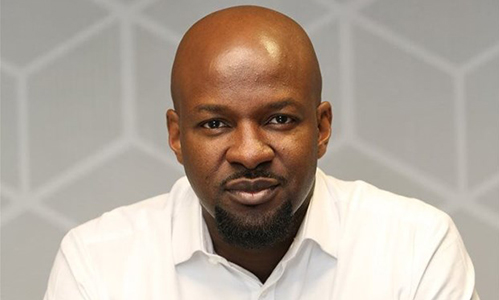
Alex Okosi, newly appointed YouTube EMEA Emerging Markets MD.

YouTube has appointed Alex Okosi as managing director of emerging markets for YouTube in Europe, Middle East and Africa (EMEA).

Okosi will be responsible for running YouTube’s business and partnership teams across emerging markets in EMEA including Russia, the Middle East, North and sub-Saharan Africa. He will report to the head of YouTube EMEA, Cécile Frot-Coutaz. Based in the London office, Okosi will start in April 2020.

Okosi said, ‘YouTube is a game-changing platform that plays an increasingly important role in our lives today through the dynamic content and innovation that it delivers. I am very excited to be joining Frot-Coutaz’s leadership team to continue empowering creators and elevating value for viewers and partners across the region.’

Frot-Coutaz, head of YouTube EMEA said, ‘I look forward to welcoming Okosi to our YouTube EMEA leadership team. He brings a wealth of experience in the content industries and has a track record for building businesses and audiences in established and new markets. Alex will be leading our existing teams in Russia, sub-Saharan Africa, Turkey, the Middle East and North Africa to drive further expansion in these key markets.’

Read the top 5 stories weekly on WhatsApp or sign up to our newsletter.
YOUTUBE
youtube.com

Franchise Marketing And Branding Observations

Outsourcing Versus Insourcing Your Marketing
Image source: www.firejuice.co.za

When you own a franchise or are the exclusive licence holder for a brand in a territory, you inevitably understand the importance of marketing to drive sales, but often miss the critical role it plays in brand building. Long term, you need a strong brand to build a franchise. This is according to Marketing Consultant and Founder of Firejuice, Bernard Jansen, who explains what to consider from a marketing and branding point of view before buying a franchise. 

You can’t run a successful franchise without a strong brand. Yet many franchisees don’t know this and struggle to make sales because of this very problem. Many franchisees think they inherit a brand from the onset and only need to worry about sales. While it may be true for well-established brands, such as KFC or Nando’s, it often does not apply to smaller brands brought in from abroad via licencing agreements, or a Durban based business franchising out to owners in Johannesburg and Cape Town.

As a franchisee, you should understand what you are, in reality, buying: a brand. But a brand is not a brand because it has a following overseas, or a cool logo, or a funky name or even because someone calls it a brand. A brand is only a brand when customers recognise it as one, right in your area. The customer decides if it is a brand, and if they haven’t made up their minds, you are either in deep trouble or have lots of work to do.

The problem is that most franchisees are unprepared when it comes to brand building. The fact that the franchisor, or owner in another territory, provides you with brand guidelines and marketing materials does not mean that now you can tick off the brand box. You still need to do the hard work of establishing it in the minds of customers.

So what should you do as an aspiring franchisee?
 
• First prize is to buy into a brand – a real brand that is recognised in your area.
• If you want to buy into a business with a brand that is unknown in your area, you should be prepared to do marketing activity that grows brand awareness in addition to driving sales. This can be difficult, and I would negotiate hard with the franchisor to assist in this for a launch period.
• If you already own a franchise that has a brand problem, I would suggest taking a couple of steps back and resetting your expectations. You need to go back and also build a story for the brand and establish awareness with customers, over and above driving sales. Marketing activity needs to work harder than if you already had a well-known brand. Marketing must now build brand awareness and build sales, which takes much longer.

Too many franchisors sell licences to entrepreneurs, giving them rights to open the same business elsewhere, but without the same brand awareness. The result is almost always businesses that fail, or never really gaining traction – like a barbecue on a cold fire. When you invest in a franchise licence, make sure you also invest in a brand. If not, know one thing: your road to success will be twice as long.

Read the top 5 stories weekly on WhatsApp or sign up to our newsletter.

FIREJUICE
bernard@firejuice.co.za
www.firejuice.co.za
This is Modern Marketing