

Home Blog Page 362

Aware.org Announces New Marketing Code For Responsible Alcohol Advertising

The aware.org Change The Game Launch team.

The Association for Alcohol Responsibility and Education (aware.org) launched a new code of Commercial Communications for alcohol beverage brands that sets out clear guidelines for responsible marketing of their products to reduce harm.

The industry’s Code for Commercial Communications (the Code) was recently launched to its partners, media, key marketing industry players and members of government at an event that took place at The Capital Hotel on Park in Sandton, Johannesburg. It was developed as a comprehensive self-regulatory framework and guideline that provides specific and structured principles for the crafting and dissemination of marketing messages for alcoholic products. 

According to the organisation, the purpose of the Code is to represent a firm commitment by the members of aware.org to maintain high standards of responsibility and ethical conduct in all commercial communication activities, ‘which will demonstrate that we, as an industry, believe in marketing for change’. It is designed to ensure that alcohol-related commercial communications are conducted in a manner that neither conflicts with nor detracts from the need for responsibility and moderation in liquor merchandising and consumption.

Ingrid Louw, CEO of aware.org, said, ’Through the Code, we aim to encourage the best creative minds in the country, both agencies and marketers, to become world leaders in the responsible marketing arena. The Code is the industry standard that we can and must live by.’
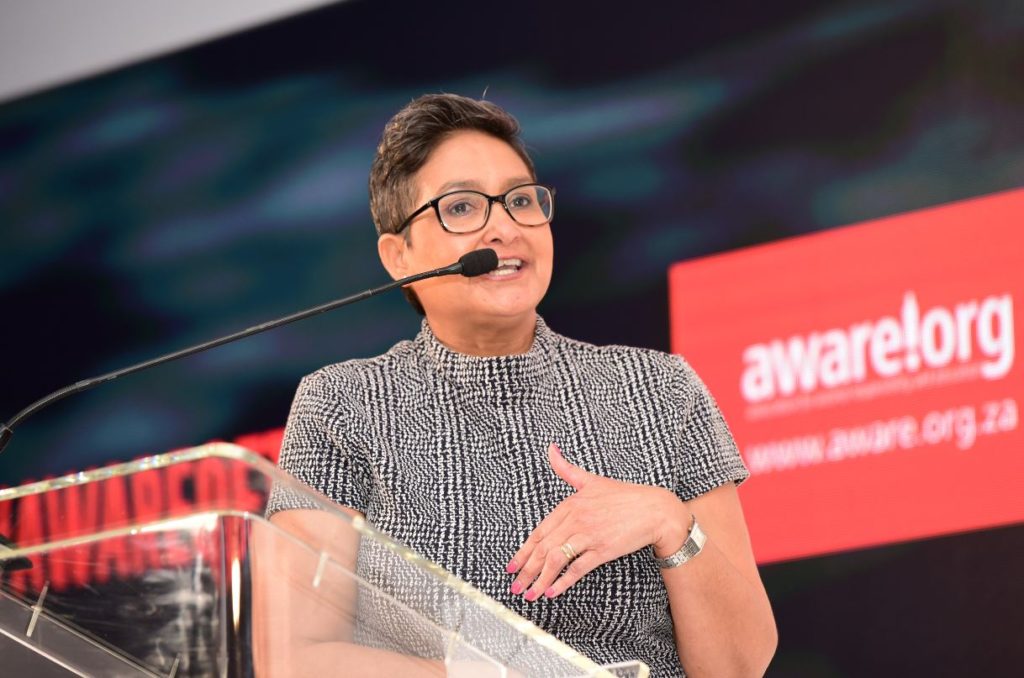
Ingrid Louw – aware.org CEO.

According to the World Health Organisation (WHO), South Africa is the sixth largest drinking nation in the world even though only 30% of South Africans consumer alcohol. The alcoholic beverage industry has been mulling over the potential impact of the National Liquor Amendment Bill, presented for public comment in 2016, which could result in severe restrictions on the industry’s ability to market their products if enacted into law.

‘The aim is certainly not to wag the finger, but it is an opportunity for us to engage with those who have the greatest influence on the strategic and creative expression of the marketing of alcohol products, whether on television, radio, billboards or in digital spaces, which is where most brands communicate their brand messages today, and which will continue to grow exponentially in the future,’ continued Louw. 

Notable speakers at the launch event affirming the industry’s commitment included: Chief Director of the National Liquor Authority, Prea Ramdhuny; Heineken Corporate Affairs Director South Africa, Millicent Maroga; MD of Diageo SA, Graeme Harlow; and Vice-President for Corporate Affairs at SAB, Zoleka Lisa, who opened the event on behalf of the Chairman of the Board of aware.org, Ricardo Ferreira.

‘We need to develop a common industry vision,’ said Lisa. ‘The introduction of our self-regulated Code is more than just a promise and goes beyond compliance. We, as an industry, already actively support campaigns that reduce alcohol abuse and we invest billions each year in responsible marketing activities.’
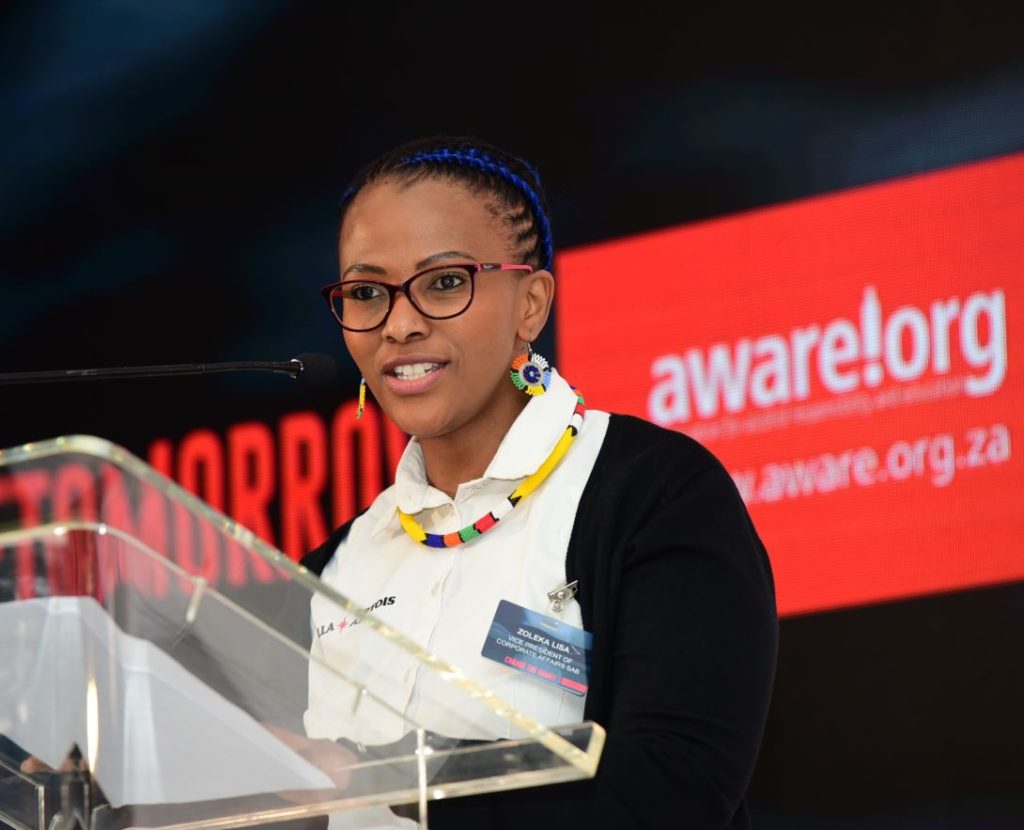
Zoleka Lisa – VP Corporate Affairs at SAB.

A dynamic and challenging panel discussion chaired by veteran journalist and radio presenter John Perlman featured Chief Director of the National Liquor Authority Prea Ramdhuny, Corporate Affairs Director, Distell Southern Africa Jolene Henn, CEO of the Advertising Regulatory Board (ARB) Gail Schimmel and Chief Creative Officer at Joe Public Xolisa Dyeshana.
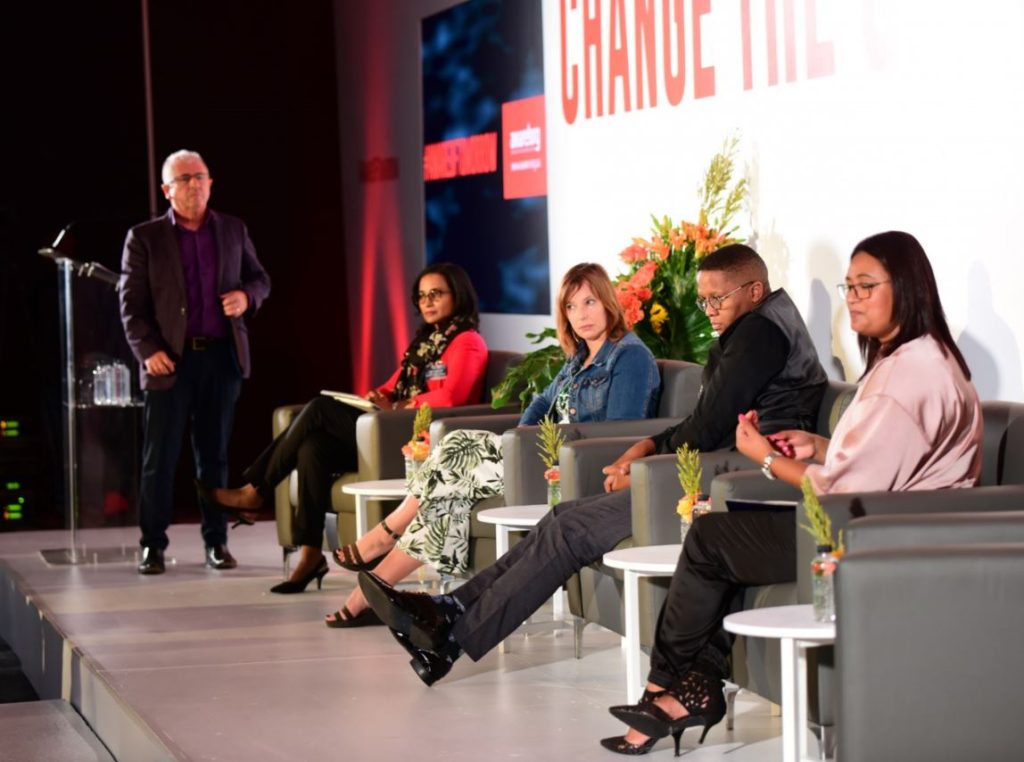
Code Launch Panel – facilitated by John Perlman – Prea Ramdhuny, Gail Schimmel, Xolisa Dyeshana and Jolene Henn.

‘When Government launched its policy document seeking to change advertising laws and regulations, it was in response to the wide-ranging socio-economic effects of alcohol abuse in the country and the industry’s seeming lack of motivation to change its harmful marketing practices,’ said Ramdhuny. ‘Our hope is that through this Code, the industry can demonstrate that it is not only committed to responsible marketing but can make a real and immediate change in how its products are marketed,’ she continued.

The debate raised tough questions about the potential efficacy of the Code and the practicalities of its implementation and adoption, as well as its potential impact on alcohol harm reduction in South Africa.  

The launch event was concluded by an announcement of aware.org partnering with the Loeries in the annual Loeries Student Challenge, where design, advertising and marketing students around South Africa are invited to find creative solutions, which combats underage drinking using Instagram as a first to mobile creative platform for change. 

‘As the alcohol industry, we will lead from the front with responsible marketing through creative innovation. We believe that this challenge will be one of our first milestones in driving real and sustainable change through creativity, both locally and internationally,’ concluded Louw.  

The winning campaign will be produced professionally with Facebook/Instagram’s guidance, together with the winners, and run on Instagram to millions of people, courtesy of Facebook.

Read the top 5 stories weekly on WhatsApp or sign up to our newsletter.

RIVERBED AGENCY 
+27860994164
hello@theriverbedagency.co.za
www.theriverbedagency.co.za

AWARE.ORG
aware.org.za

Massif And Black River FC Celebrate Award-Winning Campaign

Massif and Black River FC are celebrating their collaboration following their RSA campaign earning multiple first-place awards, including the winner in the Integrated category, for the Creative Circle Ad of the Month.

The People Opposing Women Abuse (POWA) campaign dubbed, ‘RSA’ (Republic of Sexual Abuse) was the brainchild of Black River FC ECD, Roanna Williams and her team. Commenting on this partnership, Williams said, ‘Collaborating with Massif on elements of the RSA campaign, shows their integrity as a company that is truly behind work that is driven by purpose.’

Peter Carr, founder and executive producer at Massif, expressed his appreciation of Williams for the spotlight she and her team put on the rampant gender-based violence in South Africa. He added, ‘When the agency approached Massif to collaborate on this pro bono project, we didn’t hesitate. We supported the agency and the development of this campaign wholeheartedly to help make a real difference.’

Commercial director, Gordon Lindsay commented, ‘It was so satisfying to collaborate with this team and develop this strong piece of work, underpinned with heart and purpose. Hopefully, the campaign lands with the same sort of impact internationally as it did locally. It was also incredibly rewarding to work on an initiative that is so closely aligned to our company values, and even more so to have been part of this process.’

Read the top 5 stories weekly on WhatsApp or sign up to our newsletter.

MASSIF MEDIA 
+27833776566
info@massif.media
massif.media

Seven Tips For Sustainable Events

The Event Greening Forum (EGF) hosted free event greening training in Johannesburg, Cape Town and Durban from 17-21 January 2020 in association with Meetings Africa and Africa’s Travel Indaba exhibitor briefings.

The training was sponsored by South African National Convention Bureau as part of their strategy to promote sustainable event practices within the local Meetings, Incentives, Conferences and Exhibitions (MICE) industry.

One of the training modules was delivered by Morwesi Ramonyai, who is an impact entrepreneur with nine years’ experience in the green economy, and who has carried out eco-audits for Meetings Africa, and assisted with the judging of the show’s Green Stand Awards.

While her advice was specific to winning a Green award, it is fair to say that the principles and practices she shared apply to all exhibitors who would like to be more sustainable:

1. Design a green stand

Ask your stand builder to design a re-usable stand, incorporating, for example:
• Robust structure.
• Modular design to adapt to different exhibition spaces.
• Easy to pack and assemble.
• Easy to transport (less is more – fewer walls or components helps with this.)

Following on from this – ensure that you do re-use it. Look after it. You may require occasional touch-ups, but the aim is to get the maximum use out of it.

2. Use sustainable materials

Build your stand out of materials that are:
• Locally sourced.
• Made from renewable resources (e.g. bamboo, wood, paper).
• Free of harmful chemicals (e.g. eco-friendly paints).
• Can be easily re-purposed when the stand is no longer needed (e.g. raw wood) or recycled (e.g. Xanita board) or upcycled (e.g. fabric or vinyl graphics can be used to make shopping bags).

3. Green your operations

Reduce the amount of energy your stand requires:
• Use energy-efficient lighting and appliances (such as screens, fridges, etc.)
• Avoid heavy energy-use appliances such as coffee machines.

Reduce the amount of waste your stand will produce:
• Skip visitor gifts.
• Don’t purchase anything with single-use plastics (such as bottled water).
• Avoid having printed brochures and marketing materials and go digital. If you have to print – go smaller, and opt for recyclable paper and vegetable-based inks.

4. Manage your transport

Have an efficient logistical plan:
• Ensure your stand is compact, lightweight and easy to transport.
• Make arrangements for staff to lift, share or use public transport.
• Travel is usually the biggest contributor to an event’s carbon footprint, so consider offsetting your travel-related greenhouse gas emissions. There are many organisations that can help you calculate your carbon footprint and offset it through the projects they work with.

5. Communicate your efforts

Make people aware of your sustainability efforts:
• Teach your staff about what you are doing and why – this is critical to getting their buy-in for things like lift sharing, but also means they can tell your clients about it too.
• Have accessible information on your stand, highlighting your company’s sustainability policy and what you are doing to live by these principles.

6. Have a positive social legacy

Look for opportunities to have a positive social impact, throughout the exhibition process:
• Prioritise local procurement.
• Find a local charity to partner with – for example, to donate goods to or to make the benefactor of your carbon offset project.

7. Be innovative

Find other, unusual ways to be more sustainable. Offset your carbon footprint by purchasing Renewable Energy Certificates and planting trees, for example. Look at the sustainability problems and challenges you keep coming across at exhibitions, and find a way to solve them. Explore the benefits of new technology.

Read the top 5 stories weekly on WhatsApp or sign up to our newsletter.

EVENT GREENING FORUM
+27828915883
info@eventgreening.co.za
eventgreening.co.za

Five Major Digital Trends For 2020

Zubeida Goolam, Co-Founder and Creative Partner at Brandtruth//DGTL.

Zubeida Goolam, Co-Founder and Creative Partner at Brandtruth//DGTL, explains that the digital and social media marketing landscape is in constant flux because of software updates, changes to platforms and new ways of consuming content. 

The key is to keep improving the experience for consumers, to know where they are going next and to be there when they arrive – staying ahead of the trends. Here are five expected major trends for 2020:

1. Slide into the DMs (chat messaging)

This is a line of marketing that speaks directly to customers, it is personal and direct. This will continue to grow as it is a direct way of starting a conversation with consumers and it caters to the fact that we are becoming more demanding in that we expect helpful, personal and emphatic interactions with brands.

Some of our previous insights from our Brandtruth//DGTL team highlighted that chat messaging will definitely need to form part of a brand’s integrated marketing strategy for 2020, as it directly impacts your brand’s hypersegmented audience that actively engages online.

2. Staying secure (digital privacy)

The progress of digital privacy and transparency is an opportunity for solutions. Online privacy and the protection of personal information has been on the tongues of consumers for years. First-party data and cookies will soon be a thing of the past, meaning it’s time to test and learn.

This browser identification tool makes audience targeting, data trading, measurement, attribution and frequency capping for the open web possible. But now Apple, Google and Mozilla have made moves towards blocking ad-related cookies in an effort to protect the privacy of users. Marketers need to find innovative ways of targeting and should engage with partner agencies on where the future of targeting and privacy will lead.

3. Make it an experience (content experience)

Google research has shown that 72% of consumers engage only with customised marketing. The experience of personalised content is an expectation, and the execution considers where and how a specific audience consumes it.

To cut through the noise, marketers will need to create experiences that are engaging and speak to content and context. Users want to feel connected to the subject matter, and to do this, careful consideration needs to be given to a combination of design, placement and environment.

4. What does it all mean? (Analytics)

Analytics is growing in prominence, helping to identify strengths and weaknesses, and quantifying efforts and results. Making use of available tools to track not only the success of marketing campaigns but also to track the performance of businesses, is becoming more important. Results obtained from analytics data will lead to more insight-driven marketing, meaning content that is very specific and hypertargeted.

4. Let the machines help (AI and machine learning)

Artificial Intelligence and machine learning in marketing aim to personalise customer service and minimise the need for extensive human intervention by making use of chatbots and task automation. AI offers data-driven insights and allows for the tailoring of the experience for users, as it learns what they like and engage with. The technology helps marketers to streamline their processes and offerings. The key takeout is to automate as much as possible, pilot solutions and see what works for you.

Read the top 5 stories weekly on WhatsApp or sign up to our newsletter.
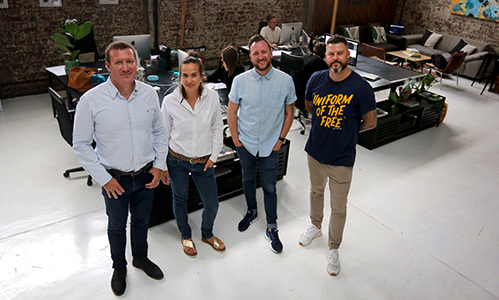
BRANDTRUTH//DGTL
+27(0) 87 897 5635
hello@brandtruth.co
brandtruth.co

Hoorah Strengthens In-House Capability With 2AM Agency Acquisition

Shaune Jordaan (Hoorah CEO), Anine de Wet (2AM MD), Marco Russolillo (2AM ECD) and Simon Spreckley (Hoorah ECD).

Hoorah Group Holdings has acquired Cape Town headquartered, through-the-line agency, 2AM. As Hoorah continues to expand its operations and grow capability across channels, it’s a move that’s sure to take the agency to great and new heights. 

2AM is the third independent agency to be acquired by Hoorah Group Holdings, following the acquisition of Tenzing Agency and Ritual Studio by the group in 2018 and 2019 respectively. 2AM now forms part of Hoorah Group Holdings, while retaining all staff as well as their Cape Town office. 

Shaune Jordaan, Hoorah CEO said, ’Hoorah’s long-term vision includes acquiring independent agencies across the Africa region in a bid to strengthen and grow our in-house capability, to nurture and develop the best talent from around the continent and to keep exceeding the expectations of our clients.’

Established in 2014 by Anine de Wet and Marco Russolillo, 2AM built its reputation on being channel agnostic, opting to prioritise the solution over the medium. It is 2AM’s AR capability in particular that drew Hoorah to the agency, which prides itself on having built an impressive client roster over the past five years to include the likes of Red Bull and Old Mutual. Renowned for their conceptual, creative work that drives solutions for clients, as well as the long-term relationships they enjoy with their clients, 2AM is ideally suited to supplement the edge Hoorah has in the digital media space due to their imaginative creative. 

‘We’re very pleased about 2AM joining Hoorah. They’re a dynamic agency who have proven their strategic and creative capability in myriad ways and we can’t wait to align the team’s expertise to our own,’ said Jordaan.

Anine de Wet, MD at 2AM, echoed Jordaan’s sentiment, ‘Our purpose-driven, highly-conceptual creativity has always been our signature, and partnering with Hoorah Digital, who are experts in the digital media space, is a logical next step in ensuring our clients get maximum value from us.’

Jordaan added that they were particularly impressed with 2AM’s ongoing commitment to creative solutions that drive results, build traction and create brand momentum. ‘Results are where you generate value for clients. At Hoorah we do this by effectively and creatively harnessing the data, and not only does 2AM understand this strategy, they have demonstrated that they actively embrace it.’

Jordaan, De Wet and Russolillo are all equally excited about the acquisition and confident that the real value of the merger will be most evident in the results they collectively deliver for their clients. 

Read the top 5 stories weekly on WhatsApp or sign up to our newsletter.

HOORAH DIGITAL
+27103125733
info@hoorahdigital.com
www.hoorahdigital.com

Loeries 2020 Entries Now Open

Loeries 2020 Entries Now Open

Loeries is calling on the brand communication industry to create work that changes things and makes a difference and then submit their entries for the Loeries 2020 awards. The deadline is 11 May 2020.

Loeries COO Suzie Bowling said that people don’t realise the incredible power creative minds have to impact real change that can make a real difference, and that the Loeries is committed to driving the industry to use its power for positive change. ‘Our region – Africa and the Middle East – is ripe with opportunity for creating meaningful change. Just two examples are that only 10% of waste is recycled, and fewer than 20% of African women have access to education.’

‘We can use our creative muscle and our brand strengths to change these statistics,’ Bowling added. ‘It’s not just what brands say, but what they do. Consumers are savvy today. They see through cause-washing. The Loeries is calling on brands and agencies to drive change that is more than surface deep. It is not only about once-off campaigns, but change in operations, policies, culture, purpose, products, services and the experiences we offer our customers,’ said Bowling.

Real problem-solving is not foreign territory for the Loeries, which is working with Facebook and the UN-Women’s Unstereotype Alliance to bring to life last year’s Student Facebook Challenge winners’ mobile-first Stories campaign – ‘Know Her Name’ – for the United Nations’ HeForShe campaign, which tackles gender inequality in professional football. This year, the Loeries and Facebook have partnered with Aware.org, the Association of Alcohol Awareness and Responsibility, and are calling on young minds to create an Instagram campaign on the issue of underage drinking.

Read the top 5 stories weekly on WhatsApp or sign up to our newsletter.

LOERIES 
www.loeries.com

Creating Brand Influence Through Activations And Radio

Brands should not forget about the ability of radio station presenters and DJs to help them connect with customers and drive interest in their products and services among consumers, states Charlie Wannell, Head of Marketing at Mediamark.

Here are some reasons why activations that tap into the influence of radio personalities work so well:

Radio presenters have listeners’ trust

The term ‘influencer’ may be a product of the digital age, but radio presenters have been influencing their listeners for many decades. They are well-loved and trusted among loyal listeners because of the emotional connection they create with their voices and personalities.

The key to their influence is that they are with people day in and day out on their daily commutes, at work and more. Many listeners come to think of their favourite radio presenter as a friend – someone who always has a good joke, a useful piece of advice, or insight into the world that they can rely on.

In a world of clutter, this is a great opportunity for brands to cut through with high-quality engagements. Radio influencers will often have time to chat in a way that feels natural to audiences and they’ll spend several minutes on-air discussing a promo or competition, sometimes going off-script with anecdotes and details.

Reach spans from online to the airwaves

Radio stations and radio presenters today have an excellent online presence through websites and social media. This presents multiple opportunities for increasing reach and frequency by interacting with people at different touchpoints – from broadcast radio to streamed audio to social media.

Radio is great for inspiring the listener’s interest and imagination through audio, while social and digital adds a visual element to the campaign. Social media is a boon for driving engagement – presenters can ask people to follow their social accounts, enter an online competition, or simply to share their opinions and stories.

Plus, followers can share social media content, extending reach to people who are not regular listeners of a presenter’s show. This can help multiply the results of a radio activation with a small increase in budget.

Keep it integrated

The key to making the most of the opportunities of a radio influencer-driven campaign is to make use of both the presenters’ radio show and their social presence. This enables brands to reach consumers with the medium or channel they prefer – driving better uplift and response rates.

Coordinating planning, executions and measurement across different disciplines such as social, digital and radio will help ensure that the work done at each touchpoint is complementary. This, in turn, will drive higher return on investment from the campaign.

Read the top 5 stories weekly on WhatsApp or sign up to our newsletter

MEDIAMARK
+27112357600
info@mediamark.co.za
www.mediamark.co.za

Discover New Revenue Opportunities With Website Audits

Image source: Bluegrass Digital website.

Bluegrass Digital CEO Nick Durrant says digital marketing should always start with an audit – it could benefit any business aiming to increase its online presence. Through strategic planning and implementation, an audit should lead to increased online sales conversions and offer a higher ROI on marketing spend.

Companies can become more profitable through website audits: it enables them to discover new revenue opportunities, uncover the most profitable areas of search and also shows their online presence profitability.

Although website audits form an integral part of creating an SEO plan, they offer far more than merely finding errors and identifying problems with website architecture. Whilst the site health audit assesses the usability and architecture of a website, it also tests website speed, identifies potential gaps in content structure and technical gaps.

SEO audit could also discover discrepancies that may result in Google penalties that affect ranking on Google’s search engine rankings page (SERP). More importantly, it could assess how vulnerable the website is to security breaches. Website security is by far the most important components of a website audit, it identifies vulnerabilities to security breaches and could prevent compromising sensitive information.

A penalty or red flag audit uncovers manual or algorithmic penalties that have a negative effect on search ranking. Identifying these penalties through an audit will reveal the cause and present solutions for site recovery. Furthermore, websites that contain duplicate content will confuse search engines and will cause search rankings to suffer and even result in algorithmic penalisation.

An active social media presence is critical to drive website traffic and a good social media strategy will help drive qualified leads, increase visibility and improve customer engagement. The social media audit is therefore extremely important as it analyses which content channels perform best. These could include tools like video, blogs, infographics and social media channels.

The conversion rate optimisation audit identifies how conversions occur and how opportunities are lost. It provides insights on how to increase leads and to convert web traffic into sales. It also guides the development team of strategic landing pages and forms. Optimisations are ongoing and need to be done to motivate the desired response from visitors.

Auditing competitive websites could also be beneficial for business growth as it could discover opportunities and insights to implement into their own digital marketing strategy. Regular SEO audits keep businesses agile and aligned with Google’s best practices. It improves Google search ranking while increasing site traffic and performance.

Google makes in excess of 500 changes to its algorithm each year. This means what works now will most likely not work in future. Google aims to serve up the very best websites, so if the user experience is good and repeat visitors are high, Google will rank the website favourably. A good website audit will evaluate the SEO and how it overlaps with the user experience so businesses can find a good balance to satisfy the users and Google.

Website audits are an essential tool to improve the efficiency and visibility of a website; they present businesses with an exceptional opportunity for growth online. Ideally, businesses will receive a summary report including any discrepancies discovered and the report will also provide the most effective way to correct them.

Enhanced usability is key. A website audit can help identify areas of the website that should be simplified in order to determine what content, structure and functions work best for the users. The design and functionality of the website is endless but a highly complicated design, busy web pages and too much information could pose a huge problem. If the website doesn’t guide visitors to the right area in a clear and concise way, they will leave immediately and possibly never return.

Auditing content helps businesses understand the kind of content users like and how they like to view this content e.g. videos, articles and images. An audit will help one decide on a solid content strategy for the website and a blog that provides quality content that users enjoy. This will lead to better organic rankings with the search engines.

A technical website audit will verify data such as time on site, bounce rates and page views. These are highly important areas that need to be improved for better search engine indexing.

In conclusion, if your website is not listed on the first page of Google, your business can lose up to 95 percent of potential clicks because sites on the second page attract less than 5 percent of search traffic. Before developing a digital marketing strategy and an online presence, businesses need to do an SEO audit to get a baseline understanding of the website, social media platforms and how search engines rank it.

Read the top 5 stories weekly on WhatsApp or sign up to our newsletter.

BLUEGRASS DIGITAL
hello@bluegrassdigital.com
bluegrassdigital.com

HaveYouHeard And Cape Town Tourism Scoop ITFF Africa Award

Created by HaveYouHeard as part of a digital campaign to promote the city and its surrounds as an ideal winter getaway destination – the Cape Town Winter Song won two awards at the inaugural International Tourism Film Festival Africa.

The video features cameos by a number of celebrities as well as original music by HaveYouHeard’s Head of Content and Platforms Jon Savage. It was conceived by HaveYouHeard’s Group ECD Dan Berkowitz, ECD Gavin Whitfield and directed by Ari Kruger from Sketchbook Studios.

The aims of the International Tourism Film Festival Africa include contributing to the development of domestic and international tourism, encouraging the growth of the local film industry, and promoting South Africa and Africa as tourist destinations.

‘Cape Town Winter Song’ achieved second place Tourism Communications Section in the Tourism Destinations City Category and was awarded Best South African Film in the same category.

HaveYouHeard was briefed by Cape Town Tourism’s Marketing Executive, Leigh Dawber, to develop a concept to increase the number of domestic tourists to the city during the winter period. ‘The ad did a great job of connecting with our fellow South Africans in a quirky and unexpected way, highlighting so many reasons why Cape Town is a great place for your winter break.’

Read the top 5 stories weekly on WhatsApp or sign up to our newsletter.
HAVEYOUHEARD
+27112681331
 haveyouheard.co.za

An Organisation’s Digital Capability Is Central To Evolving With The Market

Shaune Jordaan, CEO Hoorah Digital.

A digital strategy cannot simply be a ‘nice-to-have’, says Shaune Jordaan, CEO Hoorah Digital. In companies where digital functions add real, measurable value, the digital strategy is seamlessly aligned to the organisation’s strategy at large. 

Whether your business is focused on auditing, apple farming or architecture, it needs to have a digital arm. By now most business leaders accept that ‘digital’ is – or should be – an integral part of the organisation’s approach to its activities. 

And while it sounds fancy and forward-thinking, the reality is that very few South African businesses are truly embracing and adopting a digital-first approach to business. There’s no denying that it’s a daunting concept, particularly for those CEOs who cut their managerial and leadership teeth in more analogue environments, but ignoring it certainly won’t make it go away. 

As such it is useful to consider digital simply as another area of the business aimed at supporting value creation and operational efficiency, not unlike the production, finance or marketing functions. 

In 2020, CEOs need to focus on elevating the strategic importance of the digital function within their organisations. It’s about using digital systems, tools and agile thinking to improve business performance. 

Further considerations in this regard include the following four points: 

Understand what you’re in for

An important first step is engaging with the question around what digital means to your company. In contrast to a more uniform function, such as finance, digital is closely related to the output of the company and thus needs to be uniquely structured to meet the needs of individual organisations. 

The CEO needs to consult, recruit, read, ask questions, talk, listen and find out. Digital moves fast; it evolves all the time. Today’s cutting-edge is tomorrow’s outdated. Accept and appreciate it for what it is. Then commit to staying informed. 

Put somebody in charge

The digitally savvy CEO ensures that digital strategies are present at all levels of the company and that a digital strategy is not an appendix to the overall business strategy but central to it. And while the CEO’s job is to ensure digital integration across all business sectors, they are also smart about recruiting the right person to take charge of the digital arm of the business, as one would with finance, operations, HR, marketing and more. 

A chief digital officer is not a position limited to disruptive startups or tech giants. Every company interested in creating value, making profit and ensuring their own longevity are making room for a digital lead who, ideally, is focussed on pursuing innovation and optimising operational efficiencies across the business.  

Fall in love with data and analytics 

According to research conducted by The Hackett Group, advanced analytics is the most significant digital investment companies can make. We firmly believe that data is the competitive advantage. In fact, we’ve built our business model on the conviction that big data, where it is meaningfully organised, analysed, interrogated and interpreted, is what ultimately allows us to do work that drives measurable results. 

Part of the CEO’s role in individual organisations is to understand the metrics that matter most to the business. This is typically the data that aligns to the organisation’s commercial and client goals, and to ensure this data is strategically incorporated to support the company goals and objectives. Data is a central component of a robust digital strategy. As such, it is of utmost importance to prioritise the mining, storing and analysing and application thereof. 

Focus on future-proofing the organisation 

In 2020, an organisation’s digital capability is central to its ability to evolve with the market, to stay relevant and to keep adding value to customers in an increasingly competitive global market. 

As such, the digitally-savvy CEO’s task is to always be looking to the future, to anticipate the changing needs, to embrace and welcome the new and the unfamiliar, and to recognise the potential within it. 

When business leaders come to associate digital investments with business value, the integration becomes a seamless one. And only when digital enjoys priority in business will the value, for both the business and the customer, become apparent.

Read the top 5 stories weekly on WhatsApp or sign up to our newsletter. 

HOORAH DIGITAL
+27103125733
info@hoorahdigital.com
www.hoorahdigital.com
This is Modern Marketing