It’s only 10 years since VMLY&R South Africa launched as NATIVE, a small, full-service digital marketing agency, which is why Ryan McManus, Chief Creative Officer at VMLY&R South Africa, acknowledges that having taken 10th place in the Cannes Agency of the Decade awards for the Middle East and Africa region is a gratifying achievement for such a young agency.
‘This award reinforces our belief in purpose-driven work that lives in people’s lives,’ he said. ‘This is an ethos with real meaning, a practice we live and breathe every day. We actively create real connections between brands and their consumers. And it shows in the work.’ In 10 years, the agency has worked with some of the country’s, and continent’s, biggest and most influential brands, consistently winning awards for the work produced.
McManus said, ‘Our clients are brave enough to trust us – they give us the freedom to push the work beyond the obvious and deep into the communities they serve.’A retrospective view of some of VMLY&R South Africa’s more recent wins at Cannes shows that work with the ability to really engage the customer in a culturally relevant manner is work that wins awards.
‘We always strive to create work that is popular culture, rather than advertising – work that people choose to spend time with,’ said McManus, who believes that brands should not exist in the pre-roll before a consumer’s chosen content, but should bring consumers the entertainment they actually want to watch. VMLY&R has topped and tailed the top 10 agencies in the region, with VMLY&R Dubai taking the top spot as the number one Agency of the Decade.
Transit Ads has activated the first Digital Powa Towa in Kempton Park in Ekurhuleni, ahead of the roll-out of a network of these structures across the country, with Bloemfontein, Soweto, KwaZulu-Natal, Rustenburg, Port Elizabeth and Nelspruit the next centres to receive them.
Dual format advertising
Digital Powa Towas measure 12 metres in height, are highly visible, and offer advertisers the opportunity to brand 152sqm of high impact space in strategically-selected, bustling commuter traffic flow areas.
With growing transport development taking place in the country, large internodal commuter hubs are being created where various modes of transport converge and disperse. These hubs include retail and banking and are a captive environment for targeting consumers when they are most open to advertising messages, and when they are most prone to retail activity. Within this environment, Digital Powa Towas offer a media opportunity that delivers impact and exposure to a large commuter audience – an audience that is extremely brand, product and price-savvy.
Shamy Naidu, Transit Ads executive said, ‘With our Powa Towas, the client has complete ownership of the screen and the concept is a combination of static and digital within the commuter space. The static element helps with brand affinity and awareness, whilst the digital screen allows for content, product and price, education opportunities, etc. So, the focus is on branding performing a dual role and also introducing new and innovative ways to increase our digital footprint in the commuter space.’
SA commuter snapshot
According to the most recent National Household Travel Survey conducted by Statistics SA, roughly 66% of South Africa’s commuting population makes use of public transport, including travelling by taxi, bus and train. Approximately 68% of that public transport segment use taxis and have an average daily dwell time of 44 minutes.
Further, in total, South Africa has a total public transport commuter base – excluding the Gautrain and air travel – in excess of 21 million and that number looks set to increase, thanks to increasing urbanisation.
Urbanisation
According to research conducted by Transit Ads, the world’s urban population is expected to increase by two-thirds by 2050, and here are a few other numbers and facts to note:
90% of this urban growth will take place in Africa and Asia.
20% of the world’s urban population will be living in African cities.
South Africa’s urban population is growing larger and getting younger.
70% of South Africa’s population will be living in an urban area by 2030
This makes a strong case for brands and advertisers to consider transit media as a communication platform, as it is a proven and effective tool in reaching consumers across the entire LSM spectrum.
‘Transit media also offers specific geographical focus, targets economically-active consumers, is situated in captive environments with long dwell times, produces repetitive audiences, is an incredibly cost-effective above-the-line alternative, and guarantees exposure, with no channel hopping,’ said Naidu. ‘That’s a compelling proposition.’
Lastly, consider this number: approximately four million taxi trips to work are made every day in South Africa, with more than half of those taking place in Gauteng. Whilst the commuter environment is expected to evolve and develop, as the needs of the population change, what won’t diminish is the attractiveness of this environment, its dynamism, and the key elements listed above.
On 23 June, Modern Marketing LIVE hosted an ‘E-Commerce 101: Exploring Business Opportunities’ webinar. Attendees could engage with experts and gain the knowledge to develop their own strong E-commerce platforms. The webinar was sponsored by In-Detail and DHL.
Gerald Yapp, Creative Director at In-Detail, discussed the fundamentals of setting up your website as well as app integration.
Can a business take their existing website and turn it into an E-commerce website?
It depends on how your site is set-up. Most websites are built on a Content Management System (CMS), which has a plug-in that allows for an addition of the E-Commerce function. Popular platforms like WordPress make it easy to add E-Commerce functionality to your site. Be mindful of the spike in online shopping due to the Covid-19 pandemic as people are not opting to physically go into stores – they buy a lot of things online. A UK survey also reported that only 37% of respondents would go back to buying in-store, while the rest are happy to continue shopping online even after the pandemic.
Key elements needed to set up an E-commerce website
– Invest time in it, as it is not something you can simply ‘do on the side’.
– Create a system.
– Create an online catalogue of your products in a way that is easy for people to find what they are looking for.
– Have a payment gateway that is instant as well as different payment options for your customers.
– Set-up the shipping as you cannot do it yourself (you need to be able to ship countrywide).
– Build a relationship with a shipping company, as they can automatically calculate the cost of the shipping between the shop and the customer’s address. They can also help ship/deliver products that are large in size – this helps you set shipping parameters.
To learn more about setting up an E-Commerce store, watch the full webinar here.
Marcus Matsi, Head of SEO at Reprise, discussed how to optimise website content for better conversions.
The importance of SEO
You can have a good website but no visitors, so you need your products to be available on the search results page when a person searches on Google/Bing – that is where SEO comes in. 44% of Google users start off by doing a generic search for their products. SEO helps your website appear in a lot of potential customers’ online organic search, and can get you to the level of being the primary search for different products. When people search for things online and your website keeps appearing first, that makes it credible. So make sure the user journey is simple for them to convert to buying customers. SEO is also a relatively cheap form of marketing.
Should businesses do their own SEO or outsource?
There are pros and cons to both. But outsourcing is a viable option and agencies have dedicated people who are specialists in the SEO field and are on top of the latest and cutting-edge industry trends to help your site perform better.
To learn more about SEO and the tools that Google provides specifically for E-commerce, watch the full webinar here.
Jarred Mailer-Lyons from The MediaShop discussed paid-for advertising to promote your E-commerce site.
Importance of paid-for advertising
Doing business without advertising is like winking at a girl in the dark – you know what you are doing, but no one else does. Paid-for advertising allows you to reach a bigger base of people compared to your organic reach.
Best practice for paid-for advertising to promote E-commerce sites
Create a basic framework of what you want to achieve throughout the process. You need to be constantly enriching, analysing and adjusting – knowing that the data you collect appreciates over time. This process allows you to spend smarter and reduce marketing costs by frequency capping, so that you do not pass the point of diminishing returns.
The process also allows you to develop consumer insights. By building up that data, you overlay that into your analytics or CRM list. This also allows you to create lookalike audiences, which enables you to build your first-party data into the likes of Facebook or Google, etc. and then build models off of those current audiences based on interests, demographics and target against those audiences so that you can expand your reach. It is also about cross-selling and up-selling that is based on customer attributes, like who are the most likely to convert or who have converted before.
To learn more about paid-for advertising and converting your target audience into raving fans, watch the full webinar here.
Derek Cikes, Commercial Director at Payflex, addressed payment gateways and security.
What is the payment revolution for E-commerce websites?
The main online payment option was predominantly that of credit card, and what we are seeing on a global scale is that credit cards are being issued out less and debit cards more. That introduces complexity in the E-Commerce payment option – how do people pay for things that they cannot afford right now? Enter a new way of buying things: ‘Buy now. Pay later’, where you use your debit card to buy things online today, and receive them today, but pay for them over a period of time without being charged interest fees.
Technical innovations available now to make online retail a seamless experience
There are things like Amazon 1-Click, Climate checkout, and Apple and Google pay. Those are essentially the services that have been created by Amazon and Google to make the checkout process very quick and effective. The four big banks in South Africa and Payflex have followed suit by creating a similar checkout capability: the customer visits your site, picks their goods and completes a checkout with one click – they don’t have to re-enter their card details.
To learn more about online payment checkout options, watch the full webinar here.
Venessa Dewing from DHL focused on taking good control of the delivery process.
E-commerce shipping is the final step in the process. What E-commerce, logistics and fulfilment services do you provide?
DHL’s service capability stems from our fundamental purpose, which is to deliver consignment from point A to point B in the fastest possible time. We have domestic deliveries in South Africa, and we also have a key focus on national deliveries. We are intrigued by the possibility that comes from international trade. We can facilitate all these deliveries with additional flexibility with regards to custom charges as well.
How does your online system plug into E-commerce systems? Is this integrated or separate?
We have the ability to fully integrate into our customer’s website, particularly if they are in more popular platforms like Shopify, WeCommerce, etc. We have an application called DHL Commerce, which simplifies the entire logistics process. Reducing the complexities of the shipping process is our priority, especially as we serve a range of customers, from enterprises to small and medium sized businesses. We ensure that the sender and receiver have proof of delivery as well.
To learn more about DHL shipment and delivery options, watch the full webinar here.
The One Show named Ogilvy 2020 Network of the Year in recognition of outstanding work across disciplines on behalf of its clients. This marks the fourth time Ogilvy has been named Network of the Year by The One Show. The previous three times were in 2017, 2014 and 2013 – the year the category was launched.
Ogilvy’s focus on collaboration and big creative ideas in any form also resulted in David Miami, one of its speciality brand companies, capturing the Agency of the Year honour.
The Network of the Year honour is given to the network whose agencies have the most cumulative points for One Show Pencils won across all disciplines for the year. Over two dozen Ogilvy offices around the world contributed to the recognition by collectively winning 25 Gold, 17 Silver, 25 Bronze and 73 Merit awards for clients including Burger King, Coca-Cola, German Rail, IBM, Jimmy Dean, KFC, Kraft Heinz, Pernod Ricard, SC Johnson, and Sipsmith among others.
Burger King, a client of David, was named Client of the Year with several campaigns recognised this year. ‘Moldy Whopper’, a collaboration between agencies including David Miami and INGO (a joint venture of Ogilvy and Grey, based in Sweden), was named Best of Show. ‘Moldy Whopper’ won Best of Discipline in four categories – Film, Integrated, Print, and Out-of-Home, while ‘Stevenage Challenge’ created by the Miami and Madrid offices of David, was named Best of Social Media. ‘Burn That Ad’, created by David Sao Paulo, also took home pencils across several categories this year.
Piyush Pandey, Ogilvy Worldwide chief creative officer said, ’This recognition is a testament to Ogilvy’s ability to transform business and culture through creativity. We want to thank our clients who entrust us with their brands and congratulate Fernando Machado and everyone at Burger King for winning Client of the Year.’
‘Work by Ogilvy agencies delivered on what The One Show jurors look for: excellence in creativity of ideas and quality of execution. We congratulate the network for a year of great work that inspires the creative community,’ said Kevin Swanepoel, CEO, The One Club.
Sugeshni Subroyen, Head of Marketing for the Mint Group of Companies and Director for Mint Inland.
Sugeshni Subroyen, Head of Marketing for the Mint Group, states that living through a global pandemic is historical in many ways and navigating these unchartered waters as a marketer makes her feel almost maverick. It is part of a marketeer’s DNA to see the silver lining in every crisis.
The rules of engagement that defined the last decade have been chucked out the window, ushering in a new way for marketers to connect and engage with their audience. This approach really helped me to survive the last three challenging months in South Africa. As a marketing director for a group of companies scattered across the globe, I have learned many new lessons about positivity and marketing, some very expensive, others eye-opening and truly life-changing.
Timing is everything … until lockdown happens
In early March, we booked a few digital billboards in the Sandton CBD coupled with Google and LinkedIn ads as part of an AI-driven sales campaign. While this campaign was genius, it could not withstand Covid-19. With all ads booked to launch the same day that our President ordered a national lockdown, it was destined to fail as the Sandton CBD was a ghost town for the duration of the flighted billboards.
The lockdown also meant that the economy was spiralling downward, fast, causing businesses to hold on to whatever cash they had. As a result, we needed to shift gear like most South African businesses and change our strategy to fit the new unknown times we operated in.
There is no magic bullet
Not even Chuck Norris could render billboard marketing successful amid a national lockdown. As such, we did not find some magic communication channel that only reached businesses willing to make massive investments during a global economic crisis and grave uncertainty.Instead, we changed our approach from enabling through selling to empowering through industry leadership.
We increased our focus on thought leadership, made our training resources and digital enablement initiatives free during lockdown, and ensured even closer relationships with our clients to see how we could support them with initiatives, such as rolling out crisis communication apps for those with existing PowerApps licenses.
While our campaign was not successful, we continued to build our brand amid a time when the world turned upside down and turned businesses inside out, and we helped to support businesses and educational institutions around us during a time of crisis.
No more touch and go
Instead, it’s just go go go! I find my days filled with meetings from beginning to end. The beginning of lockdown was filled with solution and go-to-market initiatives to ensure all current assessments, consultations, solutions and products were 100% geared for online distribution and enablement.
The pressure was intense, but us marketeers are made of steel. There is no challenge we will not accept, no solution we will not help build and no limit on the number of webpages we can create! We all pulled together as a company and we did it. It was not touch and go. It was just go!
Speaking of touch, another aspect of lockdown that was hard to come to terms with, was the inability to have face-to-face conversations and interactions with clients and leads when needed. The in-personal aspect was a big loss, but we learned to gear our digital efforts to ensure we were connecting, engaging and establishing ongoing trust.
Documenting history as we go
I read a fascinating piece about how pandemics threaten humanity every 100 years and by far Covid-19 has been the most documented pandemic in history. We have a wealth of information at our fingertips and as content producers, we have the ability to control and guide the narrative in a responsible way.
As South Africans, we create a meme for everything. I guess it’s how we cope with a global pandemic. But even more fascinating is the fact that we are documenting history through every meme, post, article and solution. With no handbook available to help guide us through this global pandemic, we are writing the rule book as we go along.
Marketing is now the king, the queen and the pope
As marketeers, we have always known that we are awesome, but this awesomeness has never shone brighter. During lockdown, an organisation’s online presence, channels and communication was its only way of existing, connecting and growing. As such, we experienced a significant reliance on us creatives to work much earlier in the process with our solutions teams to disrupt the market and craft solutions that speak to Covid-19 related problems.
Leading a creative team during these crazy times meant giving them full autonomy to get on with their projects in a way that makes sense to them. If a team member felt the need for a midmorning run with their sock-chewing puppies to re-energise and bring absolute genius back to the table, then so be it. If a tiara and cape-clad four-year-old princess joined our catch-up calls and made us all laugh, enabling our brains to fire next-level creative ideas during our catch-up meeting, then great. Embrace it!
Ultimately, our new situation is challenging and scary as we are operating both professionally and personally amid the unknown. But amid the uncertainty, the fear and the chaos, we choose to look at the glass half full and see that even amid a global pandemic we have managed to become even more human, humble, and connected, which means we are able to produce more awesomeness, faster.
Hamilton Zwane, content copywriter at Grey Africa, gives insight into how the South African youth are using social media, what’s changed in their usage during Covid-19, and what should be trending in the near future.
Hamilton Zwane, content copywriter at Grey Africa.
Three latest social media trends
Social media trends change quite regularly, but that is the nature of social, to constantly change things up, right?What comes to mind is the increase in content creators (especially among the youth). We’re living in times where, if your profile doesn’t say ‘content creator’, then what are you even doing on social media?
I also like a good story, and Instagram and Facebook Stories are not slowing down. They are becoming more interactive and engaging – Facebook Stories boast approximately 500 million users daily.
Then there is video – we know that video content is king. There is a growing trend among South African brands to use TikTok to execute great video content.
Brands appealing to a youth audience in the new normal
Brands need to create a content strategy with the consumer in mind. And, because the youth are quite savvy and often named ‘the creators’ themselves, customer-centric content is more appealing. In the same breath, advocating for user-generated content is also a great step.
In addition, it’s important that brands rethink which platform they spend most of their time on. We’ve often heard the phrase: less is more. I’m not saying that brands should only have a social media presence on one platform, but do an audit to see where your target market spends most of their time and go hard there. Let’s take, for instance, Nando’s on Twitter, Savanna Cider on Facebook and Twitter, and Chipotle on Twitter and TikTok.
Facebook is the most used platform globally. Instagram, apart from being a vanity contest, is also great for creators, and Twitter is good because you hold all the power through that keypad on the cell phone in your hand. TikTok is booming.
Social media’s impact on brands during Covid-19
Since the unprecedented lockdown efforts government made to try and manage the Covid-19 situation, social media has seen an increase in usage, and it has become an essential tool for people to connect. Yet although there has been an increase in online engagements, right now context is everything. The youth know which brands they look to for a particular takeout, whether it’s humour, or the way the brand lends a helping hand, or just being that smile-giver we all need right now. Context is everything.
Examples of great social campaigns
The best social media campaigns are the tactical ones or that received organic traction through a good #Hashtag. The Savanna Cider’s Virtual Comedy Bar is great because they are giving comedians a platform during the lockdown and hosting a virtual stand-up comedy show, and it works!
Burger King France is making fun of Maurizio Cattelan’s $120,000 banana, in a campaign called ‘careful what you swallow’, where they show the world’s most expensive fruit compared to one of their fries. It’s simple, but so clever.
The future of social media and new trends after the pandemic
The youth are looking for a brand they can relate to. So, instead of going online to consume branded content, they want to feel like they are part of a brand’s story.
For example, Chipotle on TikTok is establishing a real personality by showing their audience what happens behind the scenes in-store in a fun and humorous way. In essence: give the people what they want. Consumers will respond better when the content does not feel like it’s ‘branded push-messaging’.
There is a clear indication of smaller communities engaging with each other online. Take the #Over30 on TikTok, for example. I believe that South Africans are light-hearted, and we don’t necessarily take ourselves too seriously – we like having a laugh at our own expense and finding the humour and fun in most things. That’s why people’s social feeds are curated with niche interests.
According to Ipsos South Africa, currently South Africans are very much aligned with the rest of the world, indicating that they are in the acclimation phase where they have started to adapt to restrictions and create new routines.
As we emerge from lockdown, it’s unlikely that we will resume pre-2020 behaviours, and the full impact that this has on advertising and brands continues to evolve. With the vaccine still a long way away, these changed behaviours are likely with us for the long haul. Just as our lockdown is expected to go through various phases with changes in infection rates, we can expect that consumers will be drifting interchangeably through the phases too.
What have we learnt so far?
1. Brands should not go dark
We’ve established already that it is not a good time for brands to go dark, and that people expect that brands will continue to do what they do – they want to hear from them. The data from previous crises show that those brands who maintain or increase their advertising spend in times of crisis benefit from greater revenue during the crisis, compared to those who cut their communications work.
2. It’s OK to not talk about Coronavirus
Creative assessment of primarily Corona-focused ads have produced mixed results – but mostly show a trend of having low brand linkage. The message about Corona may be getting through, but the brand message is not. A Ford advert achieved the highest brand linkage despite its dark and sombre tones, exactly because they spoke about the brand first, and then the lease option that they were offering due to the Covid-19 crisis.
3. Continue to adjust tone and story
What is important, is to strike the right tone and find the right story. Vodacom has struck the right tone well in their ‘stand together’ advertand again, they focus first on what they do: connecting people.
Keep in mind that as we move through the phases, the desired feeling from advertising may change. In the earlier stages of the crisis, people wanted to feel optimistic and secure from advertising. They wanted to feel safe and secure and over time, we have seen a shift towards seeking enjoyment from advertising while moving out of the crisis. If we think about the different phases of the pandemic, each has a different emotional motivation that advertising needs to address. As South Africa has moved into level 3, we can expect that South Africans will now be more motivated to feel positivity over enjoyment.
4. Revisit Media planning
One of the changed behaviours that is probably here to stay is the shift upwards in online activity. South Africans have reported more frequent online activity and project themselves to continue doing so.
As advertisers have scrambled to adjust their campaigns away from physical spaces, some brands are facing challenges with using this media for the first time. Two out of three creatives fail when not tested, and this equally applies to online advertising. Up to 50% of display ads are not viewable, and over a third of online ads are served to the wrong target. Added to this, 78% of Facebook Video ads are watched for three seconds or less. This brings up a new set of questions for those who have relied on traditional advertising up until this point.
Finding out whether your ad meets these requirements before going online is the best advice for advertisers in these extra taxing time for creatives. Leverage multi-touchpoint campaigns to ensure you deliver the right message to people, where they are now and when they are most receptive.
According to Paula Sartini, founder and CEO at BrandQuantum, people invest a significant amount of time and effort in selecting the right company to meet their needs, from the brands selected when purchasing groceries to important matters such as life insurance and investments.
This time is invested upfront in the hopes that the person can trust the organisation to deliver on the end product when it matters. They also hope to not have to go through the process of finding a replacement in the event that things don’t work out as planned with the company.
With the fast-paced lives we lead today, consistency provides a sense of comfort that we strive for. Children seek consistency in their everyday lives, which helps them to know what to expect from their parents at all times and provides them with the security they need to develop into healthy and confident adults. This need for consistency remains with us throughout our lives and is critical in helping us to build relationships of trust. This is demonstrated in all facets of life, right down to the brands we purchase when shopping. If a consumer trusts a brand, they are willing to pay a premium for it even though there are other similar offerings available to them at a lower price.
But why is consistency so important? Consistency is what psychologists call a ‘decision heuristic’ or shortcut for making decisions. This means that in the complex world we live in and where we are constantly inundated with information, consistency helps to ease our decision making, as once we have made a decision about a particular thing, such as a brand, we are likely to stick with our initial decision rather than have to think about it again at the risk of possibly being disappointed.
Consistency, which means doing things the same way time and time again, is viewed as a rational, trustworthy, stable and decisive trait. It also provides a level of certainty that the person or company that we are engaging with will be around for several years rather than a fly-by-night. As such people are drawn to people, brands and companies that are consistent.
While consistency is a critical trait to establishing relationships of trust, companies, and particularly larger organisations that have several employees engaging customers at any given time, can experience several challenges in delivering consistent experiences at every customer touchpoint. However, in today’s competitive business landscape, companies can increase revenues by up to 23% by always presenting a brand consistently. This is according to a 2016 study conducted by Demand Metric Research Corporation.
By delivering inconsistent experiences in customer engagements, companies are eroding the trust that customers so desperately seek in order to establish a relationship and continue to use the services of the organisation. Think of a brand as a team of Russian synchronised swimmers, if one of the swimmers is out of sync with the rest, the audience will notice immediately, however, none of the swimmers will be aware. In terms of brand delivery, while each employee may think they are delivering a consistent brand experience, only the customer will truly know the difference when engaging with various employees.
As such, if a company cannot get the small details right, such as the logo on email communications or documents and inconsistent fonts are used across all communications, how can a customer trust the company to meet its needs? Every detail, whether large or small, counts, and they all need to be delivered consistently in order to create brand certainty and trust.
It is for this reason that every employee within an organisation should be responsible for the customer experience and strive to deliver consistent experiences that align with the overall brand. What a company says it will deliver in its advertising, for example, has to be consistently delivered in all its customer engagements across the entire organisation, from the receptionist to the accounts team to the call centre agents handling a query.
While delivering consistent experiences can be challenging, often technology solutions, such as automation, can be implemented to help streamline the process and remove some of the inconsistencies that can occur from employees adding their own personal touches to brands. By implementing these solutions, employees are also freed up to focus on customer engagements and delight rather than performing repetitive tasks that hinder productivity.
Telkom has launched Freed@, a portal to bridge the digital divide between businesses and consumers. The portal allows businesses to create and share content that consumers are rewarded for engaging with.
Businesses are able to market on the Freed@ platform by putting up content such as images and video adverts and surveys that help them gain insights into their consumers and sell to them directly. The portal pushes consumers to the business’s websites where they can make purchases.
The Telkom Freed@ portal offers consumers digital currency, T-Coins, for engaging with the content put up by businesses. These T-Coins can be redeemed as Telkom data and airtime, and entries into a weekly cash-draw competition.
Telkom Freed@ will be zero-rated for Telkom mobile users, allowing businesses to market to Telkom users at no data cost while rewarding them for engaging. The app will also be available to other network carriers. Additionally, consumers will be able to use a basic text-based chat platform for messaging and engage with educational content.
Lunga Siyo, CEO of Telkom Business and Yellow Pages said, ‘Freed@ is a platform that will ensure underserved consumers are not left behind by the digital economy by giving them affordable access to goods and services through this digital platform.’
Data affordability has created a gap between consumers and businesses. Consumers who cannot afford to browse online for goods and services due to the high volumes of data consumption online platforms and digital adverts take up, are left behind in an ever-digitising economy. Businesses also lose customers because data is such a high barrier to entry for goods and services offered online. Telkom Freed@ bridges this divide by zero-rating the platform and rewarding the consumer for engaging while businesses are able to advertise directly to consumers.
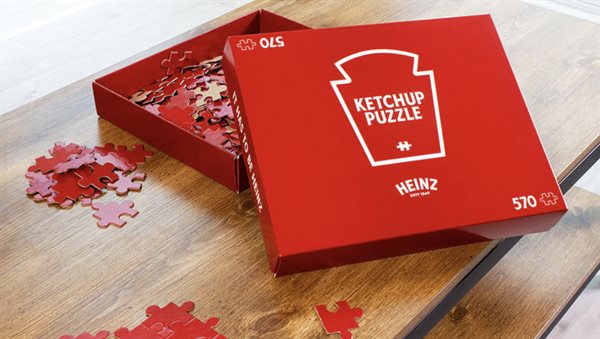
Puzzle-buying regained popularity during this pandemic, and Heinz saw the opportunity.
Kelly Moses, Regional Communications Manager at Dentsu Aegis Network SSA, states that the moves to different Levels of the Covid-19 lockdown in South Africa will create a dramatic shift in operations across local industries.
The physical movements of consumers will start changing again and the way they interact with brands will continue to evolve. Marketers are taking note of consumer behaviour and predicting what the next normal could look like.
Travel behaviour and shopping
As South Africans start to travel in and around their cities again, there will be a drastic change in traffic patterns. While commuters and logistics companies have not been travelling the same distances in the initial months of lockdown, this is set to change with schools reopening and more industries and people returning to the workplace. According to Posterscope, the early-morning commute to get to work will become a late-morning drive, with an earlier commute home.
Shorter and more local trips will boost business for local malls, convenience stores and smaller shopping centres. Fuel consumption is set to increase when compared with the lockdown period, but will not return to 2019 levels for some time. E-commerce logistics companies may partly fill the fuel consumption gap as consumers focus on e-commerce and convenience stores that will save them time.
Any retail environment that can offer a basket of solutions or utilities will trump destination stores. These behavioural changes will force marketers to step into the next normal with optimism and focus on consumer utility. Now, more than ever, localised, data-driven insights will inform campaigns and executions, ensuring they are relevant and targeted.
Another trend that is accelerating is the concept of ‘vehicle sharing’, or carpooling. As consumers begin to work in a more flexible way, they will commute less. The need to own multiple vehicles per home will decrease, and the cost of insurance, and running and maintenance costs, will deter new-car buyers in future.
New in-home experiences will emerge
As Covid-19 moves from the east to the west of the globe, there is a clear trend emerging in-home experiences. There is already a growing tendency in most countries to move further from cities and to commute to work less often. International and local air travel will be reduced, and consumers will seek out new online experiences that keep them close to home or in their homes.
Whether they use artificial intelligence (AI), augmented reality (AR), gamification or simple creative executions, these strategies will all form part of the new marketing puzzle. There’s no need for every in-home experience to be led by technology, but it should always focus on utility.
Puzzle-buying regained popularity during this pandemic, and Heinz, known for its iconic slow-pouring ketchup, saw an opportunity. The brand cleverly provided ketchup lovers, parents and puzzle lovers with a jigsaw puzzle guaranteed to keep people busy for hours, since it has no picture and the entire puzzle is red.
Watch your tone
Due to income disparity, and the loss of purchasing power, customers will be more price-sensitive and cautious about spending. The current economic climate has put extreme financial pressure on households, so it’s no surprise that the base of Maslow’s hierarchy of needs pyramid (physiological needs like air, water, food and shelter) will become more important than the apex (self-actualisation). If brands want to ensure that their tone speaks to their target audience’s most urgent needs, their messaging will have to match that desire.
There is an opportunity to:
• Accelerate growth through e-commerce. In Africa, recently surveyed clients believe it is one of their top priorities.
• Re-prioritise digital transformation and ensure that creative executions are informed by localised data.
• Focus on a rich and connected digital customer experience and a seamless UX and try to bring this into the home and personal spaces, for example, virtual vehicle showrooms.
• Clearly redefine brand strategies and value propositions.