Home Blog Page 307

Expanding Digital Footprint Creates Greater Need For Customer Behaviour Analysis

Expanding Digital Footprint Creates Greater Need For Customer Behaviour Analysis
Sizwe Dlamini, Head of Commercial at Idea Hive.

According to Sizwe Dlamini, Head of Commercial at Idea Hive, South Africa’s digital footprint is expanding at breakneck speed, creating a greater need for marketers to put their best foot forward through analyses of their customer behaviour.

Data has played a crucial role in the emergence and evolution of digital marketing. It is the fuel that drives the engine of digital marketing. However, the quality of data you have and what you infer out of it determines the success of your digital marketing efforts.

For many years, companies have been collecting data for digital marketing. However, as digital technology evolves and grows at a colossal rate, data analytics too have had to adjust to innovate the brand marketing approach that is being embraced by some of the most prominent brands in the industry today.

Gone are those days when you could develop a product and then look for buyers. Digital marketing analytics has given rise to a superpower that data holds, that can help a brand gain access to who (will buy), what (will it serve) and where (will it sell) in your potential market. These three critical inputs will assist you to strategically place your product or service into an ideal market and you can avoid shooting in the dark – mitigating unnecessary risk.

Understanding consumer behaviour is at the forefront of any marketing intervention. However, data has brought in much-needed precision to be present at the right place at the right time, for the right person. In the past, some marketing efforts have relied on guesswork as there was no ready-to-consume analytics.

Organisations today are looking to connect with their customers and gain their loyalty to strengthen their presence. Although their products and services do play a crucial role here, it depends on how you make your customers feel valued and showcase that you have solutions to their problems. Personalised communication therefore becomes critical, where a brand can showcase that they know their customers and what they are looking for.

Data has enabled us to segment customers and build user personas who will be apt for a particular product and then target them on their desired touch-point, thus building a long-lasting bond. While you have built that connect and targeted the right people through your campaigns, it is equally important to gauge ROI based on the performance of your campaign. Digital marketing analytics not only allows you to measure all those efforts that have worked for you, but also those that did not.

It is possible to track the user journey, organic and campaign level efforts. Using real-time insights, we can take actions on campaigns to improve conversions and also monitor the overall health of the intervention. There is a need to extract the relevant data and make sense out of it in order to determine the correct strategy moving forward. Big data analysis is not just a way of understanding your numbers, but a way of telling your brand story and placing customers at the heart of that.

Brand storytelling is essentially communicating. It is something we do every day, whether we are conscious of it or not. From an email to a body posture, we are constantly communicating to those around us and every moment is an opportunity to tell our story. This is an innate human need, something we do via reflex, rather than consciously. So why should brands behave differently when communicating? To reach a consumer in a way that is non-interruptive and enriching is a goal all brands should strive for.

Today’s decision-makers don’t want a sales pitch. They want to hear your story and how it aligns with their own. When you tell a story soundly, it gets audiences deeply invested, increasing the value of a product or service substantially. When identity, values and experiences are core brand differentiators, storytelling becomes essential. Vital to this is data, that helps marketers understand customers and makes stories more meaningful. The way we think about marketing transformation is changing with the rise of content marketing and thought leadership – data and storytelling are important additional layers to enable your marketing to be more innovative and strategic.

Brand storytelling should be emotive and engaging. It needs to grab the attention of consumers while informing them about your product or service. Emotive and engaging might not be words normally associated with data. However, the information we can gain from data analysis is extremely personal and can give us insights into the wants, needs and desires of our consumers.

Through assessing how your consumers think, feel, and interact with your brand, you can tap into something and forge an emotive connection that will carry your brand to the front of mind in the consideration process, making your brand memorable for all the right reasons. Data should be used to understand how to personalise a customer’s shopping experience and it is able to identify flaws in your strategy and point out weaknesses, to enable you to adjust to a more customer-centric focus.

Brand storytelling can use data analytics to improve a company’s marketing experimentation process. Using data provides a feedback loop, allowing digital marketers to easily transition from one marketing approach to another until they find one that yields better customer response and product interaction.

Analysis can provide newer insights into marketable approaches that were never available before. Translating and defining data to obtain new marketing views that will make your brand more responsive to the demands of your market is key.

It is up to brands to use this data and combine it with human empathy and understanding to create compelling stories. The more we learn to communicate our insights effectively, the more we will be able to reap the benefits that data has to offer. As people increasingly use data analysis as part of their strategies, minds will be enlightened to new possibilities never before seen in their brand’s story.

IDEA HIVE
www.ideahive.co.za

Think Digital Marketing First

Think Digital Marketing First

According to Valiant, formerly known as BrandTruth, now more than ever, brands need to be brave, nimble and defiant in digital. Modern marketing professionals need to flip their thinking upside down – and think digital first.

As events all but disappeared, media consumption patterns flew out the window and Out-of Home advertising became redundant, but courageous digital innovation thrived. In 2020, the world has experienced what is set to be the largest phase of digital disruption, as in just a few short months, every brand has had to rapidly enhance their online presence and offerings.

Now is the time to grab your audience’s attention – from motoring to financial services, FMCG to health services, tech companies to apparel. Here are five tips to be valiant in your digital marketing and unlock your online strategy’s full potential: 

1. Talk data to me

Data is at the key of a great, workable online plan and marketers and agencies should be au fait with glocal insights, data tools and updates such as the Global Web Index, which collates and delivers the latest insights on developing trends, market reports and research. Affiliation with premium local and international industry bodies gives you access to insights and knowledge-sharing that take a strategy from ordinary to extraordinary for effective creative.

2. Agile from the get-go

Being brave means knowing that immediate change is sometimes necessary and the only consistent element of a digital strategy. Do not be Blackberry. Be fast, focused and flexible when it comes to tech. 

No strategy is set in stone – trends and flavours change overnight or in a matter of days. Breaking news changes the national agenda instantly. An online plan must be made of moveable, workable parts that can be easily adapted to suit the current external environment. 

3. Meet the geek

Any strategy is only as good as its weakest creative, and for a brand that wants to be unapologetically valiant, an up to speed team is central. All team members must have a clear an understanding of how to create content and work within platform parameters. Teams must understand how to use relevant platforms. These refined skills and understanding levels are used to develop a no-mess, no fuss strategy. 

4. Content you inspire

Brands need concepts, campaigns and creative content that your audience can’t ignore, but everyone needs time for this. Change how you advertise online with software that automates high-volume content generation, freeing up your resources for creative that matters. Creating content that can be repurposed is like a product that can be recycled, it frees up time and reduces wastage. Both the world and your creative team will thank you for being valiant in efforts to create a digital strategy that is brave enough to step up to stand out. 

5. Collabs are key

Compelling marketing campaigns need to be integrated to reiterate your message. But, to be digital-first, is to understand that parts of a strategy must work in tandem to upscale productivity and improve delivery. As the online platform evolves at such a rapid pace, creatives need to constantly understand platform and product changes.

Working closely with other online partners including social platforms like Instagram and Tik Tok, allow synced synergies over shared expertise. Be it through a collaborative workshop or exploring beta versions, the second set of eyes only ensures a valiant effort in the overall strategy.  

VALIANT
+27 10 001 2531
hello@valiantagency.com
www.valiantagency.com

Guerilla And DStv’s AmaMemes Platform Is Innovative Way For Viewers To Discover Content

Guerilla And DStv's AmaMemes Platform Provides Innovative Way For Viewers To Discover Content

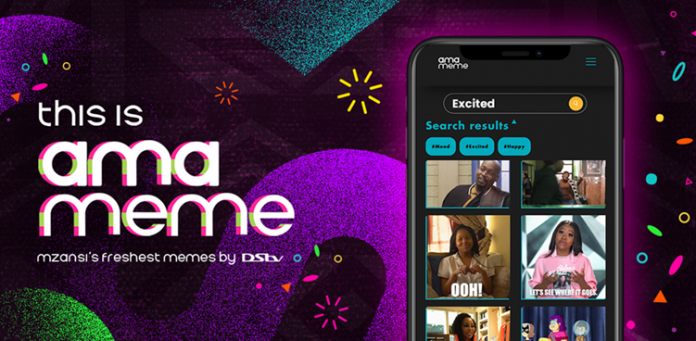
DStv’s brand-new meme only platform, known as AmaMeme, was created by creative agency Guerilla. It provides an innovative way for viewers to discover DStv’s content.

From AmaAngry to AmaShook, the meme platform gives Mzansi’s freshest, tastiest, locally sourced GIFs and reaction shots from the nation’s favourite DStv shows. In the words of the launch campaign and Guerilla, the co-founders and creators of the platform, AmaMeme has AmaEverything for AmaSocial. 

The brief behind the AmaMeme project provided Guerilla with what Cameron Naidoo, founder and creative partner of the agency, called the god of briefs. ‘We needed something provocative. With platforms like Giphy and Tenor having all the fun, we tapped into the power of signature Mzansi reactions – and so it was born – the ama-fire of GIF platforms, organically grown from the DStv library of local and international sport and kids hit shows.’

As a business asset, AmaMeme is a communication powerhouse for DStv, with just under 1000 GIFs created and uploaded in its first week. It holds exceptional future value as almost all third-party channels have agreed to join the platform to date and a Showmax partnership is on the horizon. The latest win for the project was the on-boarding of content from the DStv Premiership (formerly PSL).

One of the challenges needing to be solved for the DStv brand through the brief was the fast-paced need to keep South Africans’ short attention span talking. Naidoo said that South Africa has an imaginative sense of humour and as a result, the team needed to bed that down in the platform from the get-go. 

‘Meme selection and production were vital to ensure the platform doesn’t get tired and that we keep users coming back for their unique social reactions. We also needed to cater for all of Mzansi. There are close to 50 million smartphones in the market that vary from entry-level to high end – our development team was stoked to navigate that winning solve,’ said Naidoo.

‘AmaMeme took close on 15 months to complete from concept to launch. The platform needed an intrinsic behavioural UX (User Experience) approach as well as incredible systems architecture to serve GIFs quickly.’

Managing Director of Guerilla, Leasha Naidoo, added, ‘The week of the launch had everyone smiling at the agency as we kept checking Twitter and other social platforms for first reactions. It was a proud moment to see that the country was enjoying what we created.’

GUERILLA 
guerilla.africa

New Ways For Marketers And Brands To Reach Audiences With Twitter

Reaching New Audiences With Twitter
Refilwe Mangweta, Digital Campaign Manager at The MediaShop.

Refilwe Mangweta, Digital Campaign Manager at The MediaShop, says Twitter has launched Carousels to help marketers reach new audiences and drive people to their website or app through multiple images or videos for brands.

This allows marketers to share a brand story, show off different products or highlight specific features – all within a single ad. Twitter also recently launched its version of Facebook and Instagram Stories called Fleets. As with all Stories, these disappear after a 24-hour exposure period, so Twitter is not offering anything different on that front.

With the introduction of Fleets, many Twitter users feel that the platform is trying to conform to every other social media offering. Fleets is also on the back of Twitter having launched its audio feature – allowing people to tweet in their voice, which could be argued as similar to WhatsApp’s voice note function.

As someone who engages a lot on social media platforms, I noticed how my own patterns of consuming social media changed before lockdown – Instagram was my number one go-to. Then everyone was locked in their houses and, let us be honest, there are only so many pictures you can show of your house and selfies you can post, so Instagram content became a bit dry.

I switched and became more active on Twitter for the quick updates about everything: news, reactions to world events and to amuse myself in the shady streets of black Twitter. If I heard a rumour or something interesting, I would verify this information on Twitter first. 

The reactions to Fleets have been true to Twitter form, with people complaining that the platform is not unique anymore. Users are also consistently mentioning how Twitter continues to give us everything except the edit button. If you are an active Twitter user, you understand the frustration of not being able to go back and change that dreaded spelling mistake on your tweet after you have published it.

Others who, like me, enjoy Instagram are asking if they should keep Instagram seeing as though Twitter is offering them all that they have on Instagram and then some. Twitter is a very conversational platform and now with the addition of the imagery and audio function, I think that many people may revert to an either/or situation.

So, what does this mean for brands?

Twitter may have also seen consumer behaviour changes during this pandemic and is now catering to a broader market, particularly when it comes to brands. The combination of Carousels and Fleets means that brands run some really cool campaigns and that Fleets paired with great imagery and short-form video content can result in great brand awareness and engagement.

The Fleets can be used nicely to launch new products by running teasers and then later a big reveal. They can also be great for a brand that is rebranding. In a nutshell, the Twitter space for brands is opening up nicely and challenging marketing teams to come up with some really great and innovative content to reach the wide audience Twitter has available.

THE MEDIASHOP
www.mediashop.co.za

IAB SA Series Speakers Predict 2021 Digital Marketing Industry Trends

IAB SA Series Speakers Predict 2021 Digital Marketing Industry Trends

IAB SA held a webinar focusing on 2021 predictions in the digital marketing industry, with insights from: Ann-Mari Höfinger (GetSmarter head of product strategy and research), Noah Makholwa (digital lead for Nielsen), Karyn Strybos (Everlytic marketing manager), Jarred Cinman (VMLY&R CEO) and Melissa Kariuki (product marketing at Google).

Below is a summary of their key insights:

Höfinger

We will continue to see clients pivot, and agencies will need to do that with them. Very few organisations managed to dodge the demand and business model disruption that 2020 brought. Motivations have and will continue to change, and being able to keep a very close connection to the consumer will be critical.

Value and quality remain critical as buying decision drivers but purpose is an element that increasingly drives decision making. How brands can authentically connect to this and tell their story in a compelling and interesting way is important.

Opportunity abounds to connect in the moments that matter. The consumer decision journey is often long and complex, and we tend to simplify things too much, rather than truly understanding the challenge we are solving for our consumers. Building your marketing models around this is critical to remain relevant.

Makholwa

I urge the industry to start adopting privacy-centric technologies and methodologies. Look into machine learning and walled gardens for a start. Also, use this period to run parallel testing with existing measurement policies to ensure the results are comparable and reliable.

In 2021 we will be expanding our offering as Nielsen digital. We will look to provide more tools to the industry with the key theme and aim being to showcase to marketers where and how they achieve their ROI. Personally, I look forward to driving growth and the adoption of new technologies within our market and industry.

Strybos

The KPMG 2020 CEO Outlook: Covid-19 Special Edition clearly showed that CEOs are changing the way of work, with 69% saying that they are going to be downsizing office space. A more flexible working environment opens new challenges on how to keep your employees engaged and your culture alive.

As businesses, we need to create internal communication strategies, so that we are continuously engaging with remote workforces, sharing valuable information, creating and maintaining culture and instilling purpose. We also need to remove as many barriers as we can to ensure that this content is accessible to all employees, even those who are hard of hearing or not tech-savvy.

Data science is booming, and this is a trend that will continue into 2021. We gain immense value from data – analysing transactions, product usage, behaviours and trends – and by getting continuous feedback from customers, we will be able to get a better understanding of their preferences and reactions to changes in the market. Connecting your data to your communication platform allows you to determine the conversations you want to have based on preferences or behaviours, and create automated journeys to manage them. This adds immense value to customers’ lives, as you are providing relevant and hyper-personalised content at scale.

Marketers will become more customer-centric. Acquiring a new customer can cost five times more than retaining an existing customer. So, marketers won’t only be focused on acquiring customers, but on retaining them through unique and meaningful experiences too.

Cinman

Above all other things, the priority of those who have a lot is to share and extend that privilege to those who have too little. The fibre bubble is just a new kind of ivory tower, and the promise of technology like 5G will mean nothing if it is only enjoyed by the elite.

The most important thing we all have to do is include everyone in this revolution. Thanks largely to Chinese smart devices and Android, millions can now access the internet. Can we use our collective intelligence, knowledge and money to enfranchise those using it? Can we reverse the trends toward inequality and elitism on the very medium that has given voice to the voiceless so many times?

The internet – and the mobile internet in particular – offers this hope. It is up to us to use the influence we have to make it happen. Covid has given this industry a turbo boost, let us not waste it.

Kariuki

Consumers are increasingly demanding diversity. They want to purchase from organisations that represent them, their values and their beliefs. If companies do not adapt, consumers will deprioritise them, or if companies outwardly promote opposing values, consumers will attempt to defame them as we have seen.

To truly achieve diversity and inclusion, we need to embed it as part of our culture. It cannot be a separate, detached department. It needs to be embedded across the organisation and in all its efforts from product design to hiring and marketing. More so, there needs to be shared ownership across members of the organisation. We need to rely more on data and numbers as indicators of progress on diversity and inclusion. As with other business goals, measurable goals drive progress and accountability.

IAB SOUTH AFRICA
+27 10 900 3338 
hello@iabsa.net
www.iabsa.net

MetropolitanRepublic Reimagining Aquafresh Social Outreach With Siya Kolisi As Brand Ambassador

Aquafresh Reimagining Social Outreach With Siya Kolisi As Brand Ambassador
Siya Kolisi, Springbok Rugby captain and Aquafresh Brand Ambassador.

Springbok Rugby captain Siya Kolisi announced late in November 2020 that he has decided to team up with Aquafresh and will join the oral hygiene brand as its All-in-One Ambassador from January next year to reimagine its social outreach programme. The deal was negotiated by Roc Nation Sports.

The 29-year-old who led the Springbok team to victory in last year’s Rugby World Cup in Japan, currently plays club rugby for the Stormers in Super Rugby and Western Province in the Currie Cup.

Sharing details of his partnership with the brand, Kolisi said, ‘Aquafresh is a brand that has been with me all my life – even when times were really tough and all we had were a few things in the house. By finding confidence in myself, I managed to end up doing what I love. Now, with Aquafresh’s help, I’m going to be able to help the people of Mzansi to realise that they, too, are All-In-One. The intention is to empower others like me to stand out regardless of where they come from.’

Kolisi’s objective for the ‘You Are All-In-One’ campaign he’ll soon be launching is to help others get the same level of confidence in themselves that he had through Aquafresh. The Aquafresh-Kolisi partnership wants them to know that everything they need in order to make it in life is already inside them, he said. The campaign has been created by Aquafresh’s marketing partner, MetropolitanRepublic. 

‘Kolisi’s role as our All-in-One Ambassador is not a simple one,’ added Aquafresh’s Brand Manager, Mamabua Molepo. ’Aquafresh believes that we can use our mouths to unite, inspire and impact our communities and the world around us. It’s important to keep our mouths clean and healthy, because they serve this significant function. We did it for Kolisi. And now we’re challenging him to help us do it for Mzansi. We want him to use his mouth for good.’

Molepo added that it is logical that an oral hygiene brand would partner with a rugby player, because they celebrate the same characteristics – strength, performance and hard work. ‘Aquafresh, however, is more than oral hygiene. It’s a brand with a purpose,’ he said.

METROPOLITAN REPUBLIC
info@metropolitanrepublic.com
metropolitanrepublic.com

HelloFCB+ And Western Cape Government Campaign Inspires Students To Finish Their Matric Year

HelloFCB+ And Western Cape Government Campaign Inspires Students To Finish Their Matric Year

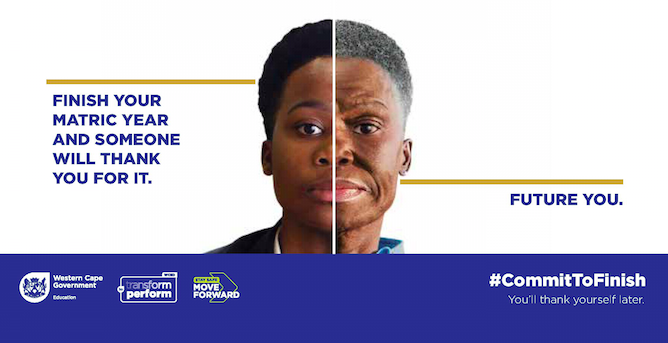
HelloFCB+ has been awarded the Western Cape Government (WCG) marketing communication account. This is the second time the agency has pitched for and won the business. They also launched the #CommitToFinish campaign.

HelloFCB+’s Executive Business Director, Nadja Srdic said, ‘This is a very emotional win for the agency. It’s a very meaningful account for us. The work being done to build the province matters a great deal, and we take our role very seriously. We’re delighted to retain the business and are looking forward to continue to drive positive change for the benefit of all WCG citizens.’

With the school year disrupted as the world battles the coronavirus pandemic, the Western Cape Government Department of Education is urging the 2020 matric class not to give up with its #CommitToFinish campaign.

Created by HelloFCB+, the campaign strives to inspire learners to make a commitment to themselves to finish their 2020 matric year by showing them that it is something their future selves will look back on and thank them for.

The campaign, which shows three matric learners sending a thank you message to themselves as the aging effect used on their faces makes it appear as if it were their older selves speaking, also invited learners to make a commitment to themselves to finish their matric year and help inspire others to #CommitToFinish too.

Western Cape Minister of Education, Debbie Schäfer said, ‘Every year, after the mock exams, we find our matrics sometimes get demotivated if they don’t do as well as they should. Of course, with this year’s added stress of Covid-19 and school closures, and so on, it’s even more difficult. The intention is to encourage them to not give up on themselves.’

‘We certainly proved our responsiveness and agility during all stages of the Covid-19 pandemic, having to respond to real-time data and analytics, adjusting our communication strategy and creative as the pandemic and its impact progressed,’ added Chief Creative Officer, Mike Barnwell.

‘We wanted to remind matric students that although they might not be motivated to finish their school year now, someone will be very thankful they did in the future – their older selves,’ said Barnwell. ‘Our human insight led us to the idea of using an ageing app that teens already use for fun to share this essential message and then personally commit to finishing.’

HELLOFCB+
+27 11 566 6000 
www.hellofcb.com

Brands That Leveraged Black Friday To Build On Equity And Popularity

Brands That Leveraged Black Friday To Build On Equity And Popularity

VMLY&R South Africa’s Dono White, Strategic Lead, and Head of Data, Mike Pearse, measured the brand equity of over 90 local brands using the agency’s new Equity Edge tool. This report reveals their findings on which brands leveraged Black Friday to build on equity and popularity. 

While many brands follow the crowd in joining the cultural trend, the question remains: is it actually worth the ‘deep’ discounting or is it detrimental to your brand equity?

The Black Friday question

It has become one of the most notorious retail days on the South African calendar, in spite of the event following the American concept of Thanksgiving. Since its introduction in 2012 servers have crashed, windows have smashed, cars have been double-parked and toilet paper packs have filled up shopping carts.

Reports by Payfast show online transactions increased by 50% YoY with the payment gateway reporting they experienced a 283% increase in total payment volumes. In a 2017 Nielsen SA research report on Business Insider, Nielsen ‘found several leading brands that did not participate in Black Friday promotions lost market share’ in the same year.

Following that logic, whether following the trend or being counterculture like REA’s famous #OptOutside, participating could increase or maintain market share. The question then was what does participating do to a brand’s equity?

Equity edge born and put to the test

Observing and capitalising on the many complications that Covid-19 brought to the world of qualitative research, VMLY&R South Africa quietly launched Equity Edge, a contemporary brand equity scoring system that leapfrogs and measures brands based on various digital data points. Inspired by the legacy and methodology of Y&R’s Brand Asset Valuator (BAV and BAV Social), the world’s leading empirical research of brands, Equity Edge acts as a lead indicator that complements lagging indicators of conventional qualitative brand studies.

Applying Equity Edge to Black Friday allowed the company to measure top brands that participated in the 2020 season. Using the ten‐point scoring system gives the ability to measure apples with apples and spot brand momentum and popularity shifts.

Brand impact assessments

Top South African retailers were measured using Equity Edge methodology in October 2020 to set the baseline, followed by data collection through the month of November 2020 – when Black Friday awareness campaigns started. The results were surprising.

Positive brand momentum gainers:

Brands who prioritised both the online and offline CX of their consumers won the differentiation race. This was coupled with single-minded messaging and integrated communications campaigns.

Notable brands who gained momentum:

1. Zando

#ZandoBlackFriday saw no conflicting messaging from the online retailer, driving a 31% increase in brand vitality month‐on‐month and a 13x increase in engagement with the likes of their single‐minded RT to win a R1000 voucher. Simplicity coupled with their needs‐based showcasing of products on sale made Zando one of the top brands on Black Friday.

2. Adidas

Adidas integrated their Black Friday campaign across social media and radio seamlessly. By leveraging YFM and KFM through a simple #3Stripes Wishlist campaign, they saw a 76% increase in brand vitality and interest spanning 6.7 million South Africans reached. The sneaker brand built on its credibility in culture, with the trendy Mandalorian shoes and Ivy Park coming out clear winners.

3. Makro

Makro understands its consumers and what value they get out of the media they provide. This was seen in their smart use of social automation and turning broadsheets into deal alerts in an unintrusive way. The added incentive of winning a Bosch hamper throughout #MakroBlackFridayExtended found the brand doubling their brand reach and gaining 22% brand vitality.

Positive brand popularity gainers

Who does not like the opportunity to win and win often? Brands who saw an exclusive movement in brand popularity experienced this because of the many promotional activities they ran throughout the month. The strategy here was to capture a share of voice and they did so, however often with too many different and sometimes competing campaigns.

Notable popular brands:

1. Game

Game is generally positioned on price, so the pressure is always on for this brand during Black Friday. Their overarching 28 Days of Black Friday came with many activities on and offline. Influencers and micro-influencers were used to drive 1c in-store surprise deals and extended operating hours. Added to this, the use of social automation software drove opt‐ins for deals and a chance to win vouchers. While net sentiment toward the brand increased 52%, no element of differentiation was added.

2. Superbalist

Again, while Superbalist captured the eye of the consumer (and possibly a very successful sales day), they ran a campaign with what seemed to be multiple mechanics to win R1500 vouchers to shop their Superbalist Spoilers. Consumers love many chances to win, but they do not love many mechanics. Superbalist drove app downloads and an online wishlist mechanic to win. The overall mood around the campaign increased 29%, making it a popular brand throughout the Black Friday month.

3. Samsung

A bonus advantage for Samsung came with the exposure through their Idols SA sponsorship both online and in broadcast, making them top of mind on a day when South Africans love to shop electronics. The slight shift in popularity came from a 23% month-on‐month mood shift owing to their multiple promotional messages that included #FeelTheSamsungDeals, Buy and Get Promo Deals, new weekly deals and the opportunity to win one of 50 Samsung fast charging battery packs.

Whose brand momentum and popularity got hurt?

In general, most grocery retailers seemed to have lost some brand momentum this year by engaging in Black Friday. Possible reasons for this include Covid‐19 making these essential dealers popular during lockdown, an increase in e-commerce (despite many having e-commerce stores) and South Africans looking for more spectacular deals in fashion and electronics.

Brands here saw large decreases in brand vitality and reach as they struggled in the overall clutter. Driving generic deals drove down Checkers’ month‐on‐month reach by almost half and left the brand with little relevance in comparison to competitions and exciting products beyond groceries.

Pick n Pay on the other hand drove a successful PR campaign to assure consumers of the learnings from panic buying extended hours and stock. Their deals, however, were also generic, and they focused on accumulating data for direct communications about deals. A lack of excitement from the category saw low consumer interest as a result.

Online eTailer Takealot joined the physical brick and mortar brands in the category of brand loss. The #BlueDotSale kept South Africans busy throughout November with similar tactics as those who won on the day. Offering vouchers, app downloads, online wish lists and RT to build mosaic mechanics should have at least made the brand popular right? Sadly, Takealot dropped 32% month‐on‐month on brand esteem measures due to continuous communication from consumers calling out the brand for inflating their prices or charging normal prices on Black Friday.

Black friday learnings

Africa is a fortunate continent that has skipped over many tech trends, often adopting devices and processes that are quicker, more convenient and cost-effective. While Equity Edge is not indicative of the actual business results and acts as a leading indicator in the shorter term, its benefit of being able to measure brands in the era of social distancing shows that how brands are measured needs to evolve and be different.

South African brands are doing little to differentiate themselves on big days such as Black Friday (and more recently an uptake with Singles Day on 11/11). While many saw positive gains (and this is most probably reflected in their market share and bank accounts), many used the same tactics that not only drive clutter but drive brand communications fatigue that runs the risk of consumers switching off.

Let us hope 2021 brings more exciting approaches to Black Friday by looking to create something closer to our local culture/s, whilst looking to drive innovation that captivates South Africans with campaigns that are more strategically driven and that drive a better customer experience in an integrated fashion using single-minded messaging and call to action mechanics that give brands a superior edge.

VMLY&R SOUTH AFRICA
+27115553800
www.vml.com/southafrica


A Competitive Edge Earns Customer Loyalty

A Competitive Edge Earns Customer Loyalty
Paula Sartini, founder and CEO of BrandQuantum.

According to Paula Sartini, founder and CEO at BrandQuantum, the customer experience is the driving force behind every business as it gives companies a competitive edge that earns customer loyalty and attracts new customers.

However, getting the customer experience right can be a challenge for companies, particularly as there is uncertainty in terms of what customer experience really means and how to go about achieving it. Customer experience has been described as a holistic perception of an experience and results from every interaction a customer has with your business. Based on this, customer experience means meeting customers’ expectations at every touchpoint along the customer journey. Each touchpoint needs to be viewed as its own customer experience.

While various factors are considered to contribute to the overall customer experience, PWC identifies speed, convenience, consistency, friendliness and most importantly the human touch as key to the customer experience. In The Great Customer Experience Opportunity by Genesys, customer experience is attributed to consistency, choice and context. As there is no single defined list of contributing factors for driving customer experience, companies should look at a combination of factors along the customer journey and consistently measure the customer experiences at these touchpoints.

Mapping the customer journey 

For companies to deliver customer experiences that keep their customers satisfied and attract new customers, companies need to put the customer at the core of their business and make changes that will affect positive customer experiences in every interaction.

According to McKinsey, to achieve this, companies need to pay attention to the complete, end-to-end experience customers have with a company. This means moving beyond individual interactions and touchpoints to looking at the entire journey from before, during and after the experience with the product or service. This includes all online elements from websites and bots through to the direct engagement with service staff, billing departments and after-sales service teams for example.

It is this end-to-end experience that shapes the customer’s overall perception of the company and brand and will either keep the customer satisfaction levels up or leave them disappointed.

Getting employees on board

Employees are part and parcel of the customer experience and need to understand their role in meeting customer expectations and delivering on the brand promise. All too often marketing departments take control of the branding and marketing elements and neglect to get employee support to execute the delivery of the customer experience. As a result, internal teams are divorced from the campaigns and what the marketing department is trying to achieve. 

This is supported by McKinsey, which states that companies often overlook the need to engage all employees across various functions to get employees involved and establish a customer-centric service culture, which is achieved by providing clear and ambitious objectives and earmarked resources.

To overcome this, companies should empower every single person in an organisation to communicate with customers consistently and deliver on the promises made in the marketing campaigns. This can only be achieved by giving employees the tools and content to serve the customers with the right information at the right time and consistently every time.

Employees need to be more than a vehicle to the customer experience. They should be a participant that is seen as part and parcel of the overall experience. To do this, they need a collective understanding of the brand purpose, their role in the customer experience and be given the right information and content to deliver consistent experiences.

Delivering consistency

Consistency is a critical component to the customer experience. No matter how customers interact with brands, they want a consistent experience. This is important as customers engage with brands across various platforms and channels, yet seek the same experience from each of them. 

While customers are engaging with brands across different touchpoints, they are looking for consistency along the journey. This is supported by PWC, which states that smooth and consistent transactions from machine to human is critical to the customer experience.

Whether engaging with brands in-person or across devices, customers are looking for companies to consistently provide exceptional value with minimal friction or stress. As such, all customer interactions should engage interest and be consistent to drive the customer experience.

Measuring the customer experience

Customer experience means delivering your customer experience at every customer touchpoint and in every interaction. This can be particularly challenging as customer needs can change throughout the journey or they may have different needs at particular points of the journey.

Typically, companies use written or verbal communication to conduct customer experience surveys at the last stages of the customer journey. However, companies would benefit from using a variety of methods to gain customer insights throughout the customer journey to determine which points of the experience are excellent, need improvement or provide recommendations. For example, companies could use images to help customers recall points of the experience and gain valuable insights in terms of what customer’s value the most from the product, service and experience. 

This insight should be used to improve the customer experience further. For example, if customers prefer to deal with a person on a personal or sensitive matter rather than a bot or social media platform, this option should be made available to establish a relationship of trust and improve the customer experience.

Using tools to meet customer expectations

Brands are a combination of product, service and the people that engage with customers daily. As such, employees should be given tools that empower them to deliver exceptional customer service in every interaction with customers and at every touchpoint along the customer journey.

However, it is important to note that these tools should enhance customer experiences rather than replace them. For example, content can be pre-developed and pre-approved for employees to quickly and easily insert it into emails to ensure the correct information is being sent out and is consistent across the company.

As the landscape of new technologies grows, companies will need to adapt to meet their customer’s expectations. All business decisions should be made with the customer in mind, and technologies implemented should empower employees to enhance customer experiences. The companies that implement solutions to create better customer experiences will see the greatest benefit from their investment.

BRANDQUANTUM
www.brandquantum.com

Black Powder Growing The Business With Managing Director And Executive Creative Director Appointments

Black Powder Growing The Business With Managing Director And Executive Creative Director Appointments
Mushambi Mutuma, new Managing Director and Lerato Tshabalala, new Executive Creative Director at Black Powder.

The newly appointed Managing Director, Mushambi Mutuma and Executive Creative Director, Lerato Tshabalala are part of the senior team, headed up by founder Gugu Mandala. They have been tasked with growing the business and building team capacity as it heads into 2021.

Mutuma joined the business as Managing Director in August 2020 with the core responsibility of giving strategic guidance and direction to the team in order to meet financial goals, as well as overseeing the vision and long-term goals as a business.  

Mutuma joins with 12 years’ experience in building brands and businesses across the African continent as well as the United States. He has served as a strategic advisor to accelerators and incubators such as AlphaCode, Standard Bank and The Innovators Hub, and is a published author of Tech Adjacent and speaker on tech issues and trends.

‘I have been brought in to optimise and fine-tune a solid business with many opportunities in order to prepare us for further scale as a growing agency. It is important to further entrench ourselves with our clients, further establish our brand and grow our capabilities and resources as a team,’ he said. 

‘We are proud to be a growing 100% black-owned and predominantly female-led business, and I am looking forward to continuing to deliver amazing work for our clients and increasing our industry footprint in the years to come,’ he said. ‘I’ve come into a team already committed to excellence which made it really easy for me to join. Now, my challenge is managing our next level of growth with this as a solid foundation.’

Earlier this year, Tshabalala joined as Executive Creative Director. She comes with previous experience as a Creative Director at both Ogilvy and Wunderman, having started her career in media as an editor and writer.

‘My immediate priority is developing data-driven creativity, as we forge ahead in getting even more digital than we are right now, producing award-winning content (although this is not the primary focus) and making sure we have fun while doing the best work and solving business problems for our clients,’ said Tshabalala.

Black Powder has also recently made further appointments to Head of Client Service and Head of Digital roles and is currently expanding its senior roles in both the Strategy and Creative divisions.

BLACK POWDER 
+27100030064
support@blackpowder.agency
blackpowder.agency
This is Modern Marketing