
Home Blog Page 18

Comrades Marathon’s YouTube Broadcast Could Change The Future Of Sports Broadcasting

Comrades Marathon's 2026 YouTube Broadcast Could Change The Future Of Sports Broadcasting

Kelvin Watt, Chairperson of Nielsen Sports SA, says for the first time, he watched Comrades the way the rest of the world will increasingly watch live sport. It worked. That is the headline and it is one worth taking seriously.

I did something I had never done before. I watched a live sports event, start to finish, on YouTube. The event was the Comrades Marathon, a 13-hour live broadcast, and I stayed with it for more than nine of those hours across my Smart TV and my phone. By the time the day was done, one thing had become impossible to ignore: the line between ‘streaming’ and ‘television’ has quietly disappeared.

The Viewing Experience

Let me start with the honest verdict, because that matters more than the theory.
The stream itself was flawless. No buffering, no drop-outs, no quality wobble between the big screen and the handset. There were definitely audio issues, especially the ambient sounds from the start and finish and with a number of on the road and finish line interviews, but these came from the event site itself, which is a production-on-the-ground challenge that sits well outside the platform’s control. On a 13-hour live feed, holding that standard is a serious achievement.

What lifted it from ‘watchable’ to genuinely compelling was the storytelling:

– The narrative arc held across the full day, from the elite battle at the front to the human drama at the back of the field chasing the cut-offs, backed up by a fabulous and informative group of commentators.

– The graphics package did real work. Live runner positions, gap times, pace-bus tracking and split data gave the broadcast the texture of a Grand Tour cycling feed rather than a regional road race. The route graphics for the first time gave the viewer a real sense of the road from Durban to Pietermaritzburg, including all the climbs, twists and turns.

– The information layered on screen respected the viewer’s intelligence and kept a casual watcher invested for hours.

– I particularly enjoyed the companion app, a technology enabled by Streambridge where viewers could choose their on-route camera and watch only that feed. We used it to watch a number of our close friends and family as the crossed the finish line during the afternoon. This type of innovation is a real winner and the big advantage of streaming over more traditional linear broadcasting of the past.

There was no shortage of drama to carry it, either. Records fell at the front, including new Up Run benchmarks, which gave the long middle hours real stakes. That is the test of good television: it has to reward the time you give it. This race certainly did. It never fails.

The Bigger Point: Stop Calling It ‘just Streaming’

Here is the part our industry needs to sit with. I watched this on the same Smart TV, in the same seat, with the same expectation of quality that I bring to any broadcast. The delivery pipe was YouTube. The experience was television.

We have spent years treating YouTube as a secondary screen, a home for highlights and clips and second-window catch-up. But during Comrades it was the primary screen for a national tentpole event and it held up to that billing without an asterisk. If a platform delivers a flawless 13-hour live broadcast to a living-room set, the distinction between ‘TV’ and ‘YouTube’ is a category we are keeping alive out of habit.

A Genuine First And Why It Matters 

For the first time in its 106-year history, the world’s greatest ultramarathon was watchable anywhere on the planet. A race that has always been a deeply South African ritual became, yesterday, a global live event. That is a meaningful unlock for the property, for the sport but most importantly for the country. The value to our travel and tourism industry was immense and if measured properly, will yield significant real impact and economic benefit long after the 12-hour gun was fired.

For the South African sports industry, this was an important first in its own right:

– One of our annual tentpole events was carried primarily on YouTube, with free, global access for the first time.

– SABC Sport, our free-to-air national broadcaster, ran the event domestically alongside it.

That dual structure is the interesting bit: a working example of YouTube and linear operating together, each doing what it does best. SABC delivered the domestic free-to-air reach. YouTube delivered the global access and the on-demand long tail. Rights holders here now have a live, local proof point to study, instead of an overseas case study to translate into our conditions.

The Measurement Question

This is where it gets interesting for those of us who sell audiences for a living. A development like this is only as valuable as our ability to measure it properly and that is the work. Over the next few days our team at Nielsen Sports SA will be doing a great deal of audience analysis to understand the true impact of yesterday. The goal is to give sponsors and advertisers a total consumption view, which means:

– Live audience across both the YouTube stream and the SABC broadcast. Importantly, YouTube numbers will reflect views, unique views and concurrent views, but it is important to note when measuring these and comparing them to SABC Sport Viewership and last year’s SuperSport viewership numbers, that they reflect connected devices and not the number of eyeballs behind those devices which may multiple the number up 3 to 4 fold.

– The long tail of video-on-demand on YouTube, where a 13-hour event keeps accumulating views for days and weeks after the gun.
– The accompanying shorts and highlights, which is increasingly where a modern audience actually meets the content. These are really the numbers to watch as this content is as valuable as the live content and on YouTube with it’s VoD capability is likely to yield the most value, turning the Comrades Marathon into a 365 days a year viewing experience and not a one day affair.

Counting only the live linear number would badly understate what happened at the event. A modern understanding of viewership has to capture the full footprint: live, on-demand and the clip ecosystem that travels far beyond the broadcast window. That total view is what turns a broadcast innovation into a credible commercial proposition for partners.

Where This Leaves Us

YouTube is a major play in this market going forward and it deserves a clear-eyed assessment on its merits. A few open questions are worth holding onto, in the interest of balance:

– The economics still need to be proven. Global reach and strong consumption are a long way from automatically translating into the rights fees and sponsorship yield that fund a property at this scale.

– Discoverability and audience ownership matter. The platform that owns the relationship and the data shapes the long-term leverage between rights holders broadcasters and sponsors.

– Repeatability is unproven. Comrades sits in a particular rights position. The event unfortunately has a complex or contested rights situation and not all parties will necessarily see the world in the same way.

Those questions sharpen the opportunity rather than dimming it. The event gave us a clean, local, large-scale demonstration that YouTube can carry a national tentpole event to television-grade standard and to a global audience at the same time. The job now is to measure it honestly, understand the full consumption picture and let the commercial story follow the evidence.

NIELSEN SPORTS
https://nielsensports.com

CA&S Group Acquires Strategic Shareholding In TDMC

CA&S Group Acquires Strategic Shareholding In TDMC
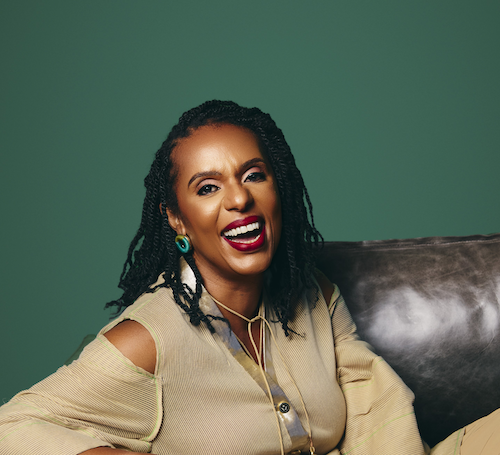
Cheryl Ingram, TDMC.

CA&S Group (‘CA&S’ or ‘the Group’) announced the acquisition of a strategic 30% shareholding in The Digital Media Collective (‘TDMC’). The investment forms part of CA&S’s strategy to build a more connected growth platform for brand owners and retailers across Southern and East Africa, combining the Group’s established physical route-to-market scale with TDMC’s specialist digital commerce, performance marketing and e-commerce capability.

The transaction includes a pathway to majority ownership over a phased transition period.

As consumer journeys become increasingly fragmented across stores, digital channels and marketplaces, brand growth depends on the ability to connect demand generation, online conversion, physical availability and in-market execution. This investment in TDMC gives CA&S deeper capability in the digital channels where consumers increasingly discover, engage with and purchase brands.

‘Consumer journeys are no longer linear, and growth increasingly depends on how well brands connect physical availability, digital visibility and meaningful customer engagement,’ said Duncan Lewis, CA&S Group CEO. ‘Our investment in TDMC gives us access to deep digital commerce expertise and enhances our ability to help clients build relevance, drive performance and unlock growth in an omnichannel world.’

TDMC brings capability across e-commerce strategy, Shopify development, marketplace management, performance media, CRM, content, creative, data and analytics. This complements CA&S’ existing strengths in retail execution, advisory, warehousing, distribution, fulfilment, technology and route-to-market solutions.

Together, the two businesses are positioned to offer clients a more integrated route from insight and demand generation through to conversion, fulfilment and execution, across both physical and digital channels.

CA&S Group Acquires Strategic Shareholding In TDMC
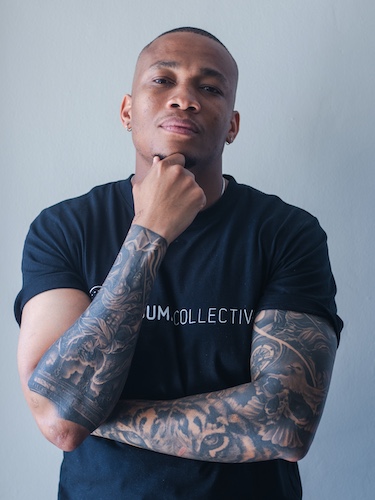
Duncan Lewis, CA&S Group .

‘We’ve always said that as the market changes, our offering has to change with it,’ said Cheryl Ingram, CEO and founder of TDMC. ‘CA&S reaches parts of the retail journey we don’t, and we reach parts they don’t. That is the whole point of this coming together of our two businesses. Very few partnerships start from that kind of genuine fit, where each side brings something the other can’t easily build for itself. This was never about scale for its own sake. It was about finding the partner whose strengths made ours worth more.’

TDMC’s credentials reflect the depth and calibre of its digital expertise. As a Shopify Plus Partner, Google Premier Partner, Meta Business Partner and Klaviyo Gold Partner, the agency holds a combination of accreditations that sets it apart in South Africa and across Sub-Saharan and East Africa. Together, these partnerships position TDMC to deliver fully integrated, end-to-end e-commerce solutions for retailers and brand owners across the region.

For CA&S, this investment reflects a deliberate move to expand its digital commerce ecosystem over time, creating new ways to help clients reach consumers, activate channels, convert demand and support growth across both physical and digital routes to market.

‘This is a deliberate move to widen what we offer the brand owners who rely on us,’ said Lewis. ‘TDMC gives clients access to specialist digital commerce capability, backed by CA&S’s regional scale, operating discipline and on-the-ground execution. It is a powerful combination for clients looking to grow in a changing market.’

TDMC will continue to operate with its entrepreneurial culture, specialist focus and current leadership structure, while gaining the benefit of CA&S’ regional scale, client relationships and wider group ecosystem.

TDMC
http://www.tdmc.co.za

CA&S Group
www.cas.group

Creating Cultures That Keep Moving When Conditions Are Tough

Creating Cultures That Keep Moving When Conditions Are Tough
Conn Bertish.

Under the 2026 theme Shift Happens™, Conn Bertish’s talk, Happy, Purposeful Businesses Are Harder to Kill, looks at a shift every business leader can recognise: how people recover, create, adapt and perform when pressure keeps rising. Bertish is a featured speaker at The Nedbank IMC, taking place on 17 September 2026 at Mosaïek, Johannesburg. Modern Marketing is a proud media partner.

Bertish is a global creative strategist and purpose advisor. His argument is simple: happy, purposeful businesses are not soft. They are harder to break because their people are more connected to what they are building and better equipped to keep creating under pressure.

Bertish helps organisations build cultures that are more resilient, more creative and better able to perform under pressure. His advisory work has supported major African businesses across retail, insurance and high-growth entrepreneurial environments.

For Bertish, purpose only matters when it changes how people think, work, recover and perform. His perspective is not theoretical. Having used creativity, play and purpose as part of his own recovery from cancer, Bertish brings a rare mix of lived experience, creative intelligence and commercial relevance to the stage.

At the Nedbank IMC, his session will show how leaders can use purpose more practically: as a source of resilience, energy and performance when business is under pressure. It is a timely message for marketers and business leaders who need cultures that can keep moving when conditions are tough.

‘Bertish is that rare combination of creative powerhouse and genuinely inspiring human being. His work, and his own recovery story, make his message impossible to dismiss,’ said Dale Hefer, CEO of the Nedbank IMC.

Africa’s biggest marketing conference, the Nedbank IMC, advances marketing’s place in the boardroom and uplifts young talent across the continent. Proudly endorsed by MASA and PRISA. Book your tickets now.

NEDBANK IMC CONFERENCE
www.imcconference.com

Marketing Needs Empathy And Empathy Needs Humans

Marketing Needs Empathy And Empathy Needs Humans
Nicky Turnbull, VML South Africa.

Nicky Turnbull, Strategy Director at VML South Africa, says B2B marketing has a new problem. For once, it is not technological, it is all human. There is this persistent belief in B2B marketing that deals are won in the pipeline. In reality, they are won much earlier, often before the process even formally begins.

Buyers are researching, shortlisting and forming preferences long before they engage with suppliers. So by the time a conversation happens, the outcome is already leaning somewhere.

The data reflects this clearly: 61% of buyers make a decision before speaking to sales, 81% of deals go to the first-choice vendor, and 95% of winners are already on the shortlist from day one. That means if your brand is not known early enough to be considered, it will not be chosen later.

It Starts And Ends With Humans

It makes sense that AI is accelerating this behaviour change, but it is not happening in the way many marketers assume.

Most buyers are not starting from zero. These are experienced decision-makers who arrive with a point of view already formed. They have often been through multiple buying cycles before, understand their categories, and already have a shortlist in mind. So the buying journey starts in their heads, not necessarily with Copilot.

Where AI does come in is in the validation phase. AI helps buyers compare, validate their assumptions, and sense-check their choices. It is not creating the shortlist, but it may be reinforcing it.

Only humans can go ahead and commit, however. AI increasingly shapes what gets discovered, interpreted and surfaced, but when the time comes to make a decision, it is humans who are making the final call. The question is, why are they taking so long?

The Collective Bottleneck

To understand why decisions are slowing down, we need to look beyond the individual and towards the group.

B2B decisions are rarely made by one person. They are made by buying groups, typically involving around ten stakeholders, many of whom never engage directly with suppliers.
This makes traditional lead-based thinking increasingly inadequate. A ‘lead’ represents only a fraction of the decision-making reality. The true task is to influence a network of stakeholders, all with different priorities, pressures and perspectives.

It is not an easy task, and even when you get it right, there is still another barrier to contend with.

Hesitation Under Pressure

In B2B, your greatest competitor is often not another brand, but simple indecision. Research shows that 63% of deals fail because of inaction, while 40% are abandoned before completion.

Those are opportunities that just disappeared. And often it is not that the buyers lacked information. In fact, they may have been overwhelmed by it. What they really lack is confidence. When confidence is lacking, buyers don’t focus on whether a solution is right, so much as whether the decision is safe: to sign, defend, and stand by even if things go wrong.

The truth is, in environments defined by risk, scrutiny and multiple stakeholders, the cost of being wrong often outweighs the benefit of being right. So, when in doubt, many choose to do nothing.

Helping Buyers Buy

When you approach it from that point of view, it is no longer enough for marketing to enable sales. Marketing must enable the buyer.

The hardest part of B2B is choosing between options. That is why the most effective organisations focus on building familiarity long before any sign of intent. They shape how buyers understand the category. And they establish trust early, so that when decision time comes, they’re not simply one option among many, but the preferred option.

The challenge is that most buyers aren’t actively in-market at any given time. And because it is hard to predict exactly when they will be, being purely reactive will not work. Instead, marketers must maintain an always-on presence of consistent, relevant visibility that builds familiarity over time. That way, when intent does emerge, you are not trying to create engagement from zero, but rather building on an established foundation of awareness and credibility.

Human First, Not System First

This is where a Human First perspective becomes essential. Yes, AI can generate signals, content and activity. But more does not necessarily mean better. Signals alone do not create understanding. They indicate when something might be happening, but not what it means.

As one insight captured succinctly, signals tell you when to show up, but it is how you interpret those signals that determines what you do when you get there. And for that, you need an understanding of the context, the organisational dynamics, and the pressures influencing each stakeholder within the buying group.

In other words, you need the kind of complex human variables that cannot be automated.

From Personalisation To Relevance

For years, B2B marketing has focused heavily on personalisation. But while it seemed like a good strategy in theory, in practice a lot of this has been superficial, relying on basic signals, like company names or industry references.

Buyers do not disengage because the messaging is not personalised. They disengage because it means nothing to them. The data supports this. While 71% of marketers believe their brand stands out, 68% of buyers feel that brands sound the same.

Being relevant means understanding what buyers are dealing with on the ground. It means getting to grips with their context, constraints, and the outcomes they are accountable for. That is a strategic capability, not a creative execution.

Impact Is Human

As AI continues to reduce the cost and effort of execution, the risk is that marketing becomes a volume exercise: more content, more campaigns, more activity. But ‘more’ doesn’t drive decisions. In fact, often it has the opposite effect, making messaging unnecessarily complex and diluting its meaning.

The moments that ultimately move decisions forward are human. It is the conversation that reframes a problem; the interaction that demonstrates real understanding; the experience that builds trust across a buying group. Because at its core, a B2B decision is a commitment to an outcome, and a willingness to be accountable for it.

It is tempting to prioritise volume and efficiency. But the role of marketing is not simply to inform or persuade; it is to give people the confidence to decide. That takes empathy. And empathy needs humans.

VML SOUTH AFRICA
https://www.vml.com/south-africa

Building Genuine Strategic Partnerships With Agencies Drives Superior Business Outcomes

Building Genuine Strategic Partnerships With Agencies Drives Superior Business Outcomes
Sean Devlin, Penquin.

Many brands spend months searching for the right agency, only to spend years treating them like suppliers. As businesses face mounting pressure to move faster, prove ROI and deliver consistent growth, agency relationships can often become reduced to a cycle of briefs, deadlines and deliverables.

While efficient on paper, Penquin’s Business Development Director, Sean Devlin, believes this approach frequently limits the very strategic thinking brands are looking for.

‘The biggest misconception many businesses have is that strategic value automatically comes with hiring an agency,’ he explained. ‘In reality, if an agency only receives a brief, they can only deliver against that brief. If you only share the brief, you will only ever get expected outcomes.’

According to Devlin, the most successful agency partnerships are built on something far deeper than project management. They are built on trust, transparency, context and shared accountability.

‘The brief is the starting point, not the solution,’ he said. ‘Great work comes from challenge, not just agreement. The best agencies do not simply execute instructions. They interrogate the brief, uncover the real business challenge and help clients solve problems they may not have fully identified yet.’

This shift from supplier to strategic partner requires commitment from both sides. For clients, it means providing agencies with greater visibility into business objectives, market pressures, commercial realities and long-term ambitions. For agencies, it means taking ownership beyond campaign delivery and being willing to challenge assumptions, ask difficult questions and contribute strategic thinking.

‘Dual accountability is critical,’ said Devlin. ‘Clients need to create an environment of openness and trust, while agencies need to earn their seat at the table by bringing insight, perspective and meaningful solutions.’

The result is often better work, stronger relationships and more sustainable business growth.

‘The more your agency understands your business, the more accountable they can be to your results,’ said Devlin. ‘You don’t get strategic value from a supplier relationship. You get strategic value from a partnership.’

As marketing landscapes become increasingly complex, Devlin believes brands should be evaluating agency relationships through a longer-term lens.

Too often, agencies are measured against individual campaigns, short-term outputs or isolated deliverables. While these metrics remain important, they can overlook the broader value agencies create when given the opportunity to contribute strategically over time.

‘The more your agency understands your business, the more accountable they can be to your results. Partnerships are about building momentum as much as they are about delivering campaigns,’ said Devlin. ‘When agencies have access to context and trust, they can help create consistency, identify opportunities earlier and contribute to stronger business outcomes over the long term.’

For marketing leaders looking to unlock greater value from their agency relationships, Devlin offers a simple piece of advice. ‘Stop treating the brief as the finish line,’ he said. ‘Treat it as the beginning of a conversation. Great work comes from challenge, not just agreement. The quality of the work is a reflection of the quality of the relationship behind it.’

As businesses continue to navigate an increasingly competitive marketplace, the brands that achieve the greatest success may not necessarily be those with the biggest agency rosters, but those that invest in building genuine partnerships with the agencies they choose to work with.

PENQUIN
https://www.penquin.co.za

Pepkor, Dentsu And CSA Create Access For Youth Into SA’s Expanding Creator Economy

Pepkor, Dentsu And CSA Create Access For Youth Into SA's Expanding Creator Economy

From Amapiano and fashion to comedy, gaming and township storytelling, creators have become some of South Africa’s most influential cultural voices. Yet while audiences continue to grow, many young creators remain excluded from the commercial opportunities their influence creates.

Recognising this gap, Pepkor’s FoneYam has partnered with the Dentsu School of Influence powered by CSA to help unlock the next generation of digital entrepreneurs and create new pathways into South Africa’s rapidly expanding creator economy.

The programme aims to shift the conversation from likes and followers to long-term commercial value, equipping creators with the skills needed to transform influence into enterprise.

For many aspiring creators, the challenge is not talent or ambition. It is access to technology, industry networks, mentorship and opportunity. And in today’s creator economy, access to technology is no longer a luxury. It is infrastructure.

FoneYam, a smartphone rental offering available at retail giants PEP and Ackermans, was created to make smartphone ownership more accessible through flexible and affordable solutions. Through this partnership, the brand is extending that commitment by helping young creators access opportunities within the digital economy.

From Creator To Entrepreneur

At the heart of the programme is ‘One Big Week’, an intensive creator accelerator where participants gain exposure to industry leaders, live business challenges and real-world brand engagement. The objective is simple: to help creators build sustainable businesses around their influence.

‘South Africa’s creator economy represents one of the country’s most exciting opportunities for youth employment and entrepreneurship,’ said Roxana Ravjee, CEO of dentsu South Africa. ‘Through the Dentsu School of Influence, we are giving young creators access to the skills, mentorship and opportunities required to build sustainable careers.’

Added Davin Phillips, Executive Director and Partner at CSA.global: ‘South Africa has no shortage of creative talent. What has been missing is the infrastructure to help that talent scale. This programme is about helping creators turn cultural influence into commercial opportunity and building careers, not just content.’

DENTSU

The Future Of Agencies Isn’t Bigger Teams, It’s Sharper Ones

The Future Of Agencies Isnt Bigger Teams, Its Sharper Ones

Lucky Chery says before any agency relationship begins, more brands should ask who will actually do the work. Not who is in the credentials deck. Not who is in the pitch room. Not who appears in the case study after everything has gone well. Who is going to sit close to the business, understand the pressure, make the calls, carry the work and stay accountable when the real job begins?

That question matters because brands are no longer operating in a slow, predictable marketing environment. They are dealing with tighter budgets, faster competitors, more fragmented audiences, more demanding consumers and leadership teams that want proof that marketing is creating business value. The pressure on brand teams has changed. The agency model has to change with it.

For a long time, agencies asked clients to fit into their structures. A brand would sign with an agency and then inherit the team, the process, the layers and the pace of that agency. Sometimes it worked. Often, it created distance between the people making the decisions and the people doing the work. That distance is expensive.

It slows things down and dilutes the thinking. It creates too many handovers and too many places for accountability to disappear. It also makes it harder for the agency to become properly immersed in the client’s world, which is where the best work usually begins.

This is why bespoke, high-performance teams are going to become more important for brands that expect more from their agency partners.

A bespoke team is not a smaller version of a big agency model. It is not a loose group of freelancers pulled together at the last minute. It is a deliberate team built around a specific brand, a specific challenge and a specific standard of delivery. It starts with the client’s ambition and works backwards from there.

What does this brand need to win? What kind of thinking does the category demand? Where does the work need to be faster? Where does it need more depth? What level of senior leadership needs to be close to the account? What specialist skills are required from day one? Who has the right temperament for the pace of the business? These are the questions that matter.

For car brands for example, this thinking is especially important. Automotive is not a casual category. People do not wake up, see a clever line and buy a car on impulse. They research, they compare and they ask people they trust. They look for value, safety, design, performance, after-sales confidence and a sense that the brand understands their life.

That means the work has to do more than look good; it has to build belief. That kind of work needs the right team around it.

Talent is everywhere but focus is harder to find. A bespoke team works when talented people are given a clear problem, a clear role and a clear standard. It works when people know why they are in the room. It works when there are fewer layers between the thinking and the doing. It works when the client knows who is responsible and the agency knows there is nowhere to hide.

For brands, one of the biggest benefits of this model is that accountability becomes visible. In a large fixed structure, responsibility can sometimes disappear between departments. But a high-performance bespoke team has fewer hiding places and creates ownership. It makes standards easier to hold. It keeps the team close enough to the problem to solve it properly.

The second benefit is speed. Speed does not mean rushing work out the door. It means reducing unnecessary drag by ensuring that the right people are in the conversation earlier. It means decisions are made with context, not through endless relays. It means the team understands the brand well enough to move with confidence.

That matters because brands are competing in real time. A campaign that takes too long to make its way through the machine can arrive polished but irrelevant.

The third benefit is depth. When a team is purpose-built around a brand, it has a better chance of becoming immersed in that brand’s world. It understands the customer and category better. It understands the internal pressures better. Over time, that closeness creates sharper work because the team is not only responding to briefs but also helping the client see what the next brief should be.

The brands that win will be those with the clearest thinking, the sharpest teams, and the strongest partnerships. Because when the ambition is serious, the team behind it cannot be accidental.

LUCKY CHERY
https://www.linkedin.com/company/lucky-chery

How Brands Can Leverage World Cup Marketing Without Crossing Legal Boundaries

How Brands Can Leverage World Cup Marketing Without Crossing Legal Boundaries

According to law experts Darren Olivier, Danielle van Deventer and Mandla Ngidi from Adams and Adams, few global events capture public attention like the FIFA World Cup™. It is important for businesses who are not sponsors but are seeking to capitalise on the excitement of the FIFA World Cup™ to strike a careful balance, leveraging the cultural moment without crossing legal boundaries.

For brands, such events present a unique opportunity to engage audiences, build visibility, and connect with consumers through the universal appeal of football. At the same time, the World Cup operates within one of the most tightly controlled commercial frameworks in sport. Sponsorship rights are sold at significant value, and the exclusivity granted to official partners is actively protected.

The Core Principle

The key distinction is straightforward but essential. Brands are free to market around football and the broader enthusiasm for the sport. However, they cannot market the World Cup itself unless they are an official sponsor or have obtained the necessary rights. Maintaining this distinction is central to avoiding both legal and reputational risk.

Why Caution Is Required

The commercial success of the World Cup depends heavily on official sponsorships. In return for their investment, sponsors receive exclusive rights to associate themselves with the event.

To protect this exclusivity, rights holders monitor marketing activity closely and enforce their rights rigorously. Campaigns that overstep the line may be challenged swiftly, often in a highly visible manner.

Consequences can include the immediate withdrawal of campaigns, legal proceedings, and reputational harm. In jurisdictions such as South Africa, additional regulatory frameworks may also apply, further restricting marketing that suggests an unauthorised association with major events.

Understanding Unauthorised Association

Unauthorised association arises when marketing creates the impression that a brand is linked to the World Cup, whether directly or indirectly. The assessment is not a technical legal exercise. Instead, it is based on how an ordinary consumer would interpret the message. If the overall impression is that the brand is an official partner or sponsor, the risk of infringement is high. This type of association can arise through explicit statements, but it can also result from more subtle cues, such as the overall look and feel of a campaign, its timing, or the themes it adopts.

Common Sources Of Risk

In practice, most problematic campaigns fall into a few recurring categories. One category involves suggesting a connection with the event, even where none exists. Another arises from the use of protected intellectual property, including event names, logos, slogans, or similar elements.

There is also the risk of so-called ambush marketing, which is a form of guerilla marketing. Guerilla marketing itself is a legitimate and widely accepted strategy, but ambush marketing sits at the point where such activity may or may not cross into unlawful conduct, depending on how it is executed. In the context of major sporting events, risk most commonly arises in four ways:

1. By intrusion into the event environment (for example, physical presence in or around stadiums).

2. By creating an impression of association with the event or its sponsors.

3. By using protected intellectual property such as event marks or imagery.

4. Through jurisdiction-specific legal restrictions that regulate event-related commercial activity.

Campaigns that fall within these categories are more likely to attract scrutiny, particularly where they create an overall impression of an unauthorised commercial link to the event.

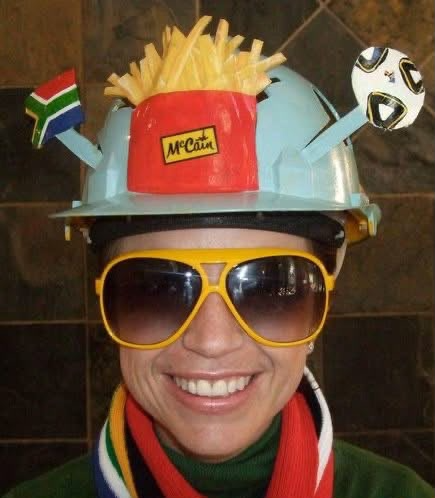
A well-known example is the Bavaria Beer alleged ambush at the 2010 FIFA World Cup™. In this case, the Bavaria brand was not an official sponsor but allegedly arranged for a group of spectators to attend a match wearing coordinated orange dresses associated with its campaign. The dresses were allegedly designed to attract attention despite the absence of prominent branding, and the group was allegedly positioned in a way that ensured visibility during the televised match. The participants were ultimately removed from the stadium, and legal action followed against the organisers. While the campaign generated significant global publicity for the brand, it also attracted strong enforcement measures.

Increasingly, risk arises in online environments, where real-time marketing, targeted advertising, and the use of event-related hashtags can quickly create an impression of association.

Permissible Marketing Activity

Despite these restrictions, there remains significant scope for creative and effective marketing.

Brands may run campaigns that celebrate football as a sport and tap into the excitement surrounding major matches. The messaging with focus on the enjoyment of the game, fan culture, or shared experiences is generally acceptable, provided that it does not reference the tournament itself. Expressions of support for national teams are also permissible, particularly where they rely on general themes of national pride. However, care must be taken to avoid linking such support directly to the World Cup or specific fixtures.

Athlete endorsements can be effective, but they require care. Brands may feature players in campaigns, provided they avoid referring to the player’s participation in the tournament, specific matches, or opponents. However, focus should remain on the individual, not the event. Likewise, brands may engage audiences through general football-related content, internal activations, or viewing experiences, as long as these do not suggest a commercial link to the tournament.

Prohibited Marketing Practices

There are clear boundaries beyond which marketing activity is likely to be considered unlawful or to attract legal challenge.

The use of official event intellectual property is strictly reserved for authorised partners. This includes the event name, logos, trophies, slogans, and other distinctive elements associated with the tournament.

Marketing should also avoid any suggestion of sponsorship, endorsement, or official affiliation. Even indirect or ambiguous wording can create a misleading impression and give rise to legal issues. Promotional activity linked to the tournament is particularly high risk. Competitions, giveaways, or campaigns tied to matches or tournament outcomes may be interpreted as attempts to exploit the event’s commercial value. Social media presents additional challenges. The speed and visibility of online content can amplify risk, particularly where posts are linked to matches or use event-related terminology in a promotional context.

Areas Requiring Careful Judgement

Not all situations are clear-cut. Some forms of marketing sit in a grey area and require a more nuanced assessment.

Campaigns timed to coincide with key matches, influencer activity during the tournament, and player-related content released at peak moments of public interest can all increase the risk of perceived association. In these instances, a useful guiding question is whether the campaign feels like it is attempting to benefit from the event in a manner similar to an official sponsor. If so, caution is warranted.

Insights From Case Law

Judicial decisions across multiple jurisdictions provide useful guidance on how courts approach unauthorised association and ambush marketing in the context of major sporting events.

In FIFA v Metcash Trading Africa (Pty) Ltd (2009), the Pretoria High Court interdicted the distribution of ‘Astor 2010’ lollipops. Although the product did not expressly refer to the FIFA World CupTM, its packaging incorporated soccer imagery and elements of the South African flag in a manner that was held to create an indirect association with the tournament. The case demonstrates that even subtle visual cues, when viewed collectively, can result in unlawful association.

A similar emphasis on implied association appears in Australian Olympic Committee Inc v Telstra Corporation Limited [2017] FCAFC 4. In that matter, Telstra’s ‘I Go to Rio’ campaign was found to suggest a connection with the Olympic Games, despite avoiding explicit use of official Olympic branding. The court considered the overall impression created by the campaign and concluded that it conveyed a misleading message of sponsorship or affiliation.

The principle that certain event-related wording is strictly protected is illustrated in San Francisco Arts & Athletics Inc v United States Olympic Committee 483 U.S. 522 (1987). The United States Supreme Court upheld the Olympic Committee’s right to prevent the unauthorised use of the word “Olympic” in a commercial context. This decision highlights that certain names and descriptors associated with global sporting events may be protected to a degree that prohibits their use altogether without consent.

Courts have also shown a willingness to intervene in high-profile ambush marketing scenarios. While some campaigns attempt to operate at the margins of legality, the consistent trend is that where the overall impression is one of commercial association with a protected event, enforcement action is likely to follow.

Taken together, these cases confirm that the legal assessment goes beyond technical wording. Courts consider the overall impression created by the marketing, including visual elements, timing, and context. Even where no explicit reference is made, liability may arise if the campaign is perceived as trading off the reputation or commercial value of the event.

Practical Application

In practical terms, campaigns that focus on football in general, celebrate the sport, or engage with fans in a broad and non-specific manner are less likely to attract legal scrutiny. Conversely, campaigns that reference the World Cup, align closely with tournament fixtures, or incorporate promotional mechanics tied to the event are more likely to be challenged.

Where uncertainty exists, seeking legal input before launch remains the most effective way to mitigate risk.

The World Cup offers a valuable marketing opportunity, but it must be approached with care. The most effective campaigns are often those that embrace the spirit of football without attempting to appropriate the event itself. By remaining creative, authentic, and mindful of the legal framework, brands can successfully participate in the global conversation while avoiding unnecessary risk.

Adams & Adams
https://www.adams.africa/

The Conversationalist Era Has Arrived. Is Your Brand Ready?

The Conversationalist Era Has Arrived. Is Your Brand Ready
Natalie Druion, Momentum Group.

Natalie Druion, Executive Head of Conversations at Momentum Group, says ‘I have been obsessed with stories for as long as I can remember. The longer I spend building brands, the more I realise this: a story told into silence is simply noise. It is the conversations that follow the response, the debate, the shared meaning that make a story matter.’

Right now the global marketing industry is gathered on the French Riviera for Cannes Lions, the biggest celebration of creativity our business has. Tens of thousands of delegates. Hundreds of stages. An ocean of rosé. And one question running underneath all of it: what actually makes creative work matter? Not reach. Not budget. Conversation.

It is telling that this year Cannes introduced a new Creative Brand Lion, rewarding brands that use creativity across the whole organisation to build lasting growth rather than chase a single campaign. Natasha Woodwal, the festival’s Director of Content, framed the 2026 programme around ‘new voices, new communities and new conversations’. The industry is finally naming the shift I have spent years living.

‘Most brands have mastered the telling, but very few have mastered the listening.’

We Are Drowning In Noise

The average consumer is exposed to thousands of brand messages every day. Across television, radio, social media, streaming platforms, outdoor advertising, and mobile devices, brands are competing for increasingly scarce attention, and yet many marketing teams still believe their campaigns are cutting through. Most are not.

We have become obsessed with reach, impressions, click-through rates, and conversion funnels. In the process, we have forgotten something fundamental: brands need to be interesting. Content has become wallpaper. Brands are talking. People are scrolling. The uncomfortable truth is that we have optimised ourselves into irrelevance.

The Creativity Crisis

Research tells us we’re born with 98% creativity. By adulthood, that number collapses to 2%.

Two percent. Somewhere along the way, marketing became less about curiosity and more about certainty. We stopped asking ‘what if?’ and started asking ‘what worked last quarter?’ The result is predictable. Much of today’s content looks the same, sounds the same, and delivers the same outcome: very little.

At the same time, people are engaging in thousands of conversations every day through WhatsApp groups, comment sections, DMs, podcasts, online communities, and face-to-face interactions. Yet many brands continue to treat their most powerful engagement channels as digital noticeboards. The opportunity is not to produce more content but to become part of the conversations people are already having.

Social Media Is Not A Billboard

Social media was never designed to be a broadcast channel. It is the world’s largest conversation platform. The brands winning today understand this. They are not asking, ‘How do we reach our audience?’ They are asking, ‘How do we create something with our audience?’ This shift represents a transfer of power.

Consumers are no longer passive recipients of marketing messages. They want participation, they want ownership, and they want to contribute to culture rather than simply consume it. The brands that understand this do not just build audiences. They build communities, and when communities reach scale, something more powerful emerges: fandom.

Fandom Is The New Brand Loyalty

Fandoms are earned, not bought. Think about the organisations and personalities that command extraordinary loyalty. They stand for something bigger than what they sell. Their communities share language, rituals, values, and identity. The same principle applies to brands.

Within Momentum Group, the #SheOwnsHerSuccess platform offers a compelling example. What began as a commitment to advancing women’s financial independence has evolved into a broader ecosystem of workshops, masterclasses, digital tools, funding initiatives, and resources. Its longevity has not come from a campaign budget, it has come from consistency.

People do not build emotional connections with campaigns; they build emotional connections with causes, communities, and convictions. Research consistently shows that younger generations increasingly expect brands to reflect their values and create opportunities for participation. For marketers, that represents one of the most underutilised opportunities available today. Building a fandom does not require massive budgets. It requires a clear point of view and the discipline to show up consistently over time.

Emotional Connection Is A Business Metric

This is where conversations become commercially valuable: when you analyse how people speak about a brand not just what they say, but how they feel you uncover insights that traditional performance metrics often miss. You begin to understand the anxieties, aspirations, frustrations, and victories shaping customer behaviour. You see the moments where trust is earned, strengthened, or lost. Tools such as sentiment analysis, topic mapping, and conversation monitoring are often viewed as reputation-management functions. In reality, they are empathy tools; they help brands understand context as they reveal where a brand can contribute meaningfully rather than interrupt unnecessarily.

Three Things Brands Need To Stop Getting Wrong

1. Stop Fence-Sitting

Brands cannot mean something to everyone. The organisations that create lasting relevance are willing to take a position. They understand their values, articulate them clearly, and consistently demonstrate them through action. Being brave does not mean being reckless. It means having the conviction to stand for something.

2. Stop Treating Communities Like Demographics

Audiences are not neat categories. The most vibrant communities are often complex, contradictory, and difficult to segment. They contain people with different motivations, identities, and perspectives. Brands that embrace that complexity build stronger relationships than those trying to force people into predefined marketing boxes.

3. Stop Broadcasting. Start Belonging.

The strongest communities are built through participation, they celebrate customer milestones, respond to content, invite collaboration and offer behind-the-scenes access. People do not want to feel like followers, they want to feel like insiders.

The Rise Of Smaller Communities

One of the most interesting shifts happening today is that meaningful engagement is increasingly moving into smaller, more focused spaces. Consumers are gravitating towards platforms and communities that feel more personal, more intentional, and more authentic. The success of platforms like Substack demonstrates this clearly. In a digital environment dominated by algorithms and endless feeds, people are actively choosing spaces built around direct relationships, trust, and shared interests. The lesson for brands is simple: meaningful engagement doesn’t require the largest audience; it requires the right audience.

Closer to home, Checkers Sixty60 demonstrates the power of this principle. What began as a grocery delivery service became something much bigger because customers genuinely loved the experience. The enthusiasm surrounding the brand wasn’t manufactured; it was amplified by people who felt emotionally invested in it. That is what happens when usefulness, consistency, and community intersect.

Five Principles For Modern Brand Builders

After years of building brand voices and managing conversations, five lessons continue to hold:

– Think like a producer. Consistency matters. Audiences love familiarity, provided it evolves over time.
– Act like a storyteller. Prioritise human moments over polished perfection. Authenticity is memorable.
– Edit like a detective. The strongest ideas survive scrutiny. Write freely, then refine ruthlessly.
– Experiment like a scientist. Protect a portion of your budget for testing. Innovation rarely emerges from certainty.
– Stay curious. Inspiration often comes from unexpected places. The most effective strategists remain lifelong students of people and culture.

The brands earning loyalty today are not necessarily the loudest, they are the most conversational. They understand that attention is earned through relevance, not volume. They recognise that community creates more value than reach. And they know that belonging drives behaviour more effectively than broadcasting ever could. The world is not getting quieter. Content volumes will continue to rise, and algorithms will continue to change. But brands that learn to listen, participate, and contribute meaningfully to the conversations shaping people’s lives will remain relevant long after the latest marketing trend has passed.

By Friday the Lions will be handed out and the Croisette will empty. The trophies matter for a week. The conversations a brand builds matter for years. That is the difference between winning a moment and earning a place in people’s lives. The rise of the conversationalist is not a trend; it’s a response to a world that has stopped listening to brands and started listening to each other.

MOMENTUM GROUP
https://www.momentumgroupltd.co.za/

CMO’s Can’t Ignore The Platform Shaping What AI Says About Your Brand

CMOs Cant Ignore The Platform Shaping What AI Says About Your Brand
Musa Kalenga, the Brave Group,

Musa Kalenga, CEO of the Brave Group, says for years, Reddit occupied an awkward corner of the marketing map: too chaotic to manage, too niche to justify a serious budget, too hostile to tolerate branded content. Most marketing teams treated it as a place to monitor occasionally and otherwise avoid. That instinct is now a liability.

Reddit is quietly becoming one of the most consequential inputs into how consumers discover and evaluate brands in the AI era. Understanding why requires a small detour into how large language models actually work.

How AI Learned To Think Like Reddit

The systems powering ChatGPT, Google Gemini, and the AI Overviews now embedded at the top of search results were trained on vast amounts of publicly available text. Reddit, with its billions of posts and comment threads spanning two decades of candid, specific, experience-driven human conversation, is among the richest sources of that training data.

Several of the largest AI developers have signed commercial licensing agreements with Reddit to formalise that access.

The consequence is significant. When a consumer asks an AI assistant which product to buy, which brand to trust, or what downsides no one mentions, the answer has been shaped in part by what Reddit communities have been saying about those categories for years. The official website, the press release, the carefully crafted product description: none of these carries the same weight as thousands of authentic peer conversations.

AI ‘Loves’ Reddit

As a result, AI experiences tend to reward content that looks like Reddit: problem-first, experience-driven, and debate-tested. Reddit threads begin with questions; replies are structured as answers; upvotes signal what the community considers credible. The platform is, in effect, a library of human judgment organised in exactly the same way AI systems are prompted.

There is a further dimension that many marketing teams have yet to absorb. Reddit threads regularly rank on the first page of Google results for relevant queries. A well-upvoted post recommending or condemning a product can persist at the top of search for months or years.

The lifespan of that influence vastly exceeds that of any paid campaign. One outdated complaint, one unresolved support incident handled badly in public: these can become disproportionately influential simply because they represent the most substantial public narrative available about a brand.

Dove And The Courage Of Radical Transparency

If the strategic case still sounds abstract, Dove’s r/eal Reviews campaign offers a concrete illustration of what engagement on Reddit’s own terms can achieve.

In early 2026, Dove launched a campaign for its Intensive Repair 10-in-1 Serum Hair Mask built on a premise that most brand safety teams would have rejected outright. The brand invited Redditors to try the product and share their honest opinions. It then promised to publish the first 50 reviews verbatim, without curation, and to use those unedited consumer voices as the creative itself across out-of-home billboards in New York City and across social media.

The reviews were exactly what you would expect from a platform built on candour. Most were enthusiastic. One reviewer noted that the mask smelled, in their words, like expired hotel shampoo. That review made the campaign.

Reddit’s Bottom-Line Results For Unilever

The results were remarkable: more than one billion impressions, hour-long queues at a Manhattan sampling pop-up, over 150 pieces of user-generated content, a meaningful lift in large language model search results for Dove Hair during the campaign period, and high single-digit growth in Unilever’s Hair Care category in the first quarter of 2026.

Emily Barfoot, Head of Dove US for Beauty and Wellbeing, frames the strategic logic with precision: ‘Transparency was not a risk. It was our strategy.’ She noted that Dove’s own research showed 71 per cent of consumers use Reddit to research brands before purchase decisions, and that the platform’s growing influence on AI and LLM outputs makes it not just culturally relevant but strategically critical.

What made the campaign work was not a clever media execution. It was the recognition that Reddit is a culture, not a channel. The brand integrated Reddit’s own Snoovatars into the campaign creative. It listened before it broadcast. It respected the community’s norms rather than attempting to override them.

The Trust Gap That Paid Media Cannot Close

The Dove campaign is not an isolated case study. It reflects a structural shift in how consumer trust is built and lost. The Edelman Trust Barometer 2025 found that peer recommendations now outrank paid advertising by 28 percentage points in consumer trust, and that gap is widening.

Companies with strong communities grow revenue 2.1 times faster than those without, according to separate research, with every pound invested returning an average of five pounds across acquisition, retention and reduced support costs.

For CMOs, the practical implications are becoming harder to defer. Specialist Reddit marketing agencies are now being formally recognised by industry bodies. Senior community roles at technology firms command salaries of $170,000 to $220,000. The title of Chief Community Officer has begun to appear on executive org charts. These are not vanity signals; they reflect belated recognition that community is a strategic function, not a marketing subtask.

What This Means For Marketing Leaders

The starting point is not a Reddit campaign. It is a Reddit audit. Identify which subreddits function as decision hubs in your category. Understand what consumers consistently say about your brand when no one from your company is in the room. Map the misconceptions that recur, the competitors being recommended in your place, and the unofficial truths that AI systems are absorbing and repeating. Only then does participation make sense.

The strategic mindset shift required is subtle but important. The question is not how to run Reddit as a channel. It is how to participate in the conversations that are already shaping your category narrative.

Brands that approach the platform as a distribution mechanism for existing messaging will earn distrust. Those who approach it as a reputation layer, one that requires patience, authenticity, and genuine contribution, can earn something far more durable.

In the age of AI-mediated discovery, understanding Reddit may matter as much as any line in your media plan. The platform is no longer where conversations about your brand end up. Increasingly, it is where the machines form their opinions about you.

Whether you are part of that conversation is, for the first time, genuinely optional. The consequences are not.

BRAVE GROUP
https://bravegroup.co.za

This is Modern Marketing