

Home Blog Page 103

Young Marketers Can Showcase Their Marketing Prowess In Nedbank IMC And MTN Pulse Competition

Young Marketers Can Showcase Their Marketing Prowess In Nedbank IMC And MTN Pulse Competition
Kholofelo Magagane, MTN SA.

The Nedbank IMC Conference and MTN Pulse have announced an innovative opportunity for aspiring marketers to showcase their skills.

The partnership is aimed at giving young marketers a platform to showcase their marketing prowess. This collaboration opens an opportunity for MTN Pulse customers to shine and demonstrate their passion for marketing.

The Nedbank IMC conference is taking place in Johannesburg and virtually on the 19th of September. Modern Marketing is a proud media partner of the event. As part of this partnership, the Nedbank IMC and MTN Pulse invite all aspiring marketers under the age of 25 to participate in a competition where they could win tickets to the conference and R2000 cash.

Participants are encouraged to create and share a one minute video on social media, highlighting a marketing campaign or advertisement that has stood out for them. This initiative is designed to discover and celebrate fresh marketing talent, while also providing valuable exposure and experience.

How to participate:

Create a one minute video: record a video showcasing your understanding and insights into marketing campaigns and ads – it could be your memories of old advertainments, or campaigns that blow your mind. Be creative, informative and engaging!

Share on social media: Post your video on social media platforms with the hashtag #MTNPulseYouthChallenge #NedbankIMC2024 #ChallengeLearnLead.

Tag and mention: ensure you tag @MTNPulse and @NedbankIMCConference in your post to enter the competition.

Engage and win: the three most compelling videos will be selected, and the best will receive R2000 cash, and two exclusive in-person passes to the Nedbank IMC Conference, where marketers can network with industry leaders and gain invaluable insights.

The Nedbank IMC, renowned for its focus on innovative marketing strategies and trends, provides an ideal platform for young marketers to connect with professionals and gain industry knowledge. MTN Pulse’s partnership with this prestigious event underscores its commitment to nurturing the next generation of marketing talent.

‘We are excited to partner with the Nedbank IMC and offer MTN Pulse customers a chance to showcase their marketing skills,’ said Kholofelo Magagane, Acting General Manager for Brand and Marketing at MTN SA. ‘This initiative reflects our dedication to empowering young talent and supporting their growth in the marketing industry.’

The competition is open to all marketers under the age of 25. If the winner is a MTN Pulse customer, an extra R1000 will be awarded. Entries close on the 13th of September 2024 and will be evaluated based on their creativity, knowledge, and presentation. The winner will be announced on the 16th of September and their video featured at the Nedbank IMC Conference and on MTN Pulse and Nedbank IMC social media channels.

For more information about the competition and the Nedbank IMC Conference, please search #MTNPulseYouthChallenge #NedbankIMC2024 #ChallengeLearnLead on social media pages. Terms and conditions apply.

In-person conference tickets are sold out. Book your online ticket and join the in-person waiting list to upgrade if a space becomes available. Virtual tickets are priced at R1499 (excl VAT).

NEDBANK IMC CONFERENCE
www.imcconference.com

How To Progress From ‘Can’t Because’ Thinking To ‘We Can If’ Thinking

Nomonde Keswa, Delta Victor Bravo.

Nomonde Keswa, Strategy Director at Delta Victor Bravo says we’ve all experienced situations at home, at work, around the braai, in the WhatsApp group or wherever, where every proposed solution or ‘oh what if we…’ is met with that ever so final ‘we can’t do that, because…’ While frustrating in everyday life, for organisational culture, this mindset can be dire.

In my client interactions at eatbigfish (eatbigfish is represented in Africa by Delta Victor Bravo), I encounter many organisations trapped in a ‘can’t because’ mindset. This results in problems left unchecked, getting bigger and hairier over time. ‘Can’t because’ thinking is incredibly stifling to progress – it removes the oxygen ideas need to emerge and the flow needed for solutions to flourish. While we’re all guilty of this thinking from time to time, for an organisation that wants to thrive, the cost of this chronic thinking is too consequential to ignore.

Let’s explore some signs of organisations at risk of ‘can’t because’ thinking:

Path Dependence

Organisations fall into the trap of ‘we’ve always done it this way’ or ‘category best practice,’ which becomes ‘proven practice’, and then ‘corporate preferred practice’, until it becomes locked-in behaviour. This limits the organisation’s ability to learn, adapt and grow.

Prioritising Process Over Progress

While process is important, an over-reliance on process to give you the answer can stifle agile inventiveness, which is critical for a Challenger. Progress is the permission and ability to inch forward, chipping away at the problem, and building and iterating to find the answers.

Lack Of Play Culture

Play might not look like ping-pong with colleagues (we don’t all work at Google). It might be taking a walk or a change of scenery – anything that jolts the status quo and invites experimentation.

Delayed Route To Market

Long periods of inactivity reduce the organisation’s share of voice and relevance. This is often due to waiting for perfection before launching instead of adopting a test, learn and iterate approach.

High Employee Turnover

Fixed cultural systems reject new ideas and people who don’t fit ‘how things are done around here’. This resistance to change makes it difficult to retain talent and foster a dynamic work environment.

As you can see, legacy thinking, bureaucracy and fear of failure can often become ingrained in a company’s culture, especially in a ‘command and control’ environment where people have limited autonomy to make decisions and own outcomes.

Effective leaders create an environment where it is safe to ask intelligently naive questions, share ideas across departments and encourage risk-taking and learning from failure. They facilitate a culture of sharing and cross-pollination of ideas, both within and across business units.

For any organisation that wishes to grow and challenge the status quo, it is dangerous to have people who are more afraid to be wrong or fail than they are to think differently and explore opportunities. For leaders who want to get the best out of their teams, it’s important to measure and incentivise the desired behaviours – because the reality is, you reap what you reward (or don’t reward).

So, what’s the alternative to this often default human ‘can’t because’ position? While there’s no step-by-step guide, I can offer a few helpful principles and ways in which you can embrace this journey.

Unifying Belief

Organise everyone’s efforts around one unifying belief, which illuminates the path like a lighthouse.

Propelling Questions

Start with the right questions (what we call Propelling Questions) as a catalyst to finding the right answers. A ‘propelling question’ combines a big ambition with a significant constraint, propelling more inventive solutions. For example, one of Audi’s propelling questions was ‘How can we win the Le Mans race (ambition), with a car that can go no faster than others (constraint)?’ It’s quite the opposite of blue-sky thinking, because this brings the constraint into the ideation process to propel more inventive solutions.

‘We Can If…’ Thinking

We use a handy tool called the ‘can-if map’ which helps stimulate multiple prompts and thinking pathways to answering propelling questions. ‘We can if we partner with…; We can if we think of it as…; We can if we substitute x for y….’ These prompts alone can unlock and inspire new thinking, as they help jolt teams out of complacent, path dependent thinking.

Pockets Of Agility And Innovation

In deeply established organisations, it is sometimes helpful to create ring-fenced pockets of agility and innovation with the mandate and freedom to think differently without bureaucracy. A good example is retail giant TFG, who created TFG Labs, a tech hub of over 100 employees, with the goal of transforming TFG into a high-tech omnichannel retailer.

Collaboration

Collaborate widely and often, taking a fundamental over departmental approach to ideation and solution finding. When we partnered with Albany to reposition their brand, they invited non-marketing and manufacturing personnel into the discussions.

Redefine Category Boundaries

Challenge yourself to continually learn and push the boundaries of your category. Innocent Drinks, for example, intentionally think of themselves as the number 2 in their category, allowing them to continually redefine boundaries and advance the category through innovation.

Changing a pervasive ‘we can’t because…’ culture is not easy, but it is important. New ways of thinking can be achieved by applying some of these principles and tools. Perhaps the most powerful tool, even at a personal level, is to alter your language and challenge yourself to say ‘we can if…’ more often. There is so much potential on the other side of that statement.

EATBIGFISH
www.eatbigfish.com

Sticking To Preferred Suppliers Can Make Agencies Seem Predictable And Uninspired

Sticking To Preferred Suppliers Can Make Agencies Seem Predictable And Uninspired
Anke Nel, RAPT Creative.

Anke Nel, Head of Media at RAPT Creative, delves into why preferred suppliers in agencies is not only a recipe for boredom but also a potential disaster for innovation, quality and client satisfaction.

Imagine this: you’re at an all-you-can-eat buffet. You’ve paid good money to enjoy the variety of dishes, but instead of sampling everything, you’re told you can only eat shiitake mushrooms. Every. Single. Time. Welcome to the world of preferred suppliers in agencies.

Preferred supplier relationships are like monogamous relationships, but with fewer romantic dinners and more awkward power dynamics. The idea is simple: stick to one supplier because they’re reliable, familiar, and won’t give you any surprises. Sounds great, right? But what happens when that supplier’s best days are behind them? It’s like being stuck in a loveless marriage where the only thing you share is a disdain for each other’s cooking.

When agencies limit themselves to preferred suppliers, they effectively put a straitjacket on creativity and innovation. The Shiitake Effect means that by sticking to a single supplier, agencies miss out on the unique flavours and cutting-edge ideas that other vendors might bring to the table.

Comfort zones are nice; they’re warm, familiar and safe. But nothing ever grows there. Agencies sticking to preferred suppliers are essentially saying, ‘We’re happy here, no need for new ideas or improvements’. This complacency can lead to stagnation. Remember Blockbuster? They were quite comfortable with their preferred supplier of VHS tapes, right up until Netflix came along.

Sticking with preferred suppliers can also hurt the bottom line. Without the pressure of competition, suppliers have little incentive to offer competitive pricing. It’s like being a regular at a fancy restaurant where you always order the same steak. Over time, you might not notice that the price has gone up, and the portion size has gone down. Meanwhile, the diner down the street is offering a steak twice as good for half the price. One supplier means putting all your eggs in one basket. If something goes wrong, you’re out of luck.

Imagine having a single plumber for your entire apartment complex. When he’s good, he’s great. But when he decides to take an impromptu vacation to Cancun, you’re knee-deep in flooded basements. Diversifying suppliers ensures that if one fails, others can step in to save the day.

At the end of the day, agencies exist to serve their clients. And clients, much like diners at that all-you-can-eat buffet, crave variety, quality and innovation. Sticking to preferred suppliers can make agencies seem predictable and uninspired. It’s like offering your dinner guests a meal of plain shiitake mushrooms every single night. They might not say anything at first, but eventually, they’ll start making excuses to eat elsewhere.

So, the next time you’re at that buffet of vendors, remember: life’s too short for just shiitake mushrooms. Your clients will thank you, and your agency will thrive.

RAPT CREATIVE
https://raptcreative.com/

1Life Insurance Ad Campaign Speaks To The Heart Of Human Experience

1Life Insurance Ad Campaign Speaks To The Heart Of Human Experience

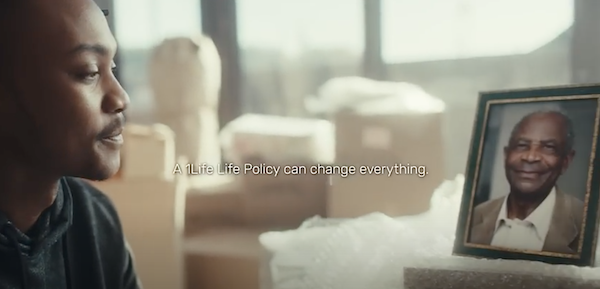
1Life wanted to move away from the usual emotional play regarding life insurance by turning it into something tangible for the consumer. Cape Town ad agency, 3Verse, were tasked with the conceptualisation of the ‘Changes’ campaign. Although the bulk of the campaign was to be a digital strategy, it was launched with two television commercials.

There’s a plethora of insurance ads all sharing similar tropes and doing so in longer format films. The challenge was not only differentiating, but also engaging the audience within the tight 30 second spots. ‘South Africans are cash-strapped, and fewer than 20% of youth have any form of insurance. As a result, they don’t necessarily see life insurance as a priority, even though it is highly regarded as a way to boost a family’s generational wealth,’ explained Brand Manager, Siphelele Sokhela.

The truth about life insurance is that the one who invests is never the one to experience the benefits. And those who do benefit, do so because of the loss of a loved one.

‘People go through so much when losing a loved one: pain, anguish, confusion and even anger. And then there is a bittersweet acceptance upon the realisation that they are a beneficiary. This happens over time. But we had all of 20 seconds to illustrate the transition or ‘change’,’ said 3Verse CCO, Ivan Johnson.

From a creative direction, the commercial has the camera up and personal on the anguished face of a young man. He laments how he ‘hates’ that his father wasn’t around enough. A change happens and he looks inwards, thinking how he couldn’t thank his father for what he had left behind.

The Funeral Policy commercial focuses intimately on a young woman in a wreath-filled family room. She expresses her pain and loss, but a change brightens the room as she accepts and acknowledges the beautiful send off.

‘The performances had to be special, and the delivery – intentionally poetic – had to be deliberate. It’s impossible to be ‘real’ and convincing even with the indulgence of doing two minute commercials. The words had to hit home, and quickly. It’s a risk, but one worth taking. A little time will tell,’ said 3Verse Creative Director, Matt Bayly.

The campaign will be a robust one, supported by digital content films, radio, promotions, an array of social media collateral and other digital communications. Each piece is interwoven with emotion, creating a powerful narrative that speaks to the heart of human experience. Together, they form a cohesive tapestry, inviting us to reflect on the fluid nature of life and the emotions that accompany it.

1LIFE INSURANCE
https://www.1life.co.za

Moonsport Makes Strategic Minority Acquisition In Bad Weather Productions

Moonsport Makes Strategic Minority Acquisition In Bad Weather Productions

Moonsport and Bad Weather Productions have joined forces to revolutionise the sports and entertainment industry.

Together, Moonsport and Bad Weather Productions share a strong aim of expanding their global footprint and to enhance each of their portfolios through shared vision and experience. Both companies will focus on the commonalities between the sports and entertainment industries and build out a global proposition which focuses on creative execution and lasting memories at the junctures of rights holders, brands and their fans/viewers.

Moonsport now has direct access to an expanded range of creative and technical services, enhancing its already dominant sports presentation offering in a more unified and integrated way. Similarly, Bad Weather Productions gains direct access to broader technical production services within the cultural and entertainment space, enabling them to deliver a more cohesive and comprehensive offering.

Moonsport and Bad Weather Productions have a proven partnership, highlighted by projects like Red Bull Kumite, Betway SA20, Red Bull Symphonic, and Red Bull Loadshredding. Their combined strengths deliver world-class entertainment, blending creative innovation with technical expertise. Bad Weather’s work on Corona Sunsets, Rocking The Daisies, and Comic Con complements Moonsport’s global vision in the entertainment market. Moonsport’s diverse offerings include strategy, video production, and broadcasting, with notable projects such as the Around The World in 80 Days documentary, HSBC Cape Town Sevens, Springbok Test Matches, and together, they’ve executed groundbreaking events, including the record-breaking Red Bull Kumite esports tournament.

‘Our partnership with Bad Weather Productions is more than just a collaboration; it’s a natural synergy with shared values that perfectly fits into our vision of becoming a global leader in sports and entertainment. Our combined expertise will enable us to deliver groundbreaking experiences that resonate with audiences worldwide and create some unforgettable memories. Through this collaboration, we believe we can create something truly special together,’ said Trent Key, Moonsport’s Managing Director.

Simon Key, Head Of Content and partner at Moonsport, added: ‘Off the back of creating some epic work together over the past few years and seeing how we share the same values, I really believe together we can create something really impactful for the sports and entertainment markets independently and collectively as we see these cross over more and more.’

‘The joining of forces was a natural next step for us, as the value we bring to each other’s businesses is undeniable, and we believe that this partnership solidifies our commitment to facilitating the future. We are extremely excited to take this step towards our unified goal of cementing ourselves as the global creative leaders in the sports and entertainment space,’ concluded Andrew Bosman, Managing Director of Bad Weather Productions.

With several exciting projects on the horizon, both companies will continue to operate from their respective headquarters under their current leadership, while merging resources to offer enhanced solutions when called upon. This strategic alignment paves the way for new opportunities, offering clients an expanded range of services, further solidifying each company’s niche, and deepening their collaborative efforts.

MOONSPORT
https://www.moonsport.tv/

BAD WEATHER PRODUCTIONS
https://badweather.co.za

Avoiding Broken Rungs And Similarity Biases In The Advertising Industry

Avoiding Broken Rungs And Similarity Biases In The Advertising Industry
Tumi Rabanye, Leagas Delaney South Africa.

Tumi Rabanye, Managing Partner – Strategy at Leagas Delaney South Africa, says that during a recent experience, when interviewing candidates for a role, she was struck by the variety of backgrounds each was coming from, all with a common desire to land up in strategy.

I was excited to see that many were coming from an academic background in strategic brand communications, marketing and advertising communications and the like. I recall having to make up a mix of courses during my undergrad studies that would eventually lead to the route, as there was no straightforward path into the discipline.

I was also struck by the lack of a clear way into the field. Neither candidate envisioned a clear career path nor confidently articulated what they saw in their long-term journey. The question was, are those of us already in the field doing enough to share or even inspire an organised route for growth in our industry? To what degree do we consider succession in our roles? What happens with the brilliant talent at all levels of our industry once they have made their way in? Naturally being a woman, the deeper reflection was on the female experience. Being a strategist myself, of course, I sought a few sources for perspective:

‘The Broken Rung and Similarity Bias’. This phrase from a McKinsey report resonated with me. As explained by Dr Margie Warrel, it refers to the concept of a broken ladder symbolising too few women’s ascent in business overall. It’s an issue we all know too well, but when coupled with ‘similarity bias’, you’ve got a proper challenge. Similarity bias simply refers to an unconscious bias towards similar people – similarities in educational background, values, hobbies and even appearance can make a person relatable. Additional research shows that similarity bias plays a significant role in succession planning, manifesting as leaders are more likely to invest in and elevate a likeness of their own.

In ad land (as in corporate), unless checked and consciously reversed, the pipeline for talent development and promotion runs the risk of remaining the same. The invitation especially among us women, I think, is to make the circle bigger, and indeed, more diverse. Think purely along life-stages, let alone race, and you’ve got something! Daily, it’s clear as a millennial, how little one knows about the latest apps to simplify tasks, the latest lingo, the latest trends, but I also have the benefit of a rearview mirror that helps contextualise how we got here, and a little black book that I can call on for advice. The love is in the sharing I say! Imagine deliberately bottling the constant learning, investing it in a reciprocal exchange at work and baking it into organisational culture. Imagine how much more dynamic the choice of present and future leaders would be?

Get To Know Those You Don’t Already Know

It’s often said that at a certain level of your career, it’s not just what you know, but rather who knows what you know. Among us women, I think it’s time to cultivate our eyes and ears to see and hear others we don’t know, because there’s an abundance of diversity.

At each stage of our careers, could we explore breaking the similarity bias and mending the broken rung well beyond Women’s Month? While we work on a straightforward path through ad land, how about we pave the way with some interesting material: something ‘Boomer’, a little Millennial in the mix and Gen Z to boot, then get ready to hand it over to Gen Alpha when they come calling.

LEAGAS DELANEY
https://www.leagasdelaney.co.za

New Joe Public Campaign Raises Awareness For SPCA

New Joe Public Campaign Raises Awareness For SPCA

Joe Public Cape Town launched its new campaign for the Cape of Good Hope SPCA, ‘Anyone can be a hero,’ to showcase the amazing work that the organisation does with the intention of thanking all donors, and ultimately inspiring others to donate.

The insight behind the campaign came from recognising that there are many animal lovers in South Africa. There is the extreme minority of people who dedicate their lives and even risk their own safety to help animals, and then there is the majority who have only ever donated.

‘We had two important objectives for this campaign: firstly, to help people understand what the SPCA does, and secondly, to drive donations. We did this through the concept of ‘Anyone can be a hero’. The SPCA staff through the hard work they do and the general public through every donation they make,’ commented Brendan Hoffmann, Executive Creative Director, Joe Public Cape Town.

In their creative executions, they created film and radio content that showcased SPCA staff and compared them to everyday animal lovers. This approach created humorous and relatable comparisons, ultimately conveying that no matter how unassuming one’s actions may seem, anyone can be a hero, to all animals at the SPCA. The campaign effectively highlighted that heroism comes in many forms, from the bravery of SPCA staff to the generosity of donors.

‘Some may say that heroism lies within the daring acts of the SPCA Inspectors who scale towering trees to rescue trapped kittens or take on dog fighters. Or in the veterinary skill of those that heal and nurse animals back to health. But the ‘Anyone can be a hero’ campaign reminds us that true heroism is, very simply, compassion compelled into action. Not everyone can do the work of the SPCA but everyone can make it possible through donations,’ commented Franco Raffa, Marketing Manager at the Cape of Good Hope SPCA.

The SPCA is a non-governmental organisation that is 100% reliant on heroes like you to continue operating.


JOE PUBLIC
https://joepublic.co.za/

How Can Brands Connect With South Africa’s Youth On Their Terms?

How Can Brands Connect With South Africas Youth On Their Terms?
Masego Letsebe, Mondeléz South Africa.

According to Masego Letsebe, Brand Manager for Candy and Meals in Sub-Saharan Africa at Mondeléz South Africa, about one third of the South African population falls into the ‘youth’ category, or people aged 18-34. So, it’s important to speak to them to help build affinity with brands.

What Is Culture?

Brands don’t create culture, and they also shouldn’t attempt to set the cultural agenda. Young people create culture through their own connections and within their own ecosystems. They play with it, explore it, examine it and then define it, all on their own. And it starts with conversations. When trying to play in the cultural space, marketers need to set their brands up with personas that build authentic connections that contribute something meaningful to young people’s cultural conversations. This also requires social awareness and listening to consumers about how a brand can meet their needs.

Speedy Evolution

Life is incredibly fast-paced, particularly among young people, which raises the question: how brands can keep up? It comes down to listening again, rather than pushing an agenda. When trends start feeling like fads, marketers and brands need to change tack and move with the times.

Social media accelerates this shift, but it’s not solely about using social media, because the ‘digital world’ and ‘real life’ are not two different spaces in this market. Everything is integrated. Being perpetually connected affords them opportunities and access to experiences with a tap or a click that are enjoyed equally, on or offline.

Conversation Is Key

Despite what appears to be passive consumption, by virtue of seemingly being perpetually physically connected to their phones, young people are not simply passively consuming information. They’re engaging in conversations and interrogating what they see. Getting a brand in front of someone in the digital space is easy, because it’s simple to pay for placement.

However, the secret sauce is in the quality and authenticity of engagement once the brand has that reach, so that trust and relationships can be built. That requires an investment in community managers who understand the cultural conversation, both on and offline, with those conversations taking place 24/7 and requiring someone to be there to be the brand voice, all the time.

Find The Balance

Despite all the information a brand has access to about behaviours, wants, likes, needs and dislikes, because of the insights offered by playing in the digital space, the challenge in differentiating between active and passive users of the brand remains. It can be hard to strike a balance between speaking to someone who currently loves the brand, because of the way they engage with it, and attracting someone who could develop an affinity for the brand in future.

That requires two different types of interactions which need to be balanced, to draw in the new without alienating the existing. No brand can be all things to all people, but it can be ‘something’ to a lot of individuals. And as marketers use more insights to start to develop more personal conversations, it’s important to remember that those individual conversations still need to contribute to the fluid and dynamic needs of the community.

Agility Over Perfection

This dynamic, but loyal, market requires authenticity, but also agility. To create a lasting impact, brands need to be more agile. Which means that brand managers need to relinquish a bit of control over their brands and see where the conversation takes them, within broad limits. A brand’s acceptance into youth culture is built on actively making and maintaining connections and staying a part of the conversation. Relevance breeds longevity.

MONDELĒZ INTERNATIONAL
www.mondelezinternational.com/south-africa/

Industry Leaders Will Share How To Supercharge Your Marketing At The Modern Marketing Power Hour

Industry Leaders Will Share How To Supercharge Your Marketing At The Modern Marketing Power Hour

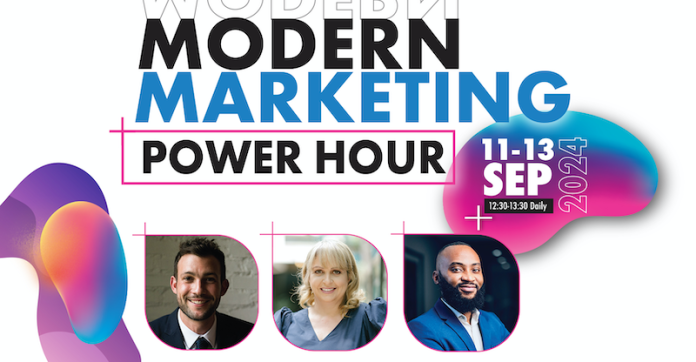
Industry leaders will share their expertise and insights in the ever-evolving field of marketing at the free-to-attend Modern Marketing Power Hour.

There will be a presentation each day from 11-13 September from 12:30-13:30 daily at the Modern Marketing Expo. The event is taking place at Gallagher Convention Centre. Book your slots here, and register for the Modern Marketing Expo here. Entrance is free!

Get insights from these industry experts:

Rowan Varkevisser, Client Services Director, Ivie Media

Topic: How to reach your target audience with dynamic creative in advertising

Using dynamic creative in advertising – whether radio, Out of Home (OOH) or TV – allows a brand to speak to its audience in the way that they want, providing consumers with more reactive and relevant content. In a highly congested and competitive advertising market, targeted awareness through dynamic creative is key. Ivie Media discusses how brands can elevate themselves and their message with dynamic creative.

Date: 11 September. Book your slot here.

Sizwe Dlamini, Managing Director of Tech Hive

Topic: Welcoming a new era of data-driven marketing

A data-driven marketing approach enables businesses to stay competitive and thrive in today’s rapidly evolving marketplace. Data is the new gold, playing an absolutely crucial role in developing innovative customer solutions around the world. Data provides the insights necessary to customise products, services, and experiences to meet the consumers’ needs effectively. Dlamini will guide you on how to use data to boost your marketing effectiveness.

Date: 12 September. Book your slot here.

Cindy Laufs, Founder of Hustle Media

Topic: How To Run A Successful Influencer Marketing Campaign

Running a successful influencer marketing campaign requires careful planning, strategic execution, and a deep understanding of the dynamics involved to avoid the headaches and challenges. Setting clear goals and aiming for authenticity and relevance are just some of the considerations. Laufs will discuss tips and strategies to get it right.

Date: 13 September. Book your slot here.

In addition to seeing these speakers, you can also attend the Modern Marketing Expo, which will be a showcase for the latest branding, marketing, graphics, signage, promotional products, commercial print, digital printing, T-shirt printing, vehicle graphics, digital packaging and other solutions.

MODERN MARKETING EXPO
+27 11 568 1894
https://modernmarketingexpo.co.za

To Employ A Successful Challenger Brand Strategy, You Better Be Ready To Fire Your Raygun

To Employ A Successful Challenger Brand Strategy, You Better Be Ready To Fire Your Raygun
Gavin Whitfield, Leagas Delaney South Africa.

Gavin Whitfield, Group Executive Creative Director at Leagas Delaney South Africa, says that on the final weekend of the 2024 Olympics, a 36-year-old Australian woman named Rachel Gunn walked onto the world’s biggest stage to compete in, of all things, the Breakdance B-Boy for Women category. She was as unlikely a contestant as any to have competed in the games; right up there with the infamous Eric ‘The Eel’ and Eddie ‘The Eagle’.

Gunn had no chance of challenging for a medal and knew it. She lacked the resources for training, the support of an engaged community or the competitive heritage of her competitors from the US. So, she did the next best thing; she stole the conversation and won the whole damn Olympics.

And don’t be naive in thinking she didn’t know what she was doing. She is a Professor of Cultural Studies at the University of Macquarie. I have watched her qualifying rounds, where she was not nearly as bad – in fact, she had to beat all comers in her region to qualify. This was entirely intentional. To get a score of zero for three consecutive rounds in an interpretative dance competition means you have to be deliberate in the same way that you would need to be to earn a perfect 10.

The parallels between her performance and those of so-called challenger brands are obvious. She was up against the ‘big girls’ and she knew it. She could have put up a brave fight and faded into the bottom half. Or she could take a big swing. Unlike many who claim the challenger status, she didn’t put the words in a deck and then try and beat the competition at their own game. No, she did the complete opposite; she threw out the book and gave us something to remember her by.

Now, agree or disagree on the merits of her motives, but you can’t argue with the fact that she managed to achieve what all challenger brands are after: consideration. The whole world is talking about her and her ‘sport’.

Now, did everyone get it? No. But, in a year from now the name Raygun is going to be on T-shirts and sneakers and she’s going to be doing public appearances and endorsing products – hell, I wouldn’t be surprised if she ends up playing the villain, in the Napoleon Dynamite vs. Raygun movie. Remind me who won her event again?

So, what can we learn from this? If you’re talking seriously about considering taking a challenger brand positioning then understand what or who you’re challenging and then make sure you don’t follow their playbook. Go out there and shoot your shot.

LEAGAS DELANEY SOUTH AFRICA
www.leagasdelaney.co.za

This is Modern Marketing