
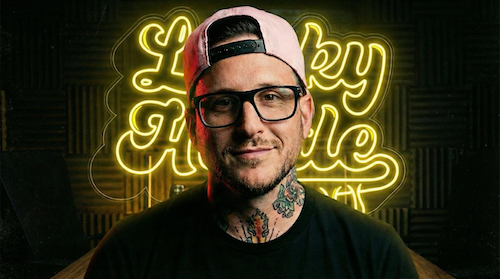
Darren Morris, CEO of Lucky Hustle, says for many years, men’s health has been framed through a narrow and highly visible lens. Strength, endurance, discipline and physical appearance have dominated the narrative, creating a version of wellbeing that is easy to measure but incomplete in practice. If a man looked healthy and performed well, it was widely assumed that everything else in his life was functioning as it should.
That assumption is increasingly at odds with the reality on the ground in South Africa.
The country is facing a mental health crisis that sits quietly behind the visible markers of performance. Depression affects a significant portion of the population, with estimates suggesting that more than a quarter of South Africans experience depressive symptoms at some point. At the same time, access to care remains uneven, stigma remains deeply embedded, and many men continue to avoid seeking help altogether, according to an Employee Assistance Professionals Association of South Africa (EAPASA) study.
The consequences of this are stark, particularly for men.
In South Africa, men account for the overwhelming majority of suicide deaths. Of the more than 13,700 recorded suicides, over 10,800 were men, which translates to roughly three-quarters of all cases. Suicide remains one of the leading causes of death among young people, and the country’s overall suicide rate places it among the highest globally and on the African continent. These are not abstract statistics. They point to a systemic gap between how men are expected to show up and the support structures available to them. This is where the conversation around men’s health begins to shift.
What is emerging is a more complex and far more honest understanding of health, one that recognises the interplay between physical performance and the often invisible pressures that shape it. Increasingly, men are starting to acknowledge that how they think, how they process stress and how they carry responsibility are not secondary concerns. These factors sit at the centre of how they function day to day, influencing not only their mental state but their physical outcomes as well.
The shift is surfacing in conversations that feel less curated and more reflective of real life with platforms like The Hustle IRL, hosted by broadcast veteran Samm Marshall, technology commentator Akhram Mohamed and myself, providing a useful window into this evolution. The podcast does not position itself as a health platform, yet it consistently surfaces the realities that underpin men’s wellbeing. Discussions move naturally between money, fatherhood, ambition, discipline, relationships and mental resilience, revealing how deeply interconnected these elements are in shaping a man’s life.
This interconnectedness signals a fundamental shift in how health is being understood. It is no longer something that can be compartmentalised into isolated categories. Instead, it reflects a system in which each part influences the other, often in ways that are not immediately visible.
The inaugural episode featuring Chris ‘The Wolf’ Thompson brings this into sharp focus. While the conversation begins with boxing, it quickly moves beyond the physical demands of the sport to explore the psychological realities that accompany it. Thompson speaks to the isolation that comes with competition, the emotional volatility of both victory and defeat, and the discipline required to continue operating in an environment defined by constant pressure. These are not experiences unique to professional athletes. They resonate with men operating in high performance environments across business, entrepreneurship and everyday life.
For a long time, the emphasis in men’s health has been placed on outputs. The expectation has been to lift more, achieve more and push harder. What is now coming into focus are the inputs that make those outputs sustainable over time. The quality of rest, the ability to manage stress, the stability of one’s financial situation and the strength of personal relationships all play a critical role in determining long-term wellbeing.
Taken together, these factors highlight an important reality. The modern man is not managing a series of isolated challenges. He is managing a system in which each element is interconnected and mutually reinforcing.
What makes this moment particularly significant is that men are beginning to articulate these experiences more openly, even as the data shows how urgent the issue has become. South Africa’s high suicide rates, the disproportionate impact on men, and the widespread prevalence of untreated mental health conditions all point to the same conclusion. The traditional model of men’s health is no longer sufficient.
The conversation has already moved. It now includes how men respond to pressure, how they navigate responsibility and how they recover from challenges that are not purely physical. It reflects a more holistic understanding of wellbeing that aligns more closely with the realities men are experiencing.