
Home Blog Page 94

It’s Time To Respect Design Rather Than Treat It As A Subordinate To Art Direction

Its Time To Respect Design Rather Than Treat It As A Subordinate To Art Direction
Tanya de Jongh, RAPT Creative.

Tanya de Jongh, Integrated Creative Director and Head of Design at RAPT Creative, says it’s long overdue that we start recognising the distinctiveness of design and doing better by the discipline. By understanding the unique contributions that designers bring to the table, we can elevate the role and celebrate the deep thinking and skill required to craft truly impactful design work.

In our industry, the terms ‘design’ and ‘art direction’ are often used interchangeably, leading to confusion and, more importantly, an undervaluation of the design discipline. While both roles are essential in shaping visual communication, they differ in their purpose, process, and the thinking behind them. Unfortunately, the industry’s tendency to blur these lines has led to a diminished respect for design as a craft.

The Role Of Design Vs. Art Direction

At its core, design is about problem-solving. It is the practice of taking a set of constraints — whether they be functional, aesthetic, or strategic — and crafting solutions that meet both the practical needs and the creative vision of a project. Design requires a balance of analytical thinking and creative execution. It is detail-oriented, iterative and hands-on.

Art direction, on the other hand, is broader in scope. Art directors are tasked with defining the overall visual direction or aesthetic strategy of a project. They conceptualise the big picture, establish a unified visual tone, and oversee the creative process to ensure that all elements — photography, typography, illustration, and more — are working harmoniously to serve the brand or narrative. Art direction is more about guiding teams and shaping ideas than it is about executing the design itself.

While art direction provides vision, it’s the designer who brings that vision to life through the nitty-gritty of craft. Whether it’s selecting typefaces, creating grids, or ensuring the design responds to user behaviour, designers are responsible for translating ideas into functional, visually compelling solutions.

The Undervaluation Of Design

Despite the essential role that design plays in making a project successful, the industry often treats it as a second-tier discipline, overshadowed by the more glamorous role of art direction. This is reflected in everything from budget allocation to the visibility of designers within agencies. Too often, design is seen as a mere execution of art direction — as if design is only about making things ‘look good’ after the art director has made the important decisions.

This mentality undervalues the strategic thinking and expertise that design requires. Designers don’t just make things pretty; we craft strategic solutions that improve the end user’s experiences, tell compelling stories, and ultimately drive business outcomes. Whether it’s designing an intuitive user interface or creating a brand system that communicates identity, design has a profound impact on how a brand or product is perceived and experienced. Yet, these contributions are frequently minimised or overlooked.

The Craft Of Design: More Than Execution

Design isn’t just a series of steps toward execution — it’s a form of critical thinking. Designers are problem-solvers who consider functionality, accessibility, hierarchy, and emotion in every decision they make. A well-designed interface, for example, isn’t just visually appealing — it’s intuitive, ensuring that users can navigate effortlessly. A well-designed brand system isn’t just a logo and a colour palette; it’s distinctive and modular, ensuring coherence across diverse mediums while leaving room for evolution.

To treat design merely as decoration is dismissing the depth of knowledge and skill involved in the craft. A designer must understand colour theory, typography, composition, psychology, and, increasingly, technology. We have to balance client needs, brand business objectives with user needs, marrying aesthetic considerations with functional ones. This level of expertise takes years to develop, and yet, it’s often undervalued in creative teams.

Respecting Design: A Call To The Industry

As an industry, we all need to do better in respecting design by recognising its role as a strategic asset, not just a cosmetic one. That means involving designers earlier in the creative process, giving them a seat at the table when decisions are being made, and acknowledging that their insights are as valuable as those of art directors or other stakeholders.

Budgets should reflect the time and expertise required for good design, and designers should be given the space to push back when decisions are made that undermine the integrity of the work. Additionally, creative teams and agencies need to invest in the continuous education and growth of designers, as their work is increasingly tied to evolving technologies and consumer behaviours.

Design should be elevated to the same level of strategic importance as art direction, copywriting, or strategy. By respecting the thinking behind design, the craft, and the intellectual rigour requires, we open the door to more innovative, effective, and cohesive creative solutions.

Design and art direction are both integral to the creative process, but they serve different roles. Art direction provides the vision, while design brings that vision to life through thoughtful, crafted execution. Yet, all too often, the industry fails to respect design as a discipline, treating it as a subordinate to art direction rather than as a strategic, problem-solving practice.

To move forward, we must acknowledge the intellectual and technical precision of design, give designers the respect they deserve, and recognise that great creative work relies as much on the excellence of design as it does on the vision of art direction. It’s time to elevate design, honour the craft, and, in doing so, push the industry forward.

RAPT CREATIVE
https://raptcreative.com/

Top Global Creatives, Including From SA, To Serve As Jury Presidents For The One Show 2025

Top Global Creatives, Including From SA, To Serve As Jury Presidents For The One Show 2025

The One Club for Creativity is the world’s foremost non-profit organisation whose mission is to support and celebrate the global creative community. Jury presidents for The One Show 2025 have been announced. Esteemed creatives will lead judging for each discipline, and have a vote on the work.

Confirmed One Show 2025 Jury Presidents, by discipline, are as follows:

– Radio and Audio: Suhana Gordon, CCO, LoveSong, Cape Town.
– Brand-Side/In-House: David Lee, CCO, Squarespace, New York.
– Branded Entertainment: Malcolm Poynton, Global CCO, Cheil Worldwide, London.
– Creative Use of Data, Creative Use of Technology: Nancy Crimi-Lamanna, CCO, FCB Canada, Toronto.
– Cultural Driver: Bianca Guimaraes, partner, ECD, Mischief, New York.
– Design: Liza Enebeis, creative director, partner, Studio Dumbar/DEPT®, Rotterdam.
– Direct Marketing: Vicki Maguire, CCO, Havas London.
– Film and Video: Javier Campopiano, global CCO, McCann Worldgroup & McCann Global, Madrid.
– Gaming: Taj Reid, global chief experience officer, US CCO, Edelman, New York.
– Integrated, Experiential and Immersive: Chris Beresford-Hill, worldwide CCO, BBDO, New York.
– Fusion Pencil: Walter T. Geer III, CCO, Innovation North America, VML, New York.
– Green Pencil: Barbara Humphries, ECD, The Monkeys, Sydney.
– Health and Wellness, Pharma: Wendy Lund, chief client officer, WPP, New York.
– IP and Product Design: Ronald Ng, global CCO, MRM, New York.
– Moving Image Craft and Production: Irene Kugelmann, chief creative officer, DDB Group of Companies Germany, Berlin.
– Music and Sound Craft: Joel Simon, CCO, JSM Music, New York.
– Out of Home, Print and Promotional: Kainaz Karmakar, CCO, Ogilvy India, Mumbai.
– Public Relations: Patricia Ávila, regional director for Latin America, Ágora, São Paulo.
– Social Media: Federico Duran, SVP, ECD, .monks, Los Angeles.
– Sustainable Development Goals Pencil: Thomas Hongtack Kim, CCO, partner, Paulus, Seoul.

Jury Presidents for Creative Effectiveness and Interactive, Online and Mobile disciplines will be announced along with the full jury in December.

In addition, members of The One Club Board of Directors will be present during judging, serving as non-voting facilitators in jury discussions.

‘The One Show’s reputation is built on the integrity of its juries and judging process,’ said Kevin Swanepoel, CEO, The One Club. ‘This year’s Jury Presidents will help further this legacy of the fairest and most positive judging process.’

Entries to The One Show 2025 can be submitted now, with fees increasing after each deadline period. Super-early entry deadline for the greatest savings is November 1, 2024. Early entry deadline is December 13, 2024, with the regular deadline January 31, 2025. The extended deadline is February 14, 2025, and final deadline February 28, 2025.

Finalists announced in April 2025, with Gold, Silver and Bronze Pencil and Merit winners announced in May during Creative Week 2025 in New York.

All One Show submissions must now include descriptions of the work background, creative idea, insights and strategy, execution, and results. This information will help judges make more informed decisions and promote thoughtful discussion, as well as enhance the quality of the comprehensive One Show awards archive.

All winning entries are showcased in the archive, and viewable for free for one year. All One Show winners receive a complimentary one-year membership to The One Club, which also includes complete archive access.

Agencies, brands, production companies and individuals responsible for winning work are included in The One Show Creative Rankings, as well as The One Club’s Global Creative Rankings, which combine points for winning work in The One Show, ADC Annual Awards, Type Directors Club TDC competition, Art Directors Club of Europe (ADCE) Awards, and ONE Asia Creative Awards. Winners are ranked globally, regionally and by country.

THE ONE SHOW
https://oneshow.org

Cape Town Is Worthy Of Your OOH Spend

Cape Town Is Worthy Of Your OOH Spend
Mali Motsumi-Garrido, Tractor Outdoor.

Currently, only 9% of out of home (OOH) media spend is directed towards the Western Cape, while 66% is allocated to Gauteng. Mali Motsumi-Garrido, Sales Director at Tractor Outdoor, discusses why you should be directing more of your out of home OOH spend towards the Mother City.

It’s no secret that Gauteng currently devours the bulk of the out of home (OOH) and digital out of home (DOOH) media spend pie. But the growth of the Mother City, in particular, is set to shift the share of spend in the near future.

No shade to Johannesburg: as a proud resident, I know all too well what the City of Gold has to offer, but that doesn’t mean we shouldn’t be redirecting some of its gold to other, equally deserving regions.

Here’s why media planners and buyers need to reconsider their OOH media investment splits – and why the Western Cape currently presents such a compelling story.

The Case For Cape Town

Firstly, the Western Cape is growing fast. In 2001, WC was the fifth most populous province, with 5 million people. Fast forward to 2022, and the WC has 7.4 million people, making it the third largest province after KwaZulu-Natal (12.4 million) and Gauteng (15.1 million).

According to census data, Cape Town will soon be a city of approximately 5 million. To prepare for this, heavy infrastructure investment has been dedicated to the city, with the 10-year spend pegged at around R120 billion.

Moreover, Cape Town currently has the fastest job growth: in the last year, the city has added over 200,000 jobs, which is more than SA’s other metros combined, and the city also boasts the lowest unemployment rate in SA.

In the near term, the City of Cape Town has secured R3.5 billion in financing for infrastructure investment, which forms part of the city’s plan to spend R39.5 billion on infrastructure over the next three years as part of its ‘Building for Jobs’ budget. To put this in perspective, this infrastructure budget is 80% larger than the next metro, Joburg (R22bn), and 98% larger than the third biggest, eThekwini (R20bn).

WC has attracted R140 billion in foreign direct investment, with the region becoming a hub for renewable energy and tech sectors. This funding brings much-needed capital and expertise to the area, providing access to global markets, talent and technology.

On the tourism front, Cape Town is once again thriving. In 2023, a record 2.8 million two-way international passengers walked through Cape Town International Arrivals’ doors. Not only did this represent a 48% growth on 2022, but it also beat the previous pre-pandemic record of 2.6 million in 2019.

Trends Shaping Audience Behaviours

Semigration: poor governance in certain provinces has driven consumer relocation, particularly towards the WC and Garden Route regions. Cape Town has emerged as a beacon of hope and optimism, stimulating migration from other parts of the country and fuelling demand for new homes.

Urban lifestyle: living in downtown Cape Town is as popular as ever and Gen Z, Millennials and Boomers alike are attracted to the urban lifestyle the city offers. These audiences are out and about and are constantly exposed to OOH advertising.

Community-centric developments: there is increasing demand for high-quality developments, with consumers favouring residences and workplaces that facilitate working, living and social interaction.

Facilitated by the rise of remote working and digital nomad culture, new developments have the opportunity to become the beating heart of communities. For example, the V&A Waterfront creates a focal space for the mixed-use developments surrounding it. This space has contributed significantly to fostering inclusivity, connectivity, and integration within Cape Town, forming a more vibrant and accessible urban environment for all.

Property Trends

This year will also see a big focus on short-term stay offerings, including hotels and aparthotels. This trend is giving way to high-quality public spaces, shared-space alternatives, short-stay offerings and office spaces, as people move away from ‘public’ spaces towards ‘belonging’ places.

Furthermore, Cape Town’s luxury property market is booming. Many first-time buyers are entering the market, facilitated by the semigration trend. Real estate businesses, financial institutions, and insurance companies looking to expand their reach will benefit from marketing to this new consumer base.

Cape Town’s Emerging Suburbs

You are likely familiar with Cape Town’s popular hotspots, such as the CBD and V&A Waterfront. While you might already be directing some of your spend towards these suburbs, it’s important to be aware of several emerging hotspots within the region, which are worthy of a slice of the OOH pie. These include:

Durbanville: this suburb has seen rapid residential and commercial development, particularly with modern estates and gated communities. The area offers good schools, proximity to the CBD, and a growing selection of restaurants, shopping centres, and recreational spaces. The area attracts young families and middle-income professionals looking for suburban living with easy access to city amenities.

Century City: this mixed-use development has seen rapid growth over the past few years, offering commercial, retail and residential spaces. It’s close to the CBD but offers a more suburban feel with modern apartment complexes, access to Canal Walk, and a vibrant business district. It is favoured by young professionals and middle-income families seeking modern, convenient living.

Somerset West/Strand – the Helderberg is a hotbed for development, with Somerset West and Strand leading the charge. Known for good schools, wine estates and gorgeous outdoor spaces, the area appeals to both retirees and young families looking for coastal living with strong community and lifestyle appeal.

Other emerging hotspots include Table View, Parklands, Sunningdale, Kuils River, Brackenfell, Kraaifontein, Milnerton, Bothasig, Edgemead, Stellenbosch, Stranfontein, Mitchell’s Plain and Bloubergstrand.

What You Need To Keep In Mind When Planning Your OOH Strategy

When it comes to OOH, Cape Town is worthy of your spending. The cultural landscape creates a vibrant theatre for brands to utilise OOH to become part of the creative narrative of the city while its favourable bylaws mean that advertisers get more exposure. The media landscape is not as cluttered as other provinces, allowing your brand’s messaging to stand out. Furthermore, tourism contributes to higher audience volumes, with a consistent influx of travellers – who tend to have spending power – serving as potential audiences.

For those looking to advertise in the Western Cape, make sure that your OOH campaign and format selection are fit for purpose. For example, short impactful messages work best on highway roadside digitals and classic sites, whereas longer format creative works best in forecourts and malls that encourage longer dwell times.

In addition, be aware of the ad length and animation requirements of sites. There are certain spaces where ad length and animation is restricted, such as roadside billboards.

Due to the dynamic nature of DOOH, brands can also be more flexible with their site selection, either employing hyper-local strategies by pre-selecting specific sites around key locations, or spreading distribution across a wide DOOH network.

The Western Cape is known for its robust bylaws, which are diligently enforced. Thus, planners must have confidence in their site selection and ensure that billboards are strictly compliant.

Finally, make sure you book in advance! Due to limited site availability and high demand, we recommend planning and booking media well in advance. This not only provides media planners with the guarantee that they will be able to deliver on campaign objectives during high-demand periods, but it also provides cost-savings through better rates.

TRACTOR OUTDOOR
www.tractoroutdoor.com

Sanlam Mixes Education And Humour For Latest Financial Literacy Campaign

Sanlam Mixes Education And Humour For Latest Financial Literacy Campaign

The F-Show – featuring comedian of the year Mpho ‘Popps’ Modikoane – was Sanlam’s secret project to get South Africans talking about the one thing they really don’t want to: their finances. The show was held over three sold-out nights at the Theatre On The Square in Johannesburg. Sanlam collaborated with author and personal finance expert Sam Beckbessinger to develop a six lesson-long ‘fin lit’ course, which was then crafted into a feature-length stand-up comedy gig by some of the country’s top comedic talent.

Mariska Oosthuizen, Chief Marketing Officer at Sanlam, said, ‘This campaign is rooted in the insight that South Africans don’t want to talk about money. However, research reveals that regularly talking about finances results in better mental wellbeing, improved relationships, and financial outcomes. Sanlam’s north star is to empower people to live with financial confidence, security and prosperity. So, the F-Show is our creative catalyst to normalise these kinds of conversations. As a nation, we’re very good at laughing at ourselves. So, comedy is a clever medium to help people to move past their inhibitions and engage with a traditionally ‘taboo topic’.’

‘Popps, along with supporting acts, Vafa Naraghi and Khanyisa Bunu, got the vision immediately and kept it raw and hilarious to bring home the message from our Dirtiest Word campaign: Money talk matters.’

Modikoane added, ‘Partnering on this project with Sanlam has been amazing. The idea of The F-Show is gripping; money is an actual f-word that people don’t want to engage with. That’s why humour is so important. As South Africans, our ability to laugh at ourselves is the glue in our culture that’s kept us going for the past 30 years.’

As clips from The F-Show started circulating on social media – generating over 2 million views, with 14,000 shares and 138,000 engagements – South Africans found themselves laughing and sharing moments that resonated with their own financial experiences, without fully realising they were being taught valuable financial lessons at the same time. With each laugh and comment shared online, the viral sensation encouraged a cultural shift – transforming the taboo around money into open and engaging dialogue.

Beckbessinger – author of Manage Your Money Like a F*cking Grownup – condensed years of financial insight and knowledge into six solid ‘fin lit’ lessons for the comedians to craft their comedy around. Popps said preparing for the show was challenging but fun. ‘There’s no sensitive way to talk about money. Money is money. You either have it or you’re trying to get it. Money shouldn’t be a taboo topic; we make it one and that’s the problem. We need to talk about money more; it’s healthy to do so. I grew up in a family that didn’t talk about it and, as a result, I had money struggles growing up. Now, I make it a point to talk about finances with my daughter and my wife.’

Beckbessinger noted that money taps into some of our trickiest emotions, such as fear and shame. As a result, money stress is something many people hide. ‘Humour disarms us and lets us look at things we’ve been too scared to confront; laughter is like flipping on a light switch in a dark room. It is South Africa’s unofficial 13th language; it’s how we connect, cope and open up about even the thorniest topics, like money.’

‘I hope that The F-Show streaming special gets money conversations out of the shadows and into the heart of our homes. We want people to talk about their finances with the same openness they’d discuss the latest episode of Real Housewives. If we can get friends and families chatting about their financial goals, then I feel we’ve done our job.’

Beckbessinger added that it can be easy for money conversations to derail us as we become defensive, throw blame, act condescendingly or feel helpless. ‘That’s exactly where humour comes to the rescue. If we can poke a little fun at ourselves, we can lower our defences and get everyone back on the same team. So, next time you’re diving into a tricky money talk at home, try to start with some self-awareness – and light-hearted moments.’ Channel your inner Mpho.

Perhaps The F-Show’s biggest impact is that it makes people feel less alone. South Africans are all going through similar struggles. That’s why hiding a ‘fin lit’ course in a comedy act was a winning idea. The material resonates as it informs. Beckbessinger said, ‘It’s easy to feel like you’re the only one drowning. When you open up, you realise you’re not alone. You give yourself the chance to ask for help, learn and take the first steps to getting back on track. Talking is the first step to banish the terror and regain control of our finances. There are solutions. We can’t begin to find them unless we first remove the terror.’

Oosthuizen concluded, ‘This has been an incredibly proud moment for Sanlam as we’ve explored a creative currency that we believe is unique to South Africa – our shared humour. We hope that The F-Show helps to normalise the F-word and lets us learn from, laugh with and lift each other. Talking about money is how we empower one another to live with financial confidence.’

SANLAM
http://sanlamonline.co.za

Marketers Must Measure Both Short-Term Impact And Long-Term Growth To Achieve Better Results

Marketers Must Measure Both Short-Term Impact And Long-Term Growth To Achieve Better Results

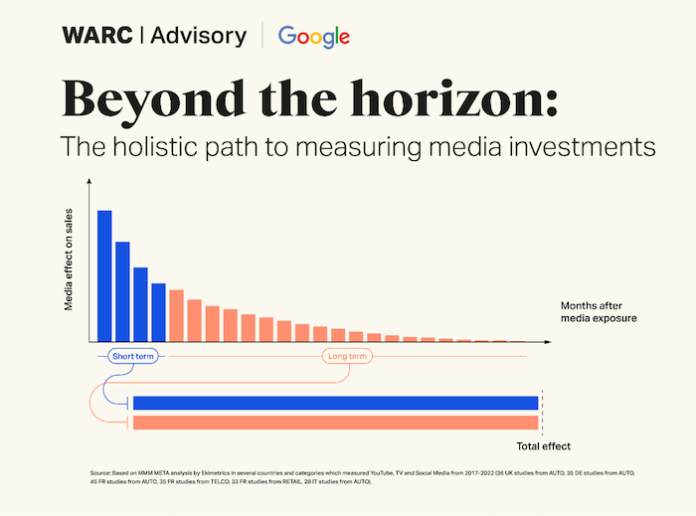
A new study by WARC in partnership with Google, highlights the latest research in EMEA on the importance of measuring both short-term and long-term effectiveness, the connection between brand metrics and sales, and how the latest technological and methodological advancements around measurement may help advertisers have a more holistic view on the impact of their marketing.

Rica Facundo, Managing Editor, WARC, commented: ‘In this white paper, developed in partnership with Google, we dive into the challenges of measuring the long-term impact of campaigns and offer new evidence into new solutions and best practices that will help marketers gain broader and more granular insights of their marketing efforts.’

Michal Protasiuk and Ahmet Bas, Senior Marketing Research and Insights Managers, YouTube Ads, Market Insights, EMEA, said: ‘Measuring marketing impact is a challenge, particularly in the ever-evolving and diverse media landscape and the increasingly messy consumer purchase journey.’

‘Advertisers are optimising their media investments with a short-term focused measurement and using it as the north star for their whole marketing budget, seemingly even for their branding campaigns with long-term goals. The need for a more holistic approach to measuring the impact of marketing has never been greater.’

Key insights and solutions outlined in ‘Beyond the horizon – the holistic path to measuring media investments’ include:

Focusing On Short-Term Marketing ROI Ignores Half Of Media Returns

A sharp focus on performance marketing and short-term measurement have made it difficult to prove the long-term value of marketing. Yet the cost of neglecting long-term effects is an incomplete picture of ROI.

According to the latest MMM Meta analysis by Ekimetrics, advertisers that prioritise short-term ROI may overlook half (50%) of media returns that can be generated by the related but separate dynamic of brand building.

Peter Grant, Head of Media Effectiveness, Boots, said: ‘If long-term health is sacrificed enough times and to a significant degree, then there is no tomorrow. Deep promotions and an addiction to conversion tactics are effectively the same thing. It may look and feel great today, but more is needed for tomorrow to be sustainable.’

Investing In Upper, Mid And Lower Funnel Marketing Drives Long-Term Growth

Investing in brand awareness via upper and mid-funnel marketing not only drives long-term growth but can also have a direct impact on the bottom line.

Multiple studies are proving that marketers should move away from the binary view of brand versus performance to be more outcome-focused and utilise both traditional and digital channels to generate growth.

A recent study conducted by Nielsen for Google revealed that boosting brand awareness in the upper and mid funnel by just 1% not only leads to a 0.6% increase in long-term sales, but also results in a 0.4% increase in short-term sales.

Investing in lower funnel marketing to drive purchase intent, has also proven to have long-term effects. According to the Nielsen study, by increasing ‘purchase intent’ activities by 1%, short-term sales grow by 0.7% and long-term sales by 0.2%.

Leveraging Marketing Mix Models (MMM) To Maximise ROI Across The Funnel

No single tool can provide a holistic measurement of media impact. To measure marketing performance effectively, a combined approach is necessary to close the gap between each measurement methodology.

Marketers are increasingly combining the use of Attribution (to measure digital media campaigns), Incremental Experiments (to validate observations and test insights) and enhanced MMM solutions (to connect insights and learnings).

Marketing Mix Modelling (MMM) is witnessing a resurgence driven by the shift towards effectiveness measurement, the adoption of robust, aggregated measurement approaches, and its capability of measuring new digital media formats.

Brands Considering Mmm Should Give Thought To:

Investment: this is dependent on factors such as how much data the company has and how granular the insights should be. Dr Grace Kite, economist and CEO/Founder of Magic Numbers recommends investing 10% of the media budget in MMM.

In-housing vs outsourcing: this is determined by factors such as expertise, bespoke or off-the-shelf solutions.

Strategic budget planning: MMM is particularly effective in assessing future cross-channel budget distribution by leveraging past performance data.

Benchmarking: MMM helps create accurate and data-driven benchmarks that quantify the holistic impact of different marketing channels on ROI.

Anna Dzierzędzka, Media and Connections Planning Director, PepsiCo CE and Founder and President of POR, part of WFA, said: ‘AI-powered advertising solutions will revolutionise holistic campaign measurement, enabling a deeper understanding of effectiveness at an accelerated pace and providing insights into potential future scenarios. This enhanced understanding will empower businesses to make more informed and impactful decisions, ultimately driving growth and success.’

A complimentary copy of the full report is available to read here.

WARC
https://www.warc.com

Chicken Licken And Joe Public Highlight Perfect Moments Of Satisfaction In Latest Campaign

Chicken Licken And Joe Public Highlight Perfect Moments Of Satisfaction In Latest Campaign

Chicken Licken is reminding South Africans that it’s the little things that satisfy us most. Chicken Licken and Joe Public’s latest campaign showcases how beloved Super Slyder® cravers can enjoy the ultimate satisfaction of the Super Slider® Mix 4.

In a series of captivating films, the campaign taps into tiny, quintessential moments of personal triumph based on human truth, and amplifying them to dramatise the immense feeling of satisfaction that it brings.

‘This campaign is unlike anything we’ve done before,’ said Xolisa Dyeshana, Chief Creative Officer at Joe Public. ‘To keep growing a brand as iconic as Chicken Licken, we have to constantly reinvent how we connect with our consumers. This campaign does exactly that — by tapping into an undeniable truth that South Africans can relate to, and then zooming in on those tiny, perfect moments of satisfaction.’

Directed by Greg Gray of Romance Films, the series of films brings to life quirky, relatable stories: from a late-night office worker finding a clever way to deal with paperwork, to a woman’s triumphant moment during a quiz show, and even a tense showdown with a claw machine. Each of these moments represents the ultimate feeling of satisfaction, the same feeling you get from eating a Super Slider® Mix 4.

Adding to the film’s creative edge is a bold and unexpected track, composed by Pressure Cooker, that heightens the tension and emotion of the storytelling.

In the coming weeks, the Super Slider® Mix 4 campaign will be promoted across social media, radio, and outdoor advertising, reminding Chicken Licken fans everywhere that when it comes to satisfaction, it truly is the little things that satisfy us most.

JOE PUBLIC
www.joepublic.co.za

Open Chair, In Partnership With Nedbank, Hosted Event For Young Women In Advertising And Marketing

Open Chair, In Partnership With Nedbank, Hosted Event For Young Women In Advertising And Marketing
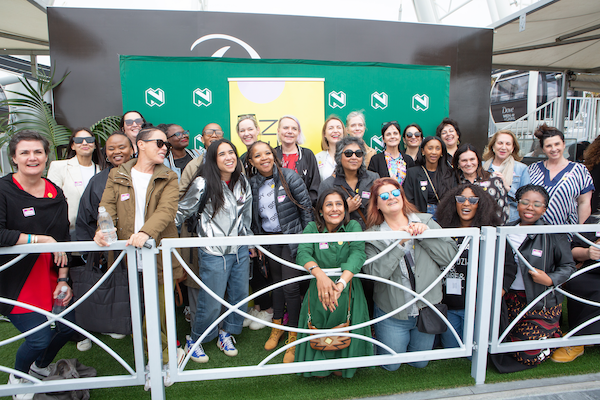
Credit: Misha Jordaan, Gallo Images.

Open Chair, in partnership with Nedbank, hosted ‘Friends in High Places’ – a speed dating event for young women in advertising and marketing. This was speed dating with a difference. It took place on The Cape Wheel where 65 mentees had face time with 31 mentors from across the industry. The pods on the wheel served as an ideal safe space for women to share knowledge and receive guidance on how to navigate their careers, while taking in a breathtaking view.

The event took place on Thursday, 10th October during Loeries Creative week, the biggest event in the calendar for the advertising and marketing industry in Africa and the Middle East. With most of the industry having descended upon Cape Town from 7-11 October, it provided the perfect context for nurturing and inspiring the next generation of young women in the creative industry.

The plan is to continue to host more speed dating events throughout the year in Johannesburg and Cape Town.

Loeries is all about recognising, rewarding, inspiring and fostering creative excellence. This aligns very well with the mission of Open Chair, a non-profit organisation, dedicated to two key objectives:

1. To uplift and inspire the women of industry.
2. To help make the industry safer for all our people.

Open Chair was founded by Suhana Gordhan, Independent Creative Leader and former Chairperson of the Loeries, as part of a vision to help create more consciousness and connection between women in the industry. Gordhan’s partners at Open Chair are all industry stalwarts, including Nkgabiseng Motau, CCO and Founder of Think Creative Africa, Roanna Williams, CCO of Boundless, Fran Luckin, CCO of VML and Melina McDonald and Lorraine Smit, Co-Founders of Darling Films.

The women at Open Chair believe that one of the challenges we face as an industry is empty chairs. There are far too few women occupying those chairs and far too many leaving them. This community was formed for the purpose of creating access to industry leaders. ‘Our events are about creating a safe space for women to meet face-to-face, to gather guidance, to navigate the tough parts of our industry and ultimately to learn from and be supported by each other. We want to focus on our futures, and to encourage each other to fill those chairs, to be visible, present and unashamedly extraordinary,’ said Gordhan.

Open Chair has also developed a Code under the hashtag, #OnMyWatch, to advocate for better behaviour across the industry. ‘Our industry, unfortunately, has a history of destructive behaviour – physical and psychological – that we need to talk about. Our Code is not about naming and shaming, but rather about painting the picture of the industry we believe is possible. It’s about creating an intentionality around addressing the harmful behaviours – from bullying to harassment and microaggressions – that have persisted over time. We want women to stay in the industry, and rather than feeling threatened and disrespected, we want their only challenge to be about creating great work,’ said Motau.

‘We are truly grateful to our partners at Nedbank for supporting this event, and for recognising the importance of investing in mentorship, as a pathway to ensure that those empty chairs in leadership are filled by the brilliant, bright, young women coming up in this industry,’ said McDonald.

You can adopt Open Chair’s Code here.

OPEN CHAIR
LinkedIn 

Empathy Is A Key Differentiator In Creating Exceptional Customer Experiences

Empathy Is A Key Differentiator In Creating Exceptional Customer Experiences
Liezel Jonkheid, Consumer Psychology Lab.

Liezel Jonkheid, Director and Founder of the Consumer Psychology Lab, says that despite its complexity, empathy can be taught and, when leveraged effectively, becomes a game changer in both customer experience (CX) and employee engagement.

Empathy is a key differentiator in creating exceptional customer experiences in an increasingly tech-driven business world. Labelled a ‘soft skill’, it’s a complex trait to develop that requires self-awareness, emotional intelligence and ongoing development.

The metaphor ‘to walk in someone else’s shoes’ oversimplifies the multifaceted process of empathy, which goes beyond a surface-level understanding of someone’s situation. To truly empathise with a customer, employees must detach themselves momentarily from their own emotional triggers, responses and biases.

At the same time, they must consider the context of the content and behaviour and respond in a way that connects with and validates the customer’s emotional needs. Empathy requires a high degree of emotional self-awareness that enables individuals to regulate their own responses more effectively, allowing for authentic empathetic engagement with customers.

Case Study: Empathy In Action

Consider the customer experience when a new bank card is issued. The bank’s process entails automatically re-issuing the card to the courier responsible for delivering the card to the customer. However, when the contact details available to the courier company are outdated and incorrect, a significant delay prompts a call to the bank.

Example of no empathy (the customer service agent responds to the query without empathy)

In this case, the agent’s response would confirm the normal process for re-issuing the card, and that the card is no longer in possession of the bank. The only option available is for the customer to reach out to the couriers directly. Falling back to process or compliance fails to address the customer’s dilemma. The agent follows the correct route to addressing the problem. However, the real problem is not resolved. The customer’s needs are dismissed, the ownership of the bank is relegated and more effort is transferred to the customer to resolve the matter.

Example of empathy (the customer service agent responds with empathy)

When the customer’s dilemma and anxiety are acknowledged, it could sound like this: ‘I understand how stressful this must be to be unable to process any transactions. Let me call the couriers while you are on the line to find out where the card is at the moment.’

Empathy is demonstrated by relating to what it must be like without access to a bank card and unable to make any transactions, and appreciating that the normal process failed the customer. It also implies the appreciation of the unique situation of the agent to access the right resources and brokering the resolution to remove the customer’s effort.

Although the delivery timeframe of the card may remain the same, an empathetic interaction and emotional reassurance offered could have dramatically changed the customer’s perception of the brand.

This small but crucial shift in interaction can help defuse tense situations, as Harvard Business Review reports that customers who feel their emotions are acknowledged during an interaction are more likely to be loyal and provide positive feedback, even when their issue isn’t fully resolved.

The Science Behind Empathy

Empathy is not just an innate skill, but a neurologically driven process that can be fine-tuned. The amygdala – the brain’s emotional response centre – triggers our fight, flight or freeze reactions when confronted with stress. Without self-awareness, employees subconsciously fall back on default responses to protect themselves in the face of potential threats. These responses could include the fear of consequences should they not act in a perceived compliant manner. The easiest way to avoid the threat is to fall back on the ‘safe’ and compliant process when confronted with discomfort or dilemmas. This lack of flexibility often prevents them from connecting with the customer on an emotional level.

Developing empathy skills requires increasing an employee’s self-awareness. Neuroscience shows that when people are conscious of their emotions, they can better regulate their responses and engage more empathetically with others. In this context, the following steps to mastery of empathy, are important.

• Becoming aware of one’s own emotions. Being able to identify one’s own emotions, especially universally identified emotions like frustration, anger, fear, anxiety, happiness or joy is essential. All humans experience these emotions at some point. Using inherent wisdom to identify these core emotions is the first step to cultivating empathy.

• Identify, articulate and respond to other’s emotions. Like the internal process, mastering strategies to identify these universal emotions in others is the next step.

• Articulate the observation in simple language ‘I can only imagine how frustrated you are by now’ and consider what they need as a result (remove obstacles). This demonstrates the ability to ‘hear’ others. Processing the information and deciphering universal human needs hold the key to navigating the conversation to a human-centred response.

Is there a link between under-developed interpersonal skills and tech-savvy Gen Z?

A Deloitte study created an informative picture of Gen Z and its skill with technology – smartphones, tablets, laptops, social media and video calling. The same Deloitte report points out though that Gen Z is concerned about their ability to communicate and forge strong interpersonal relationships, because technology has impaired their cognitive skill development, and they recognise that their skills like critical thinking, empathy and interpersonal communication, are weak.

At the same time, many Gen Z’s will find themselves starting their working careers in the service sector. The key question for every business leader is whether their younger, front-line Gen Z employees can demonstrate empathy, good (human) communication and problem-solving skills?

The Business Value Of Empathy

Businesses will need to invest significantly into training and development of the interpersonal communication and empathy skills of their people – or risk being left with a workforce poorly equipped to drive lasting success on the customer experience front.

Empathy training for employees is good for customer and employee experience. Research from the Journal of Service Research shows that customers are 60% more likely to become repeat buyers when they feel understood by a company.

Furthermore, empathy training boosts employee confidence in handling complex situations, leading to higher job satisfaction and lower burnout rates. Employees equipped with empathy can defuse tensions quickly, they manage conversations more thoughtfully, without resorting to rigid process adherence, and instead prioritise human connection.

Empathy also has a direct impact on the bottom line. Deloitte found that companies leading in empathy not only outperform their competitors but also experience greater customer loyalty and employee retention. In an age where service delivery is becoming increasingly automated and robotic, empathy remains a distinctly human advantage.

Empathy Is A Game-Changer In CX

Empathy empowers employees to connect with customers on an emotional level, defuse challenging situations, and build stronger relationships. For organisations, investing in empathy training doesn’t just improve service delivery; it creates a culture where employees feel more confident, valued, and capable of making a difference.

As businesses strive to differentiate themselves in a highly competitive market, empathy remains one of the most underutilised, yet powerful tools available.

According to a report in Harvard Business Review by Alan Zorfas and Daniel Leemon, emotional connection matters more than satisfaction: ‘On a lifetime value basis, emotionally connected customers are more than twice as valuable as highly satisfied customers. These emotionally connected customers buy more of your products and services, visit you more often, exhibit less price sensitivity, pay more attention to your communications, follow your advice, and recommend you more – everything you hope their experience with you will cause them to do. Companies deploying emotional-connection-based strategies and metrics to design, prioritise and measure the customer experience find that increasing customers’ emotional connection drives significant improvements in financial outcomes.’

Customer empathy ultimately comes down to the actions a company takes every day to ensure each customer feels heard, understood and valued. Understanding the impact of customer empathy will set you apart from the competition, strengthen your connections with customers and ultimately boost your bottom line.

CONSUMER PSYCHOLOGY LAB
https://consumerlab.co.za

Understanding Travel Trends Helps Create Targeted Marketing Campaigns That Drive Growth

Understanding Travel Trends Helps Create Targeted Marketing Campaigns That Drive Growth
Rachel Irvine, Irvine Partners.

Rachel Irvine, CEO, Irvine Partners, says that in today’s hyper-personalised world, understanding your target market is more critical than ever. For the travel industry, this means knowing where your customers are coming from and tailoring your offerings to their specific preferences.

We live in an age of hyper-personalisation. Every ad you see online, every show you watch, and every book you read is recommended to you based on your tastes and preferences (however badly some companies may do it). The travel industry is no different. No destination or accommodation provider can cater to every single person’s travel desires.

It’s therefore critical that they know who they’re likely to appeal to and market themselves accordingly. A good starting point when it comes to doing so is identifying which countries make up the majority of guests and visitors. That’s because, while there’s obviously variation within countries, it is possible to pick up broad preferences and drill down to more individualised preferences from there.

Doing so not only means that players in the travel and hospitality sector are better placed to understand why they’re hitting the mark with citizens from certain countries, but also that they can ensure they’re targeting the right people with the right message at the right time.

Understanding Country Preferences

But what do these preferences look like? McKinsey’s The state of travel and hospitality 2024 report provides some useful insights. The report, which reveals that the travel industry is on track for full recovery by the end of 2024 and that luxury travel is the fastest growing segment, also provides some interesting insights into what people from different countries are looking for in their travel experiences.

Sixty nine percent of Chinese tourists, for example, said they plan to visit a famous sight on their next trip, versus the 20% of European and North American travellers who said the same. Respondents living in the UAE, meanwhile, also favour iconic destinations as well as shopping and outdoor activities.

In other words, city hotels might have an easier time attracting Chinese tourists if they’re close to a famous landmark, while somewhere that bills itself as a quiet retreat or which is centred around interesting food experiences may find it easier to attract European and North American tourists.

Attracting German And UK Visitors

Those are all important markets for the African travel sector, as are Germany and the UK. According to a report from SA Tourism, outbound travel to sub-Saharan Africa from Germany is growing by 21.2% annually. And in the first quarter of 2024, 125 420 UK tourists visited South Africa alone, a 5.3% increase on 2023. In Kenya, UK and Germany were fourth and sixth in terms of 2023 tourist arrivals to the country, growing by 19% and 46% respectively. It’s therefore especially critical to know what the preferences for these markets are too.

According to the McKinsey survey, both Germans (45%) and UK citizens (38%) place importance on ‘getting away from it all’. Both also like beach getaways, expressing “soaking in the sun” at twice the rate of American respondents as a main reason they travel.

A study from TGM Research, meanwhile, found that the top three needs for German tourists are quality and comfort, security, and competitive prices. Their favoured activities are beach and leisure, cultural and gastronomic, and shopping. While UK residents have the same top three needs, they’re more security conscious than Germans. They’re also more invested in beach and leisure activities than their German counterparts.

Another growing travel trend is sustainability. According to a 2022 report carried out by Opinium on behalf of the Spanish Tourist Office, 86% of UK tourists value sustainability as either ‘important’ or ‘very important’ when selecting a holiday destination. A 2023 study by Germany’s environmental protection agency (UBA), meanwhile found that ‘61% of the population have a positive attitude towards sustainable holiday travel’. This shows that destinations and providers targeting these markets can gain mileage by punting their green credentials, but only if they’re actually earned.

Interestingly, neither value traditional hospitality marketing initiatives such as loyalty programmes and hotel branding as much as visitors from China, the UAE, and North America. Make no mistake, there’s still value in such programmes but it does show that there’s room for innovation in these markets, particularly in the luxury segment.

The Right Marketing Partner

Of course, knowing what a country’s preferences are and marketing to those preferences are two different things. It’s therefore critical to choose marketing partners that don’t just know how to market effectively according to specific insights but also have deep knowledge and understanding of the markets you’re trying to reach.

That’s important for a few reasons. The first is that they can ensure that your messaging will actually land in those markets. They understand what tone and language to use and also which platforms to target with that messaging. Perhaps most importantly, however, they can take the insights around a particular market and drill deeper into them, providing additional levels of personalisation.

Positioned For Growth

Ultimately, even as travel numbers to Africa from the UK, Germany, and other markets keep growing, players across the hospitality sector must remember that success isn’t guaranteed. That means understanding their customers as deeply as possible and working with experienced marketing and communications partners who can turn those insights into results.

IRVINE PARTNERS
www.irvinepartners.co.za

MTN And Aleph Group Partnership To Unlock The Full Potential Of Digital Advertising For Businesses

MTN And Aleph Partnership To Unlock The Full Potential Of Digital Advertising For Businesses

MTN’s Digital Services has appointed Aleph Group as their sales partner for their go-to-market MTN Ads solution. This strategic partnership will enable advertisers to leverage MTN’s vast first party data to enable precise audience targeting, while tapping into core telco channels like SMS and platforms like Ayoba, an all-in-one app developed by the MTN Group.

‘It’s a unique proposition in the market; one that incorporates our device-agnostic, data-free and rewards solutions. This combination enables businesses to drive immediate engagement regardless of content or user journey, with measurable attribution,’ said Jason Probert, General Manager: Digital Services at MTN South Africa.

With access to MTN’s extensive user base of over 38 million subscribers in South Africa, these advertising solutions provide an excellent opportunity to reach a vast audience across all demographics and device types.

‘We are thrilled to pioneer the MTN Ads solution and continue to contribute to the growth of South Africa’s digital advertising ecosystem,’ said Stephen A. Newton, Managing Director of Sub-Saharan Africa at Aleph Group.

‘MTN’s vast network and rich data insights, combined with Aleph’s expertise in digital advertising, will empower businesses to connect with their target audiences in a more meaningful and effective way, helping to accelerate the transfer from offline to online GDP.’

As an official sales partner, Aleph Group will provide a team of experts to collaborate with brands and advertising agencies to develop and execute advertising solutions across MTN’s various platforms, including SMS, Rich Business Messaging (RBM), mobile display, and in-app advertising.

‘In today’s challenging economic climate, businesses are seeking a greater return on advertising spend (ROAS). We believe this partnership will enable businesses to unlock the full potential of digital advertising in South Africa,’ added Newton.

South Africa’s ad spend is projected to reach R40.95 billion by the end of the year, with digital advertising driving much of this growth because of increased urbanisation and mobile network expansion. Furthermore, internet advertising is anticipated to reach R32.77 billion by 2027.

38% of South African respondents to a recent Aleph survey claimed that they learn about new products via ads that play before online videos they’re watching, highlighting the importance of digital and internet advertising. By 2029, nearly half of total spending will come from digital channels, with mobile advertising accounting for 74% of digital ad spending by 2028.

This partnership allows MTN and Aleph to capitalise on this shift, empowering brands to reach audiences through impactful, data-driven campaigns. Leveraging telco unique solutions, including zero rating for users and device agnostic solutions, advertisers can now reach all audiences across the digital funnel journey.

MTN
https://www.mtn.co.za/home/

ALEPH GROUP
https://www.alephholding.com/

This is Modern Marketing