

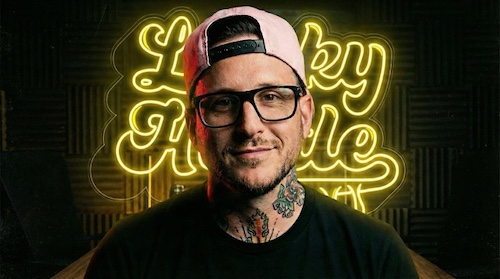
Darren Morris, CEO of Lucky Hustle, says half the room thinks AI is coming for everyone’s jobs. The other half thinks it can magically do everyone’s jobs. Both sides are missing the point: AI is not the threat; unoriginal thinking is.
AI Adoption Is No Longer The Debate
The South African industry is already deep inside this shift. Agency Scope 2025 found that 76.9% of marketers and agencies identify adapting to AI as their top challenge, almost double the 2023 figure, with the central tension being efficiency on one side and the risk of creative convergence on the other. In other words, the question is no longer whether agencies will use AI, but whether they will use it in a way that makes the work sharper or simply makes everything sound the same.
The real danger for creative agencies is not that people are using AI; it is that too many people are using it badly. They are asking it for a headline, copying the first answer, dropping it into a deck and calling that strategy. Sadly, that is not innovation but a Ctrl-C with better lighting.
There is a massive difference between using AI to replace thinking and using AI to sharpen thinking. The first makes the work generic while the second can make the work faster, smarter and more useful.
Local research published in the South African Journal of Information Management shows that South African marketing agencies are already adopting AI for content strategy optimisation, content creation enhancement, insight integration and personalisation, as well as automation and process improvement. Importantly, the same research found that agencies still believe the human element is necessary, and that content marketing cannot depend entirely on AI.
The agencies that will win are not the ones pretending AI does not exist. They are the ones building intentional AI stacks into the studio, not as a gimmick, but as part of how better work gets made.
AI Should Power The Process, Not Replace The Point Of View
For progressive agencies, AI has become part of the production brain, helping us move more intelligently through the heavy lifting that can slow creative momentum, from storyboarding, visual references, location recce, wardrobe direction, casting considerations and mood boards to production planning, performance insights, audience behaviour, first-draft exploration and scenario planning.
That does not mean AI makes the idea. It means AI helps us get to the right idea with more speed, more clarity and less waste. The original thought still has to come from humans. The instinct still has to come from people who understand culture, tension, timing, humour, emotion and the weird things that make audiences care.
The best agencies of the next decade will be the ones that understand the difference between output and judgment. AI can help with output, but humans must lead the judgement.
This matters even more in a performance-focused environment. Creativity cannot just look good anymore. It has to earn attention, sell, shift behaviour, build memory or solve a business problem.
It can help clients see an idea before production money is spent or help teams eliminate weak routes earlier. It can help us make more informed creative decisions without killing the magic. Because the magic is still the point.
Protect The Thinking
The problem is not AI-assisted creativity, it is AI-assisted sameness. That is why agencies need to stop treating AI like a shortcut and start treating it like a discipline.
You need rules and standards. You need people who know when to use it, when to ignore it and when to kill the thing it produced. You need an intentional AI stack that supports the way your studio thinks, creates and delivers, not a random collection of tools everyone plays with when the deadline is close.
We are interested in smarter ways of doing things. Not because speed is everything, but because we know that wasted time is expensive. Our AI studio was built to turn briefs around in under 48 hours, because we understand that production is expensive and creative decisions need to be sharper before budgets are committed.
We have used these AI superpowers on campaigns that required a considered creative approach without the luxury of big production budgets, from Ringside Fitness, Woodrocks’ Kennel to the Crib, to Unlucky Lemonade and other work where the challenge was not to replace the idea, but to stretch the thinking, sharpen the execution and make every rand work harder.
We understand that wasted thinking is expensive, and AI can help reduce the waste, but only if the agency already knows what it stands for creatively.
More clients are asking for braver ideas, clearer thinking and better-performing creative, which means they need agencies that can use technology without losing taste, humanity or instinct.
So yes, agencies should use AI. Use it to explore. Use it to pressure-test. Use it to visualise. Use it to save time and money. Use it to make the work sharper before it gets expensive. But do not use it to avoid having an opinion.
Because in the end, the best work will still come from original thought. AI can help improve that thought, stretch it, shape it and bring it to life faster. But first, you need to have one.
LUCKY HUSTLE
https://luckyhustle.co.za.